



Why Fixing Driveway Ruts Requires More Than a Surface Patch
Fixing driveway ruts the right way means correcting the water, weak base, or soil failure beneath the surface – not simply adding more gravel or patch material on top.
| What you see | What it often means | Lasting repair focus |
|---|---|---|
| Tire-track depressions | Water has softened the base or subgrade | Rebuild and compact the base |
| Ruts that return after rain | Drainage is directing water into the drive | Restore slope, crown, and drainage |
| Spongy areas or mud pushing upward | The soil beneath has failed | Excavate weak material and stabilize the base |
| Sunken asphalt or pavers | The supporting aggregate has shifted or settled | Reset the surface after base repair |
In Chicago and surrounding suburbs, including Elmhurst, Hinsdale, Mount Prospect, Norridge, Arlington Heights, Cook County, and DuPage County, freeze-thaw weather and heavy vehicle traffic can turn a small low spot into a deeper structural problem. This affects residential driveways as well as commercial paving and parking areas.
Euro Paving evaluates the full driveway system before recommending a repair. Our experienced, Unilock certified team can plan durable brick paving, paver, asphalt, and concrete driveway installation solutions with 3D paving design and Unilock lifetime material guarantees where applicable.
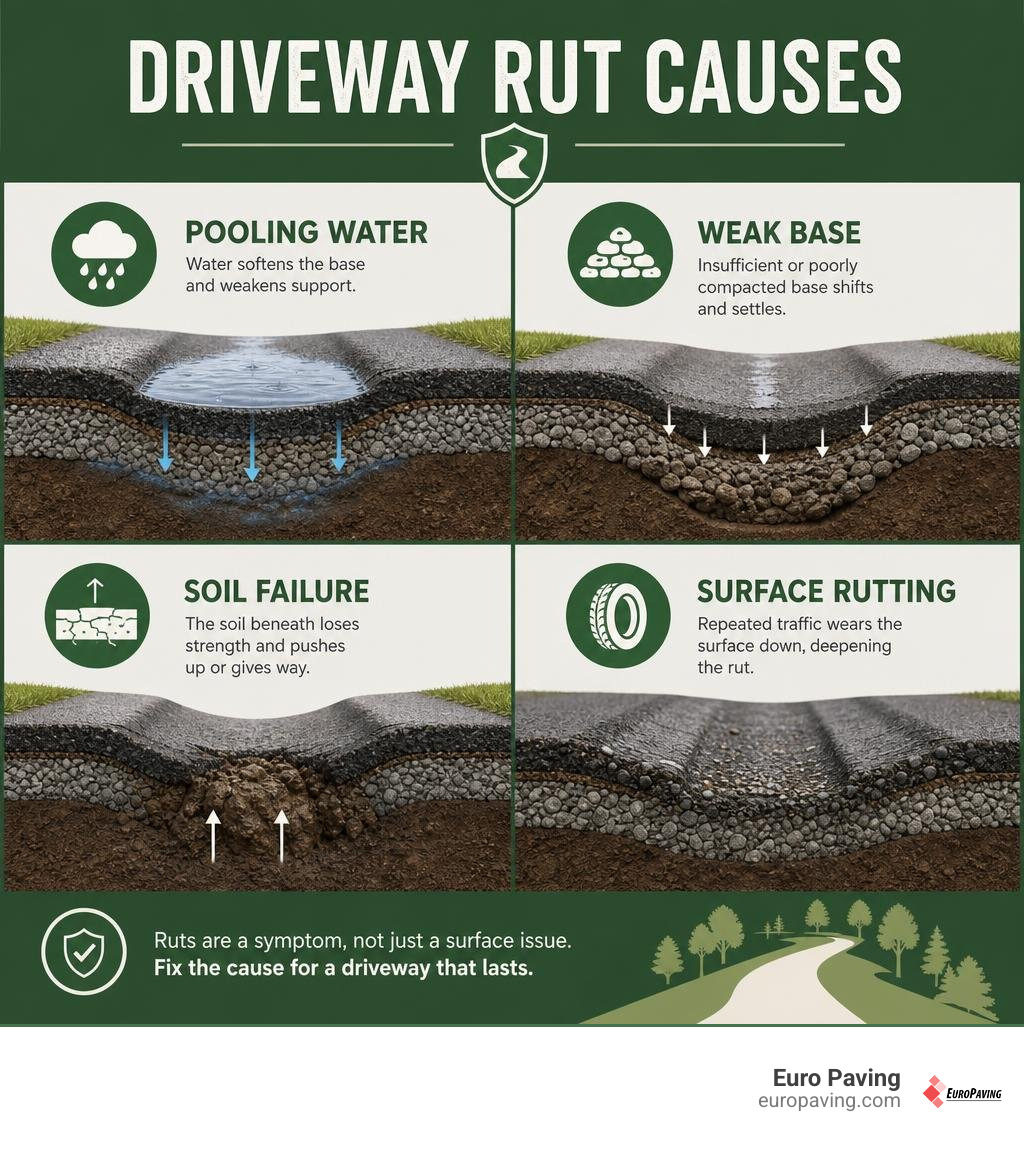
Quick fixing driveway ruts definitions:
Understanding the Root Causes of Driveway Rutting
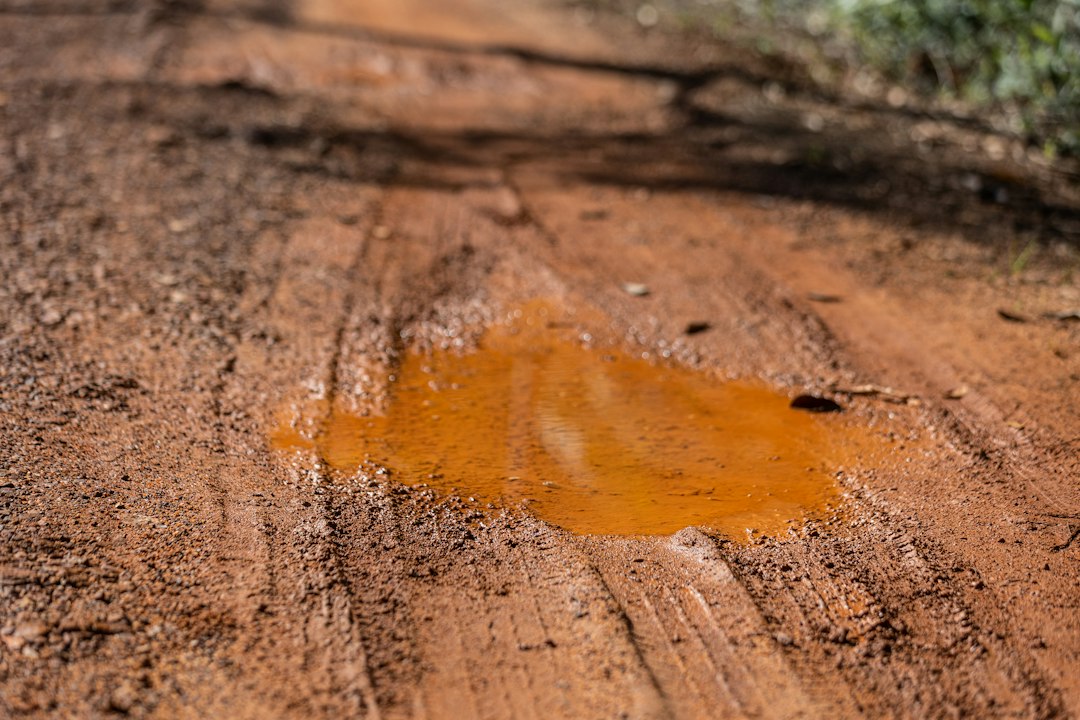
When we evaluate properties across Cook County and DuPage County, we frequently find that property owners view ruts as simple surface depressions. However, fixing driveway ruts effectively requires diagnosing the unseen structural failures happening deep beneath vehicle tires. Ruts develop when the load-bearing capacity of the subgrade drops below the weight of daily vehicular traffic.
Several distinct environmental and mechanical factors trigger this breakdown:
- Subgrade Saturation and Hydrostatic Pressure: When surface rainwater or snowmelt remains trapped in low spots, water percolates deep into the subsoil. Saturated clay soil—common in northern Illinois—loses its stability when wet.
- Subgrade Pumping: As heavy trucks, delivery vehicles, or family SUVs drive over saturated aggregate, hydrostatic pressure forces wet clay and fine silts upward through the gravel base layer. This process, known as pumping, contaminates the base rock and undermines structural support.
- Freeze-Thaw Expansion Cycles: Chicago winters subject driveways to harsh freeze-thaw cycles. Water trapped inside the base freezes, expands, and dislodges compacted aggregate. When the spring thaw arrives, the melted ice leaves behind empty voids, causing the driveway surface to collapse under vehicle loads.
- Mechanical Displacement: Repeated driving along identical wheel paths pushes unanchored surface stone toward the driveway shoulders, leaving deep channels where water collects.
To determine if soil failure has reached a critical point, our engineering teams perform a subsurface load test. Pressing into exposed subsoil after removing surface aggregate helps us verify whether the ground has lost mechanical stability. If subgrade soil yields easily under light pressure, standard surface filling will fail within weeks. Professional base excavation and structural soil replacement are mandatory.
Professional Methods for Fixing Driveway Ruts Permanently
Achieving a lasting solution for rutted driveways demands an engineering-based restoration process rather than cosmetic surface patches. When our crews rebuild rutted residential driveways or commercial parking areas in Elmhurst, Hinsdale, and Mount Prospect, we follow strict structural standards to guarantee long-term performance.
For severe rutting caused by subgrade degradation, we excavate rutted zones to a depth of 8 to 12 inches down to stable soil. Superficial fills fail because uncompacted patch materials cannot bind to a hardened, contaminated base plane. Following deep excavation, we line the exposed earth trench with high-performance, heavy-duty non-woven geotextile fabric. This geotextile layer forms a permanent physical barrier between the raw clay subsoil and the new aggregate foundation, preventing subgrade soil pumping while allowing moisture to drain freely.
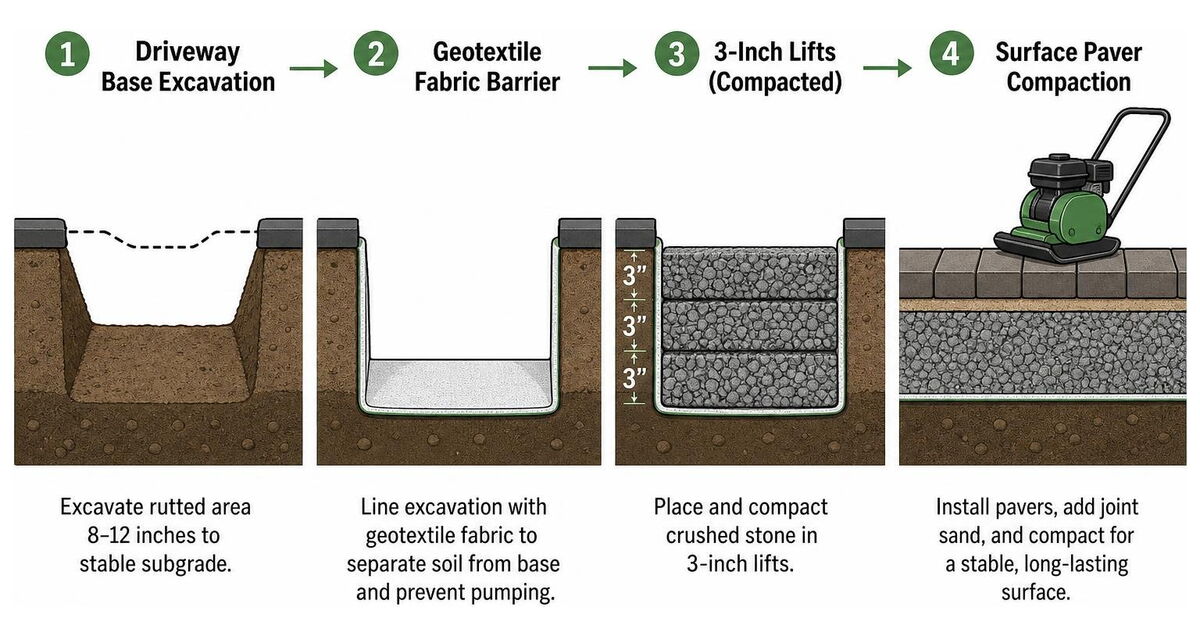
Once geotextile fabric is installed, we reconstruct the base using dense, highly angular crushed stone base layers, such as 21A crusher run or 3/4-inch minus aggregate containing a precise balance of angular stone and crushing fines. We place aggregate in uniform 3-inch “lifts” or layers, misting each lift with moisture to optimize binder density before mechanical compaction.
For properties seeking complete aesthetic enhancement and maximum longevity, Euro Paving leverages advanced 3D paving design software. We allow property owners to visualize full paver driveways and commercial entrance turnarounds before breaking ground. By using premium, lifetime-guaranteed Unilock pavers over custom-engineered bases, we eliminate recurring rutting altogether. For further technical details on deep track excavation standards, review How to Repair Rutted Driveway [Permanently Fix Deep Tracks] – RapidRepair.blog.
Fixing Driveway Ruts on Gravel and Aggregate Surfaces
Unpaved aggregate driveways, private access roads, and farm lanes require deliberate mechanical binding to resist tire displacement. Restoring these surfaces begins with thorough surface scarification using heavy tractor-mounted scarifiers or box blades. Scarifying breaks up the hardened edges of existing ruts down to their lowest point, ensuring that new aggregate forms a cohesive bond with the underlying base layer rather than forming a weak, peelable surface scab.
Our crews apply 21A crusher run stone (or 3/4-inch crushed minus aggregate) across the scarified bed. Angular stones interlock tightly under weight, while fine stone dust fills empty voids, curing under moisture to achieve concrete-like density. To understand how underlying foundation stability preserves unpaved surfaces, explore our guide on Fixing the Foundation of Your Sinking Driveway.
Fixing Driveway Ruts on Asphalt and Paver Surfaces
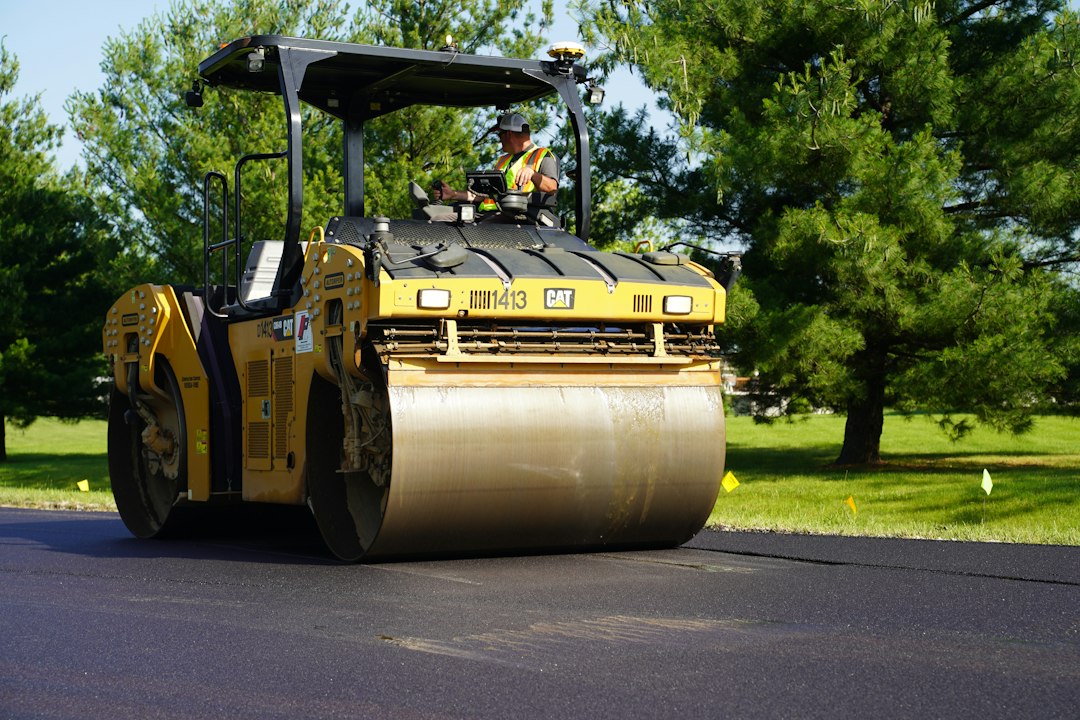
For paved surfaces in suburban Chicago, rutting indicates underlying subbase movement beneath rigid or flexible surface layers:
Asphalt Driveways and Commercial Parking Lots
Ruts in asphalt surfaces, frequently referred to as “birdbaths” or wheel-path rutting, stem from base settlement or heavy static point loads during hot summer months. We repair sunken asphalt by cutting clean vertical edges around the depression using diamond-blade saws, excavating shifted subbase materials, installing 4 to 6 inches of compacted crushed stone base, and applying fresh hot-mix or polymer-modified asphalt in 1.5 to 2-inch lifts. Each layer is rolled flush to match surrounding grades.
Interlocking Brick and Concrete Paver Driveways
Interlocking pavers offer superior durability under Chicago weather conditions when installed on engineered bases. When paver driveways develop ruts due to initial subgrade settling, Euro Paving delivers seamless professional paver restoration:
- Paver Extraction: We lift existing surface pavers from the rutted area without damaging surrounding stones.
- Subbase Excavation and Soil Stabilization: We remove compromised bedding sand and unstable base stone down to firm ground, installing non-woven geotextile fabric if needed.
- Base Reconstruction: We install 4 to 6 inches of 3/4-inch crushed aggregate base, compacting in 3-inch lifts to achieve 98% Standard Proctor Density.
- Bedding Sand and Paver Reset: We place a crisp 1-inch screed layer of coarse bedding sand, re-lay the Unilock pavers in their original pattern, install heavy-duty concrete or aluminum edge restraints, and mechanically plate compact the surface while sweeping polymeric joint sand into all seams.
Step-by-Step Base Stabilization and Compaction Techniques
Proper compaction is the single most critical factor in successful fixing driveway ruts. Loose aggregate left uncompacted retains 20% to 30% air voids, allowing rainwater to collect and causing immediate rut reoccurrence under heavy vehicle loads.
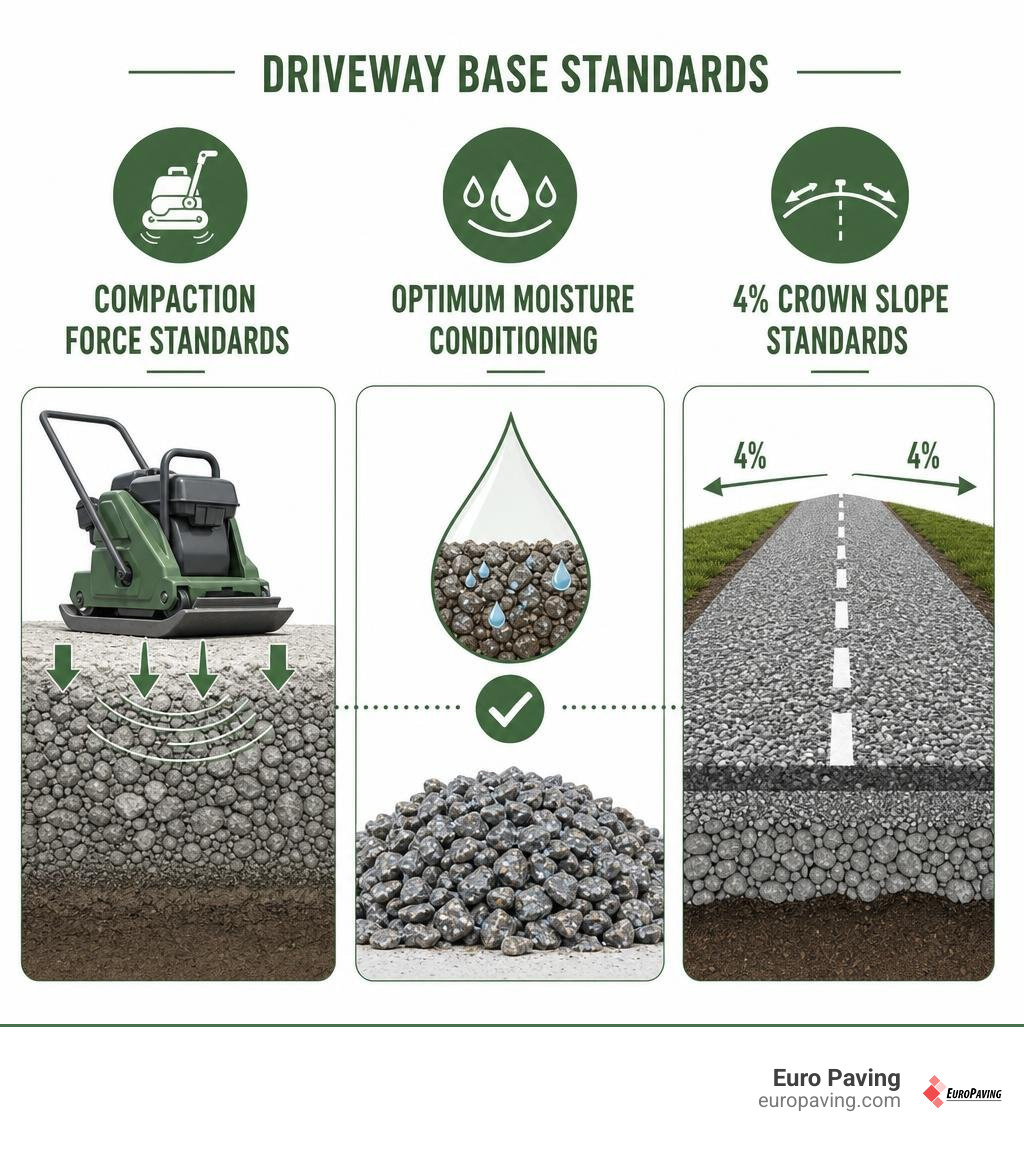
Our professional compaction protocol follows rigorous engineering specifications:
- Optimum Moisture Conditioning: Aggregate must reach a precise moisture level—resembling damp earth—before compaction. Water acts as a lubricant, enabling fine stone particles to slide tightly into voids between larger angular rocks.
- Controlled Lift Layering: We never attempt to compact aggregate layers thicker than 3 inches in a single pass. Compacting in 3-inch lifts ensures uniform density from the bottom of the base trench to the top surface.
- Heavy Vibratory Compaction: We utilize heavy commercial vibratory rollers and high-impact plate compactors. Vibratory force settles smaller fines into inter-aggregate spaces far more effectively than static rolling or light vehicle tire packing.
- Establishing a Precise Center Crown: Water diversion is essential for surface longevity. We shape all driveways with a center crown featuring a 2% to 4% slope (equivalent to a 1/2-inch drop per linear foot from the center ridge to the outer shoulders). A 4% crown ensures continuous lateral water shedding, preventing surface pooling along tire lines.
- Proof Rolling and Load Verification: Before applying final paver, asphalt, or top-dressing surfaces, we conduct proof rolling with loaded commercial equipment to confirm that zero base deflection or yield occurs under heavy weight.
Preventative Maintenance and Long-Term Drainage Solutions
Maintaining proper surface drainage and edge integrity is the most effective way to eliminate future repair costs. Research indicates that routine preventative maintenance—such as clearing culverts, keeping ditches open, and preserving a 4% center crown—reduces overall driveway lifecycle repair expenses by 80%.
To protect your property investment against moisture infiltration and structural erosion, implement comprehensive surface management strategies:
- Bi-Annual Grading and Inspections: Commercial access roads and aggregate driveways should undergo professional grading twice per year—once in early spring after the ground thaws completely, and once in late fall before winter’s first hard freeze.
- Edge Restraint and Shoulder Reinforcement: Crumbling driveway edges represent the primary starting point for structural base failure. Installing heavy-duty concrete edge restraints or reinforced stone shoulders prevents lateral aggregate migration when vehicles drive close to borders. Read more about protecting your borders in our article on How to Fix Your Crumbling Driveway Edges Before They Disappear.
- Culvert and Side Swale Management: Clean leaves, mud, and organic debris from roadside culverts and drainage ditches quarterly. Blocked drainage structures back water up into the driveway subgrade, softening base layers.
- Professional Resurfacing Practices: Municipal and residential paving standards demand routine surface overlays to maintain structural integrity. Learn more about regional paving standards at Skokie, IL Residential Street Resurfacing Process.
Frequently Asked Questions About Driveway Rutting
How often should a driveway be regraded to prevent deep ruts?
Driveways subject to heavy suburban traffic, winter snowplowing, and Midwestern freeze-thaw cycles should be professionally inspected and regraded twice annually. Early spring grading reshapes surface crowns flattened by winter snowplows, while late fall grading seals the surface plane prior to freezing winter rains.
What is the best aggregate type for preventing rutting?
The industry standard base aggregate for preventing driveway ruts is 21A crusher run (also designated as 3/4-inch minus crushed stone base). Unlike rounded river rock or pea gravel, which shift like ball bearings under tire weight, 21A aggregate contains sharp, angular crushed stones mixed with fine stone dust. When moistened and mechanically compacted, aggregate fines lock the angular rocks into a dense matrix that resists vehicle displacement.
When should property owners call a professional paving contractor?
Property owners should contact a certified paving contractor as soon as ruts exceed 2 inches in depth, show signs of subgrade pumping (mud oozing up through stone), exhibit standing water after rainfall, or affect commercial parking lots.
Euro Paving delivers comprehensive structural excavation, base stabilization, 3D paving design, and Unilock paver installations across Chicago, Elmhurst, Hinsdale, Mount Prospect, Norridge, Arlington Heights, Cook County, and DuPage County.
Conclusion
Successfully fixing driveway ruts requires far more than spreading loose stone over surface track marks. Lasting durability relies on identifying subgrade water failure, excavating compromised soil 8 to 12 inches deep, installing non-woven geotextile separation fabric, rebuilding crushed stone bases in 3-inch lifts, and compacting aggregate to a precise 4% center crown.
Euro Paving brings nearly 20 years of hardscaping and paving experience to residential and commercial properties throughout Chicago and surrounding suburbs. As an Authorized Unilock Contractor, we specialize in high-end brick paving driveways, custom paver patio installations, and total subbase restorations backed by lifetime material guarantees and advanced 3D visual design planning.
Stop wasting time on temporary fixes that wash away with the next heavy rainfall. Contact Euro Paving for your next brick or driveway project and schedule a consultation with our paving experts today.