



That Pothole in Your Driveway Is Getting Worse — Here’s What to Do
Driveway pothole repair is something most Chicagoland homeowners will face sooner or later — usually after a brutal winter leaves behind crumbling craters where smooth asphalt used to be.
Before diving in, here’s a quick answer if you need it fast:
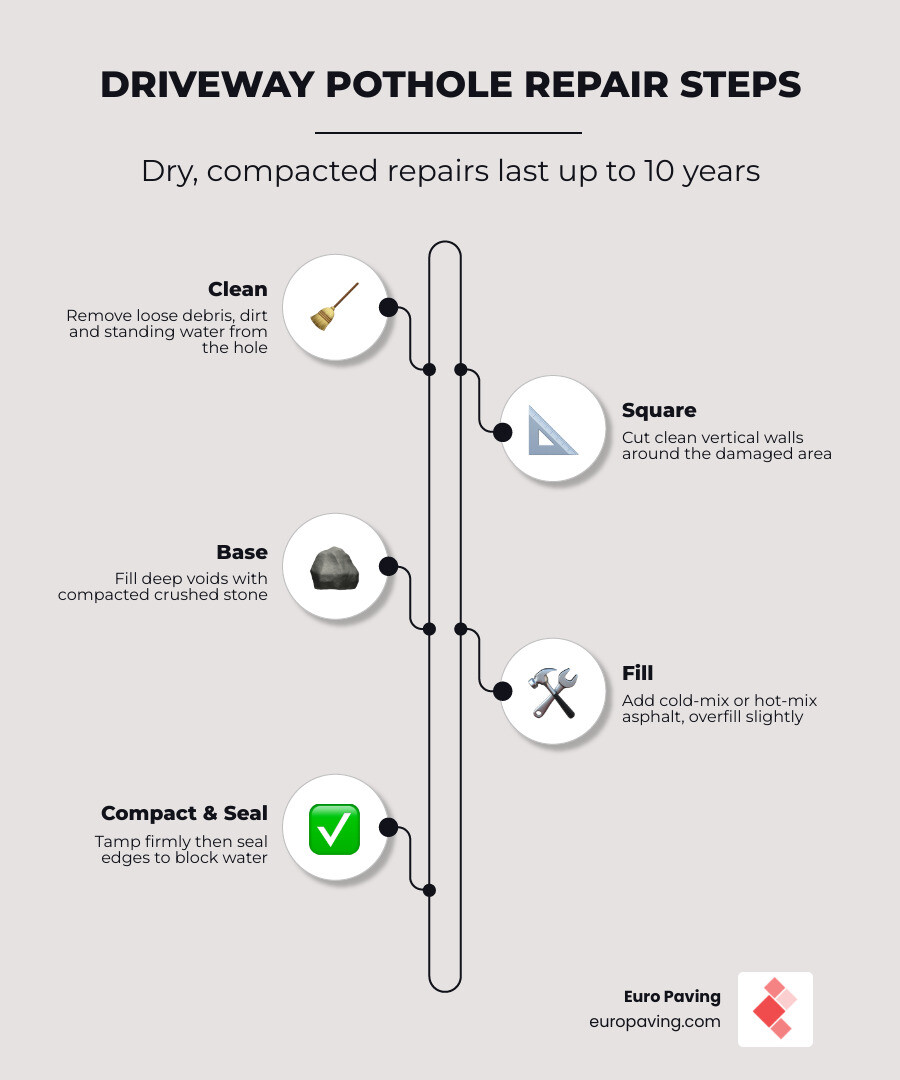
How to repair a driveway pothole (summary):
- Clean the hole — remove all loose debris, dirt, and standing water
- Square the edges — cut or chisel clean vertical walls around the damaged area
- Prepare the base — fill any deep voids with compacted crushed stone
- Fill with patch material — use cold-mix asphalt, hot-mix, or a water-activated filler
- Compact thoroughly — tamp down firmly, overfilling by 2–3 inches first
- Seal the edges — prevent water from sneaking back in
A dry, well-compacted repair can last up to 10 years. A rushed, damp repair? As little as 3–4 years.
Potholes rarely stay small. What starts as a minor dip becomes a structural problem fast — especially here in the Chicago suburbs, where freeze-thaw cycles can repeat 30 to 50 times in a single season. Water seeps into a hairline crack, freezes, expands by roughly 9%, and breaks the asphalt apart from the inside. Add heavy vehicles and clay-rich soil underneath, and you have a recipe for rapid deterioration.
The good news: whether your driveway is asphalt or gravel, repair is very achievable — and knowing how to do it right makes all the difference between a fix that lasts a decade and one that fails by spring.
Driveway pothole repair word guide:
Why Chicagoland Winters Cause Severe Driveway Damage
Living in Northern Illinois means dealing with some of the most punishing winter weather in the country. From Skokie down to Hinsdale, our driveways take a relentless beating every single year. The primary culprit behind this destruction is the freeze-thaw cycle.
Unlike regions that stay consistently frozen all winter long, the Chicago area experiences frequent temperature fluctuations above and below 32°F. During a typical winter, these cycles can occur 30 to 50 times. When snow melts, water flows into tiny hairline cracks in your driveway. As the temperature drops overnight, that trapped water freezes and expands by approximately 9%. This expansion exerts immense pressure on the surrounding pavement, widening cracks and weakening the structural integrity of the asphalt or concrete.
Compounding this issue is the clay-rich soil native to Northern Illinois. Clay holds onto water instead of draining it away quickly. When this saturated clay soil freezes, it expands upward in a process known as frost heave. This subsurface ground movement shifts the foundation beneath your driveway, cracking the surface and leaving hollow voids underneath. When a heavy vehicle drives over these unsupported spots, the weakened asphalt collapses, forming a pothole.
Furthermore, the road salt and deicing chemicals we use to keep our walkways safe actually accelerate this damage. Salt lowers the freezing point of water, which sounds helpful, but it actually increases the number of freeze-thaw cycles the driveway experiences. It also attracts and traps extra moisture within the pavement’s pores.
To protect your investment and catch these issues before they require a complete overhaul, check out our comprehensive driveway maintenance tips to keep your pavement structurally sound through the worst Cook and DuPage County winters.
Professional Driveway Pothole Repair: Asphalt vs. Gravel
The strategy you choose for driveway pothole repair depends entirely on your driveway’s material. Asphalt and gravel require completely different repair methodologies to ensure long-term durability.
Asphalt Pothole Repair
For asphalt driveways, the goal is to create a seamless, watertight patch that bonds with the existing pavement. Before choosing a product, you must inspect the damage. If you have spiderweb-like cracks surrounding the hole (known as alligator cracking), this indicates a deep structural base failure that surface patching won’t fix permanently. However, for isolated potholes, matching the damage to the correct material is key to a lasting repair. You can learn more about this in our guide on asphalt damage matching.
The most common repair materials include:
- Traditional Cold Patch: A convenient, budget-friendly option available at local home improvement stores. It remains pliable in the bag and cures over time as its solvents evaporate.
- Water-Activated Fillers: Premium products (like Aquaphalt) that cure rapidly when exposed to water, creating an incredibly tough, commercial-grade surface almost immediately.
- Hot-Mix Asphalt: The gold standard used by professional paving crews. It offers the strongest bond and longest lifespan but requires specialized commercial heating equipment to apply.
Gravel Pothole Repair
Gravel driveways are highly prone to erosion, especially during heavy spring rains in suburbs like Barrington and Lake Forest. Repairing a gravel pothole is not as simple as scooping loose gravel into the hole; vehicle tires will easily push loose stones right back out.
To perform a proper gravel driveway restoration, you must dig out the pothole entirely, clear any debris, and fill it in compacted layers. You should start with a coarse, angular aggregate base (like 5/8-inch crushed stone with fines) to lock the base in place, and only use fine gravel for the very top layer. Compacting each layer with a hand tamper or plate compactor and adding a slight crown to the driveway’s center ensures water drains off to the sides rather than pooling in the middle.
Step-by-Step Commercial-Grade Asphalt Pothole Repair
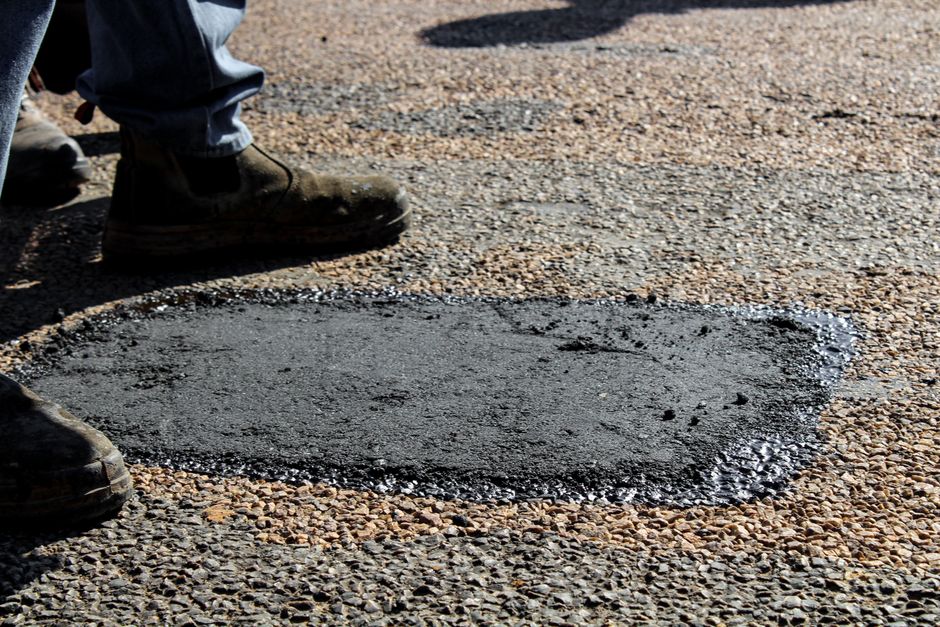
If you want your asphalt patch to survive the heavy traffic and extreme weather of the Chicago area, you must follow a meticulous, commercial-grade repair process. Cutting corners now guarantees you will be redoing the job next spring.
Step 1: Excavation and Cleaning
Begin by clearing out all loose asphalt chunks, dirt, weeds, and standing water. Use a stiff-bristled broom, a shovel, or even a leaf blower to get the hole completely clean. If the pothole is deep, excavate down until you reach a stable, firm sub-base.
Step 2: Cut Clean, Symmetrical Edges
Never feather the edges of an asphalt patch. Thin edges will quickly crumble under vehicle tires. Instead, use a wet masonry saw with a diamond blade or a chisel to cut a neat, vertical “picture frame” or square around the pothole. Having a 90-degree vertical edge distributes vehicle weight evenly and gives the patching material a solid wall to bond against.
Step 3: Prepare the Sub-Base
A patch is only as strong as the ground beneath it. If the pothole is deeper than two inches, do not fill the entire void with expensive asphalt patch. Instead, add a high-quality paver base or crushed stone in 2-inch layers, compacting each layer thoroughly before adding the next. For larger craters, follow our detailed guide on repairing large asphalt holes.
Step 4: Apply and Overfill the Patching Material
Pour your chosen asphalt patching material into the hole. Overfill the hole by 2 to 3 inches above the surrounding driveway level. This extra height is crucial because the material will compress significantly during the compaction phase.
Step 5: Thorough Compaction
Compaction is where many DIY repairs fail. Use a heavy hand tamper or a mechanical plate compactor to compress the material until it is flush with the surrounding driveway. For maximum compaction, place a piece of plywood over the patched area and slowly drive a vehicle tire over it several times. This mimics professional rolling equipment and locks the aggregate together.
Step 6: Seal the Joints
Once compacted, apply a cold jointing spray or an over-banding joint sealant tape along the seams where the new patch meets the old asphalt. This prevents water from sneaking into the joint and causing the patch to fail.
Ensuring proper execution of these steps is vital. According to UK RAC pothole statistics, potholes cause approximately one-third of cars to suffer damage each year, illustrating just how destructive these pavement craters can be to your vehicles if left unaddressed.
Frequently Asked Questions about Driveway Pothole Repair
How long does a professional driveway pothole repair last?
A professionally executed asphalt pothole repair can easily last up to 10 years, provided the area is completely dry during the installation. Water is the ultimate enemy of asphalt bonding; if a patch is applied to a damp hole, moisture gets trapped underneath, reducing the lifespan of the repair to just 3 to 4 years. Professional contractors use thermal blowers to dry the pavement completely and commercial-grade plate compactors to eliminate internal air pockets, ensuring maximum resistance to Chicago’s volatile weather.
What is the cost of professional driveway pothole repair vs. DIY?
For a single, small pothole, a DIY approach using a 50-pound bag of cold patch from a local hardware store in Norridge or Arlington Heights will typically cost between $10 and $50 for materials. However, DIY repairs lack the heavy-duty compaction and commercial hot-mix materials used by professionals.
Professional pothole repair typically costs between $100 and $400 per hole. While the upfront cost is higher, professional repairs offer vastly superior long-term value because they address the root cause of the failure and utilize commercial-grade equipment.
| Repair Method | Average Cost | Expected Lifespan | Best Used For |
|---|---|---|---|
| DIY Cold Patch | $10 – $50 per bag | 1 – 3 years | Temporary, small fixes |
| DIY Water-Activated | $30 – $80 per bag | 5 – 8 years | Medium-sized, urgent repairs |
| Professional Hot-Mix | $100 – $400 per hole | 8 – 10+ years | Permanent, deep pothole repairs |
When should I resurface or replace my driveway instead of patching?
If your driveway is covered in extensive spiderweb cracking (alligator cracking), has multiple deep potholes, or suffers from severe foundation instability, simple patching will no longer suffice.
Asphalt resurfacing (adding a fresh asphalt overlay) can extend your driveway’s lifespan by 8 to 15 years, but only if the underlying foundation is still structurally sound. If your driveway is over 20 years old and has systemic drainage issues or a crumbling base, a complete replacement is necessary.
For homeowners in Mount Prospect or Hinsdale looking for an elegant, permanent upgrade, replacing a failing asphalt driveway with a premium brick paver driveway is often the best choice. Brick driveways do not suffer from the same cracking and pothole issues as asphalt, and they dramatically boost your home’s curb appeal.
Conclusion
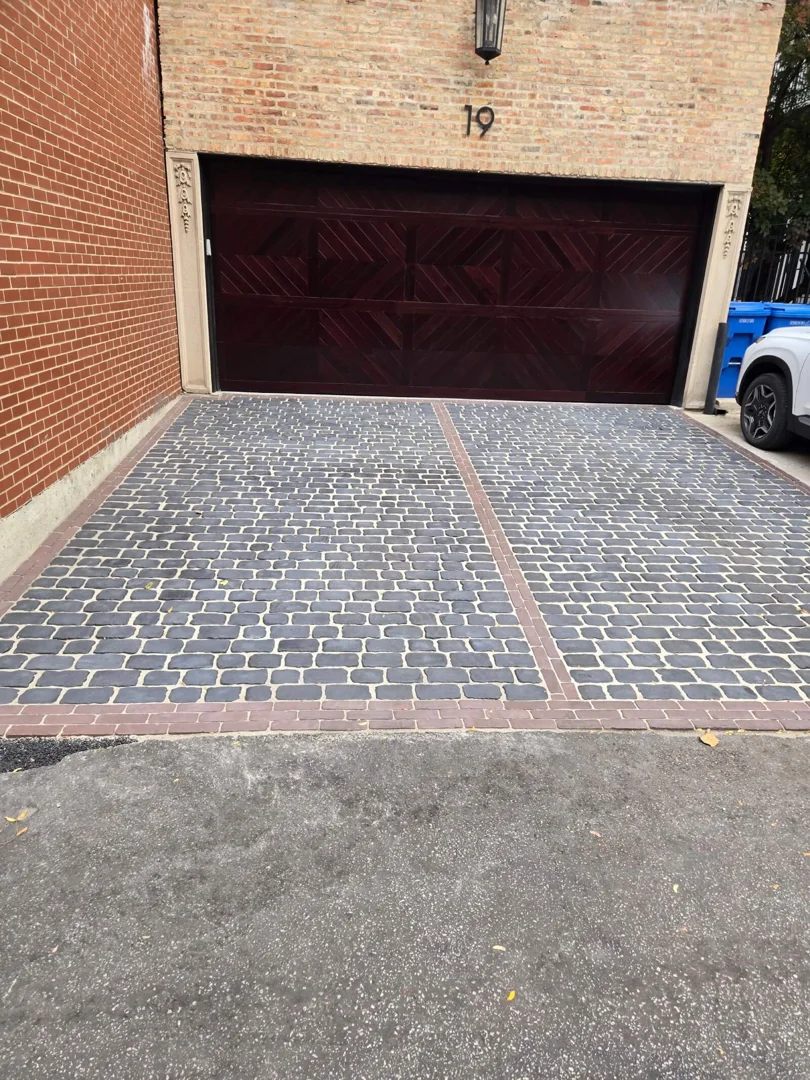
While temporary patches can buy you a little time, they are ultimately band-aids on a larger problem. If you are tired of dealing with crumbling asphalt, constant sealcoating, and recurring potholes every spring, it may be time to upgrade to a permanent, elegant solution.
At Europa Paving, we specialize in transforming tired, cracked driveways into stunning, durable brick paved surfaces. As a premier hardscaping and paving contractor in the Chicago Area, we serve communities including Arlington Heights, Norridge, Skokie, Barrington, Downers Grove, Lake Forest, Northbrook, Highland Park, Hillside, Winnetka, Hinsdale, Mount Prospect, Lombard, Glenview, and Roselle.
As a Unilock Authorized Contractor, we combine exceptional craftsmanship with lifetime material guarantees. Our custom brick driveways, patios, and outdoor kitchens are designed to withstand the harshest Illinois winters without cracking, shifting, or forming potholes.
Ready to transform your home’s exterior with a gorgeous, maintenance-free driveway? Explore our professional Euro Paving brick driveway installation services and schedule your design consultation with our hardscaping experts today!