



Your Driveway Is Quietly Falling Apart — Here’s How to Stop It
The most important driveway maintenance tips every homeowner should know:
- Seal regularly — concrete annually, asphalt every 2-5 years, brick pavers as needed
- Clean stains fast — motor fluids can penetrate up to a quarter inch into concrete
- Repair cracks immediately — small cracks become expensive potholes fast
- Skip the rock salt — use sand, calcium chloride, or eco-friendly alternatives instead
- Protect your edges — keep heavy vehicles off the perimeter
- Manage water runoff — direct downspouts away and clear drainage paths
- Inspect twice a year — spring and fall are the best times to catch damage early
Your driveway is one of the first things people notice about your home. Yet it’s also one of the most neglected surfaces on the property — until a crack turns into a crater or a stain becomes permanent.
The stakes are real. A well-maintained driveway can boost your home’s value by 5 to 10 percent. Ignore it, and you’re looking at costly repairs or full replacement far sooner than you should.
The good news? Most driveway damage is preventable. Whether you have asphalt, concrete, or brick pavers, a consistent maintenance routine makes all the difference between a surface that lasts decades and one that crumbles in a few years.
Here’s everything you need to know — broken down by material, season, and situation.
Essential Driveway Maintenance Tips for Every Material
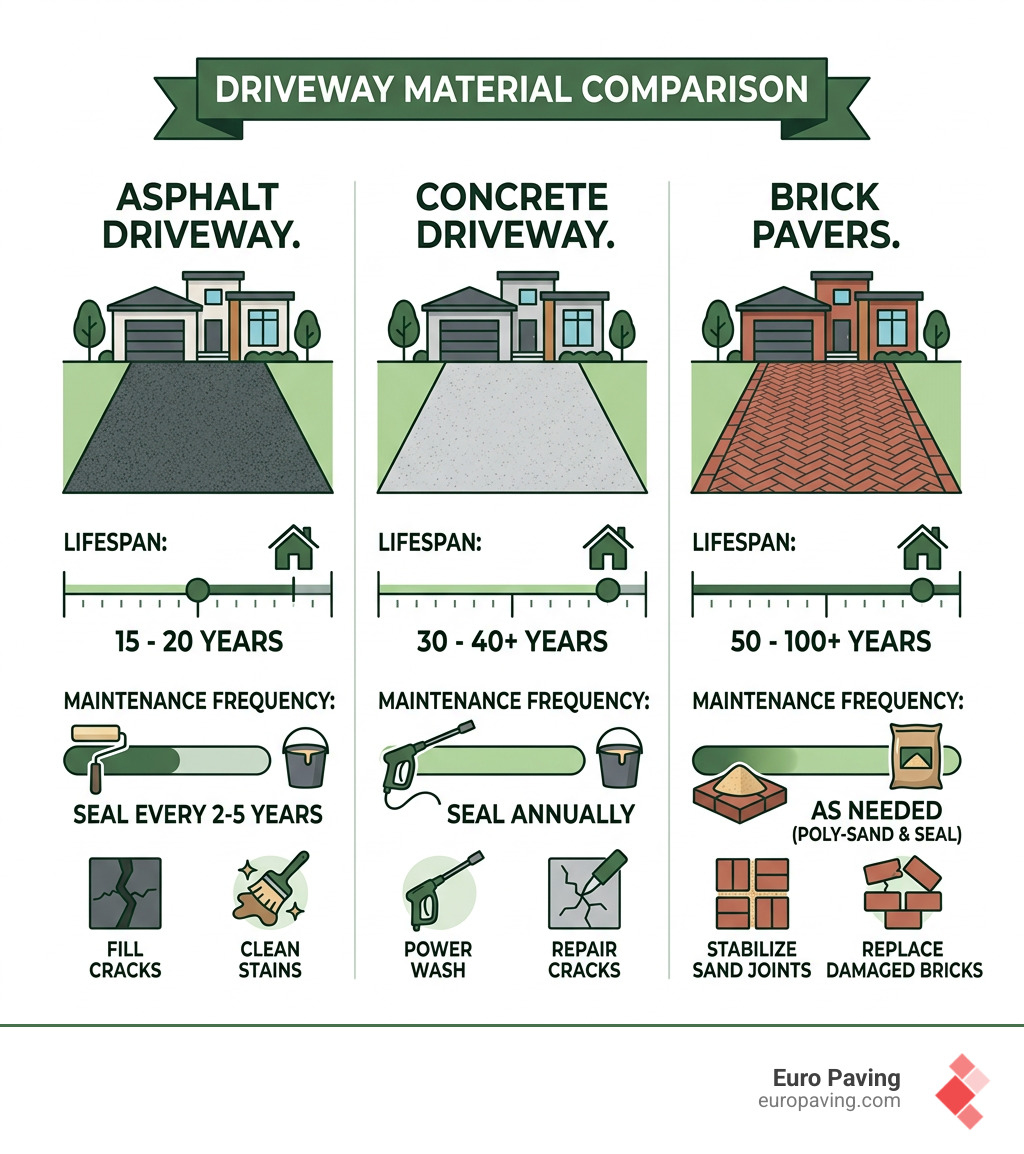
Every driveway material has its own “personality” and set of requirements. In the Chicago area, from Arlington Heights to Skokie, our driveways face extreme temperature swings that test the limits of any surface. Understanding what your specific driveway needs is the first step in effective care.
| Material | Average Lifespan | Maintenance Frequency | Major Vulnerability |
|---|---|---|---|
| Asphalt | 15–30 Years | Seal every 2–3 years | UV rays and oil spills |
| Concrete | 30–100 Years | Seal every 2–5 years | Freeze-thaw cycles and salt |
| Brick Pavers | 50–100+ Years | Occasional re-sanding/sealing | Weeds and shifting soil |
| Gravel | Variable | Annual raking/leveling | Erosion and snow removal |
Asphalt Care
Asphalt is oil-based, which makes it flexible but also susceptible to “drying out” through oxidation. When asphalt loses its oils, it turns gray and brittle, leading to cracks. One of our top driveway maintenance tips for asphalt is to keep it clear of gasoline or motor oil, as these fluids actually dissolve the binder that holds the stones together.
Concrete Longevity
Concrete is incredibly durable, but it is porous. It acts like a sponge, soaking up water. When that water freezes during a typical Chicago winter in places like Norridge or Northbrook, it expands and causes the surface to flake or “spall.” Keeping concrete sealed is the only way to prevent this internal pressure from destroying the slab.
Brick Paver Aesthetics
At Europa Paving, we specialize in brick pavers because they offer a unique combination of beauty and structural resilience. Unlike solid slabs, pavers can move slightly with the ground without cracking. However, they do require attention to the joints. Keeping the sand between the bricks topped up prevents shifting and discourages weed growth. For a deeper look at why this material is a premier choice, read about the 7 Benefits of Sealcoating Your Brick Driveway.
Professional Cleaning and Stain Removal
Stains are more than just an eyesore; they are chemical attacks on your driveway’s integrity. Motor fluids, for instance, can penetrate up to a quarter inch into concrete surfaces.
For fresh oil spills, we recommend using non-clumping kitty litter. Spread it over the spill, let it sit overnight to absorb the liquid, and sweep it up the next day. For older, stubborn stains, a professional-grade degreaser or a pressure washer may be necessary.
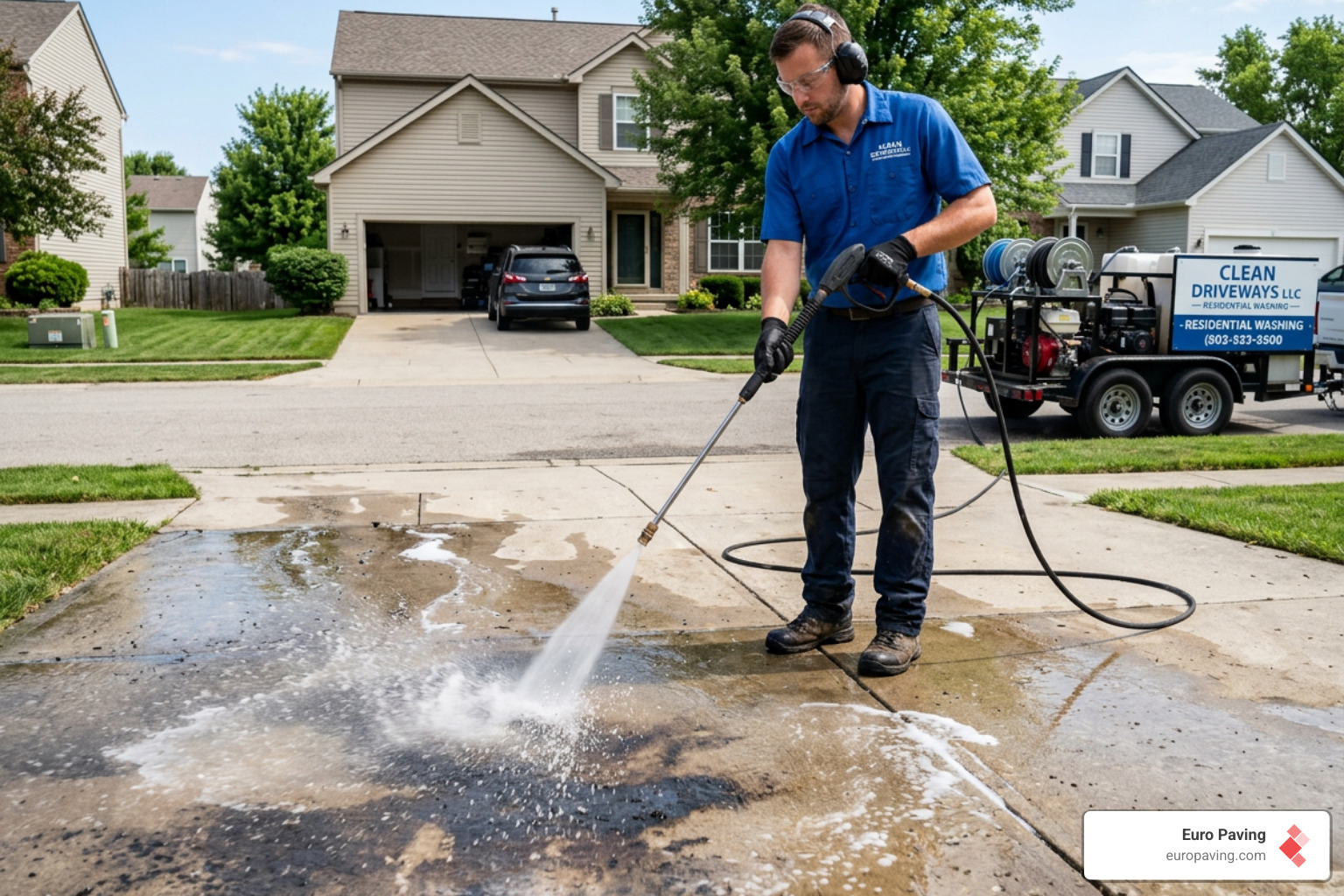
When pressure washing, be careful not to use a setting that is too high, as you can actually etch grooves into concrete or blow out the joint sand between pavers. If you are dealing with a paver system, check out these 11 Tips How to Keep Your Brick Pavers Clean to ensure you don’t damage the delicate balance of the installation.
Sealing and Resealing Schedules
Think of sealer as “sunscreen and a raincoat” for your driveway. It provides a UV protection layer that slows down oxidation and creates a moisture barrier that keeps water out of the pores.
- Asphalt: Should be sealed about 3 to 6 months after installation, and then every 2 to 3 years thereafter.
- Concrete: We recommend a high-quality penetrating sealer every few years to protect against the harsh freeze-thaw cycles common in the Chicago Area.
- Brick Pavers: Sealing pavers not only protects them from the elements but also enhances their color and helps lock the joint sand in place. You can learn more about our specialized Brick Paving Sealer Coating services to see how we preserve the “new” look of your hardscaping.
Seasonal Care: Protecting Your Investment Year-Round
In Illinois, our driveways don’t get a day off. From the humid summers in Downers Grove to the sub-zero winters in Lake Forest, seasonal transitions are when most damage occurs.
Winter Driveway Maintenance Tips: Beyond Rock Salt
Winter is the ultimate test for any driveway. While rock salt (sodium chloride) is cheap, it is devastating to your driveway. It accelerates the freeze-thaw cycle and can cause significant pitting and cracking in concrete and asphalt.
Instead of traditional salt, consider these alternatives:
- Calcium Magnesium Acetate (CMA): Much safer for concrete and pavers.
- Sand or Coffee Grounds: These don’t melt ice, but they provide essential traction without chemical damage.
- Beet Juice: Believe it or not, scientific research on eco-friendly de-icers like beet juice shows it can be effective in temperatures as low as -20°F and is far less corrosive than salt.
When it comes to snow removal, shoveling should be done with care. Use a plastic shovel rather than a metal one to avoid scratching the surface. If you use a snowblower, ensure the intake is set high enough so the metal blade doesn’t scrape against the driveway. For more specific winter advice, see our guide on Winter Paver Maintenance.
Summer and Spring Driveway Maintenance Tips
Spring is the time for a “deep clean.” Use this season to power wash away the salt and grime left behind by winter. This is also the best time for a thorough inspection. Look for small cracks that may have formed during the winter months and fill them before the spring rains can wash away the underlying soil.
In the summer, the main enemy is heat and weeds. High temperatures can soften asphalt, making it prone to “scuffing” from car tires. Weeds are also a concern; their roots can exert incredible pressure, widening small cracks into major gaps. Using a safe herbicide or a vinegar-water solution can help keep these at bay without damaging your pavers.
Structural Integrity: Cracks, Drainage, and Weight Limits
A driveway is only as strong as its foundation. If you notice “alligator cracking” (cracks that look like scales) or frequent potholes, you likely have a drainage or base issue.
Managing Water Drainage and Runoff
Water is the number one enemy of any paved surface. If water pools on your driveway, it will eventually seep underneath, soften the soil, and cause the surface to collapse.
- Downspout Diversion: Ensure your gutters aren’t dumping water directly onto the edge of your driveway.
- Grading: A properly installed driveway should have a slight slope to direct water away from the home and toward a drainage area.
- Edge Clearing: Clear a 2-3 inch strip of grass and soil away from the edges of the driveway to allow water to run off freely rather than “wicking” back under the pavement.
Protecting Driveway Edges and Surfaces
The edges of your driveway are its weakest points. They lack the lateral support of the rest of the surface and are prone to crumbling if subjected to heavy loads.
One of our most practical driveway maintenance tips is to avoid parking right on the edge. If you have a heavy vehicle or a dumpster being delivered for a home renovation in Barrington or Hinsdale, place plywood down to distribute the weight. Furthermore, installing reinforced edging or concrete curbing can provide the structural support needed to prevent “edge creep.” For more on this, read our article on Driveway Renovation: Avoiding Common Problems.
Repairing Cracks and Potholes
Don’t wait for a small crack to grow. For concrete, a polyurethane filler can seal the gap and prevent water infiltration. For asphalt, a cold-patch or specialized crack filler is essential. If you are a DIY enthusiast, you can learn How to Repair Driveway Cracks on our blog, but major structural issues usually require professional intervention.
When to Call the Professionals for Driveway Restoration
While regular cleaning and minor crack filling are great DIY projects, some tasks require the expertise of a professional team. If your driveway is over 20 years old and showing signs of widespread structural failure, simple repairs might just be a “band-aid.”
At Europa Paving, we help homeowners in the Chicago area determine if they need a simple resurfacing or a complete renovation. As Unilock authorized contractors, we specialize in high-end brick paver installations that are designed to withstand the local climate for decades.
Signs it’s time to call us:
- Potholes that keep returning: This indicates a base failure.
- Extensive “alligator” cracks: The sub-base is no longer supporting the load.
- Significant drainage issues: Standing water that refuses to move.
- Deep stains or surface scaling: When the aesthetics are beyond simple cleaning.
If you’re curious about what a professional restoration looks like, browse our Driveway Sealer Coating Gallery to see the transformation.
Frequently Asked Questions about Driveway Care
How often should I seal my driveway to maximize its lifespan?
For the best results in the Chicago climate, we recommend sealing asphalt every 2 to 3 years. Concrete should be treated with a penetrating sealer every 3 to 5 years. Brick pavers are more flexible; they should be sealed whenever the color begins to fade or the joint sand starts to wash away frequently.
Can a well-maintained driveway increase my home’s market value?
Absolutely. Real estate experts suggest that a pristine driveway can increase a home’s value by 5 to 10 percent. It is the “welcome mat” of your property and sets the tone for the entire home’s condition. You can use tools to estimate the value of your home to see how curb appeal investments pay off.
What is the best driveway material for the harsh Chicago winters?
While asphalt is popular because it absorbs heat and melts snow faster, high-quality brick pavers are often the best long-term investment. They are resistant to salt damage (when properly sealed) and can handle the ground’s natural movement during freeze-thaw cycles without the catastrophic cracking seen in solid concrete slabs.
Conclusion
Your driveway is an investment that deserves protection. By following these driveway maintenance tips, you can extend the life of your surface, save thousands in premature replacement costs, and keep your home looking its best.
Whether you’re in Elmhurst, Hinsdale, Norridge, or Arlington Heights, Europa Paving is here to help you transform your outdoor spaces. We specialize in custom brick designs that combine durability with unmatched style.
Don’t let your driveway crumble. Contact Euro Paving for professional brick paving driveways and let us build a surface that lasts a lifetime.