



Why Fixing Large Cracks in Your Concrete Driveway Can’t Wait
Fixing large cracks in a concrete driveway is a critical maintenance task that requires professional expertise to ensure a long-lasting, structurally sound result. While minor hairline cracks might seem simple, large cracks are often symptoms of deeper subbase failure or severe environmental damage.
Here is how professional contractors approach large driveway crack repairs:
- Comprehensive Assessment — diagnosing the root cause, such as subbase erosion or tree root intrusion
- Precision Preparation — routing and cleaning the crack using industrial-grade equipment to ensure maximum adhesion
- Subbase Stabilization — addressing underlying soil issues to prevent future shifting or sinking
- High-Performance Material Application — utilizing commercial-grade polymer-modified concrete patchers or flexible polyurethane sealants
- Seamless Texturing — matching the existing concrete finish for a clean, professional appearance
- Long-Term Protection — applying commercial-grade sealants or recommending permanent upgrades like interlocking brick pavers
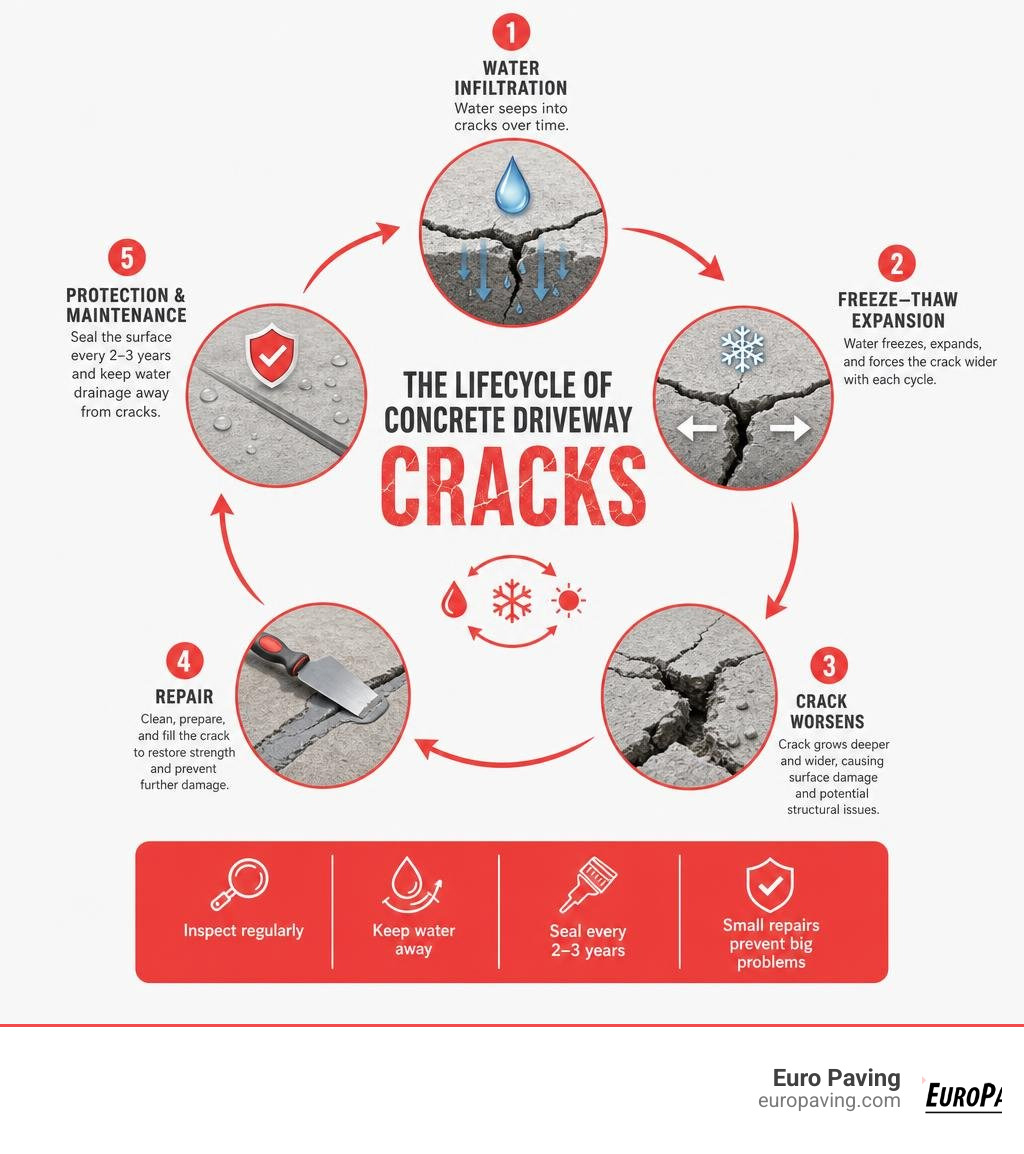
Cracks wider than 1/2 inch, uneven slab edges, or water pooling near the crack are clear signs of structural compromise. According to industry data, extreme temperature changes account for nearly 50% of concrete driveway damage, and poor drainage contributes to roughly 25% more. In Chicago’s climate, freeze-thaw cycles hit hard — water seeps into a crack, freezes, expands, and forces the concrete apart.
Left unaddressed, these issues quickly escalate into costly safety hazards. This guide explains the professional methods used to resolve large concrete cracks and helps you determine when it is time to upgrade to a permanent, crack-resistant solution.
Glossary for fixing large cracks in concrete driveway:
Understanding Large Concrete Driveway Cracks and Their Causes
In professional concrete maintenance, size and depth are the primary indicators of structural health. Hairline cracks (typically under 1/16 inch wide) are usually cosmetic, often caused by the natural shrinkage of concrete as it cures. However, when a crack exceeds 1/4 inch — and especially when it stretches past 1/2 inch — it transitions from a minor blemish into a structural warning sign that requires professional intervention.
Understanding the root causes of these failures is essential for implementing a permanent fix:
- Freeze-Thaw Cycles: This is the undisputed heavyweight champion of concrete damage in the Chicago area. When winter temperatures fluctuate in suburbs like Downers Grove, Arlington Heights, Hinsdale, and Winnetka, water finds its way into any unsealed crack. When that water freezes, it expands by about 9%, acting like a hydraulic wedge that forces the concrete apart.
- Subbase Settlement: Concrete is only as strong as the soil beneath it. If the gravel and sand base was poorly compacted during installation, or if water has washed the subbase away, the heavy concrete slab will sink under its own weight, causing massive, uneven cracks.
- Poor Drainage: If gutters dump water directly onto your driveway, or if the surrounding yard slopes toward the concrete, you are asking for trouble. Poor drainage contributes to roughly 25% of all concrete damage.
- Tree Roots: Nearby oak or maple trees can grow massive root systems that physically lift concrete slabs, creating dramatic, uneven cracks that cannot be resolved with simple surface patches.
Identifying these underlying issues is critical because the correct repair strategy depends entirely on them. Attempting to patch a crack that is actively moving due to tree roots or subbase erosion will only result in the patch cracking again within a single season. To learn more about diagnosing these issues early, check out our guide on How to Repair Driveway Cracks and read the Ultimate Guide To Sealing Large Cracks In Concrete: Tips For Long-Lasting Repairs – ConcreteCaptain.com.
Professional-Grade Tools and Materials for Fixing Large Cracks in Concrete Driveway
To achieve a repair that withstands heavy vehicular traffic and brutal Midwestern weather, professional contractors utilize specialized, commercial-grade materials and equipment. Using standard retail products often leads to premature failure, as they lack the bonding strength and flexibility required for lasting repairs.
Here is a breakdown of the essential tools and materials professional crews use:
- Industrial Foam Backer Rod: A flexible, compressible foam rope. For cracks deeper than 1/2 inch, professionals insert a backer rod to act as a physical floor. This supports the sealant and prevents “three-sided adhesion” (which causes the sealant to tear when the concrete expands and contracts).
- Polymer-Modified Vinyl Concrete Patcher: A high-strength cement compound modified with polymers to offer incredible bonding capabilities. Unlike standard concrete, vinyl patcher can be applied in thin layers and resists shrinking.
- Commercial Polyurethane Sealant: A highly flexible, elastomeric caulk. It can stretch and compress up to 25% to accommodate the seasonal movement of concrete slabs without tearing or losing its seal.
- Structural Epoxy Resin: Ideal for non-moving structural repairs where the goal is to weld the concrete back together. It cures to a strength exceeding that of the concrete itself but lacks the flexibility of polyurethane.
- Heavy-Duty Crack Chasers and Chisels: Industrial routing tools used to clean and widen the crack, creating a clean, mechanical lock for the patching compound.
- High-Powered Vacuum and Air Compressors: Used to remove every speck of dirt, dust, and loose aggregate, ensuring a pristine surface for maximum adhesion.
Concrete Repair Material Comparison
| Material | Best Used For | Flexibility | Curing Time | Durability |
|---|---|---|---|---|
| Vinyl Concrete Patcher | Wide, deep cracks and spalled areas | Low | 24 – 48 Hours | High (Rigid) |
| Polyurethane Sealant | Moving cracks, joints, freeze-thaw zones | Very High | 3 – 5 Days | High (Flexible) |
| Epoxy Resin | Structural, non-moving cracks | Low | 24 Hours | Extremely High |
The Professional Process for Restoring Deep Crevices
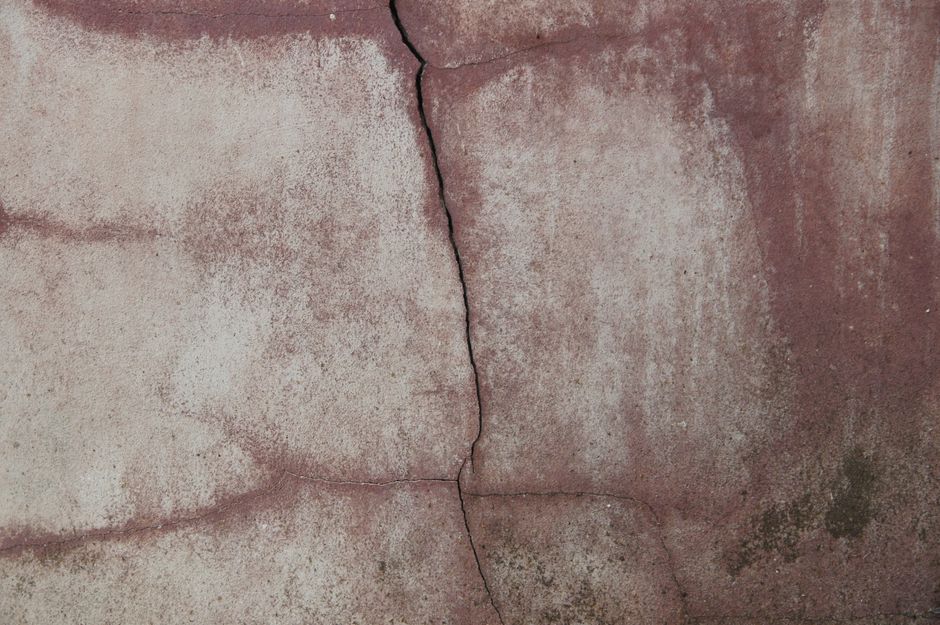
Restoring a damaged concrete driveway requires a systematic, professional approach. If patching material is applied directly to a dirty, crumbling crack, it will peel off under the weight of a vehicle. Professional contractors follow a rigorous multi-step process to ensure a permanent bond. For comparison with standard residential maintenance, you can read more at DIY Driveway Crack Repair in 5 Simple Steps | Family Handyman.
Preparing and Undercutting the Damaged Area
The longevity of any concrete repair is determined by the quality of the preparation work.
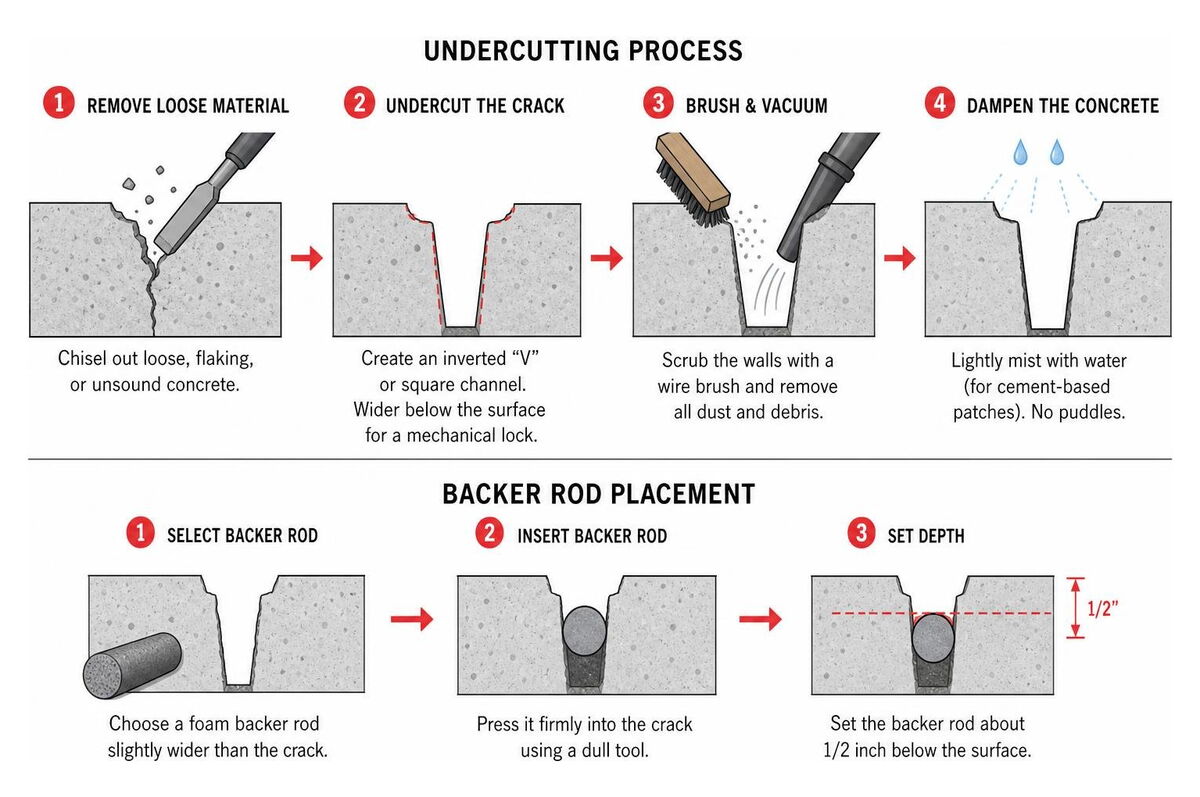
- Clearing Loose Material: Technicians use industrial chisels or mechanical crack-chasers to break away all loose, flaking, or unsound concrete along the edges of the crack.
- Undercutting the Crack: Rather than creating a simple “V” shape, professionals chisel the crack into an inverted “V” or a square channel. This means the crack is slightly wider below the surface than it is at the top. This shape mechanically locks the cured patching material in place, preventing it from popping out during thermal expansion.
- Deep Cleaning: The vertical walls of the crack are scrubbed with stiff wire brushes to dislodge fine dust and stubborn dirt. High-powered shop vacuums or compressed air are then used to blow out all remaining debris.
- Moisture Management: If a cement-based patching material like vinyl concrete patcher is being used, the concrete is lightly misted with water. This prevents the dry concrete from sucking moisture out of the wet patch, which would weaken the bond and cause premature cracking.
Applying Backer Rods and Professional Patching Compounds
Once the crack is prepared, the application process begins:
- Installing the Backer Rod: A foam backer rod, slightly wider than the crack itself, is pressed firmly into the void until it sits approximately 1/2 inch below the surface.
- Mixing and Layering: High-performance vinyl patcher is mixed to precise manufacturer specifications. It is applied in controlled layers (lifts) no thicker than 1/4 inch at a time. Technicians pack the mixture deep into the crack to eliminate hidden air pockets.
- Compensating for Shrinkage: The final layer is overfilled slightly to compensate for the minor shrinkage that naturally occurs as the compound cures.
Finishing and Texturing the Repaired Surface
A high-quality repair should blend seamlessly with the surrounding driveway rather than leaving an unsightly scar.
- Smoothing the Patch: Trowels are used to smooth the patch flush with the surrounding driveway, ensuring clean, level edges.
- Matching the Texture: To match the existing “broom finish” of the driveway, a stiff-bristled broom is run lightly over the wet patch. For older concrete with exposed aggregate, dry play sand may be sprinkled over the surface to camouflage the repair and eliminate any synthetic shine.
- Curing and Traffic Control: The repaired area must be protected from vehicle traffic for at least 72 hours to allow the materials to reach their full structural strength.
When to Choose Professional Restoration Over Temporary Patching
While surface patching can address minor cosmetic issues, it is not a cure-all for structural failures. In many cases, patching is merely a temporary band-aid on a deep, structural wound that requires professional intervention.
Identifying Structural Slab Movement and Subbase Failure
If your driveway exhibits any of the following warning signs, simple patching will not suffice:
- Uneven Slab Heights: If one side of the crack sits more than 1/2 inch higher than the other, the slab has shifted structurally. This is a major tripping hazard and requires professional concrete leveling or replacement.
- Alligator Cracking: A web of interconnected cracks resembling alligator skin indicates complete subbase failure. The concrete is crumbling from the bottom up and must be replaced.
- Sunken Areas: Large depressions where water pools constantly indicate that the supporting soil has washed away, leaving the slab entirely unsupported.
Attempting to patch these issues is a temporary fix; underlying soil movement will quickly tear any new patch apart. To understand what is happening beneath your driveway, read our in-depth guides on Fixing the Foundation of Your Sinking Driveway and Resurface or Replace Your Driveway Today.
Upgrading to Crack-Resistant Brick Paver Driveways
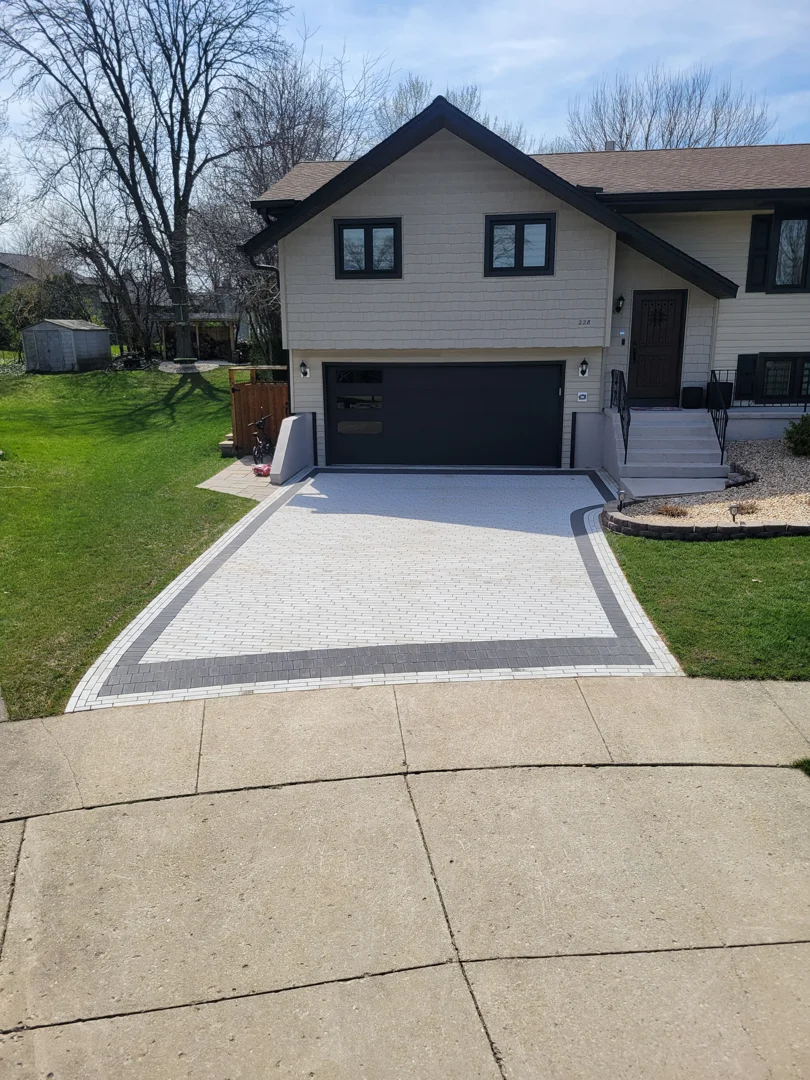
For concrete driveways that are highly cracked, constantly shifting, or over 20 years old, patching is no longer a viable option. The most durable, high-value upgrade is a professional interlocking brick paver driveway.
Unlike rigid poured concrete, which inevitably cracks when the ground moves, a brick paver driveway is a flexible pavement system. It consists of individual, high-strength concrete pavers set on a flexible sand and gravel base. When the ground in Chicago suburbs like Hinsdale, Elmhurst, and Mount Prospect freezes and heaves, the pavers flex individually to accommodate the movement, then settle back into place without cracking.
As a premier Unilock authorized contractor Illinois, Euro Paving specializes in replacing tired, crumbling concrete driveways with stunning, lifetime-guaranteed brick paver systems. Not only do brick pavers completely eliminate the headache of fixing large cracks in concrete driveway surfaces, but they also instantly boost your home’s curb appeal and can increase your property’s resale value by up to 15%.
Whether you require residential driveway installation or commercial parking lot paving, our team designs and installs custom solutions tailored to your property’s specific needs.
Frequently Asked Questions About Driveway Repair
To help you protect your investment, we have compiled some of the most common questions we receive from residential and commercial property owners in the Chicago area. For more tips, check out Don’t Let Your Driveway Crumble With These Maintenance Tips.
What is the best material for fixing large cracks in concrete driveway surfaces?
For cracks wider than 1/2 inch, a high-quality, polymer-modified vinyl concrete patcher is the best choice for rigid, deep repairs. If the crack is subject to minor seasonal movement, a flexible, commercial-grade polyurethane sealant applied over a foam backer rod is highly recommended because it stretches without tearing.
How long does a professional concrete driveway crack repair typically last?
A professional repair using industrial-grade backer rods and polyurethane sealant typically lasts 2 to 5 years. However, if there is ongoing subbase settlement or tree root growth, the repair may fail much sooner. This is why addressing the root cause of the damage through professional restoration or replacement is so important.
Can freeze-thaw cycles in Chicago ruin a fresh concrete patch?
Yes. If water gets behind or beneath a fresh patch and freezes, it will pop the patch right out of the crack. To prevent this, always ensure your repair is completely sealed, and avoid using harsh rock salt (sodium chloride) de-icers during the winter, as they attract moisture and accelerate freeze-thaw damage.
Transform Your Property’s Curb Appeal with Euro Paving
If you are tired of dealing with temporary patches, recurring cracks, and an eyesore of a driveway, let us help you build a permanent, beautiful solution.
At Euro Paving, we have spent nearly 20 years transforming ordinary residential and commercial properties into gorgeous, functional outdoor spaces. From custom backyard hardscaping ideas and cozy fire pit installation near me to complete driveway installations, our team delivers award-winning craftsmanship backed by 5-star Google reviews.
As a certified Unilock authorized contractor Illinois, we offer premium materials backed by lifetime guarantees. We serve clients throughout Chicago and the surrounding suburbs, including Hinsdale, Elmhurst, Mount Prospect, Norridge, Arlington Heights, and Cook & DuPage Counties. With flexible financing options available through the Unilock DO-IT-NOW Program, your dream driveway is closer than you think.
Ready to upgrade? Explore Euro Paving’s brick paving driveways and contact Euro Paving today to schedule your custom 3D design consultation with our experts!