



Professional Restoration for Concrete Driveway Potholes
Repairing concrete driveway potholes is a critical maintenance task for high-value residential and commercial properties. In the Chicago area, a pothole is rarely just a surface issue; it is often a symptom of sub-base failure caused by the region’s intense freeze-thaw cycles. Addressing these failures with professional-grade restoration is essential to protecting your vehicle, your property value, and your curb appeal.
At Euro Paving, our industrial restoration process ensures a permanent fix:
- Structural Assessment: We identify the root cause, whether it’s soil erosion or drainage failure.
- Industrial Edge Squaring: Using concrete saws to create vertical edges for a superior mechanical bond.
- Substrate Preparation: Removing all compromised debris and cleaning with high-pressure systems.
- Advanced Bonding: Applying polymer-modified agents to fuse new material to the existing slab.
- Layered Compaction: Utilizing industrial tampers to eliminate air pockets and prevent future sinking.
- Precision Finishing: Matching the texture and level of your existing driveway for a seamless look.
Ignoring a pothole allows water to expand beneath the surface, breaking the concrete apart from the inside out. With over 500,000 insurance claims filed annually due to pothole damage, the cost of delay far outweighs the cost of professional repair. This guide outlines the technical standards required for a restoration that survives Chicago’s harshest winters.
Why Potholes Form in Concrete Driveways
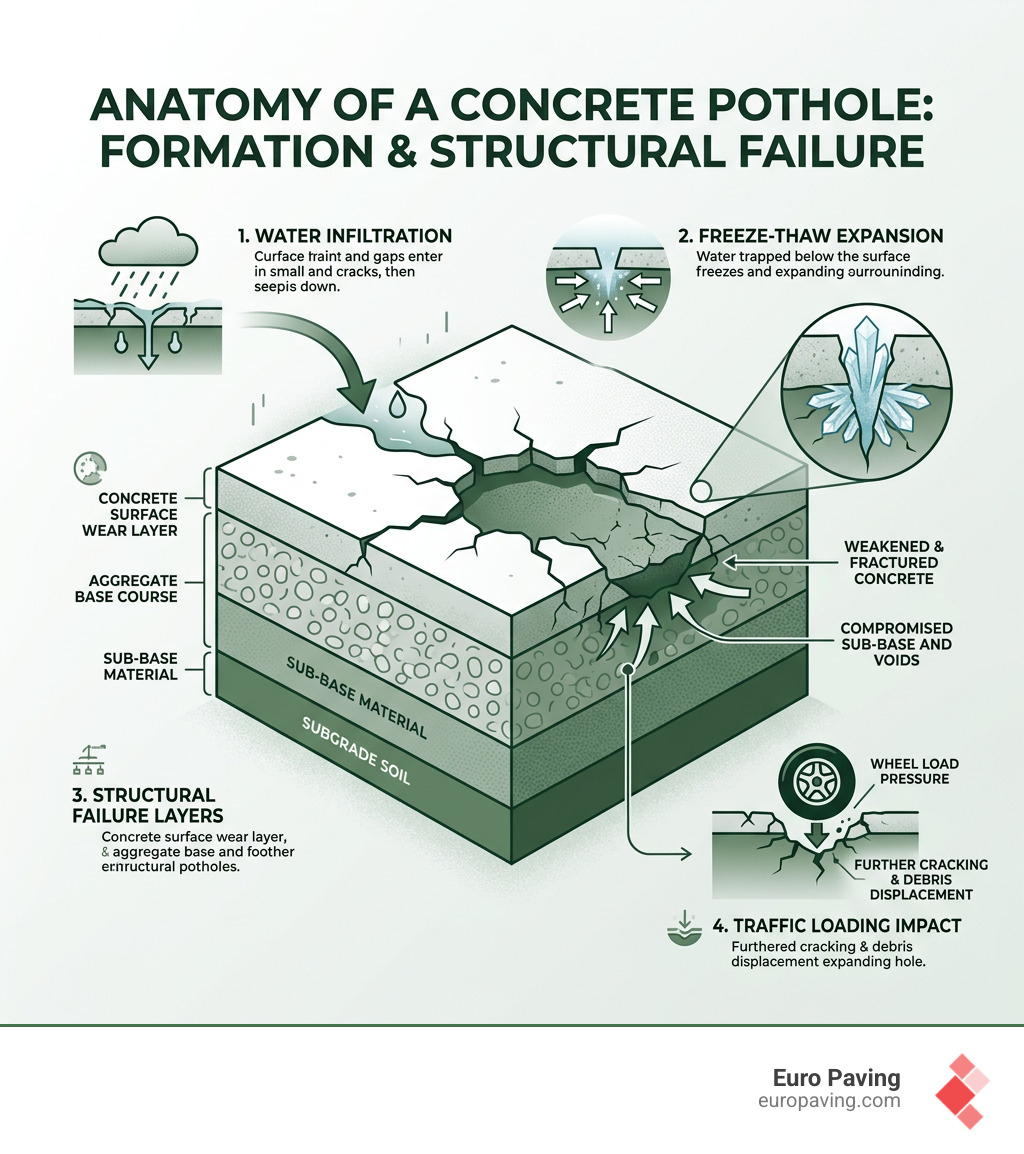
To properly tackle repairing concrete driveway potholes, we first have to understand why they’re showing up in your Arlington Heights or Skokie driveway in the first place. Concrete is incredibly durable, but it isn’t invincible.
The primary culprit is water. When water finds a way into a small crack or a porous section of the concrete, it settles into the base material. In our region, where temperatures fluctuate wildly, this water undergoes a constant cycle of freezing and thawing. Because water expands when it freezes, it exerts immense pressure on the surrounding concrete, eventually causing it to rupture.
Beyond the weather, several other factors contribute to driveway failure:
- Heavy Vehicle Loads: Constant pressure from heavy SUVs or delivery trucks can stress weakened sections of concrete.
- Soil Movement: If the ground beneath the driveway shifts due to poor compaction or erosion, the concrete loses its support and collapses.
- Underlying Drainage Issues: If water pools near your driveway instead of running off, it will eventually find its way underneath the slab.
Understanding these root causes is essential because if you don’t fix the underlying drainage or soil issue, the pothole will simply return next year. For more on the long-term health of your exterior surfaces, check out our guide on driveway-renovation-avoiding-common-problems. You can also find scientific insights on concrete failure to better understand the chemistry of your driveway.
The Professional Approach: Specialized Tools and Materials for Lasting Concrete Pothole Repair
While a quick bag of pre-mix from a big-box store might seem like an easy fix, there is a significant difference between a “patch” and a “restoration.” When we approach a project in places like Barrington or Downers Grove, we use industrial-grade equipment that ensures the repair becomes a permanent part of the driveway.
Professional-Grade Tools
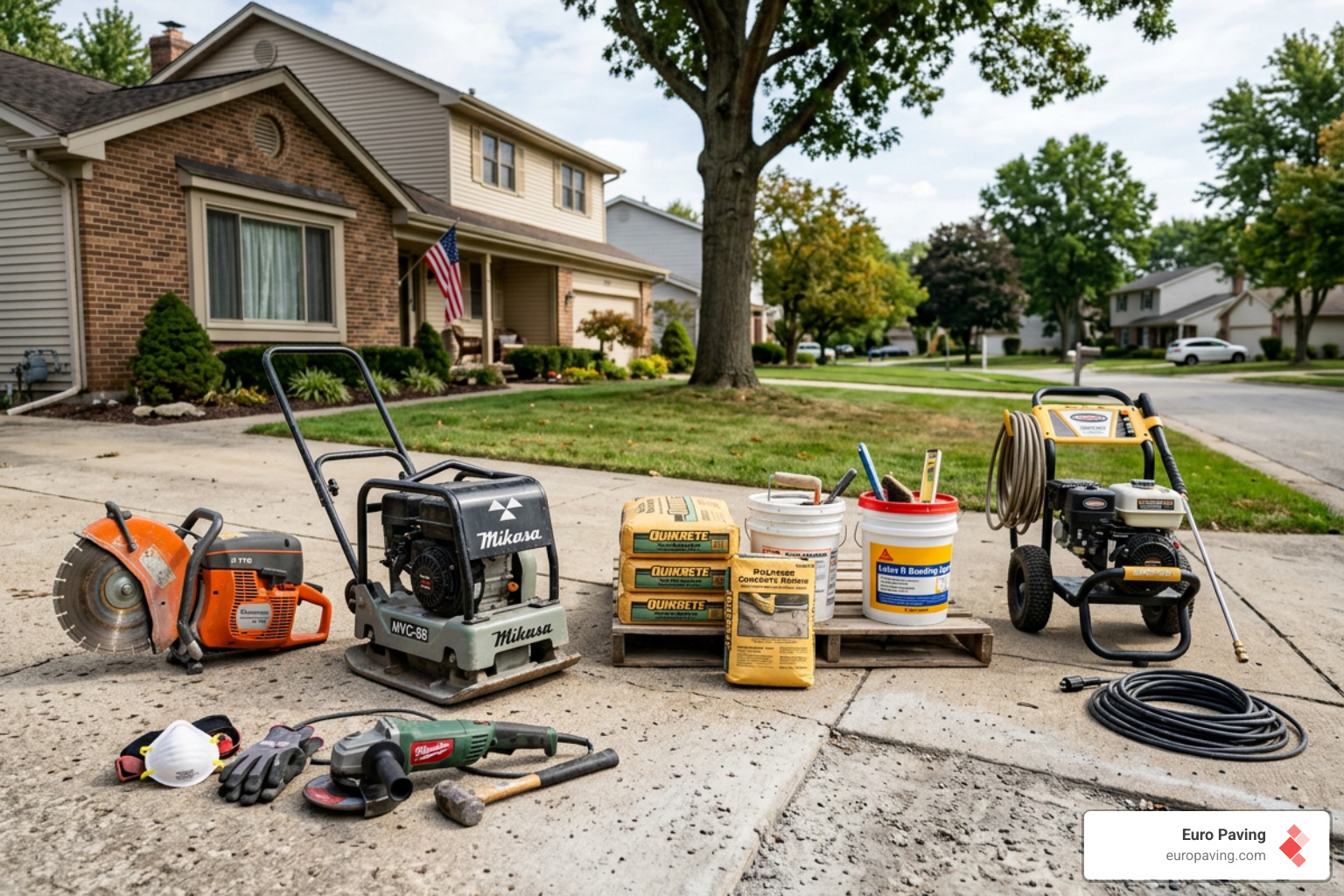
To achieve a finish that lasts decades rather than months, we utilize:
- Concrete Saws and Industrial Grinders: Used to create clean, vertical edges. A “feathered” edge (where the new concrete gets thinner at the edges) is the number one reason DIY repairs fail—they simply chip away.
- Plate Compactors and Heavy-Duty Tampers: Ensuring the base material is rock-solid is the only way to prevent the new patch from sinking.
- High-Pressure Cleaning Systems: Standard garden hoses often leave behind fine dust that prevents bonding. We use high-pressure systems to ensure a pristine surface.
Premium Materials
The material you choose for repairing concrete driveway potholes matters. For deep holes, a standard gravel mix is often necessary, whereas smaller repairs might require a sand mix or a polymer-modified “cold patch.”
- High-Strength Concrete Mixes: We use mixes designed to withstand the heavy traffic of a residential driveway.
- Polymer-Modified Bonding Agents: These act as a “glue” between the old concrete and the new. Without a professional-grade bonding agent, the new patch is just sitting in the hole, waiting for the next freeze to pop it out.
Our Professional Process: Ensuring a Durable and Seamless Concrete Pothole Repair
At Euro Paving, we believe that the secret to a high-performance driveway isn’t just the pour—it’s the engineering. Whether we are performing driveway-paving or a targeted structural repair, we follow a rigorous protocol to ensure a seamless result.
Professional Surface Preparation: The Foundation of Structural Integrity
The most common failure in repairing concrete driveway potholes is inadequate preparation. Our team utilizes industrial-grade techniques to ensure the patch becomes a permanent part of the slab.
- Precision Squaring: We use industrial saws to make the edges of the pothole vertical or “undercut.” This creates a mechanical lock that prevents the patch from popping out during temperature shifts.
- Sound Substrate Inspection: We excavate all loose, crumbling concrete until we reach a solid, “sound” substrate capable of supporting heavy vehicle loads.
- Moisture Management: We carefully condition the substrate to ensure it is damp but free of standing water, preventing the old concrete from wicking moisture away from the new mix and causing brittleness.
For a deeper dive into the technical side of this, you can read this detailed guide on masonry repair.
Expert Filling and Finishing Techniques
Once the site is prepped and the bonding agent is applied, our technicians begin the restoration:
- Layered Compaction: For deep potholes, we apply material in controlled layers, tamping each firmly to ensure maximum density.
- Screeding and Compression: We use precision straightedges to level the concrete, overfilling slightly before compressing it to match the surrounding driveway’s density.
- Broom Texturing: To ensure the repair is safe and aesthetically consistent, we apply a professional broom finish, providing essential traction for Chicago winters.
Curing and Long-Term Maintenance Strategies for Professional Repairs
The restoration process continues long after the trowel is put away. The “curing” phase is where the concrete achieves its industrial-rated strength.
Managed Curing Process
Concrete gains strength through a chemical reaction called hydration. If water evaporates too quickly, the repair will fail.
- Hydration Control: Our team manages the curing environment, often utilizing moisture-retaining covers to ensure a slow, high-strength cure.
- Traffic Protocols: To protect the structural integrity of the new patch, we provide specific timelines for when the surface can return to full vehicle service, typically 24 to 48 hours depending on the specific high-strength mix used.
Long-Term Prevention
Once you’ve invested in repairing concrete driveway potholes, protecting that investment is key.
- Professional Sealing: We recommend professional sealing every 2–3 years to prevent water infiltration into the concrete pores.
- Drainage Engineering: If your property is prone to potholes, our experts can evaluate your grading to ensure water flows away from your concrete surfaces.
If you are looking for local experts to help maintain your property, searching for driveway-paving-near-me will lead you to our team of specialists ready to serve the Northbrook and Lake Forest areas.
When to Replace Your Driveway Instead of Patching
There comes a point where repairing concrete driveway potholes is like putting a band-aid on a broken leg. If the structural integrity of the driveway is gone, patching is a waste of money.
Signs that it’s time for a full replacement:
- Structural Heaving: If sections of the driveway are physically lifting or sinking significantly, the base has failed.
- Widespread Cracking: If you have “alligator cracking” (many small, interconnected cracks) or jagged cracks wider than 1 inch, the slab is reaching the end of its life.
- Age: Most concrete driveways last about 20–25 years. If your driveway is older than that and crumbling, a new installation is more cost-effective.
- Extensive Scaling: When the top layer of the entire driveway starts to peel off (spalling), patching won’t fix the aesthetic or structural decline.
At this stage, many of our clients in Hinsdale and Winnetka consider upgrading to brick pavers. You might wonder, is-a-brick-driveway-cheaper-than-concrete? While the initial investment may be higher, the long-term maintenance and ability to replace individual bricks make it a favorite for high-end homes.
Frequently Asked Questions about Concrete Driveway Pothole Solutions
The Value of Professional Restoration vs. Temporary Fixes
While retail “patch” products exist, they lack the industrial bonding agents and compaction requirements necessary for long-term durability. Professional restoration utilizes specialized saws, high-PSI concrete mixes, and polymer bonding agents that a standard DIY approach cannot replicate. For property owners in Mount Prospect or Glenview, hiring an expert ensures the repair survives the extreme soil movement common in the Chicago suburbs.
How Long Will a Professionally Applied Concrete Patch Last?
A professional restoration using the “undercut” method and industrial-grade materials can last for many years, often matching the remaining lifespan of the original driveway. Longevity is maximized through proper sealing and ensuring the underlying drainage issues are addressed by a qualified contractor.
Conclusion
Repairing concrete driveway potholes doesn’t have to be a source of stress. Whether you are dealing with a small nuisance or a massive crater that threatens your car’s suspension, addressing the issue quickly is the key to saving your driveway.
In the Chicago area, from the busy streets of Norridge to the quiet lanes of Highland Park, we understand the unique challenges our weather poses to your property. At Euro Paving, we specialize in more than just quick fixes. We are dedicated to transforming your outdoor spaces into durable, beautiful areas that stand the test of time.
As a Unilock authorized contractor, we bring a level of craftsmanship and quality that is unmatched in the industry. Whether you need a professional concrete repair, a complete driveway replacement, or are ready to upgrade to a stunning new brick patio, we are here to help. We even offer lifetime material guarantees on our brick paving projects to ensure your peace of mind.
Don’t let a pothole ruin your home’s curb appeal or damage your vehicle. Contact Euro Paving for professional concrete driveway repair, brick paving, or full driveway replacement solutions today. Let us help you fix it right the first time!