



Your Asphalt Driveway Edge Is Failing — Here’s What to Do
To fix asphalt driveway edge damage, follow these core steps:
- Assess the damage — look for longitudinal cracks, crumbling corners, and standing water
- Remove loose material — chisel away unstable asphalt down to solid pavement
- Prepare the sub-base — compact a gravel or crushed road base layer
- Fill and compact — apply cold patch or hot-mix asphalt in 1-inch lifts
- Add edge restraint — install brick, Belgian block, or concrete curbing to lock the edge
- Seal the repair — apply asphalt sealant to protect against moisture and UV damage
That ragged, crumbling edge along your driveway isn’t just an eyesore. It’s a structural warning sign.
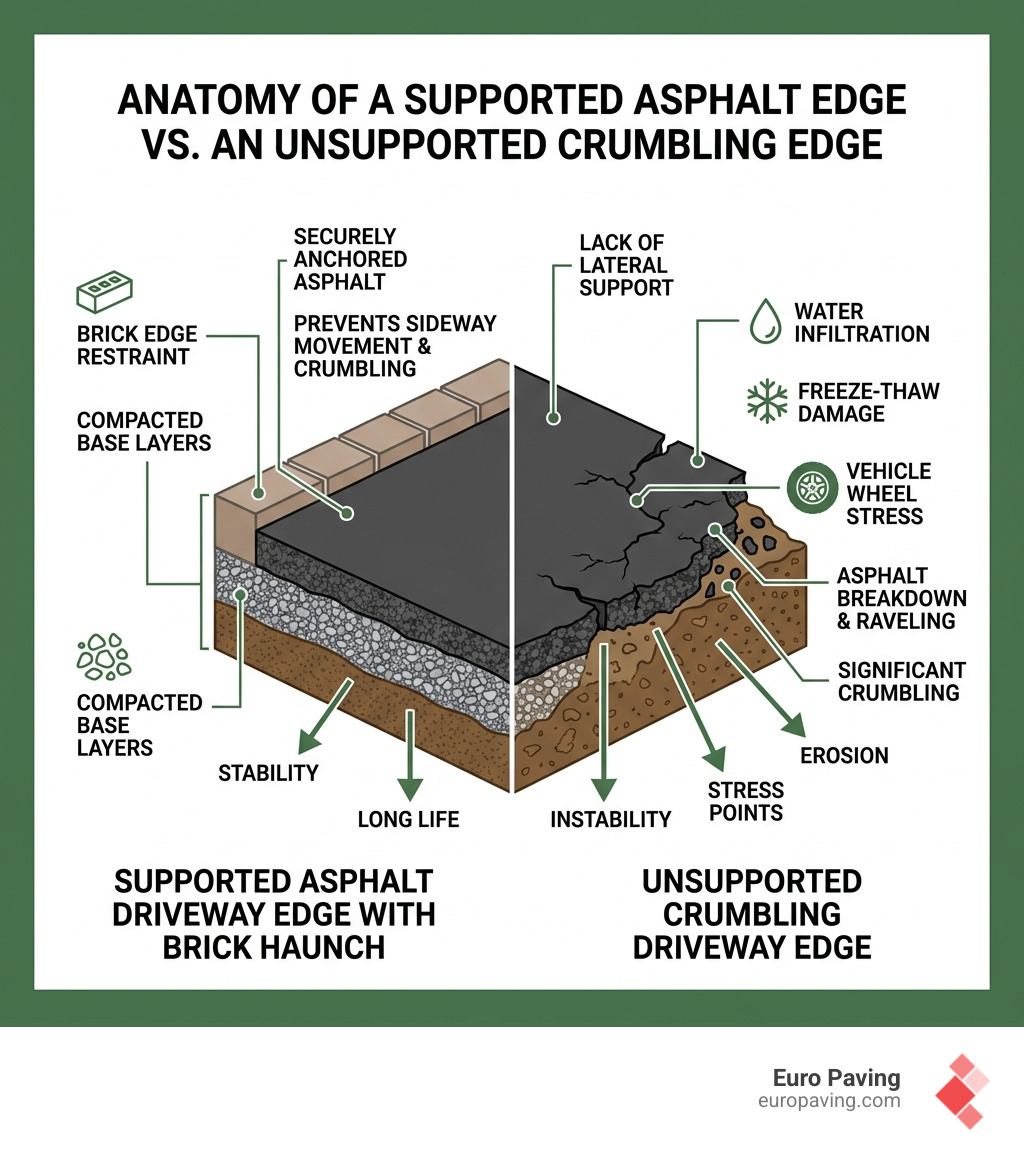
Asphalt edges are the thinnest and least supported part of your driveway. Without proper lateral support, they take the first hit from vehicle tires, water infiltration, and freeze-thaw cycles — and they fail faster than any other part of the surface.
Left untreated, a crumbling edge doesn’t stay at the edge. The damage works its way inward, weakening the base and turning a simple repair into a costly resurfacing or full replacement job. With proper maintenance, an asphalt driveway can last 15 to 20 years — but neglected edges can cut that lifespan significantly short.
For homeowners in the Chicago area — where clay soil, harsh winters, and repeated freeze-thaw cycles put driveways under enormous stress — catching edge deterioration early makes a real difference in long-term cost and curb appeal.
Fix asphalt driveway edge terms to remember:
Identifying Why Your Driveway Edges Are Failing
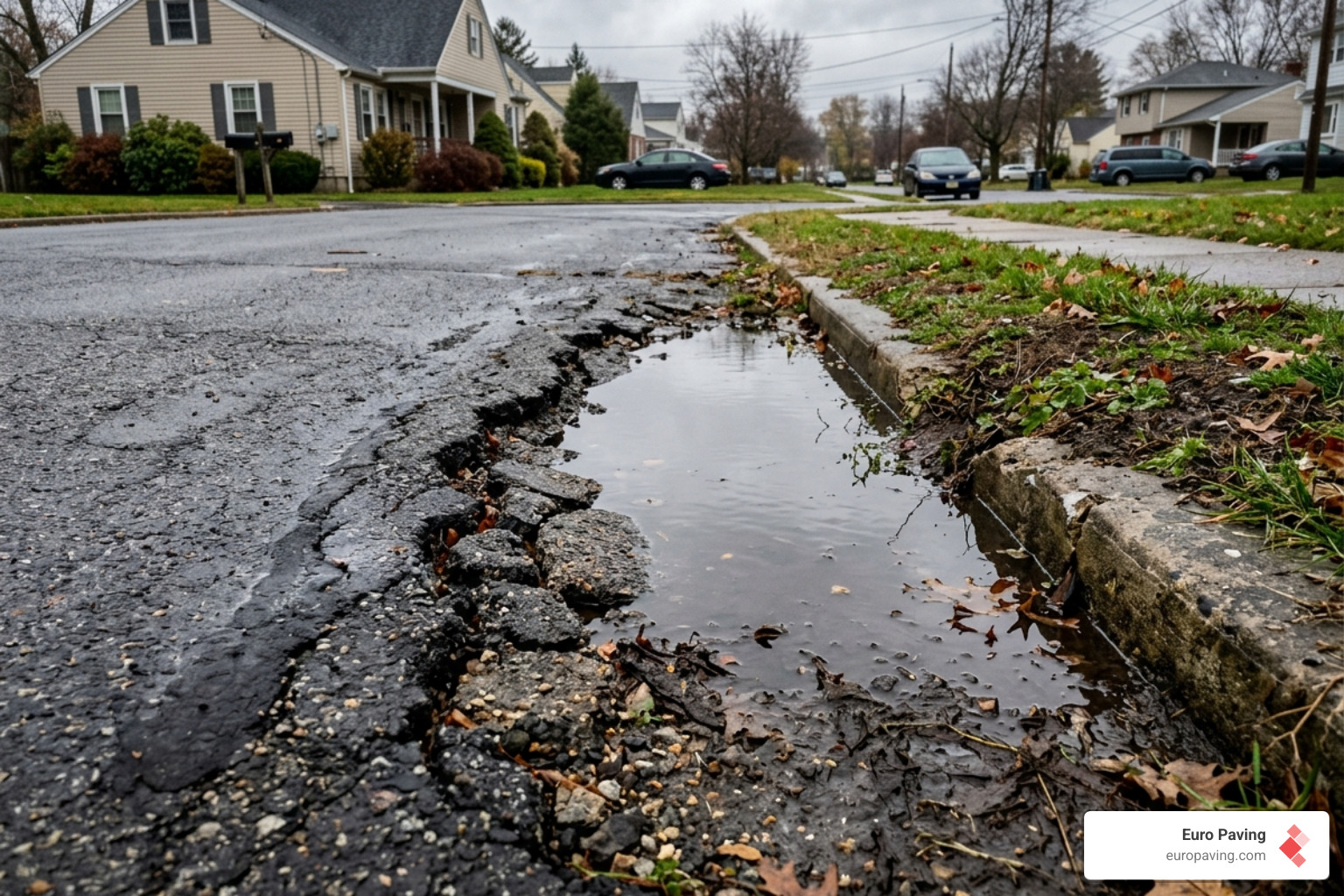
When we look at a driveway in Arlington Heights or Skokie, the first place we check for trouble is the margin. Why? Because the edge is where the “flexible” nature of asphalt meets the “unstable” nature of the surrounding soil. If your driveway wasn’t installed with a proper 30-degree bevel (often called a “safety edge”) or a structural border, the weight of a car driving just an inch too far to the right can cause the asphalt to compress and displace.
Several factors accelerate this decay:
- Water Infiltration: This is the silent killer. When water pools at the edge, it seeps underneath the asphalt, washing away the fine particles in your gravel base. This creates a hollow pocket. When a car drives over that pocket, the asphalt snaps.
- Chicago Clay Soil: Our local soil is notorious for holding moisture. This leads to excessive “frost heave” when the ground freezes.
- Oxidation: UV rays from the sun bake the oils out of the asphalt, making it brittle. Brittle asphalt can’t flex; it just crumbles.
- Vegetation Intrusion: Roots from weeds and grass act like slow-motion crowbars, prying the asphalt apart from the bottom up.
Understanding how to fix your crumbling driveway edges before they disappear starts with recognizing these environmental pressures.
Common Signs of Edge Deterioration
You don’t need to be a civil engineer to spot trouble. Keep an eye out for these red flags:
- Alligator Cracking: A series of interconnected cracks that look like the skin of a reptile. This is a clear sign of base failure.
- Raveling: This is when the “stones” in the asphalt start to come loose, leaving a gritty, gravel-like texture on the surface.
- Longitudinal Cracks: These are cracks that run parallel to the edge of the driveway. They often indicate that the edge is spreading outward because it lacks lateral support.
If you catch these early, you can often repair driveway cracks before they require a full-scale excavation.
The Impact of Illinois Winters on Pavement
In the Chicago area, we experience between 30 and 50 freeze-thaw cycles every single season. This is devastating for asphalt. When water enters a crack and freezes, it expands by roughly 9%. This expansion exerts incredible pressure on the surrounding pavement.
In Cook County and DuPage County, the combination of road salt and these temperature fluctuations means your driveway is constantly moving. Salt can also lead to “pitting” and white residue, which further weakens the surface. To protect your investment, you must don’t let your driveway crumble with these maintenance tips such as early fall sealcoating.
How to Fix Asphalt Driveway Edge Issues with Precision
When it’s time to actually fix asphalt driveway edge damage, a “slap-and-dash” approach with a bag of cheap cold patch won’t last a single winter. Professional restoration requires a focus on the foundation.
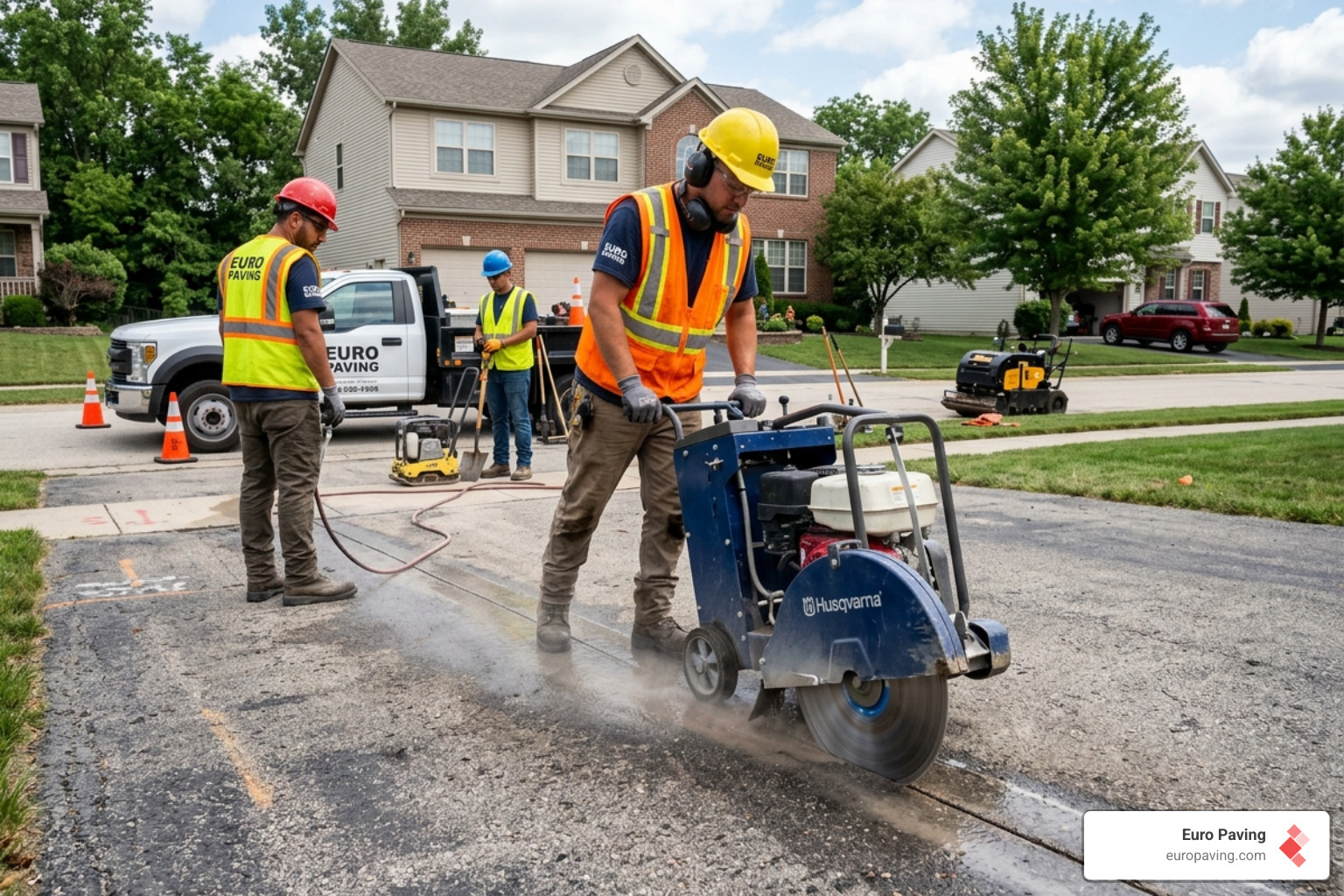
The most critical step is creating a clean, vertical edge. If you try to patch over a rounded, crumbling slope, the new material will have nothing to bond to. We use industrial asphalt saws with diamond blades to cut back into the “sound” pavement. This creates a strong wall that the new asphalt can “lock” against.
Professional Equipment for Lasting Edge Restoration
While a homeowner might try to use a hammer and chisel, we utilize heavy-duty equipment to ensure the repair is permanent:
- Industrial Saws: To achieve perfectly straight, deep lines.
- Vibratory Plate Compactors: A hand tamper only provides surface compaction. To prevent future sinking, the sub-base and the asphalt lifts must be compacted with thousands of pounds of force.
- Mechanical Locking: By digging 4 inches deeper than the repair and backfilling with 3/4-inch minus road base, we create a foundation that won’t shift.
Avoiding these driveway renovation: avoiding common problems is what separates a one-season fix from a decade-long solution.
The Euro Paving Process for Edge Restoration
Our process is designed for the punishing Illinois climate:
- Marking Precision Lines: We use chalk lines to ensure the new edge is straight and aesthetically pleasing.
- Squaring Edges: We remove all loose debris and ensure the sides of the “trench” are vertical.
- Sub-base Preparation: We level the base with a 1-2% slope to ensure water runs away from the driveway, not under it.
- Applying Lifts: We apply asphalt in 1-inch increments, compacting each layer individually.
Even if you are looking for how to patch your tarmac driveway without a professional crew, following these structural steps is non-negotiable for success.
Enhancing Durability with Decorative Paver Edging
The best way to fix asphalt driveway edge problems permanently is to stop relying on the asphalt to support itself. By installing a decorative paver or stone border, you provide the lateral restraint the asphalt needs to stay in place.
At Europa Paving, we specialize in using high-quality Unilock materials to create borders that are as tough as they are beautiful. A Belgian block) or brick edge acts as a “haunch,” transferring the weight of vehicles into the ground rather than letting the asphalt spread and crack.
Benefits of Brick and Stone Borders
- Soil Stabilization: Prevents the surrounding lawn from eroding into the driveway.
- Moisture Barrier: A concrete-set border keeps water from seeping into the asphalt’s sub-base.
- Increased ROI: A paver-edged driveway is a high-end feature that significantly boosts curb appeal in neighborhoods like Hinsdale and Lake Forest.
- Mower Strips: These borders provide a flat surface for lawnmowers, preventing you from accidentally “scalping” your asphalt edges with mower blades.
Explore these driveway edging brick ideas for a polished look to see how form meets function.
Installation Standards for Long-Lasting Borders
To ensure these borders don’t shift during a Norridge winter, we adhere to strict standards:
- Excavation: We dig deep enough to accommodate a 4-6 inch compacted gravel base.
- Base Material: We use crushed granite or road base, which binds better than sand.
- Jointing Sand: We use polymeric sand to lock pavers together and prevent weed growth.
- Lifetime Guarantee: As Unilock authorized contractors, we provide materials that come with a lifetime guarantee against splitting or cracking.
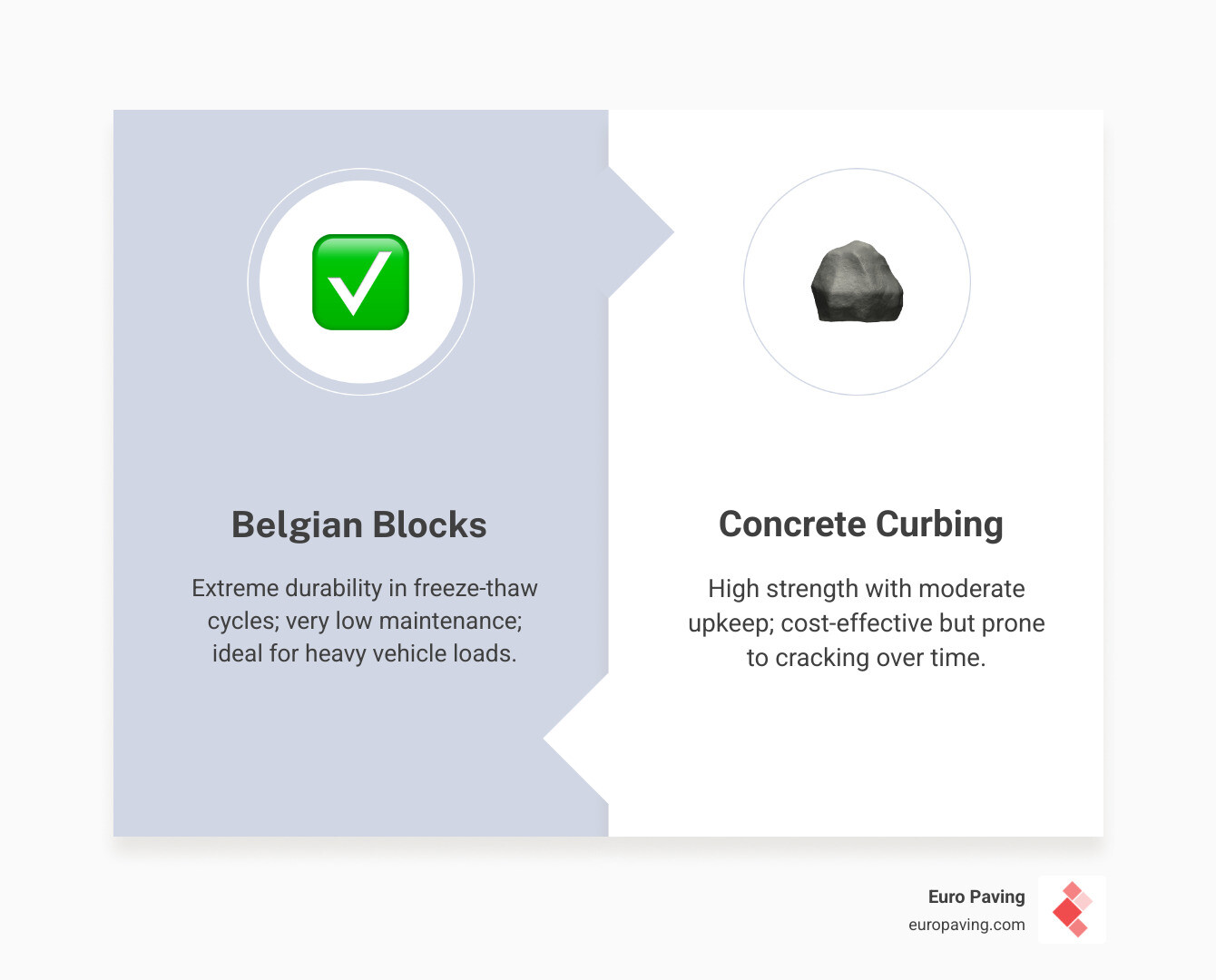
| Material | Durability | Maintenance | Est. Cost (per sq ft) |
|---|---|---|---|
| Belgian Blocks | Extreme | Very Low | $10 – $20 |
| Unilock Pavers | High | Low | $6 – $12 |
| Concrete Curbing | High | Moderate | $5 – $10 |
| Plastic/Metal | Low | High | $2 – $4 |
Professional Restoration vs. DIY Patching
Can you fix asphalt driveway edge issues yourself? For a small, 2-foot section of minor crumbling, a high-quality cold patch like Road Rescue (which covers 7 sq. ft. at 1-inch depth) can be a temporary solution. However, if you see “alligatoring” or if the edge has completely fallen away for several feet, you likely have a base failure.
DIY patches often fail because they lack the heat and compaction force required to create a “permanent” bond. Professional hot-mix asphalt is applied at over 300°F, allowing it to melt into the existing surface for a seamless, waterproof seal.
When to Call a Professional Contractor
You should reach out to an expert if:
- The cracks are wider than 1/4 inch.
- The driveway is more than 20 years old (at this point, the asphalt is likely too brittle to hold a patch).
- You notice standing water that won’t drain.
- You want to integrate complex 3D designs or custom brickwork.
For those in the Chicago suburbs, our asphalt paving services offer the structural reinforcement necessary to survive the next decade of winters.
Long-Term Value of Professional Edging
Hiring a professional might cost more upfront — with professional repairs typically ranging from $300 to $1,500 — but it prevents the need for a full driveway replacement, which can cost five times that amount. Professional-grade materials and mechanical compaction ensure the repair lasts for years, not just until the next spring thaw.
Frequently Asked Questions about Driveway Edging
How long do professional asphalt edge repairs typically last?
When done correctly with a squared edge and proper compaction, a repair can last 5 to 10 years. However, the overall lifespan of your driveway (15-20 years) depends heavily on sealcoating every 2-3 years to prevent the new patch from oxidizing at a different rate than the old pavement.
Can I install paver edging on an existing asphalt driveway?
Absolutely. In fact, this is one of our most popular services. We trim back the ragged asphalt to a clean line, excavate a trench along the side, and install the pavers on a reinforced base. This “retrofits” your driveway with the lateral support it was missing.
What is the best material for driveway edging in Chicago?
In the Illinois climate, Belgian blocks) and Unilock pavers are the gold standard. Unlike poured concrete, which can crack if the ground shifts, individual pavers allow for slight movement during freeze-thaw cycles without losing their structural integrity.
Conclusion
Don’t let a “small” crumbling edge turn into a complete driveway failure. Whether you are in Elmhurst, Norridge, Mount Prospect, or Hinsdale, the key to a long-lasting driveway is protecting the margins. At Europa Paving, we don’t just patch holes; we transform driveways into durable, high-end entrances using custom brickwork and professional-grade asphalt restoration techniques.
Ready to secure your driveway’s future and boost your home’s curb appeal? Contact Euro Paving for your next brick or driveway project and let our experts design a solution that stands up to the toughest Chicago winters.