



Your Driveway and Walkway Set the Tone for Your Entire Home
Driveway and walkway contractors are professionals who design, install, repair, and maintain paved surfaces around your home — from the curb to your front door and beyond.
If you’re ready to hire, here’s a quick summary of what to look for:
- Licensed and insured — always verify before signing anything
- Local Chicago-area experience — knowledge of freeze-thaw cycles, soil conditions, and municipal codes matters
- Material expertise — brick pavers, concrete, and asphalt all have different strengths
- Written bids with timelines — no surprises on cost or schedule
- Warranty coverage — look for lifetime material guarantees and multi-year labor warranties
- Portfolio of completed projects — clean edges and crack-free surfaces are good signs
Your driveway is the first thing people see. Before a guest rings the doorbell, before a potential buyer steps inside — they’ve already formed an impression based on what’s outside, which is a key factor in your home’s curb appeal.
A cracked, faded, or uneven driveway signals neglect. A clean, well-designed paver driveway signals pride of ownership.
And it’s not just about looks. Properly installed driveways and walkways improve drainage, reduce erosion, and make your outdoor space actually usable — especially in the Chicago suburbs where harsh winters can destroy inferior paving in just a few seasons.
The challenge? Finding the right contractor is harder than it looks. The market is crowded, pricing varies widely, and not every crew has the expertise to handle the specific demands of Chicagoland’s soil and climate.
This guide walks you through everything you need to know — from materials and costs to what separates a great contractor from a regrettable one.
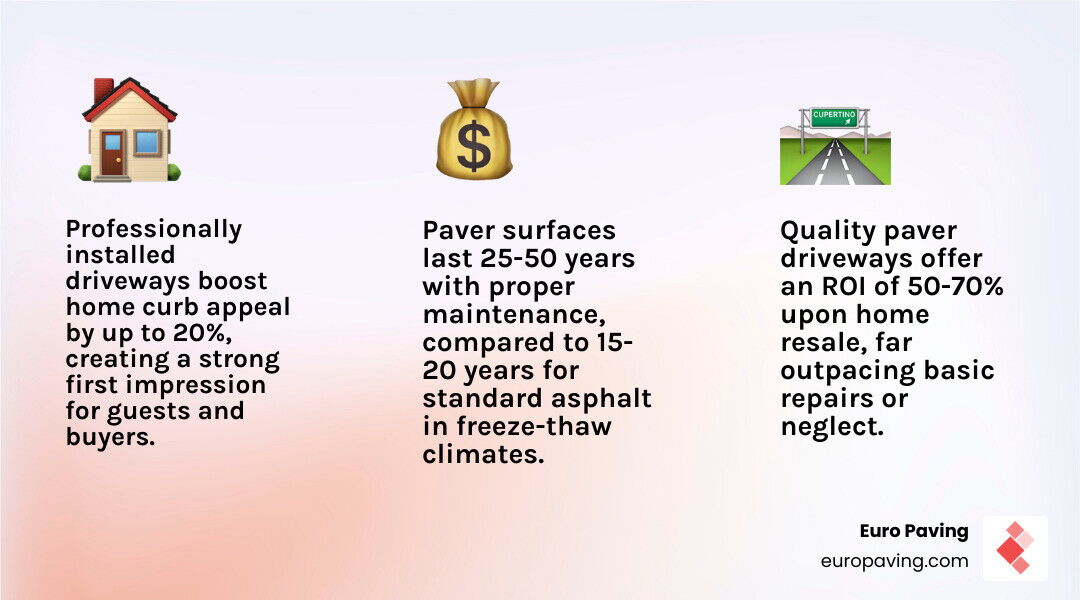
Simple driveway and walkway contractors word guide:
Essential Services Offered by Driveway and Walkway Contractors
When you begin your search for the right team, you’ll find that professional driveway and walkway contractors offer much more than just pouring material onto the ground. A comprehensive service package ensures that your investment stands the test of time, especially in the variable climate of May 2026.
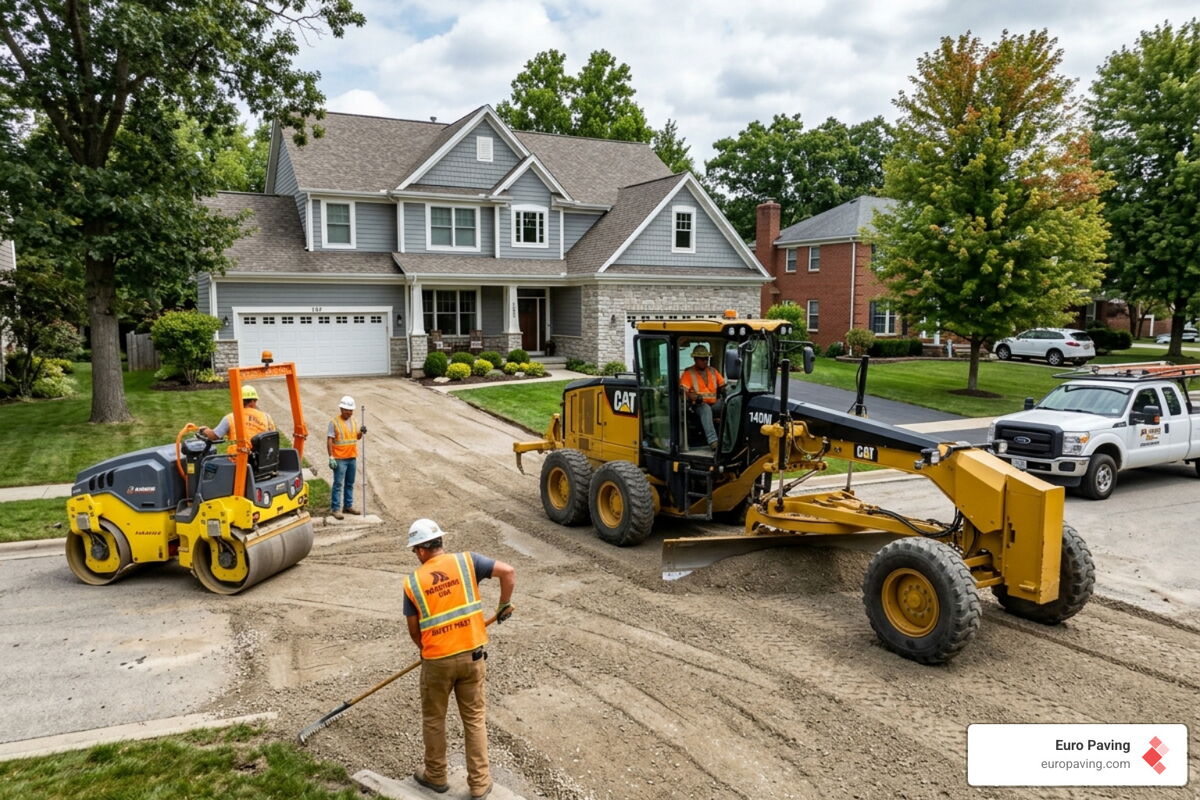
Modern paving relies on high-grade equipment and technical precision. Most reputable contractors provide a suite of services including:
- Asphalt Paving and Resurfacing: From new installations to overlays that make old surfaces look brand new.
- Concrete Slab Installation: Providing a solid, traditional foundation for driveways and patios.
- Comprehensive Maintenance: This includes sealcoating every 1-3 years to protect against the elements, as well as professional crack filling to prevent water infiltration.
- 3D Design Planning: We believe you should see your project before the first shovel hits the ground. 3D design planning allows for a virtual walkthrough of your new landscape.
- Site Preparation and Engineering: This is the “invisible” work that matters most. It involves excavation, grading, and drainage engineering to ensure water flows away from your home’s foundation.
Specialized Solutions from Driveway and Walkway Contractors
Beyond standard paving, specialized solutions address specific environmental and aesthetic needs. For instance, permeable pavers are becoming increasingly popular in the Chicago area to manage stormwater runoff and prevent erosion.
We also specialize in sidewalk paving and decorative curbing that defines the edges of your property. For those with larger needs, such as commercial parking lots or expansive residential entryways, reinforced foundations are essential to handle the weight of heavy vehicles or RVs.
Custom Masonry and Hardscape Integration
A great contractor doesn’t stop at the driveway edge. To truly transform a backyard into a relaxing retreat, we integrate brick paving driveways with other hardscape elements. This includes:
- Retaining Walls: Essential for sloped lots in areas like Barrington or Lake Forest to prevent soil shifting.
- Outdoor Kitchens and Fire Pits: Transforming a simple path into a family-friendly destination.
- Natural Stone Steps: Using flagstone or travertine to create elegant transitions between different elevations in your yard.
Material Selection: Comparing Durability and Aesthetics
Choosing the right material is a balance of budget, maintenance, and style. In our experience serving the Chicago IL area, the choice often comes down to how a material handles the local freeze-thaw cycles.
| Material | Lifespan | Maintenance | Best Feature |
|---|---|---|---|
| Asphalt | 12-20 Years | High (Seal every 2-3 yrs) | Economical & Flexible |
| Concrete | 20+ Years | Medium (Seal every 1-3 yrs) | Rigid & Durable |
| Brick Pavers | 25-30+ Years | Low (Occasional joint sand) | Repairability & Beauty |
| Natural Stone | 50+ Years | Low | High-End Elegance |
Pros and Cons of Modern Paving Materials
Asphalt is a popular choice due to its flexibility; it can expand and contract slightly without cracking immediately. However, it requires frequent sealcoating to reach its maximum 30-year potential. Concrete offers a clean look and high durability but can be prone to “heaving” if the sub-base isn’t perfectly engineered.
For many homeowners, brick paving is the gold standard. Unlike monolithic slabs of concrete or asphalt, individual pavers can be removed and replaced if they become stained or damaged. This “repairability” makes them a long-term cost-effective choice. Furthermore, using Unilock certified materials ensures you are getting high-density products designed to resist salt damage and fading.
Natural stones like travertine or flagstone offer unmatched elegance, but they require a skilled hand to install correctly to ensure slip resistance and proper leveling.
The Professional Installation Process: From Excavation to Completion
The longevity of your driveway is 90% dependent on what you can’t see. A professional installation follows a rigorous sequence to ensure stability.
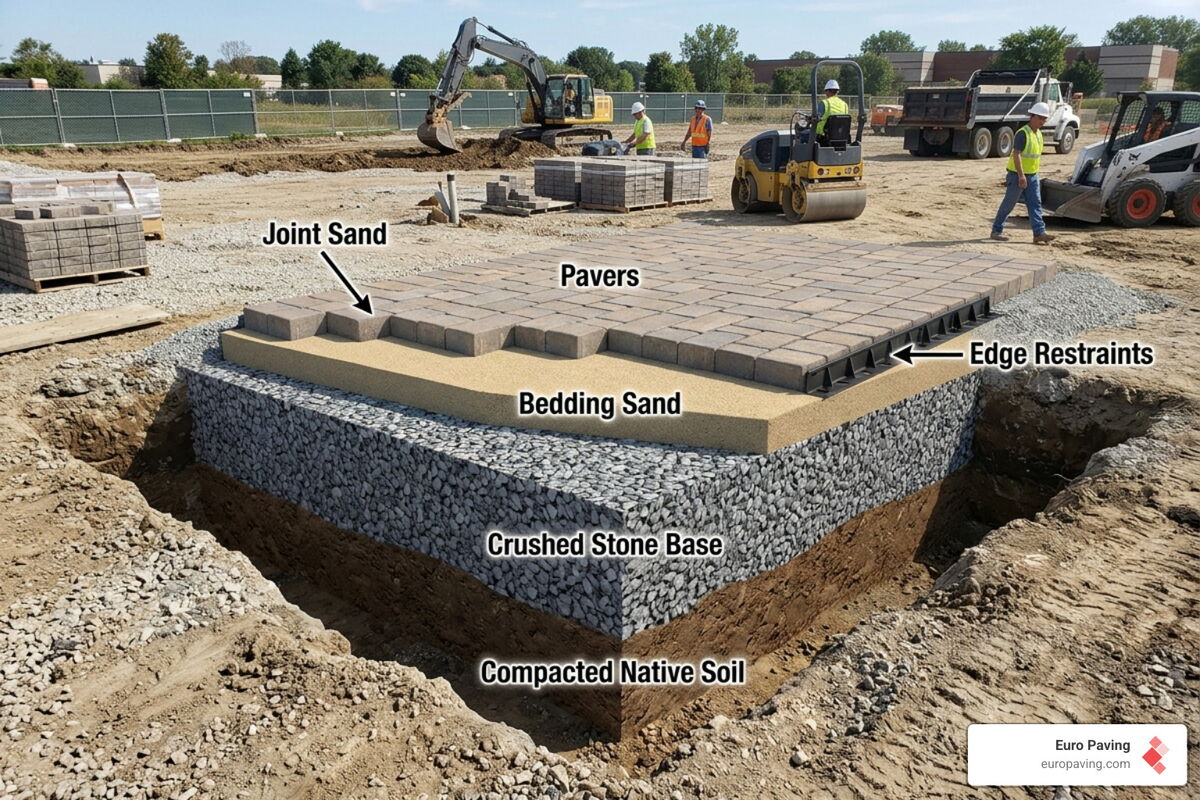
- Excavation and Grading: We remove the old surface and excavate the soil. Proper grading is critical to ensure water doesn’t pool on the surface.
- Sub-grade Compaction: The native soil is compacted to create a firm “floor.”
- Crushed Stone Base: A layer of crushed stone, typically 4 to 8 inches deep depending on the soil type (clay vs. sand), is laid and compacted.
- Edge Restraints: These prevent the pavers or material from shifting outward over time.
- Bedding Layer and Joint Sand: For pavers, a thin layer of sand is used to set the stones, followed by polymeric joint sand that hardens to keep weeds out.
- Mechanical Compaction: The final surface is compacted to “lock” everything into place.
- Permits and Compliance: We handle the heavy lifting regarding municipal codes in Chicago, Arlington Heights, and Skokie to ensure your project meets all local regulations.
Key Factors Influencing Your Project Investment
When you receive a bid from driveway and walkway contractors, several variables affect the final number.
- Square Footage: Naturally, the larger the area, the higher the material and labor costs.
- Material Choice: Asphalt typically costs $3-$5 per square foot, while high-end pavers or natural stone will be a higher initial investment.
- Drainage Complexity: If your yard has significant water issues, we may need to install specialized drainage systems or French drains.
- Soil Stabilization: In some parts of the Chicago area, the soil is particularly soft, requiring extra base material or geotextile fabric for reinforcement.
- Warranty Value: A cheaper contractor might offer no guarantee. We focus on providing lifetime material guarantees through our partnership with premium suppliers, which adds significant long-term value to your property.
How to Evaluate Driveway and Walkway Contractors in Chicago
Not all contractors are created equal. In the “Contractor Quest,” your goal is to find a team that combines technical skill with professional communication.
Start by verifying the basics: Are they licensed, bonded, and insured in your specific municipality? A contractor who is expert in Downers Grove or Arlington Heights will be familiar with the exact permit requirements of those villages.
Questions to ask during your portfolio review:
- Do the edges of their previous projects look clean and straight?
- Can they provide references for projects completed 5+ years ago? (This shows how their work stands up to Chicago winters).
- Do they provide a detailed, written bid, or just a number on a napkin?
- What are their communication standards? Do they have a dedicated project manager?
Local Expertise Matters
Hiring local means hiring someone who understands that a driveway in Winnetka or Hinsdale faces different challenges than one in a warmer climate. Whether it’s navigating Cook County standards or DuPage County permits, local experience prevents delays and legal headaches. We have spent years perfecting our craft in Northbrook, Highland Park, and Lake Forest, ensuring every installation is built for the local environment.
Maximizing Longevity: Maintenance and Regional Considerations
The Chicago freeze-thaw cycle is the enemy of all pavement. When water seeps into cracks and freezes, it expands, turning small fissures into major potholes.
To protect your investment:
- Seal Regularly: For concrete and asphalt, sealing every 1-3 years can extend the lifespan significantly.
- Avoid Harsh Salts: Use calcium chloride instead of rock salt (sodium chloride) on new concrete and pavers to prevent surface pitting.
- Power Washing and Weed Prevention: For paver systems, occasional power washing and refreshing the polymeric sand will keep the surface looking new and prevent weed growth.
- Re-leveling: If a section of your brick paving in Skokie or Norridge shifts due to tree roots or extreme weather, a professional can re-level just that section without replacing the whole driveway.
Frequently Asked Questions about Driveway Paving
How long should a professional paver driveway last?
With a properly installed 4-8 inch crushed stone base and high-quality materials, a paver driveway should last at least 25-30 years. Many of our installations in Barrington and Hillside are still in perfect condition decades later.
What is the best time of year for driveway installation in Illinois?
The ideal window is between late spring and early autumn. By May 2026, the ground has typically thawed and settled, making it the perfect time for excavation. We avoid pouring concrete or laying asphalt when temperatures drop below freezing, as it compromises the curing process.
How soon can I drive on my new driveway after installation?
For asphalt, you should wait at least 48-72 hours before driving on it, and longer before parking for extended periods. Concrete requires about 7 days to reach sufficient strength for vehicles. However, with brick pavers, you can often drive on them immediately after the final compaction and sanding are complete!
Conclusion
Transforming your home’s exterior is a journey that starts with choosing the right driveway and walkway contractors. Whether you are looking for a luxury brick paving expert in Winnetka or a functional driveway solution in Chicago, the focus should always be on quality foundations and family-friendly designs.
At Euro Paving, we specialize in more than just paths; we create backyard retreats complete with fire pits and custom masonry that increase your property value and your quality of life. Don’t settle for a “quick fix” that will crack by next winter.
Ready to upgrade your curb appeal? Schedule a consultation for your professional sidewalk or driveway project with our expert team today!