



Why Driveway Potholes Are a Bigger Problem Than They Look
Professional patching driveway potholes is one of the most important things you can do to protect your home’s value — and your car’s suspension.
A professional approach to patching driveway potholes involves several critical steps to ensure longevity:
- Debris Removal — clearing all loose material, dirt, and standing water
- Edge Squaring — creating vertical edges to lock the new material in place
- Foundation Reinforcement — stabilizing the sub-base with compacted gravel for deep craters
- Hot Mix Application — utilizing high-temperature asphalt for a seamless bond
- Mechanical Compaction — using industrial plate compactors for maximum density
- Surface Integration — ensuring the patch is flush and ready for future sealing
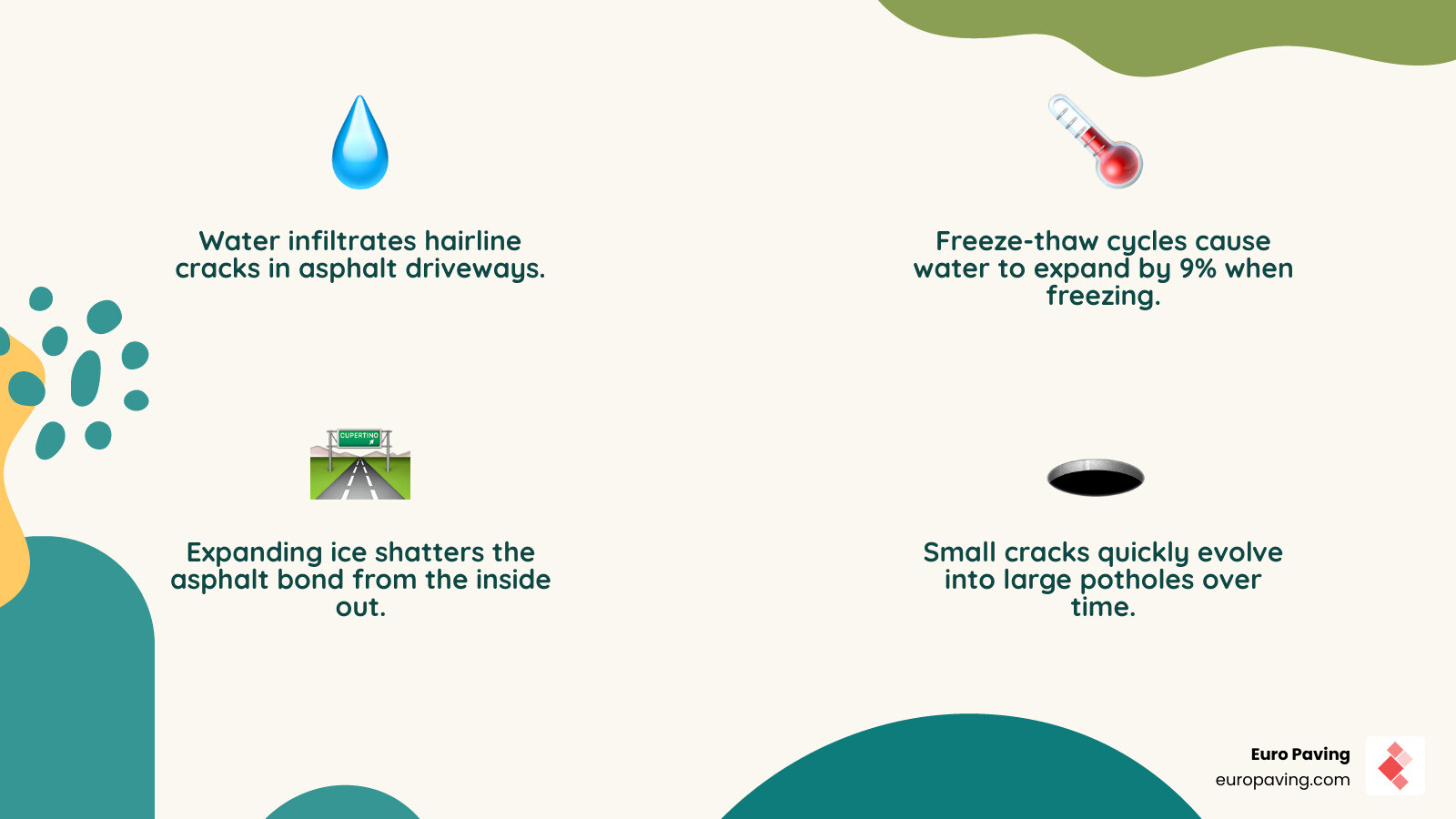
A driveway pothole doesn’t stay small for long. What starts as a hairline crack quietly fills with water. In Chicago and the surrounding suburbs, winter freeze-thaw cycles do the rest — water expands as it freezes, breaking apart the asphalt from the inside out. Before you know it, that small crack has become a crater.
The stakes are real. A full driveway replacement averages around $7,500. Professional pothole repairs run $100–$300 per hole. Catching damage early — and repairing it correctly — is almost always the smarter move.
The longer you wait, the more expensive the fix.
This guide walks you through everything a Chicago-area homeowner needs to know: what causes potholes, how professionals repair them, and how to prevent them from coming back.
Understanding the Causes of Driveway Potholes
In our experience serving the Chicago area-from Arlington Heights to Hinsdale-we’ve seen that potholes are rarely the result of a single event. Instead, they are the climax of a long-term battle between your driveway and the elements.
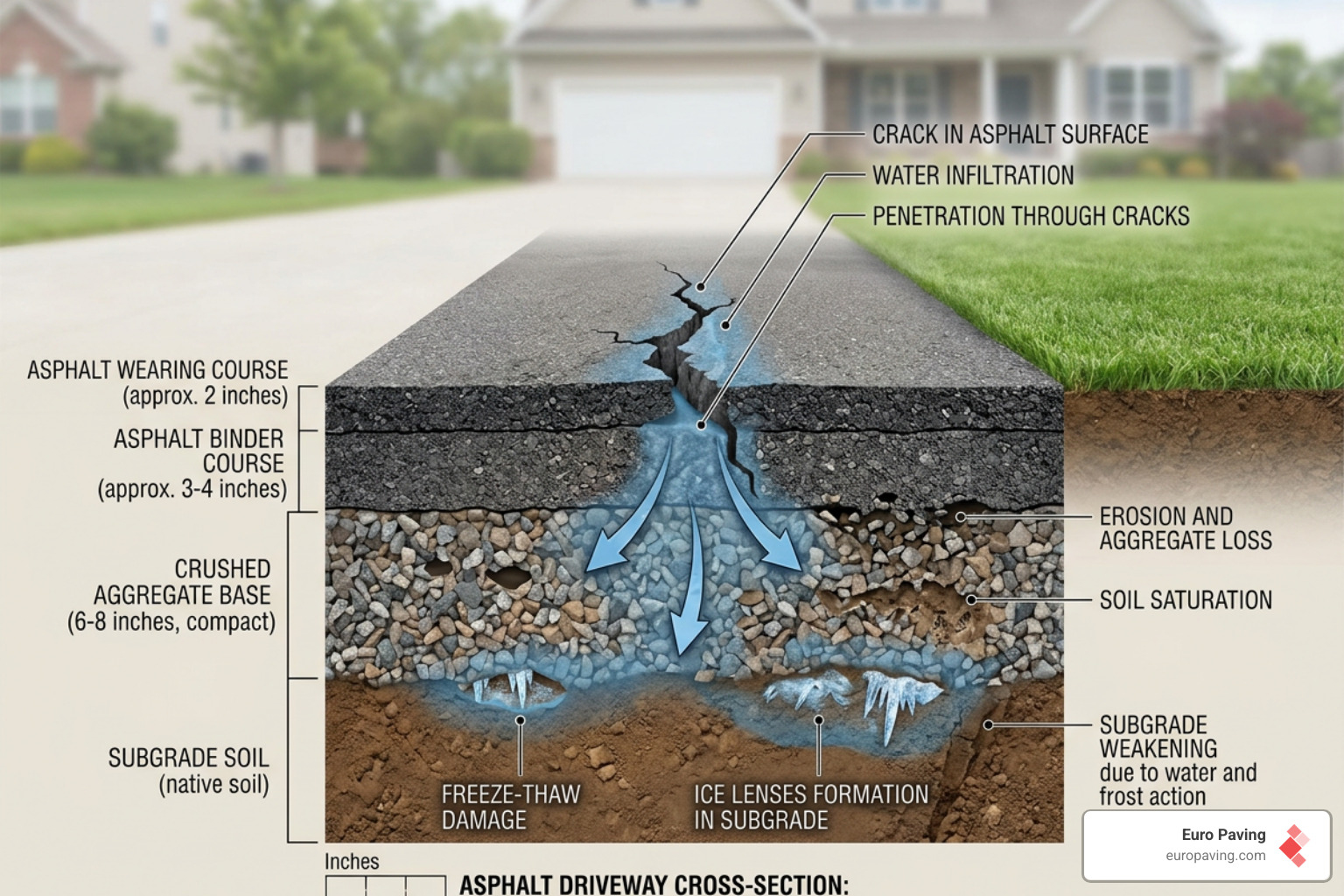
The primary antagonist in this story is water. When water infiltrates cracks in the asphalt, it settles into the sub-base. In the Chicagoland climate, this is particularly devastating. Our region is famous for its “freeze-thaw cycles.” During a typical winter in Skokie or Northbrook, the temperature might rise above freezing during the day, melting snow into your driveway’s cracks, only to plummet at night. As that water freezes, it expands by about 9%, exerting massive internal pressure that shatters the asphalt bond. For more on how freeze-thaw damage affects pavement, the National Weather Service’s freeze-thaw information offers helpful background.
Beyond the ice, several other factors contribute to the need for patching driveway potholes:
- UV Rays and Oxidation: Just as the sun damages your skin, UV rays bake the essential oils out of your asphalt. This process, called oxidation, makes the pavement brittle and gray. Brittle asphalt cracks more easily under the weight of your SUV.
- Heavy Vehicle Loads: Driveways aren’t designed for the same weight as highways. Frequent delivery trucks or heavy equipment can stress the asphalt, especially if the sub-base has already been weakened by moisture.
- Poor Drainage: If your driveway doesn’t have at least a 2% slope for runoff, water will pool. Standing water is a pothole’s best friend.
- Chicago Winter Road Salt: While salt keeps us safe on the roads in Barrington and Lake Forest, it also accelerates the freeze-thaw process by increasing the number of times water melts and refreezes within the pavement.
Professional Pothole Repair Methods and Materials
When we evaluate a driveway in Downers Grove or Highland Park, we choose materials based on the severity of the damage and the desired longevity of the repair. Not all “patches” are created equal.
Cold Asphalt Patch
Cold asphalt patch is a common material for temporary repairs. It is a “ready-to-use” compound that doesn’t require heating. While convenient for quick fixes, it is generally considered a temporary solution. It can last several months to over a year, but it remains somewhat flexible and doesn’t bond as permanently as hot-mix options.
Hot Mix Asphalt (HMA)
For a permanent, professional-grade repair, hot mix is the gold standard. This is the same material used for highway construction. It is applied at temperatures around 300°F (150°C). Because it is applied hot, it melts into the surrounding asphalt, creating a seamless, waterproof bond. When properly executed, a hot mix repair can last 5 to 10 years.
Essential Professional Tools
To achieve a repair that actually lasts, we use a specific arsenal of tools:
- Wire brush: Used to scrub away every bit of loose grit and debris.
- Industrial degreaser: Crucial for removing oil and fuel stains that prevent new asphalt from bonding.
- Rubberized crack filler: Used for the edges of the patch to prevent water from seeping back in.
- Heavy-duty steel tamper: While a hand tamper works for small spots, professionals often use a plate compactor to achieve the necessary density.
The Professional Pothole Repair Process: What to Expect
If you are considering driveway paving or a significant repair, it helps to understand the professional workflow. A “dump and run” approach—where you just throw asphalt into a hole—will fail within weeks. A lasting repair requires a systematic approach.
First, we address any surrounding issues. Often, a pothole is surrounded by smaller cracks. We use a liquid sealer for cracks half an inch wide or smaller to stop the damage from spreading. For larger issues, we follow a strict preparation and application protocol.
Professional Site Preparation for Pothole Repair
Preparation is 90% of the job. We start by squaring the edges of the pothole. Round edges allow the patch material to “pop” out under traffic; vertical, squared edges provide a mechanical lock.
We then perform a deep clean. This includes:
- Removing Debris: Using high-pressure air or a wire brush to clear all dirt.
- Vegetation Removal: We ensure all vegetation is professionally cleared from the edges to prevent root growth from compromising the patch.
- Base Stabilization: If the hole is deep, we don’t just fill it with asphalt. We add and compact gravel to create a solid foundation. If the base is soft, the patch will simply sink.
- Drying: We ensure the area is bone-dry. Moisture trapped under a patch is a recipe for a “bubble” that will burst the next time it freezes.
Expert Application and Compaction Techniques
Once prepped, the material is layered. We don’t fill a 4-inch hole in one go. We apply it in 2-inch lifts, compacting each layer as we go. We mound the final layer slightly above the surface—about half an inch. This allows for “compaction settlement.”
We use industrial-grade compaction equipment to ensure the material is packed to the necessary density, preventing future shifting or sinking. This provides much more force than a hand tool, ensuring the patch won’t shift or sink under the weight of a vehicle.
If the edges look porous, we apply a hot rubber sealant to “weld” the seam between the old and new asphalt. This is a crucial step in driveway-renovation-avoiding-common-problems.
Long-Term Maintenance and Prevention Strategies
The best way to handle patching driveway potholes is to prevent them from forming in the first place. Think of driveway maintenance like changing the oil in your car—it’s a small expense now that prevents a massive bill later.
- Quarterly Inspections: After every major Chicago storm or seasonal shift, walk your driveway. Look for “alligator cracking” (cracks that look like scales) or small pits.
- Crack Sealing: This is the single most cost-effective maintenance task. Crack sealing can extend your pavement’s life by 5 to 10 years. We recommend sealing any crack wider than 1/4 inch immediately.
- Sealcoating: Think of sealcoating as a sunscreen for your driveway. It protects against UV rays and chemical spills. Most driveways in the Chicago area should be sealcoated every 2 to 5 years, depending on traffic. However, new cold patches need about 3 months to cure before you can apply sealer.
- Drainage Management: Ensure your gutters aren’t dumping water directly onto the asphalt. Check that the 2% slope is maintained and not blocked by landscaping or debris.
- Professional Assessment: If you notice significant crumbling, it might be one of the 5-signs-you-need-to-call-a-paving-expert.
Frequently Asked Questions About Driveway Repair
Is Pothole Repair Possible in Wet or Cold Weather?
While you can use certain “all-weather” cold patches in damp conditions, it is far from ideal. For a repair to last, the surface must be dry and the temperature should ideally be above 50°F. If you have an emergency pothole in the middle of a Barrington winter, a cold patch is a fine “band-aid” to prevent tire damage, but you should plan for a more permanent hot-mix repair once the weather warms up.
What is the Lifespan of Different Pothole Repair Methods?
- Gravel Fill: Days to weeks (it will wash out).
- Standard Cold Patch: 6 months to 1 year.
- High-Performance Cold Patch: 1 to 3 years.
- Professional Hot Mix Asphalt: 5 to 10 years.
- Recycled Asphalt Millings: Semi-permanent, but requires heat and heavy compaction to reactivate the bitumen.
When is Professional Asphalt Repair Essential?
You should step away from the DIY bucket and call us if:
- The pothole is larger than 2×2 feet.
- The edges of the driveway are crumbling away.
- The “pothole” is actually a sinkhole indicating a collapsed sewer line or major sub-base failure.
- You have multiple potholes (at this point, a professional overlay is more cost-effective).
Conclusion
At Europa Paving, we understand that your home is your biggest investment. Whether you’re in Norridge, Skokie, or Mount Prospect, your driveway is the first thing people see. While patching driveway potholes is a necessary part of homeownership, it’s often a sign that your outdoor space needs a professional touch.
We specialize in transforming backyards and driveways into relaxing, family-friendly spaces. From custom brick patios and outdoor kitchens to durable, expertly installed driveways, we bring years of experience to every project in the Chicago area. If your driveway is beyond a simple patch, or if you’re ready to upgrade to a stunning brick paver design that stands up to the Illinois winters, we are here to help.
Don’t let a small hole turn into a $7,500 replacement. Contact Europa Paving for expert brick paving and driveway solutions today. We serve the entire Chicago area, including Lombard, Glenview, Roselle, and beyond, ensuring your home remains safe, beautiful, and valuable for years to come.