



Why Cracks in Your Blacktop Driveway Get Worse Every Winter
To repair blacktop driveway cracks and understand the scope of maintenance, these are the core steps involved in temporary repairs:
- Clean the crack — use a wire brush and hose to remove all debris, weeds, and loose material
- Let it dry completely — moisture prevents filler from bonding
- Choose the right filler — liquid/pourable for cracks under 1/4 inch, tubed or rope-style for up to 1 inch, cold patch for anything wider
- Apply the filler — slightly overfill to account for shrinkage, smooth flush with a putty knife
- Cure before use — wait at least 24-36 hours before foot traffic; 72 hours before driving
- Seal the driveway — apply a quality sealcoat over the entire surface after repairs cure
A cracked driveway is easy to ignore — until it isn’t. What starts as a thin line across your blacktop can quietly grow into a serious structural problem, especially here in the Chicago area where winters are brutal.
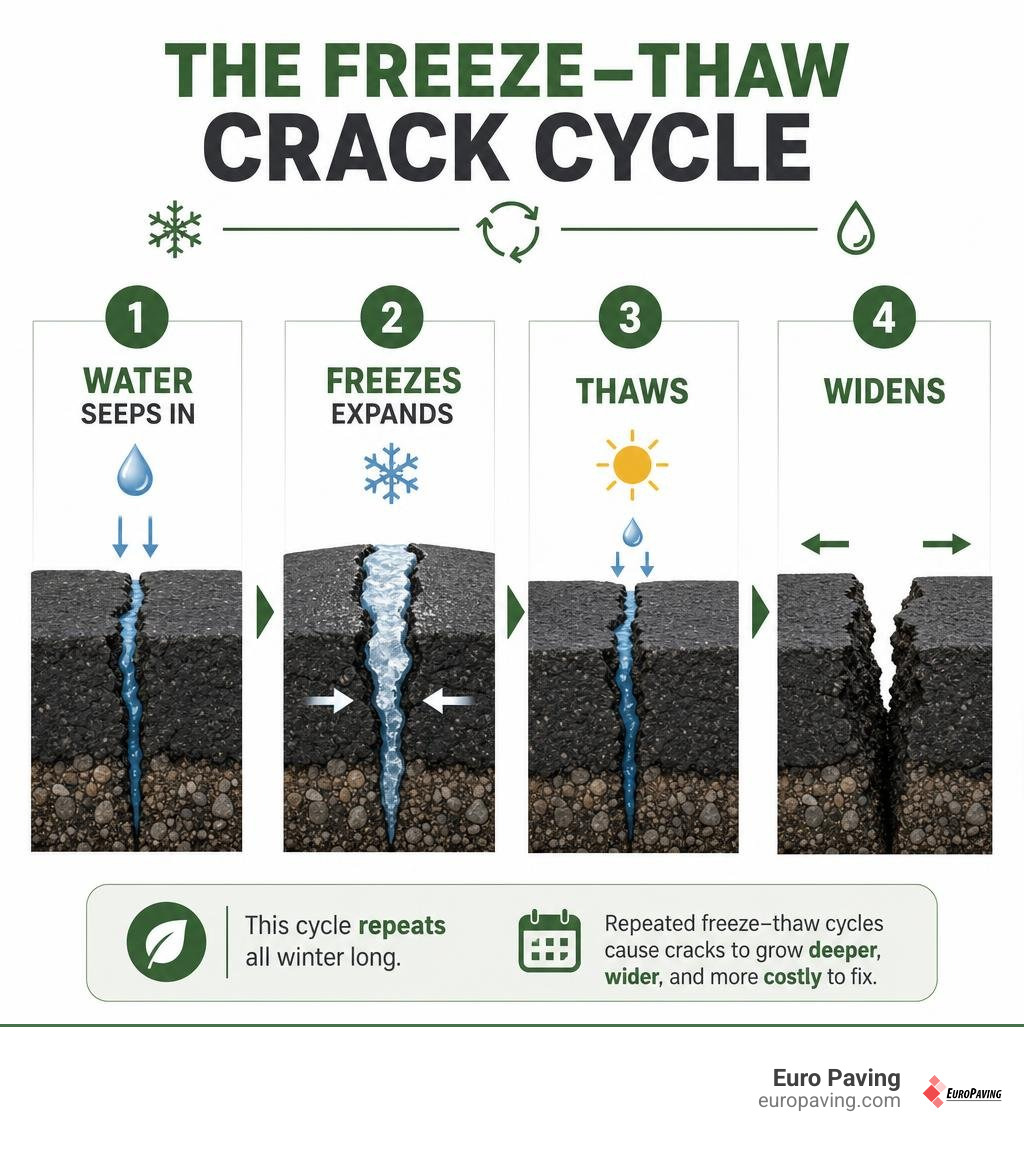
Here’s why: water seeps into small cracks, freezes, and expands by roughly 9%. That pressure widens the crack from the inside out. Then it thaws. Then it freezes again. In a typical Northern Illinois winter, this cycle can repeat 30 to 50 times in a single season.
By spring, that hairline crack you noticed in October can look like a pothole.
While some homeowners attempt temporary DIY patches using retail products, these quick fixes rarely address the root cause of the damage. A standard DIY patch might seem cost-effective upfront, but recurring failures and the constant need for reapplication can make professional solutions or a complete driveway upgrade far more economical in the long run.
The key to lasting durability is acting early, using professional-grade materials, and ensuring proper subbase preparation. Without these, most temporary repairs fail before the next winter is over.
This guide walks you through the complexities of driveway crack repairs, the limitations of DIY maintenance, and how to determine when your driveway requires a permanent, professional solution.
Repair blacktop driveway cracks glossary:
Understanding What Causes Asphalt Driveway Damage
Asphalt is a flexible pavement, which makes it ideal for handling the heavy loads of our vehicles. However, that flexibility also makes it vulnerable to the elements. To protect your investment, it helps to understand what is happening beneath the surface.
In the Chicago suburbs — from Norridge to Arlington Heights — the soil has a notoriously high clay content. Clay soil acts like a sponge, retaining water instead of letting it drain away easily. When winter temperatures plunge, this trapped water freezes and expands, causing subsurface ground movement known as frost heave. This upward pressure bends the asphalt from below, creating stress fractures on the surface.
At the same time, the surface of your driveway is under constant attack from above:
- UV Degradation: The sun’s ultraviolet rays break down the liquid asphalt binder that holds the stones together. Over time, your rich black driveway fades to gray, becomes brittle, and begins to shed fine aggregates.
- Water Expansion: Once the asphalt is brittle, tiny surface cracks develop. Rain and melting snow find their way into these openings, expanding by 9% every time they freeze, exerting up to 2,000 pounds of pressure per square inch inside the pavement joints.
- Heavy Vehicles: When heavy SUVs or delivery trucks park over sections of asphalt that have been undermined by water, the weakened base collapses, turning small cracks into deep structural damage.
To keep your driveway in top shape, check out our comprehensive resource, The Ultimate Asphalt Maintenance Guide, which dives deeper into the science of pavement protection.
How to Repair Blacktop Driveway Cracks: The Complete Process
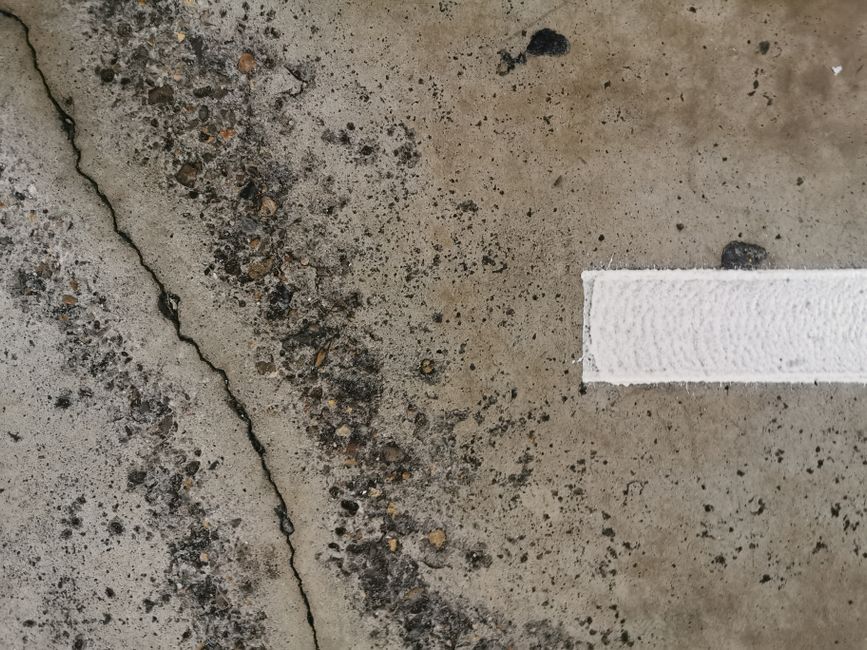
If you want crack repairs to survive a harsh Chicago winter, the preparation must be flawless. In fact, improper cleaning is the single most common reason a standard driveway crack repair fails early. If filler is applied over dirt, loose gravel, or organic debris, the sealant bonds to the debris instead of the asphalt walls, peeling away within months. Because of the intensive labor and precision required, many homeowners choose to bypass this tedious process by hiring professional contractors.
To understand the level of detail involved, follow our guide on How to Repair Driveway Cracks and review the necessary steps.
Step-by-Step Guide to Repair Blacktop Driveway Cracks
Here is the exact process required for repairing cracks up to 3/4 inches wide:
- Clear Out the Vegetation: Weeds love to grow in asphalt cracks. Use a flat-head screwdriver or a utility knife to scrape out the roots. If weeds are a persistent problem, apply a concentrated weed killer a day before you plan to repair the cracks.
- Scrape and Brush: Use a stiff wire brush to aggressively scrape the inside walls of the crack. This knocks loose any crumbling asphalt pieces and dirt.
- Blast with Water: Wash the crack thoroughly using a garden hose with a high-pressure nozzle or a pressure washer. Work from one end of the crack to the other to sweep out the mud.
- Allow Complete Drying Time: This is critical. Asphalt fillers require a completely dry surface to adhere properly. Wait at least 24 hours after washing (or longer if the crack is deep) before applying any sealant.
- Insert a Backer Rod (For Deep Cracks): If a crack is wider than 1/4 inch and deeper than 1/2 inch, do not fill the entire void with liquid sealant. It will sink, crack, and waste material. Instead, press a foam backer rod into the crack using a screwdriver, leaving about 1/4 inch of space at the top for the filler.
- Apply the Filler: Load your professional-grade cold-pour asphalt filler into a caulk gun (if using a tubed product) or prepare your pourable jug. Fill the crack, slightly overfilling it to account for natural shrinkage as the water-based solvents evaporate.
- Smooth It Flush: Use a putty knife or a specialized driveway squeegee to scrape the excess filler flat, leveling it with the surrounding pavement.
Selecting the Right Crack Filler and Patching Materials
Selecting the right material depends entirely on the size of the crack you are dealing with. For minor cracks up to 1 inch wide, options include latex-based pourable liquids, caulk-style tubes, and thermo-plastic rubber ropes.
For instance, the Bluestar Flexible Asphalt Crack Filler is a popular, latex-based squeeze-bottle product. It has earned a 4.2 out of 5 stars rating from 941 ratings on Amazon, with over 500 units bought in the past month, making it a common choice for quick DIY projects.
To help you choose the best product for your specific driveway needs, check out our review of the Stop the Split with These Top Driveway Crack Fillers. Here is a quick breakdown of how these materials compare:
| Filler Type | Best For | Application Method | Key Advantage |
|---|---|---|---|
| Cold-Pour Liquid | Cracks up to 1/2″ wide, 1/2″ deep | Squeezed directly from bottle or poured from jug | Simple DIY application, highly flexible |
| Hot Rubberized (e.g., Pli-Stix) | Cracks 1/2″ to 1″ wide | Pushed into crack, melted with a propane torch | Highway-quality, permanent elastic seal |
| Asphalt Tape | Hairline to 1/2″ wide joints | Rolled over crack, melted with a torch | Clean, no-mess application, instant seal |
For homeowners tackling medium-sized cracks between 1/2 inch and 1 inch, products like the 30ft. Pli-Stix®Permanent Blacktop Crack & Joint Filler | Super Seal offer an incredible commercial-grade solution. This thermo-plastic rubber rope is pushed deep into the crack and melted using a household propane torch, creating a permanent, watertight bond that moves with the pavement during thermal expansion.
The Limitations of DIY Driveway Maintenance
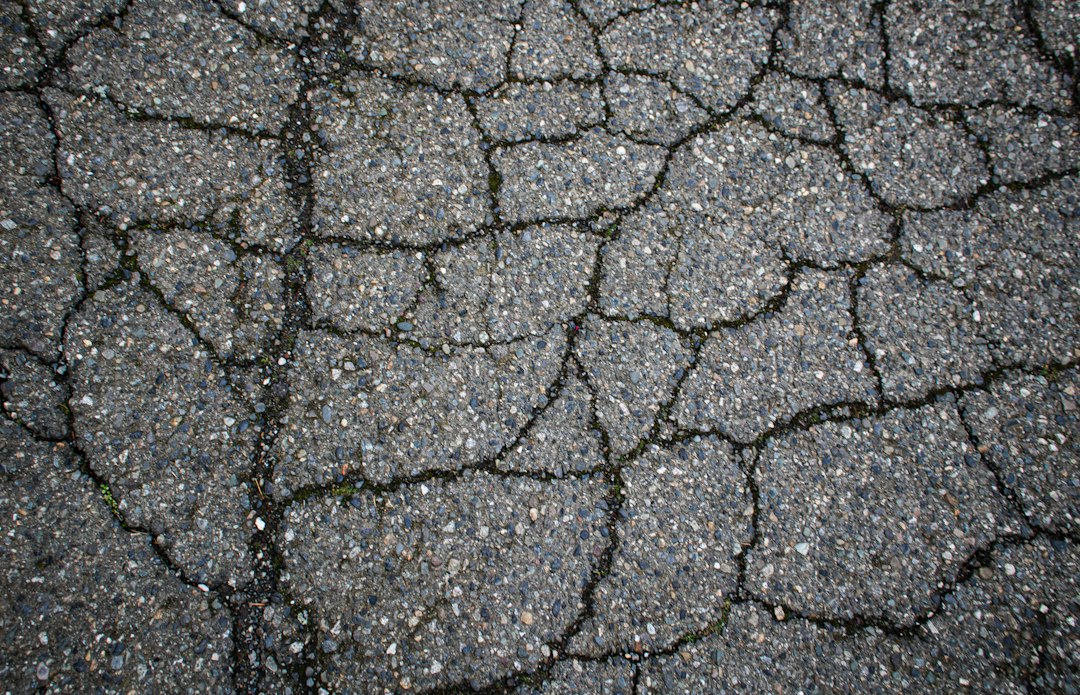
While filling a few linear cracks might seem like a quick weekend project, DIY repairs have severe limitations. Asphalt driveways are only as strong as the gravel base beneath them. When water penetrates deeply, it compromises this subbase, leading to structural failures that no liquid filler can fix.
If you ignore these deeper issues, your driveway’s appearance and structural integrity will degrade rapidly. To understand how these issues impact your home’s value, read our article on how Cracks Kill Your Curb Appeal.
Why DIY Attempts to Repair Blacktop Driveway Cracks Fail in Chicago
In Cook County and DuPage County, the local climate is incredibly harsh on asphalt repairs. When homeowners attempt to repair blacktop driveway cracks using standard big-box retail fillers, they are often fighting a losing battle against physics.
Because standard DIY liquid fillers lack the extreme elasticity of professional hot-applied rubber, they cannot cope with the intense thermal expansion and contraction of Chicago’s seasons. When the temperature drops below zero, the asphalt shrinks, pulling the crack open. A rigid DIY patch will simply split apart under this tension.
Furthermore, the high clay content in local soils means that frost heaves will actively push and bend the driveway sections every winter. Without a perfectly compacted, well-drained gravel base, any surface patch is merely a temporary band-aid. To learn how to extend the lifespan of your pavement, explore our guide on Don’t Let Your Driveway Crumble With These Maintenance Tips.
When to Call a Professional Paving Contractor
You should step away from the DIY materials and contact a professional Asphalt Contractor if you notice any of the following warning signs:
- Alligator Cracking: This is a pattern of interconnected cracks that look like scales. It is a definitive sign of base failure, meaning the ground beneath has collapsed and the entire section must be replaced.
- Potholes: Deep holes indicate that the asphalt has completely broken away. While cold patches can temporarily fill them, they often fail within one or two seasons.
- Structural Sinking: If sections of your driveway near the garage apron or the street are sinking, it points to serious drainage and base compaction issues.
For these advanced structural issues, consulting a professional paving contractor is the only way to ensure a safe, durable, and long-lasting repair.
Frequently Asked Questions About Driveway Repair
Can asphalt repair products be used on concrete driveways?
No, you should never use asphalt repair products on concrete driveways. Asphalt is an oil-based, flexible material, whereas concrete is a rigid, cement-based material. Asphalt patch products bond through chemical adhesion to existing bitumen. If applied to concrete, they will fail to bond properly and will quickly pop out under traffic.
For concrete surfaces, always use specialized concrete acrylic or polyurethane sealants. To learn more about tackling concrete issues, read our guide on Fixing Concrete Potholes Without Losing Your Mind.
How long does crack filler take to cure?
The curing window depends heavily on the product used and the local weather. Standard cold-pour crack fillers typically take 24 to 36 hours to dry enough for foot traffic, and up to 72 hours before you should drive a vehicle over them.
For heavy-duty repairs, the Quikrete Commercial Grade Permanent Blacktop Repair Guide notes that while traffic can sometimes compact a cold-patch repair immediately, the material actually requires 30 to 90 days of curing before you can safely apply a coal-tar or asphalt emulsion driveway sealer over the top.
How can I prevent future cracking and extend the life of my driveway?
The best way to prevent future cracking is to keep water away from your pavement’s subbase. Ensure your lawn is graded so that rainwater runs away from the edges of your driveway rather than pooling alongside it. In areas with poor drainage, installing a French drain along the side of the driveway can prevent water from seeping underneath and causing frost heaves.
Additionally, apply a high-quality sealcoat to the entire surface every two to three years to block out destructive UV rays. For more drainage tips, check out Don’t Let Your Driveway Go Down the Drain.
Conclusion
While regular DIY sealing and crack filling can prolong the life of an asphalt driveway, they cannot stop the inevitable effects of the Chicago climate. Year after year, the freeze-thaw cycle will demand your weekends, requiring you to scrape, wash, and patch the same recurring cracks.
If you are tired of the endless cycle of asphalt maintenance, there is a beautiful, permanent alternative.
At Euro Paving, we specialize in transforming worn-out driveways into stunning, lifetime-guaranteed brick masterpieces. As a premier Unilock authorized contractor Illinois, we design and install custom brick paver driveways that are built to withstand the harshest Chicagoland winters without cracking, shifting, or fading.
Unlike rigid asphalt, brick pavers are an interlocking system. This means they can naturally flex with the ground’s movement during freeze-thaw cycles, completely eliminating the risk of surface cracking. If a single paver is ever damaged by an oil spill or physical impact, it can be popped out and replaced in minutes — without leaving an ugly patch mark.
Beyond driveways, our team brings nearly 20 years of experience to a full suite of outdoor living services. We are the trusted experts for:
- Premium brick patio installation Chicago to elevate your backyard entertainment.
- Custom outdoor living designs by leading outdoor kitchen contractors Chicago suburbs.
- Inspirational backyard hardscaping ideas featuring retaining walls and walkways.
- Cozy evening gatherings with a professional fire pit installation near me.
We proudly serve homeowners throughout Elmhurst, Hinsdale, Mount Prospect, Norridge, Arlington Heights, and the surrounding Chicago suburbs. Ready to upgrade your home’s curb appeal and say goodbye to driveway crack repairs for good?
Contact Euro Paving today to schedule your custom 3D design consultation and start building the outdoor space of your dreams!