



The Smart Homeowner’s Guide to Installing Pavers Along Sidewalk Paths in Chicago
If you’re considering pavers along a sidewalk at your home, here’s what you need to know right away:
Quick answers for homeowners ready to hire:
| Question | Answer |
|---|---|
| How much does it cost? | $9–$20 per sq ft installed ($1,430–$3,530 typical project) |
| How long do they last? | 50–100 years with proper installation |
| Best material for Chicago winters? | Permeable or clay brick pavers with a compacted aggregate base |
| Do I need a permit? | Often yes — especially where pavers connect to public sidewalks |
| DIY or hire a pro? | Hire a pro — base preparation in clay soil is critical |
Your home’s sidewalk is one of the first things visitors see. A cracked, uneven, or plain concrete path doesn’t just look tired — it can hurt curb appeal and even create safety hazards, especially through Chicago’s brutal freeze-thaw winters.
The good news? Professionally installed brick or stone pavers transform an ordinary walkway into a standout feature that adds real value to your property.
And unlike poured concrete, pavers can flex slightly with soil movement — meaning they won’t crack apart the first time frost heaves the ground under Cook County clay.
This guide covers everything you need to know: materials, patterns, base preparation, costs, permits, and how Euro Paving designs and installs sidewalk paver systems built to last in the Chicago suburbs.
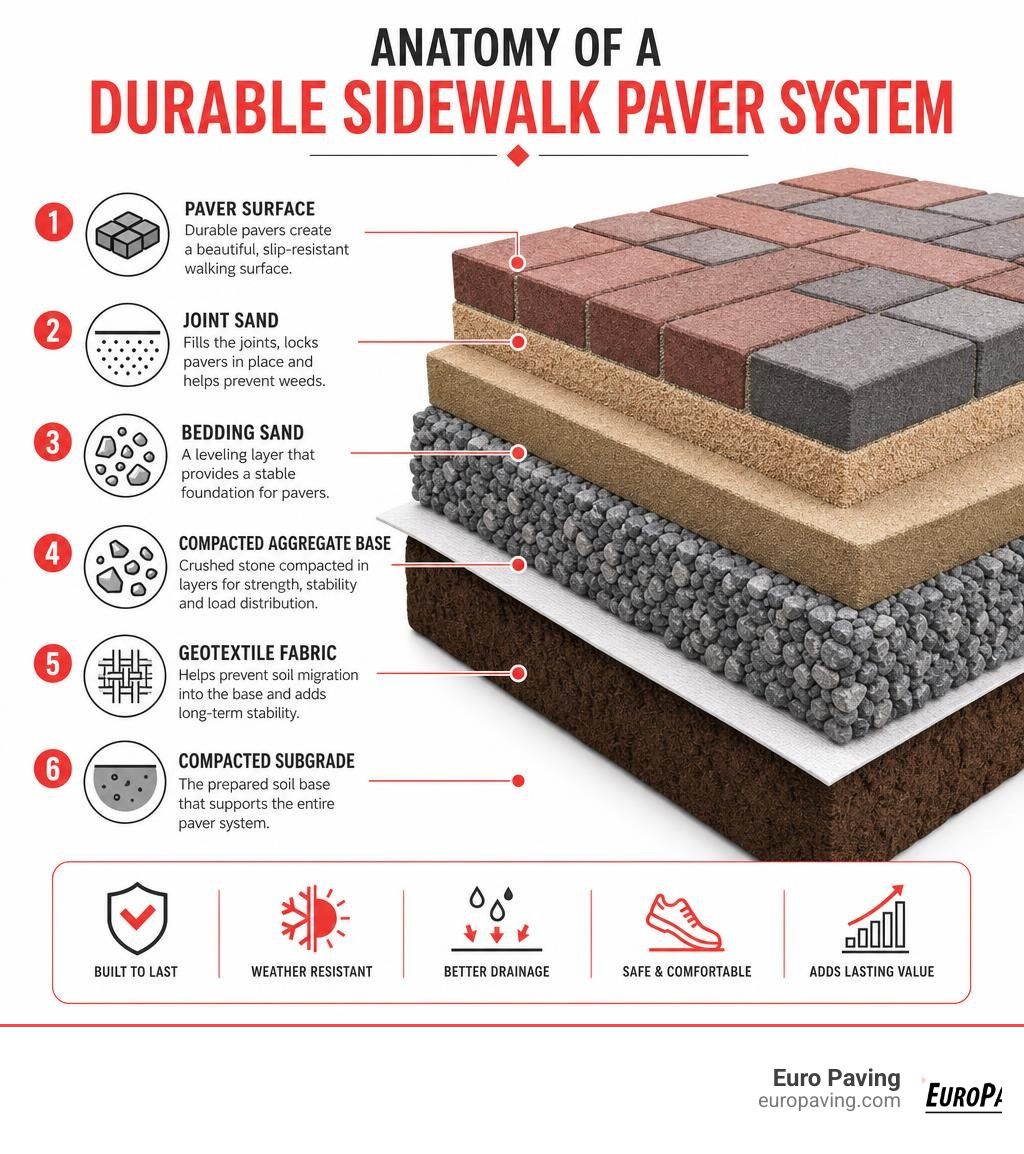
Pavers along sidewalk terms at a glance:
Why Premium Pavers Along Sidewalk Borders Elevate Chicago Properties
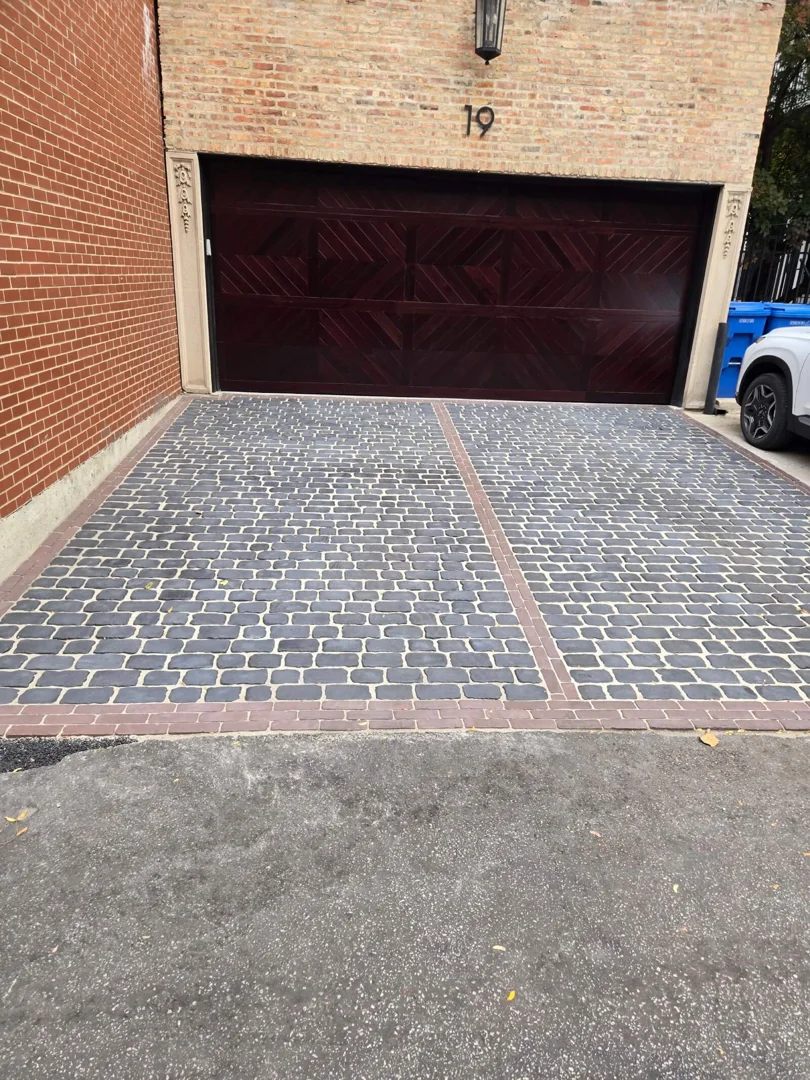
Adding a border of high-quality pavers along sidewalk edges or driveways is one of the most effective ways to elevate your property’s curb appeal. In prestigious neighborhoods from Lake Forest and Winnetka to Hinsdale and Barrington, first impressions are everything. A standard poured concrete sidewalk can look institutional, but framing it with a meticulously engineered brick or stone border instantly adds architectural character and visual depth.
Beyond the undeniable aesthetic upgrade, installing a paver border provides crucial structural benefits. In the Chicago area, our soils are notoriously rich in heavy clay. Clay retains water, which expands dramatically when frozen. This vertical movement—known as frost heave—places immense tensile stress on rigid, continuous surfaces like concrete slabs, leading to unsightly cracks and dangerous tripping hazards.
Interlocking pavers function as an articulated system. Because they are individual units bound by flexible polymeric sand joints, they can distribute load and accommodate minor soil movements without cracking. When placed alongside an existing concrete walkway, a paver border acts as a protective buffer, absorbing lateral pressure and helping to prevent the edges of the concrete from crumbling.
Additionally, a professionally graded paver border provides outstanding erosion control. By gently sloping water away from your home’s foundation and directing runoff into lawn or garden areas, it prevents rainwater from pooling on walking surfaces. This is highly complementary to municipal infrastructure efforts, such as the local pavement management seen in the Street Resurfacing in Arlington Heights programs, where managing local runoff and maintaining safe public rights-of-way are top priorities. Choosing the right materials is the first step in ensuring your border survives our harsh Midwestern climate. Learn more about selecting the right products in our guide on The Best Paving Stones for a Sidewalk That Lasts.
Selecting the Best Materials and Patterns for Sidewalk Borders
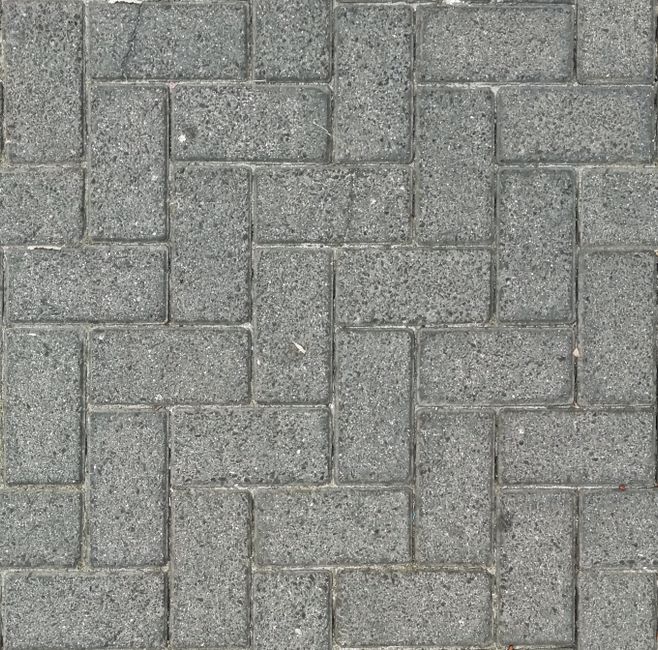
When selecting the ideal materials for framing your walkways, you must balance durability, water absorption, and style. The three primary options for bordering a sidewalk or driveway are kiln-fired clay brick, natural stone, and manufactured concrete pavers.
- Kiln-Fired Clay Brick: Fired at temperatures exceeding 2,000°F, clay brick pavers boast an impressive compressive strength of at least 10,000 psi. Their rich, warm hues are entirely natural and will not fade under UV exposure over the decades. They offer a classic, historic aesthetic that beautifully complements Colonial and brick Tudor homes in areas like Wilmette and Downers Grove.
- Natural Stone: Sourced from premium quarries, natural stone options like bluestone, granite, and limestone offer unparalleled luxury. Granite is exceptionally hard and suited for heavy-traffic zones, while limestone offers a clean, organic look. Natural stone pavers have incredibly low water absorption rates, making them naturally resistant to freeze-thaw damage.
- Manufactured Concrete Pavers: Offering tight dimensional tolerances (around 1.5 mm) and a minimum compressive strength of 8,000 psi, concrete pavers are highly versatile. Modern manufacturing allows them to replicate the texture of hand-carved stone or weathered antique brick at a more accessible price point.
To explore how different shapes and scales can transform your front entrance, consult The Ultimate Guide to Large Sidewalk Pavers Design and Inspiration.
Designing Custom Pavers Along Sidewalk Paths for Maximum Curb Appeal
The pattern in which your borders are laid impacts both the structural integrity and the visual flow of the path. For straight borders running parallel to a sidewalk or driveway, a running bond pattern is highly popular. It features offset joints that create a clean, modern look while easily framing the existing concrete.
For high-traffic transition zones—such as where a sidewalk meets a wide asphalt driveway—a herringbone pattern (set at either 45 or 90 degrees) is the gold standard. The interlocking design of a herringbone pattern distributes physical loads across multiple units, preventing the pavers from shifting or sliding under the weight of turning vehicles or heavy foot traffic. Another classic option is the basket weave, which groups pavers in alternating horizontal and vertical pairs, offering a charming, historic feel. Discover more creative layouts in our showcase of Sidewalk Paving Ideas That Will Make Your Neighbors Jealous.
Selecting the Right Color and Style of Pavers Along Sidewalk Edges
Achieving architectural harmony requires careful color matching. We recommend choosing a paver color that echoes an existing element of your home’s exterior—such as the brick facade, the stone foundation, or even the trim. For modern homes in Glenview or Northbrook, cool gray and charcoal concrete pavers create a sleek, contemporary frame. For traditional homes, warm reds, browns, and multi-colored blends provide a welcoming, classic feel.
As a Unilock Authorized Contractor, Euro Paving utilizes premium Unilock pavers featuring EnduraColor technology. This advanced manufacturing process fuses a wear-resistant layer of high-performing minerals and colorfast pigments onto the surface of the paver, ensuring your sidewalk border retains its vibrant color and resists fading for a lifetime. For deeper insights into designing cohesive outdoor environments, read our comprehensive guide on Sidewalks and Walkways: Design and Build a Beautiful Outdoor Living Space.
Professional Engineering: Base Preparation and Drainage Solutions
A beautiful paver border is only as good as the foundation beneath it. In Northern Illinois, failing to properly engineer the subgrade and base layers is the number one cause of shifting, sinking, and cracking. Our heavy clay soils expand when wet and frozen, creating powerful vertical forces. To counteract this, we employ a rigorous, multi-layered engineering process.
First, we excavate the walkway corridor to a precise depth—typically 6 to 8 inches for pedestrian walkways, and up to 10 inches if the border runs alongside a driveway that handles vehicular loads. We grade the subgrade to ensure a minimum slope of 1% (or a 1/4-inch drop per foot) away from your home’s foundation to shed water cleanly and prevent winter slip hazards.
Next, we lay down a high-performance geotextile fabric. This commercial-grade stabilization fabric is a critical capillary break; it prevents the native clay soil from mixing with our clean stone base while still allowing water to drain through.
We then build a machine-compacted aggregate base using 3/4-inch clean crushed stone. This aggregate base is placed in controlled 2-inch lifts, with each layer thoroughly compacted using a commercial plate compactor. For pedestrian paths, a 4-to-6-inch compacted base is the industry standard. This open-graded stone base contains void spaces that allow water to filter through safely, preventing hydrostatic pressure from building up beneath the pavers. To understand the complete professional process of laying stone, see our Step-by-Step Guide to Laying a Stone Paver Sidewalk.
For properties facing severe drainage challenges, we often recommend permeable systems. Permeable pavers feature wider joints filled with small stone aggregates, allowing stormwater to immediately pass through the surface into the stone reservoir below. This reduces surface pooling and ice formation during winter. You can learn more about how these systems manage stormwater at the Pervious Paver Block Stormwater Solutions demonstration site.
Traditional Aggregate Base vs. Modern Paver Panels
While a traditional compacted aggregate base remains the industry standard for maximum longevity and heavy-load durability, modern hardscaping has introduced engineered interlocking paver base panels. These lightweight, high-density foam panels can replace a portion of the traditional gravel base, requiring a shallower excavation depth.
While paver panels can be useful for tight, light-pedestrian residential paths where deep excavation is physically impossible, they are generally not recommended for heavy-clay soils or areas adjacent to driveways. For long-term structural integrity in Chicago’s climate, a deep, machine-compacted crushed stone base topped with a 1-inch layer of screeded bedding sand and locked with high-quality polymeric sand is the most durable solution. For a comparison of these installation methodologies, read The Ultimate Guide to Installing Sidewalk Pavers for Beginners.
Commercial vs. Residential Sidewalk Paving Solutions
The engineering requirements for sidewalk paving vary significantly between residential backyards and high-traffic commercial properties. For residential projects in areas like Hinsdale or Highland Park, the focus is typically on custom aesthetics, architectural integration, and family-friendly designs. Residential walkways must accommodate light foot traffic, lawnmowers, and strollers, with a standard comfortable width of 36 to 48 inches.
In contrast, commercial and municipal sidewalks—such as those in retail plazas, office parks, or public rights-of-way in Norridge or Skokie—must adhere to strict regulatory standards.
- ADA Compliance: Commercial walkways must feature a minimum continuous width of 36 inches (often 48 to 60 inches to allow two wheelchair users to pass side-by-side) and a maximum cross-slope of 2% to ensure accessibility. Joint openings between pavers must not exceed 1/3 to 3/8 of an inch to prevent wheels or heels from getting caught.
- Load-Bearing Capacity: Public sidewalks must be built to withstand heavy foot traffic, municipal maintenance equipment, and occasional vehicular overruns. This requires a thicker compacted stone base (typically 6 to 8 inches) and highly durable concrete pavers with beveled edges to prevent tripping hazards.
- Permits and Municipal Codes: Connecting any private walkway or paver border to a public sidewalk requires specific municipal permits, which typically range from $200 to $1,000 depending on the suburb.
At Euro Paving, we have over two decades of experience navigating these complex local codes and structural demands. Whether we are designing a tranquil backyard path or a commercial plaza, we ensure complete compliance and durability. For a deeper dive into these differences, explore our guide on Don’t Get Stepped On: Commercial and Residential Sidewalk Paving Solutions.
Frequently Asked Questions About Sidewalk Pavers
How long do professionally installed sidewalk pavers last?
When designed and installed by a certified professional, high-quality clay brick or concrete pavers can easily last 50 to 100 years. Unlike poured concrete, which has an expected lifespan of 20 to 30 years and is highly prone to cracking under Chicago’s freeze-thaw cycles, individual pavers can expand and contract naturally. If a single paver ever becomes stained or damaged, or if localized settling occurs, that specific unit can be easily removed, the base re-leveled, and the paver replaced without leaving unsightly patches.
Do I need a permit to install pavers along a public sidewalk?
Yes, in most Chicago suburbs—including Arlington Heights, Skokie, and Downers Grove—any hardscape work that connects to, borders, or impacts a public sidewalk or right-of-way requires a municipal permit. Homeowners associations (HOAs) also frequently have strict rules regarding the colors, materials, and styles of front-yard hardscaping. Euro Paving manages the entire design planning and permitting process, ensuring your project meets all local building codes and municipal guidelines.
How do you prevent weeds and shifting in paver joints?
Weeds do not actually grow up from the soil beneath a properly constructed paver system; rather, windblown seeds land in open joints and take root. To prevent weed growth and structural shifting, we lock the joints using premium polymeric sand or jointing resin. Once swept into the joints, this specialized sand is misted with water, activating binding polymers that cure to a firm, flexible, rubber-like consistency. This locks the pavers in place, resists washouts from heavy rains, and prevents weed seeds and ants from penetrating the joints.
Conclusion
Installing premium pavers along sidewalk boundaries is one of the smartest investments you can make to enhance your home’s beauty, safety, and long-term market value. However, because of Northern Illinois’ challenging clay soils and intense winter weather, professional engineering is absolutely essential to prevent shifting, settling, and cracking.
At Euro Paving, we specialize in transforming ordinary outdoor areas into beautiful, family-friendly spaces. As a premier hardscaping contractor serving Cook and DuPage counties, we bring over 26 years of experience, Unilock Authorized craftsmanship, and a commitment to quality to every project. We utilize advanced 3D design planning so you can visualize your custom brick walkway, patio, or outdoor kitchen before ground is ever broken. Plus, our Unilock materials come backed by a lifetime material guarantee, giving you complete peace of mind.
Ready to elevate your home’s curb appeal with a stunning, durable paver sidewalk? Contact Euro Paving for Professional Sidewalk Paving and schedule your design consultation with our experts today!