



Why Laying a Paver Sidewalk Is One of the Best Investments for Your Home
Laying a paver sidewalk transforms the front or back of your home with a durable, attractive surface that lasts 20 to 30 years when installed correctly.
Here is a quick overview of the core steps:
- Plan and mark the walkway area, call 811 to mark utilities, and check local permits
- Excavate 6 to 8 inches below the finished surface level
- Compact the subgrade, then lay 4 to 6 inches of crushed gravel base in layers
- Screed 1 inch of bedding sand to create a level, sloped surface (1-2% grade for drainage)
- Install edge restraints along both sides to prevent shifting
- Lay pavers in your chosen pattern, starting from a straight fixed edge
- Cut pavers to fit edges and curves using a diamond-blade saw
- Sweep polymeric sand into the joints, compact, and mist with water to set
A properly built paver sidewalk does more than look great. It manages rainwater runoff, holds up against heavy foot traffic, and adds real curb appeal to your property.
But here is the thing: the result is only as good as the foundation beneath it. Skipping steps in the base preparation is the number one reason paver sidewalks sink, shift, or look uneven within a few years.
Whether you are planning a simple front entry path or a sweeping walkway through a landscaped yard in Hinsdale or Arlington Heights, understanding the full process from excavation to finishing makes all the difference.
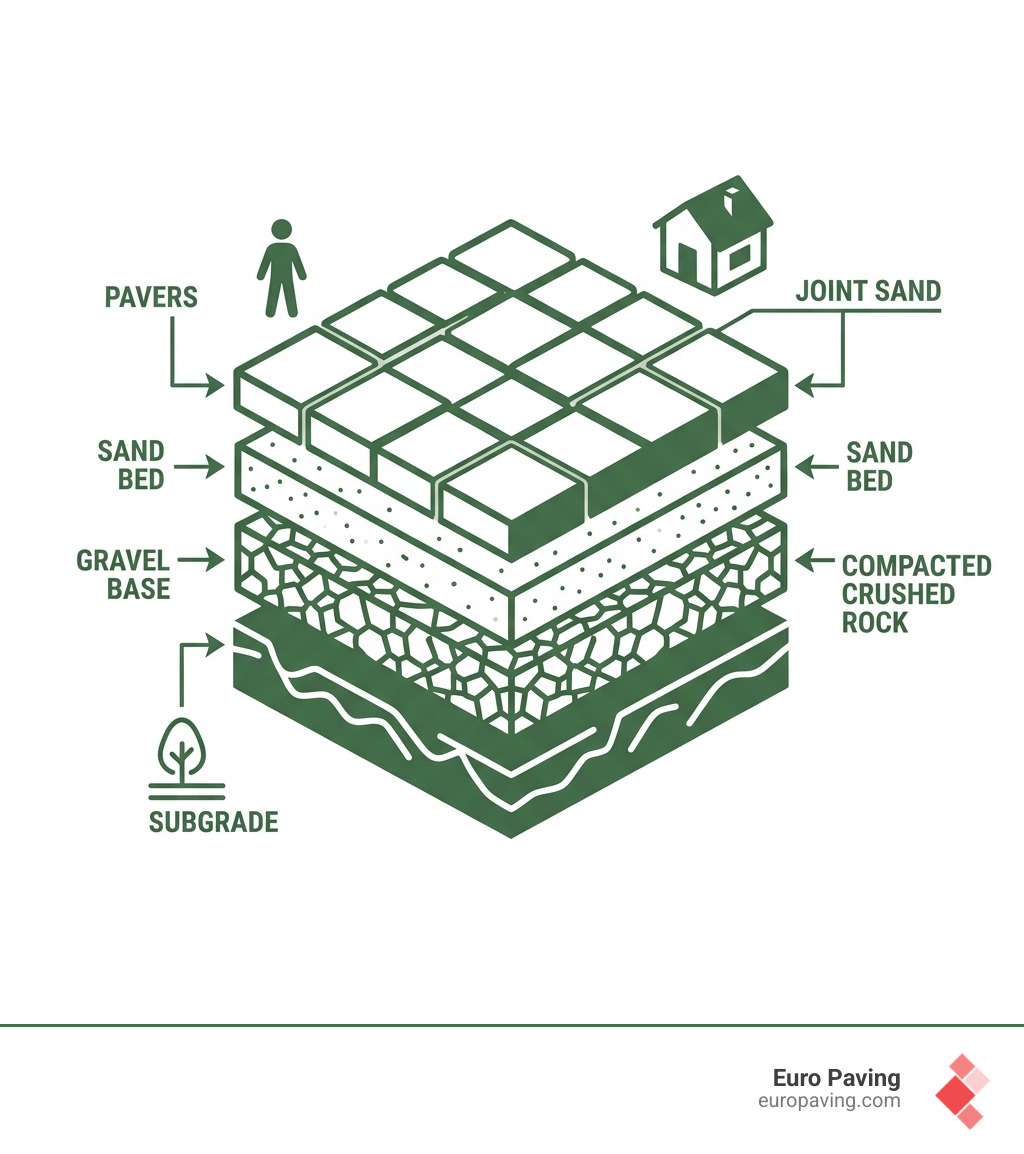
Know your laying paver sidewalk terms:
Strategic Planning and Design for Walkway Longevity
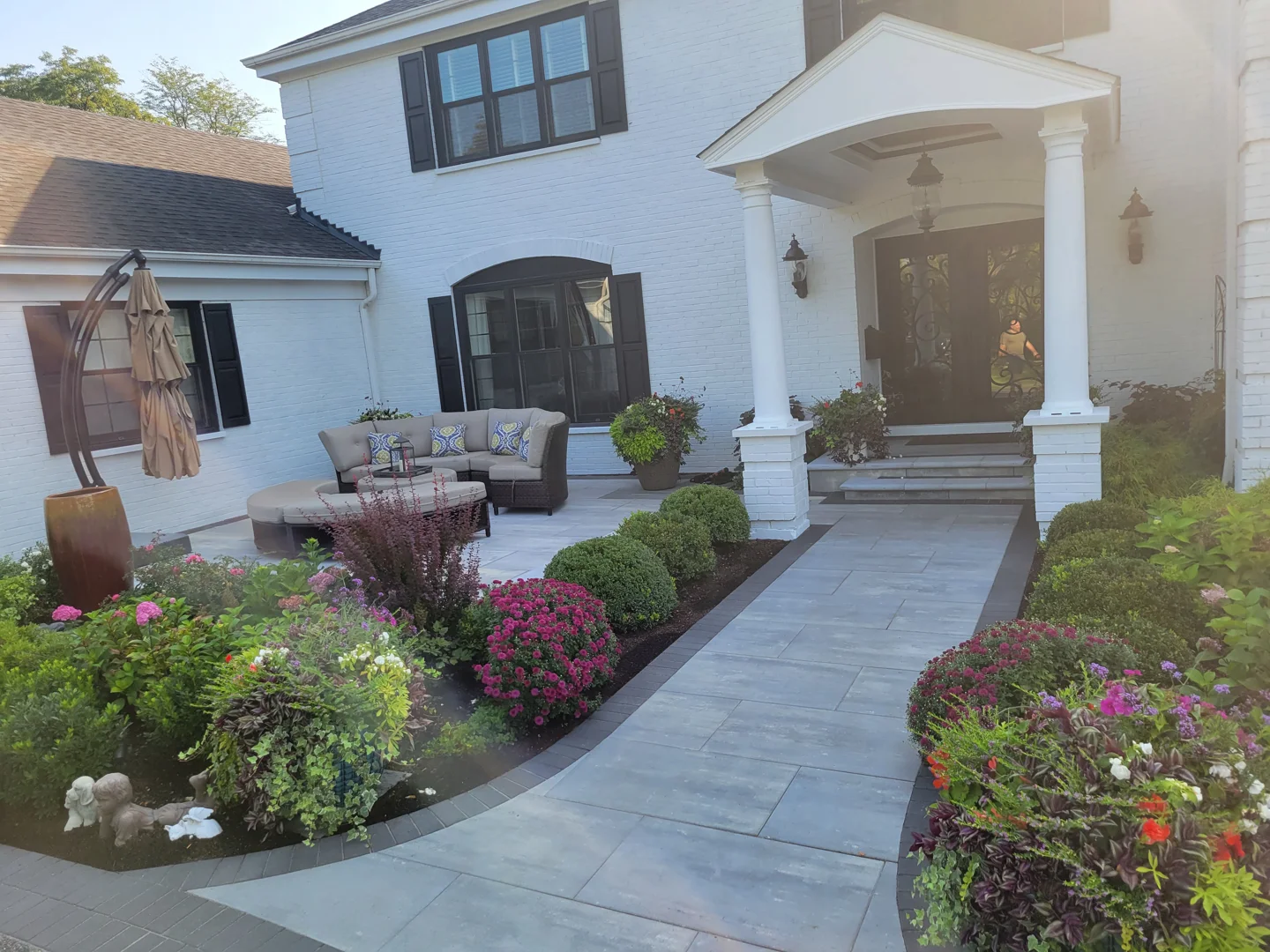
When we sit down with homeowners in Skokie or Barrington to discuss a new project, we emphasize that the design phase is where the magic happens. A well-planned walkway isn’t just a path from point A to point B; it’s an architectural element that guides the eye and defines your outdoor space.
For those looking for more info about sidewalk design and inspiration, it’s important to consider both aesthetics and ergonomics. A standard walkway width is 36 inches, which is comfortable for one person. However, if you want two people to walk side-by-side comfortably, we recommend a 48-inch width. If you are designing for accessibility, a 36-inch path with a 60-inch turnaround area for wheelchairs is the professional standard.
Before any dirt is moved, we always call 811. In the Chicago area, hitting a gas or water line can turn a dream project into a nightmare instantly. We also check for local permits, as some municipalities like Norridge or Downers Grove have specific codes regarding permeable surfaces and property line setbacks.
Our team often utilizes 3D design planning to help clients visualize the final result. This allows us to account for:
- Property lines and setbacks: Ensuring we don’t encroach on the neighbor’s yard.
- Existing vegetation: Protecting tree roots that could lift pavers later.
- Drainage patterns: Directing water away from the foundation.
- Utility locations: Avoiding high-traffic areas over sensitive lines.
Determining Project Timeline and Skill Requirements
As of April 2026, the standards for high-end hardscaping have evolved. While a simple stepping-stone path might take a few hours, laying paver sidewalk surfaces that meet professional standards is a labor-intensive process. A typical 30-foot walkway can take 24 to 40 man-hours depending on the complexity of the curves and the soil conditions.
Professional grading is the most difficult part of the job. If the ground isn’t perfectly pitched, you’ll end up with “birdbaths” (standing water) that turn into ice sheets during a Chicago winter. For many, the benefits of brick sidewalks—such as increased home value and durability—make the investment in professional installation worthwhile.
Selecting Patterns for Laying Paver Sidewalk Projects
The pattern you choose dictates the visual rhythm of your landscape. Common choices include:
- Running Bond: The easiest to install; pavers are laid in rows with staggered joints.
- Herringbone: The strongest interlocking pattern, excellent for preventing shifting. It’s a classic look for historic homes in Lake Forest.
- Diamond Bond: A more decorative approach that requires precision cutting.
We often recommend Unilock technologies like FaceMix, which provides a smooth, high-density surface, or Enduracolor, which ensures the color stays vibrant for decades. If you want to see these patterns in action, you can watch How to Install Pavers like a Pro for a visual breakdown of the mechanics.
Professional Grade Materials and Essential Toolset
Quality results require quality tools. You won’t get a 25-year lifespan out of a sidewalk built with a hand shovel and a prayer.
Material costs in the Chicago market generally range from $10 to $20 per square foot for concrete pavers and up to $50 per square foot for premium natural stone or professionally installed pebble paths.
| Material Type | Estimated Cost (sq. ft.) | Lifespan | Best Use |
|---|---|---|---|
| Concrete Pavers | $10 – $20 | 20-30 Years | High-traffic sidewalks |
| Brick Pavers | $5 – $10 | 25+ Years | Classic aesthetic |
| Stepping Stones | $3 – $6 | 15-20 Years | Garden paths |
| Natural Stone | $25 – $50 | 50+ Years | Luxury entryways |
For the installation, we use a specialized toolset including:
- Plate Compactor: Essential for reaching 90-95% soil and base density.
- Laser Levels: To ensure a consistent 1-2% slope.
- Diamond-blade Saws: For clean, dust-controlled cuts.
- Safety Gear: Including silica-rated respirators, heavy gloves, and ear protection.
Estimating Costs for Premium Hardscaping
When budgeting, always factor in a 5-10% overage for material waste and cuts. In Arlington Heights or Mount Prospect, logistics can impact costs—getting a pallet of heavy stone into a tight backyard requires specialized equipment. For those seeking more info about sidewalk paving services, the “cheapest” quote often skips the most important part: the base.
The Foundation: Excavation and Base Preparation for Laying Paver Sidewalk
We cannot stress this enough: the base is the most important part of laying paver sidewalk projects. In the Chicago area, our clay-heavy soils and harsh freeze-thaw cycles will destroy a weak foundation in a single season.
We begin by excavating to a depth of 6 to 8 inches below the finished height. This allows for:
- Subgrade Compaction: We compact the “raw” soil first to prevent future settling.
- Geotextile Fabric: This optional but recommended layer prevents the gravel from sinking into the soft Chicago soil over time.
- Gravel Base: We use 4 to 6 inches of crushed limestone (3/4-inch minus), compacted in 2-inch layers. Each layer is wetted slightly to help the particles lock together.
Achieving Optimal Drainage and Slope
Water is the enemy of hardscaping. To prevent pooling against your home’s foundation, we establish a 1-2% grade. This translates to a 1/4-inch drop for every foot of width. Using a laser level is the only way to ensure this is consistent across the entire length of the path. If you want to see the traditional method for setting these lines, This Old House offers a great look at using mason’s lines.
Creating a Stable Gravel and Sand Bed
Once the gravel base is rock-hard (we test it with a steel spike—if you can’t drive it in easily, it’s ready), we add the bedding sand.
We use 1 inch of coarse, washed concrete sand. To get it perfectly level, we lay down two 1-inch PVC pipes as “screed rails” and pull a straight 2×4 board across them. This creates a smooth, flat bed for the pavers to sit on. Never use “play sand,” as the rounded grains will shift like marbles under the pavers. For more details on this specific layer, check out our brick paving sidewalks guide.
Precision Installation and Structural Integrity
Now comes the part where the sidewalk actually starts to look like a sidewalk. We start laying pavers from a fixed, straight edge—usually the house or a driveway.
Edge Restraints: The Unsung Heroes
Without edge restraints, your pavers will eventually “walk” into the grass. We install rigid or flexible plastic edging along the entire perimeter, secured with 12-inch galvanized nails every 8 to 12 inches. This keeps the joints tight and prevents lateral shifting.
Advanced Cutting and Fitting Techniques
Curves add elegance, but they require precision. We use wet-cut masonry saws to ensure clean edges without the dangerous dust. For a truly professional look, we often install a “soldier course”—a border of pavers laid perpendicular to the main pattern. This frames the walkway and provides extra structural support.
Common Installation Mistakes to Avoid:
- Skipping Compaction: Leads to sinking.
- Wrong Sand: Using fine sand that washes away.
- No Slope: Leads to ice patches and foundation water damage.
- Tightly Butting Pavers: Always leave a 1/8-inch gap for joint sand.
Finishing Touches: Jointing, Compaction, and Maintenance
The final step in laying paver sidewalk surfaces is the “lock-up.” We sweep polymeric sand into the joints. Unlike regular sand, polymeric sand contains water-activated polymers that harden into a flexible “glue.”
After sweeping the sand, we run the plate compactor over the pavers one last time. This vibrates the pavers into the bedding sand and helps the joint sand settle deep into the gaps. Finally, we mist the surface with water to activate the bonding agent.
Professional Maintenance for a Long-Lasting Laying Paver Sidewalk
While pavers are low-maintenance, they aren’t “no-maintenance.” To keep your walkway looking like new:
- Reseal every 3-5 years: This protects the color and keeps the polymeric sand intact.
- Clean Efflorescence: That white, chalky powder that sometimes appears is natural salt; it can be cleaned with specialized paver cleaners.
- Winter Care: Avoid using heavy rock salt, which can pit concrete surfaces. Use calcium chloride or sand for traction instead.
For more inspiration on how to categorize and style your paths, visit our sidewalk categories page.
Frequently Asked Questions about Sidewalk Paving
Can pavers be installed over existing concrete?
Yes, but with caveats. The concrete must be in good structural shape without large cracks or heaving. We use a thin-set sand bed or specialized adhesive. However, you must account for the height transition—adding 3 inches of material on top of a sidewalk might create a trip hazard at the door or driveway.
How do you fix uneven or sinking pavers?
Sinking is almost always a sign of base failure or poor compaction. To fix it, we lift the affected pavers, add and re-compact the gravel base, screed new sand, and relay the stones. It’s a “spot repair” that saves you from replacing the whole walk.
What are the best pavers for Chicago climates?
In the Chicago area, we recommend high-density concrete pavers from brands like Unilock. They are engineered to withstand the extreme freeze-thaw cycles of Cook and DuPage Counties. Permeable designs are also excellent for managing the heavy rainfalls we see in the spring.
Conclusion
Laying a paver sidewalk is an investment that pays dividends in both curb appeal and functionality. When done right, it provides a stable, beautiful path that serves your family for decades. At Euro Paving, we take pride in transforming backyards and entryways in Chicago, Hinsdale, and across the suburbs into relaxing, high-end spaces.
By following professional standards—from the 95% density compaction to the precision of the 1% slope—we ensure that your “weekend project” doesn’t become a “next year’s headache.” Whether you want a classic brick look or a modern stone aesthetic, the foundation is what matters most.
Ready to upgrade your home’s exterior? Contact Euro Paving for professional sidewalk paving and let us help you design a walkway that stands the test of time.