



Why Brick Pavers Are the Smartest Upgrade for Your Outdoor Space
Exploring patio brick paver ideas is the first step toward turning a bare backyard into a functional outdoor living space your family will actually use. Whether you want a cozy fire pit area, a dining terrace, or a full outdoor kitchen, brick pavers deliver the durability and curb appeal to make it happen.
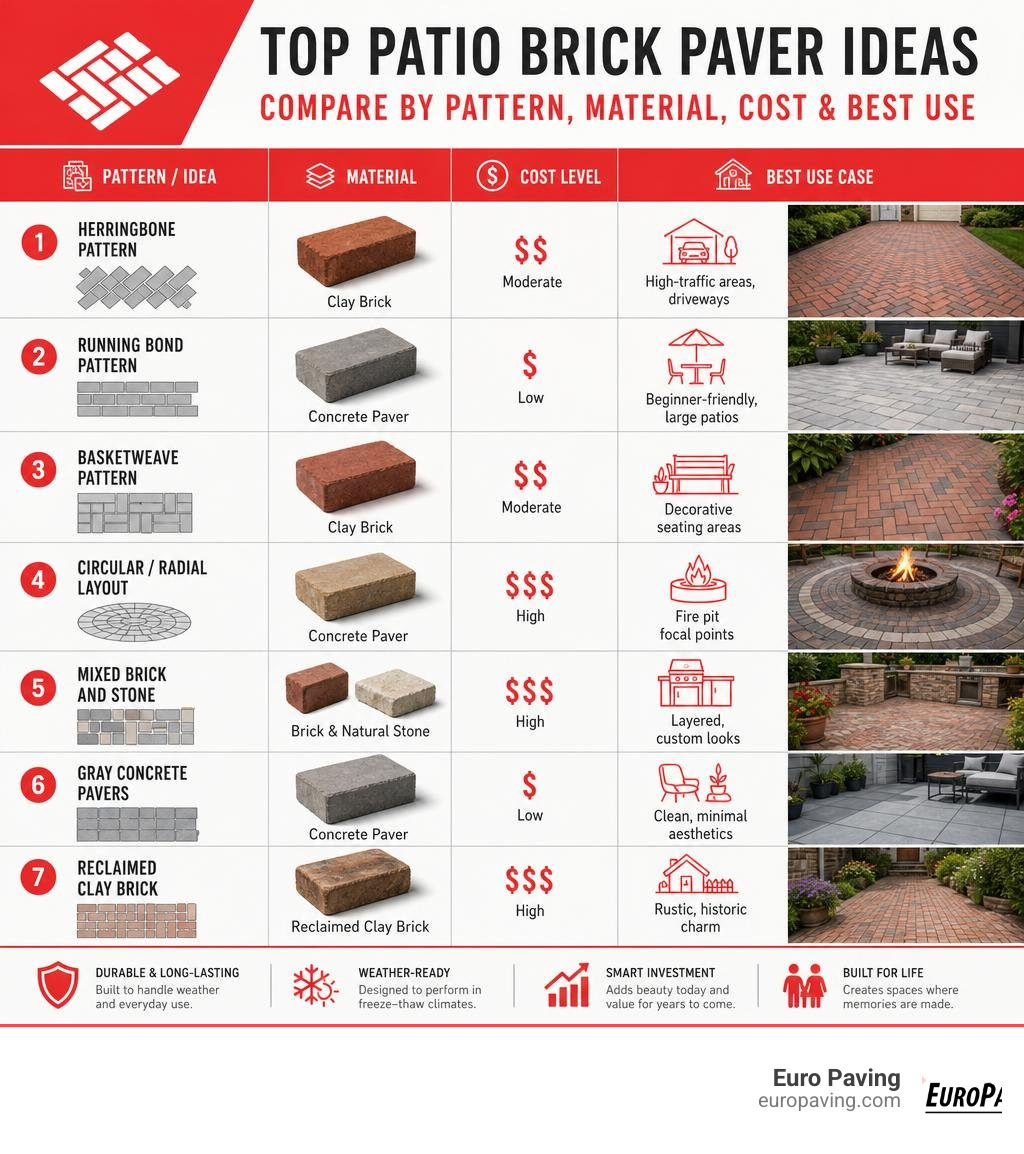
Here are the top patio brick paver ideas at a glance:
| Idea | Best For | Style |
|---|---|---|
| Herringbone pattern | High-traffic areas, driveways | Traditional, transitional |
| Running bond | Beginner-friendly, large patios | Modern, classic |
| Basketweave | Decorative seating areas | Cottage, traditional |
| Circular/radial layout | Fire pit focal points | Any style |
| Mixed brick and stone | Layered, custom looks | Mediterranean, contemporary |
| Gray concrete pavers | Clean, minimal aesthetics | Modern |
| Reclaimed clay brick | Rustic, historic charm | Farmhouse, cottage |
Brick patios score a homeowner satisfaction rating of 9.7 to 9.9 out of 10 — the highest of any outdoor renovation project. And a well-built patio returns 60–80% of its cost at resale.
But not all brick paver projects are equal. The pattern, material, and base preparation you choose determine whether your patio lasts 5 years or 50. This guide compares the top design options so you can make the right call before breaking ground.
Chicago-area homeowners face specific challenges — freeze-thaw cycles, clay-heavy soil, and HOA requirements — that make professional installation and material selection especially important.
Know your patio brick paver ideas terms:
Popular Patio Brick Paver Ideas by Architectural Style
Selecting the right patio brick paver ideas starts with looking at your home’s existing architecture. In the Chicago suburbs, we see everything from historic 1920s bungalows to sprawling modern estates. Your patio should feel like an organic extension of your indoor living space, matching the siding, trim, and overall architectural era of your home.
When researching design styles, many homeowners gather inspiration from 75 Brick Patio Ideas You’ll Love – June, 2026 | Houzz. To narrow down these options, we suggest focusing on how the patio’s color, texture, and shape complement your home’s exterior. For a complete deep dive into how different layouts can transform your yard, check out Lay It On Me: 25 Stunning Brick Patio Designs for Your Backyard.
Traditional and Cottage Patio Brick Paver Ideas
For classic colonial, Tudor, or craftsman homes in neighborhoods like Hinsdale, Winnetka, and Lake Forest, traditional and cottage-style designs are incredibly popular. These styles typically rely on rich red clay pavers, weathered or tumbled finishes, and softer, organic layouts.
The goal here is rustic charm. By using clay pavers with natural color variations—ranging from deep crimson to burnt orange and charcoal—we can create an outdoor space that looks like it has been there for decades. Cottage gardens filled with perennials, climbing ivy, and low-profile shrubs frame these warm brick surfaces beautifully. If you are working with a smaller backyard footprint, you can learn how to maximize your space with Brick by Brick: The Best Small Patio Designs.
Modern and Contemporary Patio Brick Paver Ideas
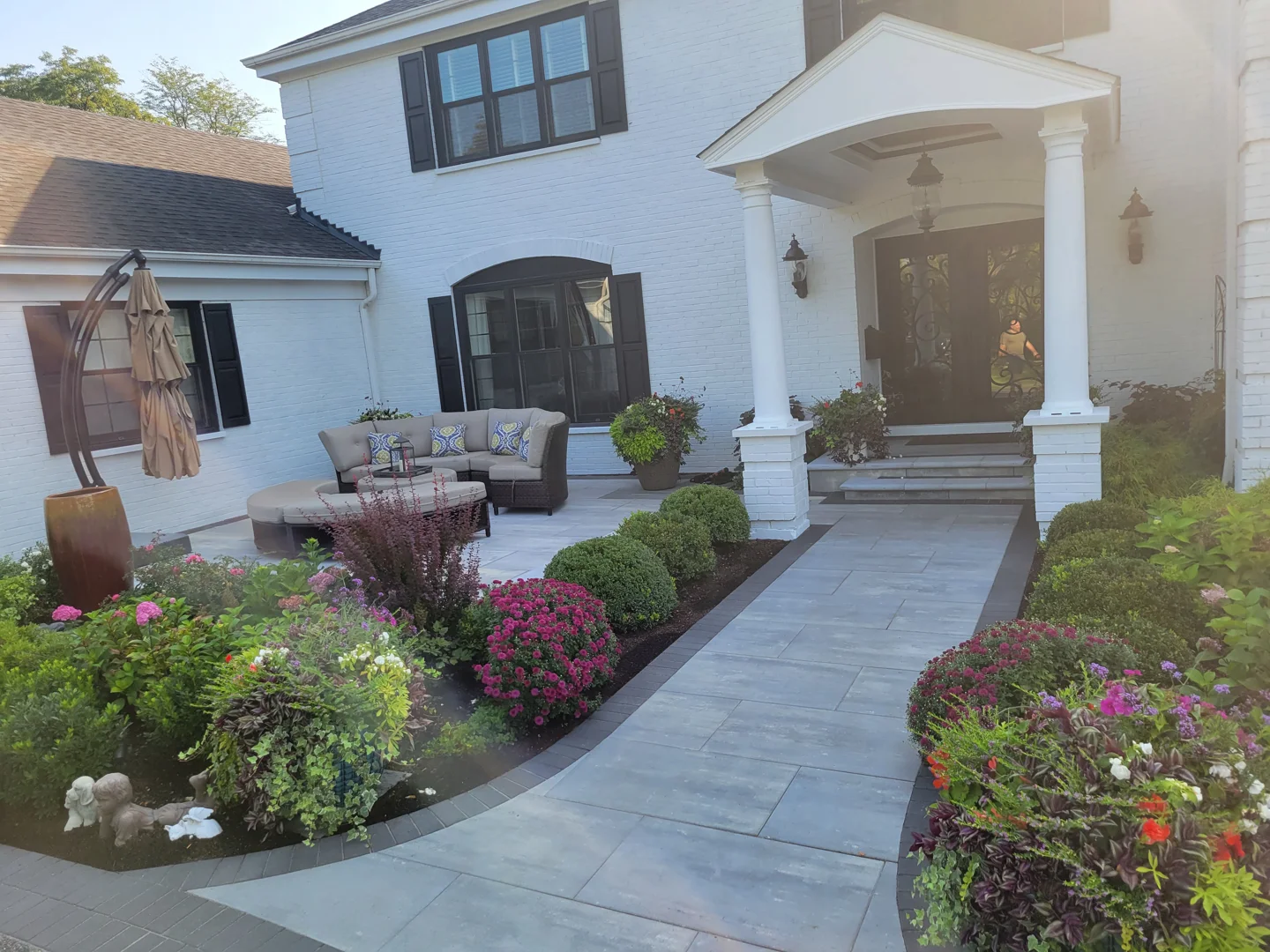
If your home features clean lines, large windows, and minimalist aesthetics—common in newer builds across Glenview, Northbrook, and Skokie—a modern brick patio is the perfect fit. Modern designs depart from traditional red brick in favor of sleek gray, charcoal, and buff finishes.
Instead of standard rectangular bricks, contemporary patios often utilize large-format pavers (such as 24″x24″ or larger) laid in tight, clean joints. These larger sizes minimize joint lines, creating a calmer, more expansive feel. To see how these modern floor layouts look in real-world settings, explore Stunning Brick Patio Floor Designs for Your Next Project.
Comparing Brick Paver Patterns and Material Options
The pattern in which your bricks are laid is not just a visual choice; it also dictates the structural integrity and load-bearing capacity of your patio. For a comprehensive look at how different floor styles set the foundation for your outdoor living room, read through our guide on Brick Patio Floor Inspiration for Your Dream Backyard.
To help you compare your pattern options, we have outlined the three most popular layouts below:
| Pattern | Interlocking Strength | Installation Complexity | Best Use Case |
|---|---|---|---|
| Herringbone | Excellent (Highest) | High (Requires precise cuts) | Driveways, high-traffic patios, walkways |
| Running Bond | Good | Low (Minimal cuts needed) | Large modern patios, clean transitions |
| Basketweave | Fair | Medium | Seating areas, decorative accents, historic homes |
Herringbone Pattern for High-Traffic Durability
The herringbone pattern—where rectangular pavers are laid at 45-degree or 90-degree angles to create a continuous zig-zag—is widely regarded as the strongest laying pattern. Because the bricks interlock tightly, they distribute heavy loads evenly and resist shifting underfoot. This makes herringbone the gold standard for driveways and busy walkways throughout Cook and DuPage Counties.
While it provides incredible durability and visual energy, keep in mind that herringbone requires more cutting along the borders, which can increase labor time and material waste slightly.
Running Bond and Basketweave for Classic Appeal
For a classic, understated aesthetic, the running bond (or stretcher bond) is a highly popular option. This pattern features rows of offset joints, similar to a traditional brick wall. It is incredibly clean, easy to align, and works beautifully on straight walkways or rectangular patios in communities like Elmhurst and Lombard.
The basketweave pattern, on the other hand, groups pairs of bricks at right angles to create a decorative, woven grid. It offers fantastic visual texture and works perfectly for quiet seating nooks or historic farmhouse designs.
Circular and Curved Layouts for Focal Points
If you want to draw attention to a central feature like a fire pit, dining table, or water fountain, circular and curved layouts are highly effective. These designs use radial patterns and concentric rings that emanate from a central point.
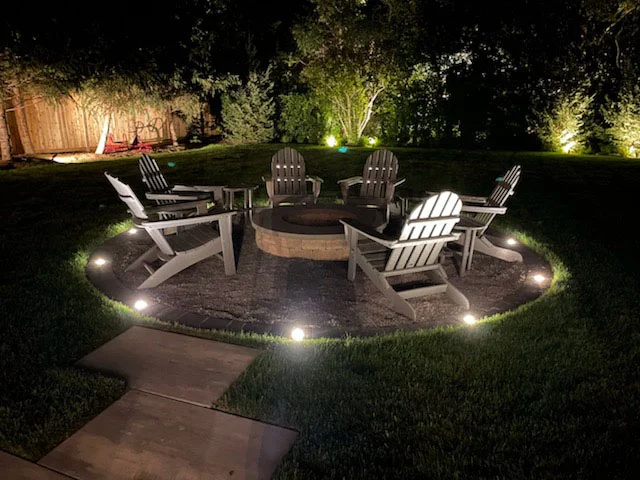
Curved layouts soften the rigid lines of your yard, creating a more organic, inviting flow. For visual inspiration, you can browse through The Best Circular Brick Patio Pictures for Your Next Project or read our comprehensive guide, The Ultimate Guide to Round Brick Patio Design.
Choosing Between Clay and Concrete Pavers
One of the most important decisions you will make is choosing between natural clay and manufactured concrete pavers.
- Clay Pavers: Made from natural clay fired in a kiln, these pavers offer unparalleled color retention. They do not fade under harsh UV rays, meaning a red clay brick will stay red for decades. They also have a beautiful, classic texture that is highly sought after. You can find excellent visual collections of clay layouts on the 68 Best Brick Pavers ideas – Pinterest.
- Concrete Pavers: Engineered from cement and aggregates, concrete pavers offer incredible design flexibility. They come in a massive variety of shapes, sizes, and colors. As a certified installer of premium brands like Unilock, we recommend concrete pavers for their outstanding freeze-thaw resistance, high compressive strength, and lifetime material guarantees.
Understanding Common Brick vs. Face Brick
It is crucial to understand that not all bricks are rated for outdoor paving. Common brick, often used for building walls, is porous and lacks the weathering resistance required to withstand the freeze-thaw cycles of Chicago winters.
For a long-lasting patio, you must use face brick or paving brick designed specifically to handle ground contact, moisture, and heavy foot traffic. Working with professional installers ensures that only high-quality, slip-resistant, and frost-proof materials are selected for your backyard. To understand how professional material selection saves you money in the long run, check out Transform Your Backyard with a Stunning Brick Paver Patio.
Professional Installation Standards and Custom Features
A gorgeous design is only as good as the foundation beneath it. To ensure your investment stands the test of time, we adhere to strict engineering standards on every project. To see what goes into a professional hardscaping project from start to finish, refer to The Ultimate Checklist for Patio Hardscaping Services.
Excavation, Base Preparation, and Drainage
The most common cause of patio failure—such as sinking, tilting, or weed growth—is a poorly prepared base. A professional installation requires excavating 8 to 10 inches below grade.
First, we lay a geotextile fabric to prevent soil mixing. Next, we install 4 to 6 inches of crushed gravel, compacting it in lifts using a heavy plate compactor. This is topped with a 1-inch layer of bedding sand, which is screeded to a perfect level. Crucially, the entire base must be sloped at a minimum of 1/4 inch per foot away from your home’s foundation to ensure proper water runoff. You can read a breakdown of this process in How to Build a Brick Paving Patio in 9 Steps.
Edge Restraints and Polymeric Sand Joints
To prevent the outer borders of your patio from shifting outward over time, we install heavy-duty steel or aluminum edge restraints staked securely into the ground.
Once the pavers are set, we fill the joints with polymeric sand. Unlike regular sand, polymeric sand contains special additives that activate when misted with water, hardening to lock the pavers in place. This joint stabilization is essential for preventing weed growth, resisting erosion, and keeping ants out of your patio joints in areas like Norridge and Skokie.
Fire Pits, Pergolas, and Seating Walls
To turn your patio into a true outdoor living room, we can integrate custom vertical features. Seating walls built from matching brick or stone provide permanent, low-maintenance seating for large gatherings.
Adding a built-in fire pit or an outdoor fireplace creates a cozy focal point for cool autumn evenings. For shade, a custom wood or vinyl pergola can be anchored directly into the patio’s structural base. To explore some of our favorite completed projects featuring these custom upgrades, take a look at our Spectacular Patio gallery.
Combining Brick with Stone, Gravel, and Turf
For a truly custom, high-end look, consider a mixed-material design. Combining classic red brick with natural flagstone borders, pea gravel infill, or clean concrete slabs creates beautiful texture contrasts.
In 2026, we are seeing a massive trend toward biophilic designs, where turf strips or ground covers like creeping thyme are planted between large paver joints. This softens the hardscape and improves natural drainage. For design inspiration on combining materials, you can view our gallery of Beautiful Brick Patios or read the latest trends in the Paver Patio Ideas 2026: 42 Stylish Layouts With Brick, Stone, Fire Pits, And DIY Budget Tips for USA.
Frequently Asked Questions about Patio Brick Pavers
Planning a hardscaping project naturally brings up questions about pricing, maintenance, and longevity. Here are the answers to the most common questions we hear from homeowners in Mount Prospect, Hinsdale, and the surrounding Chicago suburbs.
How much does a professional brick paver patio cost in the Chicago area?
A professionally installed brick paver patio typically costs between $15 and $35 per square foot, depending on the materials chosen, the complexity of the laying pattern, and site access. For a standard 300-square-foot patio, homeowners should budget between $5,000 and $10,500.
That high-quality pavers represent only about 20% of the overall project budget—the remaining 80% reflects the intensive excavation, base preparation, and skilled labor required to build a patio that lasts. To see a stunning example of a high-end residential installation, visit our page on the Spectacular Brick Patio Hinsdale IL.
What maintenance is required for a brick paver patio?
While brick patios are incredibly durable, they do require occasional maintenance to preserve their beauty:
- Cleaning: Sweep regularly and wash off seasonal dirt with a garden hose and mild dish soap. Avoid using wire brushes, which can scratch the paver surface.
- Joint Sanding: Over time, joint sand may settle. We recommend sweeping fresh polymeric sand into the joints every 8 to 10 years to maintain joint stabilization.
- Sealing: We recommend applying a high-quality paver sealer every 3 to 5 years. Sealing protects the pavers from UV damage, repels oil and food stains, and enhances the natural color of the brick.
- Winter Care: When clearing snow in Arlington Heights or Barrington, use plastic-edged shovels instead of metal ones to prevent scratching. Avoid using harsh chemical de-icers; instead, opt for sand or calcium chloride-based products that are safer for concrete and clay surfaces.
How long do professional brick paver patios last?
When designed with a proper compacted base and installed by certified professionals, a brick paver patio can easily last 30 to 50 years—and natural stone or clay options can last even longer. Because individual pavers are flexible, they naturally adjust to the dramatic freeze-thaw cycles of Cook County without cracking, unlike poured concrete slabs. If a single paver ever becomes stained or damaged, it can easily be popped out and replaced without disturbing the rest of your patio.
Conclusion
Investing in a custom brick patio is one of the best ways to expand your living space, increase your home’s value, and create lasting memories with your family. From classic red clay herringbone patterns to sleek, modern gray concrete layouts, the design possibilities are virtually endless.
At Europa Paving, we specialize in turning backyard dreams into reality. Our experienced team uses advanced 3D rendering to help you visualize your project before we ever move a shovel of dirt. Whether you are ready to install a gorgeous new patio, a custom outdoor kitchen, or a welcoming fire pit, we are here to deliver exceptional craftsmanship and peace of mind with our lifetime material guarantees.
Ready to take the first step? Schedule a consultation for paver patios with our experts today!