



Why Brick Patio Floor Designs Are the Foundation of a Great Outdoor Space
Brick patio floor designs are one of the most searched topics by homeowners who want to transform a plain backyard into a true outdoor living space.
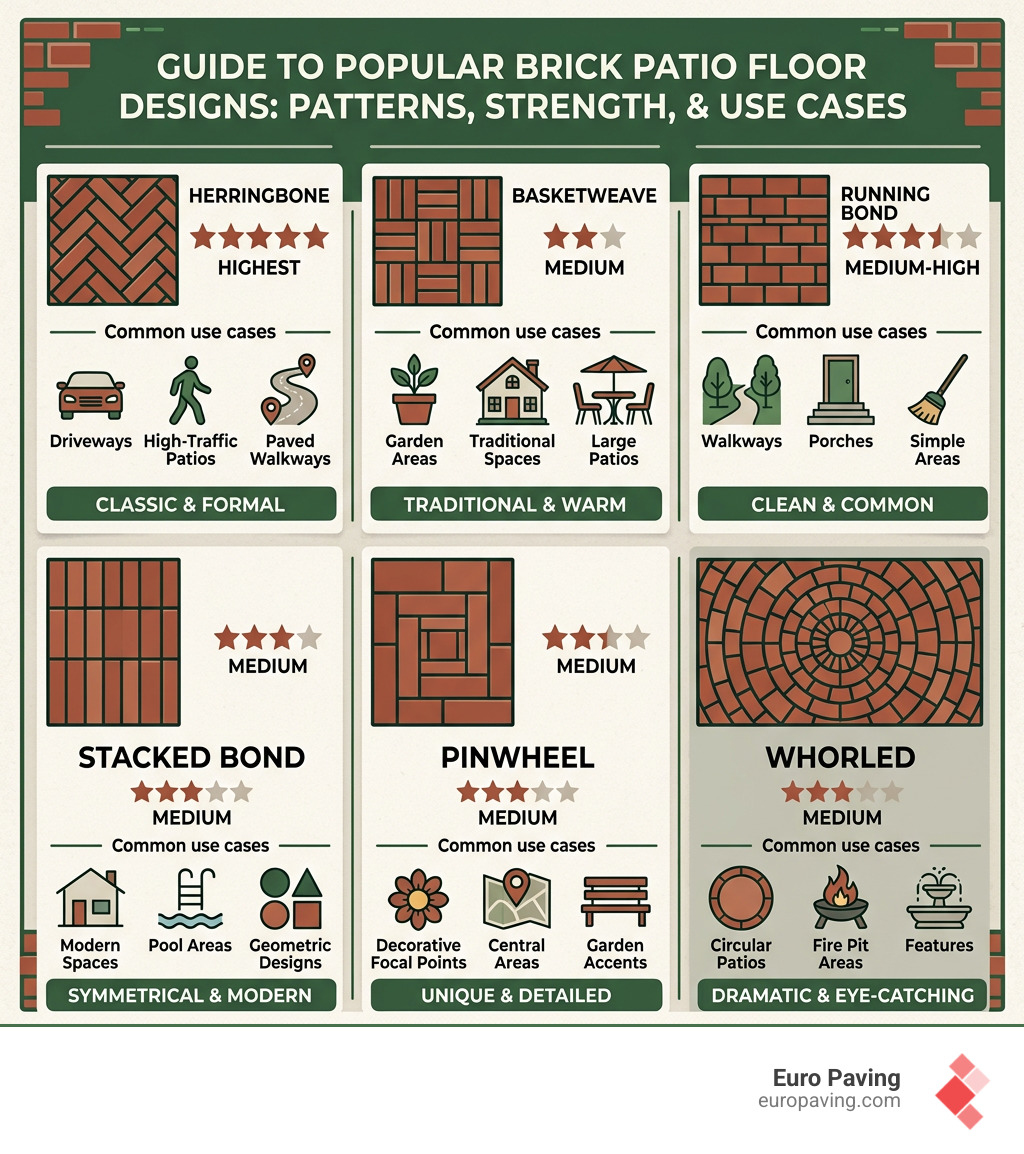
Before diving deeper, here’s a quick comparison of the most popular brick patio patterns to help you choose:
| Pattern | Best For | Strength | Visual Style |
|---|---|---|---|
| Herringbone | Driveways, high-traffic patios | Highest | Classic, formal |
| Basketweave | Large patios, garden areas | Medium | Traditional, warm |
| Running Bond | Walkways, porches | Medium-High | Clean, common |
| Stacked Bond | Pool areas, modern spaces | Medium | Symmetrical, modern |
| Pinwheel | Decorative focal points | Medium | Unique, detailed |
| Whorled | Circular patios, fire pit areas | Medium | Dramatic, eye-catching |
Brick has been used as a building material for over 5,000 years – and its popularity in outdoor spaces hasn’t slowed down. It’s versatile, durable, and works with almost any home style, from historic Chicago bungalows to sleek modern builds in the suburbs.
For busy homeowners dreaming of a backyard where the family can actually gather – whether around a fire pit, an outdoor kitchen, or a shaded dining area – the right brick patio pattern makes a real difference. Not just in looks, but in how well the surface holds up over years of use.
The pattern you choose affects more than aesthetics. It determines how well your patio resists shifting, handles heavy foot traffic, and weathers Chicago’s freeze-thaw cycles.
Popular Brick Patio Floor Designs and Patterns
When we sit down with clients in Hinsdale or Barrington to discuss their vision, the conversation almost always starts with the “look.” However, we quickly transition to how the pattern functions. Choosing from various 21 Brick Paving Designs Hinsdale homeowners love involves balancing the architectural style of your home with the intended use of the space.
For instance, a pattern that looks stunning on a small garden path might feel overwhelming on a 500-square-foot entertaining terrace. Many homeowners find inspiration in 9 Ideas for a Beautiful Brick Patio – Bob Vila, which highlights how classic materials can be reimagined for modern living.
The Structural Superiority of Herringbone
If you are planning a high-traffic area, such as a driveway or a primary patio where heavy furniture will be moved frequently, we almost always recommend the herringbone pattern. This design is widely considered the strongest of all brick patio floor designs.
The secret lies in its interlocking nature. Bricks are laid at either 45-degree or 90-degree angles to one another, creating a zigzag effect that prevents the pavers from shifting or “creeping” under the weight of vehicles or heavy foot traffic. In the context of Brick Patterns for Patios 2024, herringbone remains the gold standard for durability. It’s a sophisticated choice that directs the eye and creates a sense of movement, making it ideal for walkways leading to a grand front entrance.
Visual Texture with Basketweave and Pinwheel
For those who prefer a more nostalgic or “Old World” feel, the basketweave and pinwheel patterns offer incredible visual texture. A basketweave pattern uses pairs of bricks laid at right angles to each other, mimicking the look of a woven basket. It’s a fantastic choice for large, flat expanses where you want to break up the monotony without using complex geometric shapes.
The pinwheel pattern is slightly more decorative, featuring a central “half-brick” or a smaller square paver surrounded by four full-sized bricks. These designs are excellent for creating focal points. We often use these Brick Patterns to Inspire Your Next Project when we want to define a specific “room” on your patio, such as a dining area or a cozy reading nook. One of the practical benefits of these patterns is that they often require minimal cutting, which can help keep the installation process efficient and clean.
Selecting the Right Materials for High-Traffic Patios
While the pattern provides the “skeleton” of your design, the material you choose is the “skin.” In the Chicago area, we have to be particularly picky about materials because of our brutal winters. A brick that looks beautiful in a climate that never freezes might crumble after one season in Skokie or Northbrook.
We primarily work with high-quality clay bricks and advanced concrete pavers from brands like Unilock. For a truly Spectacular Brick Patio Hinsdale IL residents expect, we often look toward natural stone options like sandstone, limestone, or granite. These materials offer superior freeze-thaw resistance and incredible compressive strength. When you invest in an Extraordinary Brick Patio, you aren’t just buying a floor; you’re buying a permanent upgrade to your property’s value.
Comparing Brick Pavers vs. Concrete Pavers
A common question we hear is: “What is the difference between a clay brick and a concrete paver?”
Statistically, a brick paver is about $5 more per square foot than a concrete paver. This price difference reflects the manufacturing process and the longevity of the color. Clay bricks are made from natural earth and fired in a kiln; their color is consistent throughout the entire brick and will never fade, even after decades of UV exposure.
Concrete pavers, on the other hand, offer a wider variety of textures and sizes. They can be manufactured to look like weathered stone, sleek slate, or even wood planks. While they are slightly more affordable, high-end concrete pavers are engineered to be even harder than traditional clay. We often discuss these 11 Benefits of Adding a Brick Patio to Your Home with our clients to help them decide which material aligns with their budget and aesthetic goals.
Professional Installation: Flexible vs. Mortared Methods
At Euro Paving, we believe that a patio is only as good as what lies beneath it. You can choose the most beautiful brick patio floor designs in the world, but if the base is poorly prepared, the bricks will be uneven within a year.
There are two main ways to install a patio:
- Flexible Pavement (Dry-Laid): This is the most common method for residential patios in the Chicago suburbs. It involves laying the bricks on a bed of compacted sand and gravel. It “flexes” with the ground as it freezes and thaws, preventing cracks.
- Mortared Pavement (Wet-Laid): This involves setting bricks into a mortar bed on top of a concrete slab. While this creates a very flat, rigid surface, it is more susceptible to cracking in our climate if the concrete slab moves.
For most of our projects, we follow a rigorous How to Build a Brick Paving Patio in 9 Steps process that ensures longevity. This includes:
- Excavation: Digging down roughly 8 inches to remove organic soil.
- Base Layer: Adding 4 inches of crushed gravel (MOT) and compacting it until it’s rock-hard.
- Sand Layer: Adding a 2-inch layer of sharp sand for the bricks to “nest” into.
- Landscape Fabric: Using high-quality fabric to prevent weeds from coming up through the joints.
- Polymeric Sand: Sweeping a specialized sand into the joints that hardens when misted with water, locking the bricks in place and deterring insects.
Drainage and Grading Considerations
One of the most critical parts of our job is protecting your home’s foundation. We ensure every patio has a 1/4-inch slope per linear foot. This means for every 10 feet of patio, the surface drops about 2.5 inches. This ensures that rainwater runs away from your house and toward your lawn or a designated drainage system.
When searching for Patios Near Me, homeowners should look for contractors who emphasize soil compaction and proper grading. We often use crushed granite for the base because it compacts tighter than standard sand, providing a more stable foundation for heavy features like outdoor fireplaces.
Avoiding Common Installation Mistakes
Many DIY attempts fail because they overlook the “boring” parts of the job. For example, failing to install a proper edge restraint (the border that holds the bricks together) will cause the edges of your patio to “fan out” over time.
Ignoring local building codes is another major pitfall. While many Brick Paving Patios don’t require a full building permit, there are often strict zoning laws regarding how close you can build to your property line (easements). We handle these logistics for our clients in Arlington Heights, Skokie, and beyond to ensure the project is fully compliant.
Customizing Brick Patio Floor Designs for Modern and Traditional Spaces
The beauty of modern hardscaping is that we can create a completely custom environment. We don’t just lay bricks; we design lifestyle hubs. This includes Custom Brick Patios Outdoor Kitchens Backyard Paving Ideas that incorporate seating walls, multi-level layouts, and integrated lighting.
Modernizing Brick Patio Floor Designs with Clean Lines
For homeowners in Barrington or Lake Forest with contemporary homes, we often recommend a minimalist approach. This involves using large-format gray pavers and a stacked bond (Jack-on-Jack) pattern. This creates a symmetrical, grid-like look that feels very clean and organized.
Pairing these Backyard Patios with sleek, minimalist furniture and geometric fire pits creates a high-end, resort-style feel. By using dark or contrasting polymeric sand, we can emphasize the lines of the pattern, making the patio itself a piece of modern art.
Traditional Brick Patio Floor Designs for Historic Homes
If you live in a historic Chicago bungalow or a colonial-style home in Downers Grove, you might prefer a design that feels like it has always been there. We often use reclaimed bricks or pavers with a “weathered” or “tumbled” texture for these projects.
A simple running bond pattern (where the ends of the bricks align with the center of the bricks in the next row) is a timeless choice. This aesthetic is very popular for a Brick Patio in Chicago because it complements the city’s famous masonry. Using eco-friendly sourcing by repurposing older materials is also a great way to add character while being mindful of the environment.
Maintenance and Longevity of Brick Paving
While brick is a low-maintenance material, it is not “no-maintenance.” To keep your brick patio floor designs looking as bright as the day they were installed, we recommend a few simple steps.
Every two years, we suggest a light pressure wash. However, you must be careful—using more than 3,000 psi can actually damage the surface of the brick. You should also avoid sandblaster attachments. After cleaning, applying a clear masonry sealer is the best way to protect your investment. A good sealer:
- Enhances the color of the brick.
- Provides UV resistance to prevent fading.
- Inhibits the growth of mold, moss, and weeds.
- Repels oil and food stains (essential for outdoor kitchen areas).
For more detailed care, we often point our clients toward The Home Depot Maintenance Guide for seasonal tips. You can also explore our Category Patios page for more advice on long-term care.
Frequently Asked Questions about Brick Patio Floor Designs
What is the strongest brick pattern for driveways and patios?
As mentioned earlier, the Herringbone pattern is the strongest. Its interlocking 45 or 90-degree design ensures that the weight of a vehicle or heavy furniture is distributed across multiple bricks, preventing any single paver from sinking or shifting.
How much does a professional brick patio cost compared to concrete?
A professional brick or paver patio typically costs between $15 and $18 per square foot, depending on the material and complexity of the design. While this is more than a simple poured concrete slab, the long-term ROI is much higher. A well-designed patio can offer an 80-100% return on investment when you sell your home.
Do I need a permit for a brick patio in the Chicago suburbs?
It depends on your specific municipality. While a “paver patio” is often considered a non-permanent structure, many suburbs have rules about “impermeable surface ratios” (how much of your yard can be covered so that water can still soak into the ground). We always recommend a professional consultation to check your local zoning laws and property easements before we break ground.
Conclusion
At Euro Paving, we take pride in being more than just installers; we are craftsmen. As a Unilock authorized contractor, we offer our clients access to the best materials in the industry, backed by lifetime material guarantees. Whether you are in Hinsdale, Arlington Heights, or anywhere in the Chicago area, our goal is to transform your backyard into a family-friendly oasis.
From our initial 3D design planning to the final sweep of polymeric sand, we handle every detail so you can focus on what matters: enjoying your new outdoor space. Are you ready to upgrade your home with a custom design? Schedule a consultation for your custom paver patio today and let’s start building your dream backyard together.