



Why Good Brick Patio Steps Design Makes or Breaks Your Outdoor Space
A great brick patio steps design does two things at once: it solves a real problem — navigating a sloped yard — and it creates an entrance that makes your whole outdoor space look intentional and polished.
Quick answer: Key elements of brick patio steps design
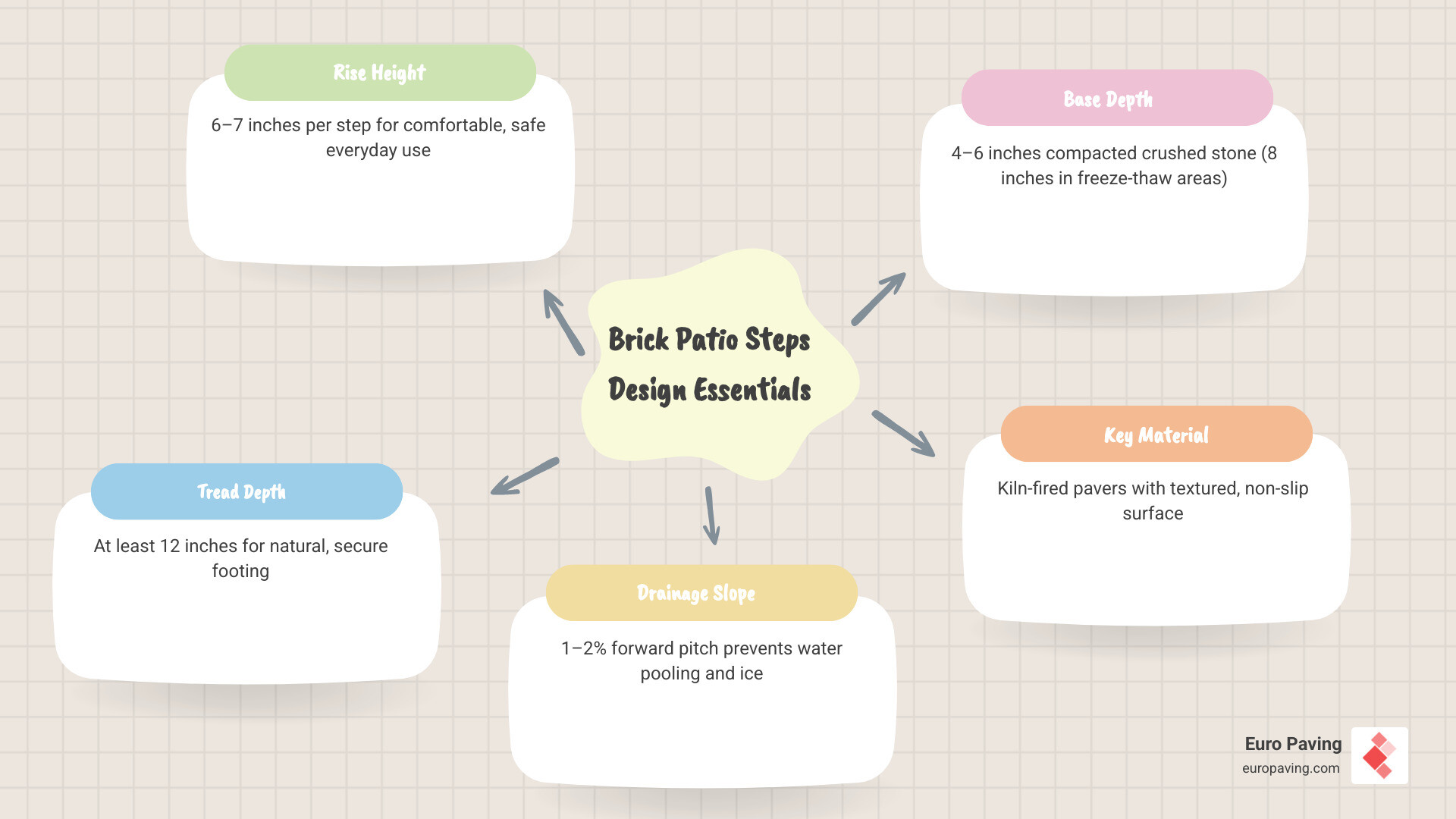
- Rise height: 6–7 inches per step for comfortable, safe use
- Tread depth: At least 12 inches (deeper treads feel more natural)
- Drainage slope: 1–2% forward pitch so water runs off, not pools
- Base depth: 4–6 inches of compacted crushed stone (up to 8 inches in freeze-thaw climates like Chicago)
- Material: Kiln-fired or outdoor-rated pavers with a textured, non-slip surface
- Pattern: Running bond or herringbone for strength and visual appeal
- Integration: Match step pavers to your patio and walkway for a seamless look
Whether you’re connecting a raised patio to your lawn, building an entry from the sidewalk to your front door, or carving usable space out of a sloped backyard, brick steps are one of the most durable and visually rewarding hardscape investments you can make.
Brick pavers can last 25–50+ years with proper installation. But that lifespan depends almost entirely on what happens beneath the surface — the base prep, drainage pitch, and structural foundation.
This guide walks you through every decision that matters: materials, dimensions, patterns, integration with your patio and walkway, and the installation details that separate steps that last from steps that sink.
Brick patio steps design vocabulary:
Why Brick Patio Steps Design Works for Entrances and Sloped Yards
When we look at a backyard in Arlington Heights or a front entry in Hinsdale, we often see elevation changes that make a yard feel “unusable.” A smart brick patio steps design changes that narrative. By installing professional-grade steps, we transform a steep, muddy hill into a functional transition that adds massive curb appeal and resale value.
Main benefits of brick for patio steps
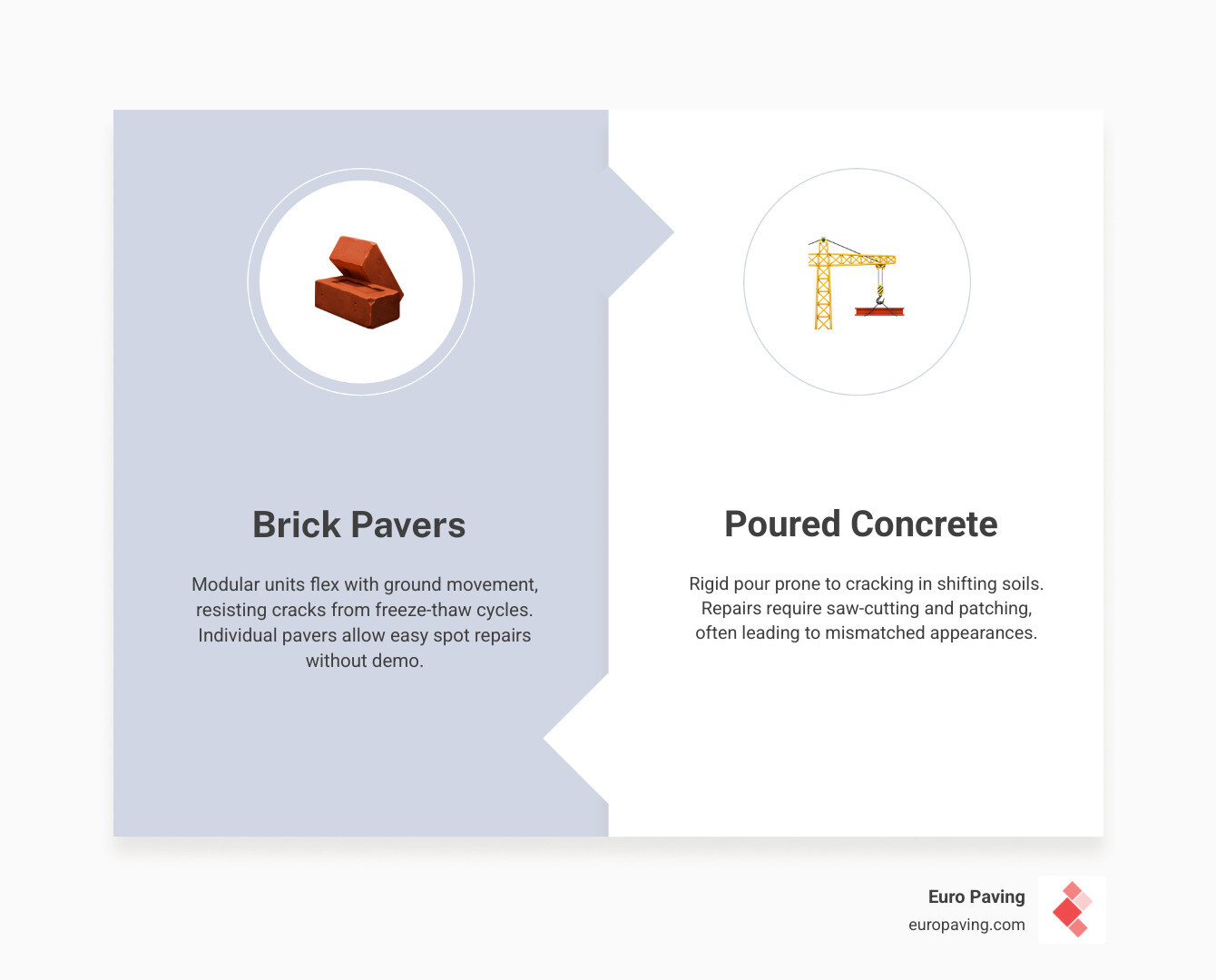
We choose brick for our Chicago-area projects because it is incredibly resilient. Unlike poured concrete, which is prone to cracking during our brutal freeze-thaw cycles, brick pavers are individual units. They flex slightly with the ground movement, preventing structural failure.
Other key benefits include:
- Non-slip texture: Most paving bricks have a naturally rough surface, providing essential traction during rainy days or icy winters.
- Repairability: If one brick gets damaged by a heavy impact, we can replace that single unit without tearing up the entire staircase.
- De-icing salt resistance: High-quality pavers are manufactured to withstand the chemicals we use to clear our walkways in January.
- Color consistency: The pigments in modern pavers are baked in, meaning your steps will look just as vibrant in ten years as they do today.
How brick steps improve outdoor design and property value
A well-designed set of steps isn’t just a way to get from point A to point B; it’s a focal point. In places like Barrington and Northbrook, homeowners use steps to create “zones” in their backyards. You might have a high-tier grilling area that leads down to a lower-tier fire pit lounge.
By matching the brick to the home’s architecture, we create a sense of “outdoor rooms” that feel like a natural extension of the house. This kind of thoughtful hardscaping can significantly boost property value because it proves the yard is fully utilized and easy to maintain.
Best Materials and Layout Choices for Brick Patio Steps Design
Choosing the right material is the first step in ensuring your stairs don’t just look good but stay safe. In our experience across the Chicago suburbs, the “cheapest” brick often ends up being the most expensive after a few winters of crumbling.
Which brick pavers are best for steps and landings
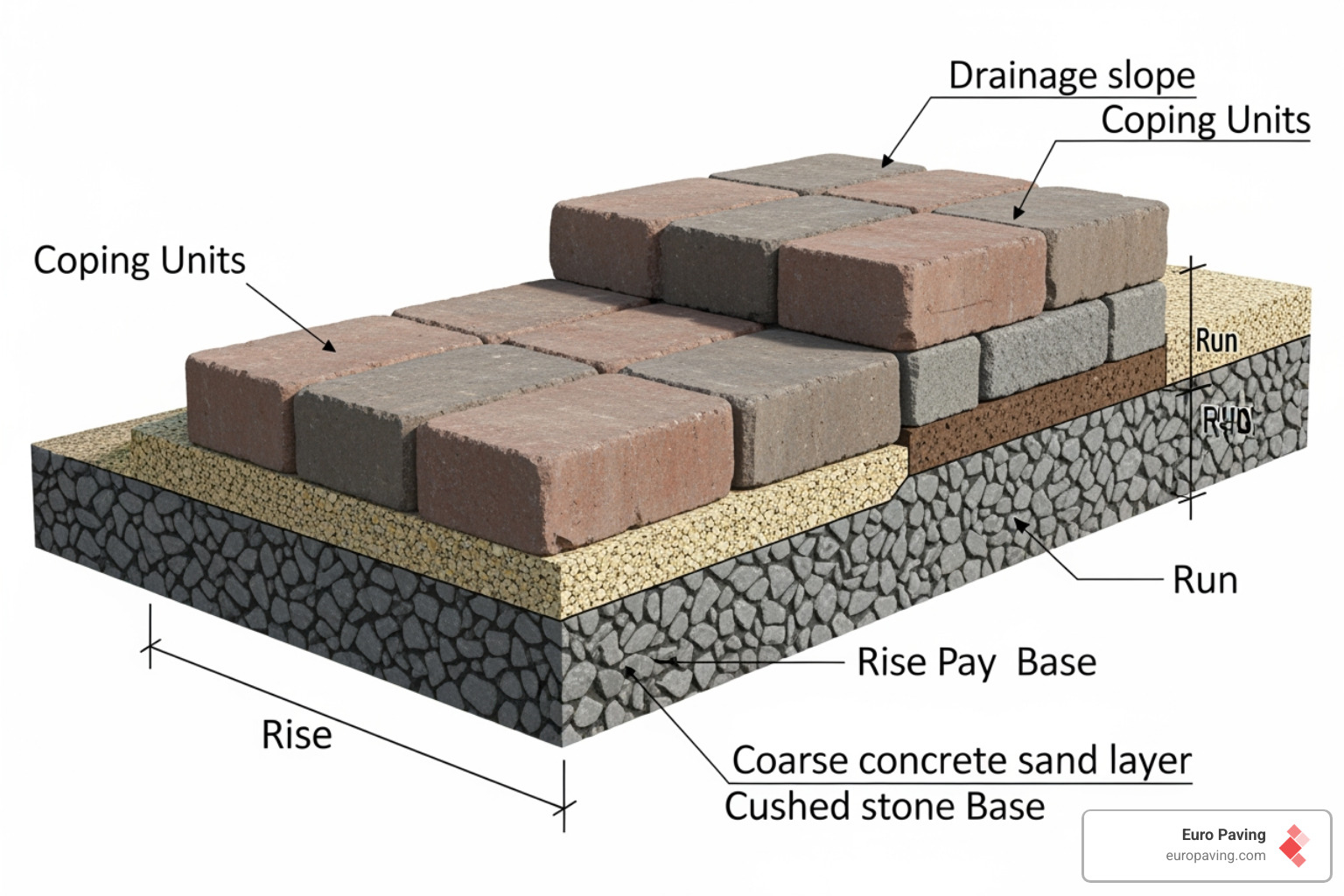
For steps, we recommend kiln-fired clay bricks or high-density concrete pavers specifically rated for outdoor use. These materials have low water absorption rates, which is vital for resisting ice damage.
- Coping Units: These are the “caps” of the steps. We often use bullnose edges (rounded) for a softer look and increased safety against sharp corners.
- Dense Base Materials: We never use “play sand” for the base. Instead, we use coarse ASTM C33 concrete sand over a thick layer of crushed stone.
Proven patterns and styles for a sturdy, attractive look
The pattern you choose for your brick patio steps design affects both the look and the structural integrity.
- Running Bond: This is the classic “staggered” look. It’s excellent for straight steps because it helps lock the bricks together.
- Herringbone: This 45-degree or 90-degree interlocking pattern is the strongest choice for high-traffic areas.
- Soldier Course: We often use this for the borders of the steps, where bricks are laid side-by-side like a row of soldiers to define the edge.
- Curved Steps: For a more organic, “cozy” feel, sweeping curves can soften the hard angles of a house.
Safe dimensions and structural details professionals follow
Safety isn’t an accident; it’s engineered. We follow strict standards for every project in Skokie or Downers Grove:
- Riser Height: We aim for 6 to 7 inches. Anything higher becomes a “climb,” and anything lower is a trip hazard.
- Tread Depth: A minimum of 12 inches is required, but we prefer 14 inches for a more relaxed, natural stride.
- Uniformity: Every single step must be the exact same height. The human brain expects consistency; a variance of even half an inch can cause someone to stumble.
- Forward Slope: We build in a tiny 1/8-inch per foot pitch so that water runs off the front of the step rather than pooling at the back.
How to Integrate Brick Steps with Patios, Walkways, Lighting, and Planting
Integration is what separates a DIY project from a professional landscape design. Your steps should feel like they were born to be there, connecting your paving brick patio and sidewalk seamlessly.
Creating a seamless transition between patio, steps, and sidewalk
We ensure visual continuity by aligning the joint lines of the steps with the main patio area. This creates a clear visual axis that guides the eye toward the entrance. In sloped yards, we often build “landing zones”—wider platforms between sets of steps—to give guests a place to pause and enjoy the view.
Design details that soften hard edges and boost safety
To prevent your hardscape from looking too “industrial,” we use softscaping:
- Sweeping Curves: These feel more welcoming than rigid, straight lines.
- Planting Beds: We often install ornamental grasses or rounded shrubs along the sides of the steps to contrast the square angles of the bricks.
- Lighting: Low-voltage LED path lights or “under-tread” lights are essential for safety at night. They highlight the edge of each step, preventing accidents while creating a warm, high-end glow.
Installation Essentials That Make Brick Steps Last
Building steps is 80% foundation work and 20% laying the bricks. If you skip the prep, the first heavy rain will begin to wash away your hard work.
Base preparation and drainage are the real foundation
We start by excavating 6 to 8 inches deep. We then lay a heavy-duty geotextile fabric to keep the soil from mixing with our gravel.
- Compaction: We use a plate compactor to harden the subgrade and every 3-inch layer of crushed stone.
- Drainage: In the Chicago area, we often extend the base depth to 8 inches to account for the frost line. This ensures that when the ground freezes and thaws, the steps move as one solid unit rather than tilting.
Professional build methods for long-term durability
For a truly sturdy entrance, we often use a “two-set” philosophy. We build a structural core of concrete blocks or a reinforced concrete pad first. This acts as the “skeleton.” We then “clothe” that skeleton in a brick veneer using a specialized mortar mix of three parts sand to one part Portland cement. This mix is much stronger than standard wall mortar and is designed to handle the horizontal pressure of foot traffic.
You can learn more about the technical details of Building Brick Patio Steps… Step by Step or the specific masonry requirements for brick steps to see why professional installation is key for these structures.
Common mistakes to avoid during design and installation
- Ignoring Utilities: Always call 811 before digging. We’ve seen many DIYers accidentally hit gas or water lines.
- Poor Compaction: If the base isn’t “rock hard,” the steps will sink within two years.
- Wrong Mortar: Using lime-based mortar on steps will lead to crumbling joints. Always use a Portland cement-based mix for grade-level work.
| Feature | Brick Pavers | Poured Concrete |
|---|---|---|
| Durability | 25-50+ Years | 15-25 Years |
| Repairability | Easy (Individual units) | Difficult (Requires patching) |
| Crack Resistance | High (Flexible system) | Low (Rigid system) |
| Maintenance | Low (Occasional sand) | Moderate (Sealing cracks) |
| Curb Appeal | High (Classic/Custom) | Moderate (Industrial) |
Brick Steps vs. Concrete, Stone, and Other Paver Options
When choosing your brick patio steps design, it helps to compare it to other popular materials used in the Chicago area.
Durability, maintenance, and cost tradeoffs
While concrete is often cheaper upfront, it lacks the “restoration foresight” of brick. When concrete cracks—and in Chicago, it will crack—the repair always looks like a patch. Brick pavers, however, can be reset or replaced individually. This makes them more cost-effective over a 20-year cycle. Natural stone (like bluestone or travertine) is beautiful but can be significantly more expensive and sometimes more slippery when wet.
How brick performs in freeze-thaw climates
Brick is a champion in Midwest weather. Because the joints are filled with polymeric sand or a flexible mortar mix, the system can “breathe.” This prevents the heaving that ruins solid surfaces. Furthermore, high-fired bricks have very low porosity, meaning they don’t soak up water that later turns to ice and shatters the material from the inside out.
Maintenance Tips to Keep Brick Patio Steps Looking Great
Maintenance for brick is “mild” but essential. We recommend a regular schedule to keep your entrance looking like new. Check out our brick paving steps gallery for examples of how well-maintained steps age gracefully.
Simple upkeep that protects appearance and safety
- Sweeping: Keep organic debris (leaves, dirt) off the steps to prevent staining and algae growth.
- Washing: A gentle power wash once a year can remove built-up grime. Avoid high pressure, which can blow out the joint sand.
- Joint Sand: Every few years, you may need to sweep in a bit of fresh polymeric sand to keep the units locked tight.
When restoration is smarter than replacement
If you have old brick steps that are starting to look tired, you might not need a full replacement. We often perform “restorations” where we lift the existing bricks, re-level the base, and reset them with fresh sand and sealer. This can save you thousands of dollars while making the steps look brand new. Typically, a minor restoration is only needed every 15 to 20 years if you follow a basic cleaning routine.
Frequently Asked Questions about Brick Patio Steps Design
Are brick patio steps a good choice for Chicago-area freeze-thaw weather?
Absolutely. In fact, they are often superior to concrete. The flexible nature of a paver system allows the steps to handle the expansion and contraction of the soil during our extreme temperature swings without cracking.
What step size is safest and most comfortable for everyday use?
We recommend a 6-inch riser and a 12-to-14-inch tread. This ratio mimics a natural walking gait, making the stairs feel effortless to climb.
Do brick steps need sealing and regular maintenance?
Sealing is optional but highly recommended. It protects the color from UV fading and creates a barrier against oil, wine, or leaf stains. We suggest re-sealing every 3 to 5 years depending on the exposure to the elements.
Conclusion
At Euro Paving, we believe that your backyard should be a sanctuary for your family. Whether we are working in Lake Forest, Skokie, or right here in Arlington Heights, our goal is to provide a brick patio steps design that combines safety with stunning aesthetics.
From the initial 3D design planning to the final sweep of polymeric sand, we focus on the structural details that ensure your investment lasts for decades. If you’re ready to transform your sloped yard into a functional masterpiece, we are here to help.
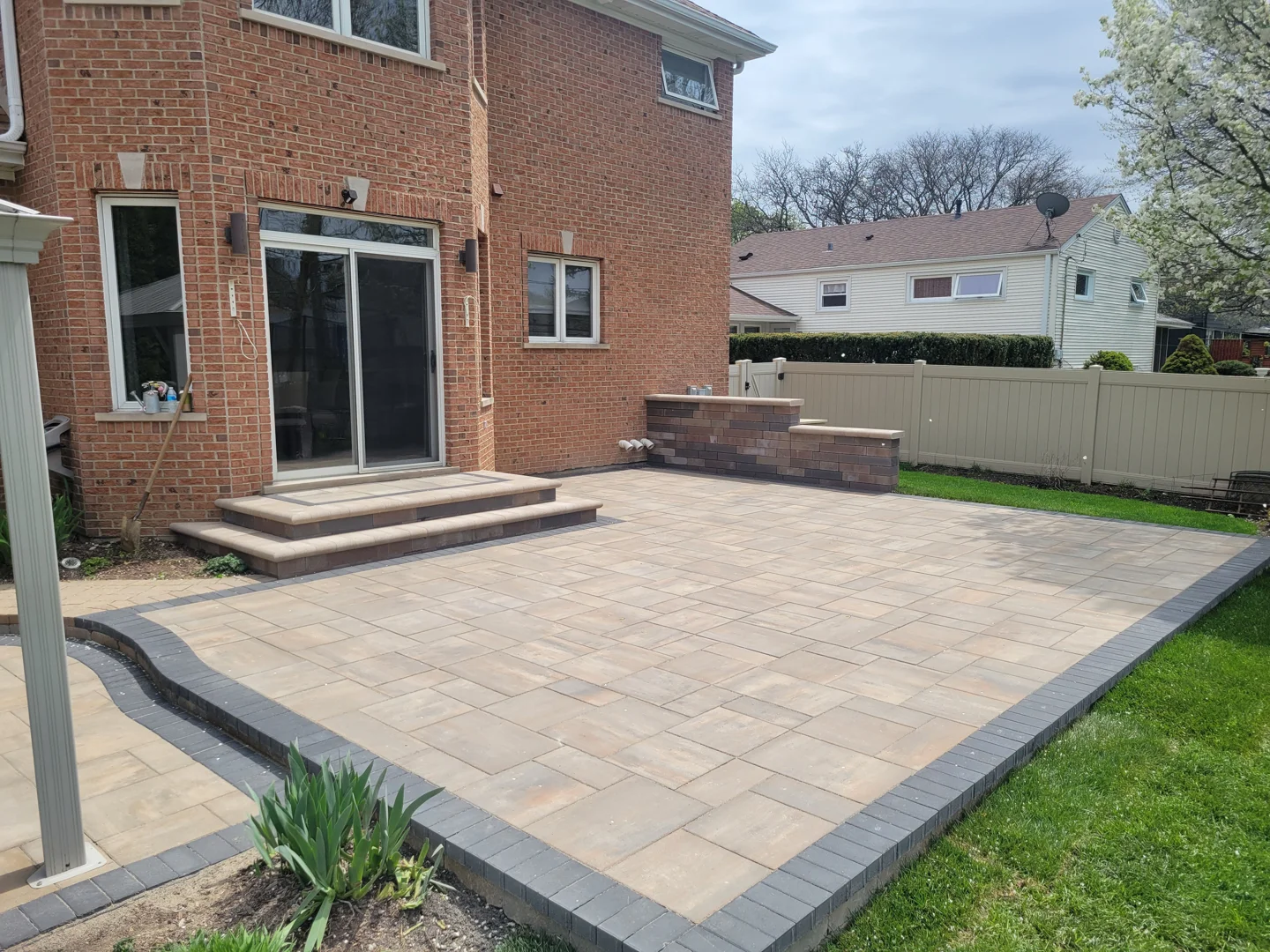
More info about our paver patios See a completed patio and stairs project in Arlington Heights