



What Stone Patio Contractors Do — and Why It Matters for Your Backyard
Stone patio contractors are licensed hardscaping professionals who design, prepare, and install natural stone or paver surfaces for outdoor living spaces.
If you’re looking for a quick overview before diving deeper, here’s what you need to know:
What stone patio contractors typically provide:
- Custom patio design (often with 3D renderings)
- Site excavation and base preparation
- Drainage planning and grading
- Natural stone or paver installation
- Retaining walls, fire pits, and outdoor kitchens
- Sealing, finishing, and ongoing maintenance advice
Typical costs: Stone patios generally start around $25 per square foot and go up depending on material and complexity. Most residential projects are completed in 2–7 days.
Why it matters: Natural stone patios can last for decades — even centuries — when properly installed. The difference between a patio that stays flat for 20 years and one that becomes a trip hazard in 3 comes down almost entirely to one thing: base preparation.
For Chicago-area homeowners, that means excavating deep enough to account for freeze-thaw cycles, compacting the aggregate base correctly, and getting the drainage pitch right from the start.
Whether you’re dreaming of a bluestone patio off your back door, a flagstone entertaining area with a fire pit, or a full outdoor kitchen setup — the contractor you choose will make or break the result.
This guide walks you through everything: materials, installation process, what to look for in a contractor, and how to get it right the first time.
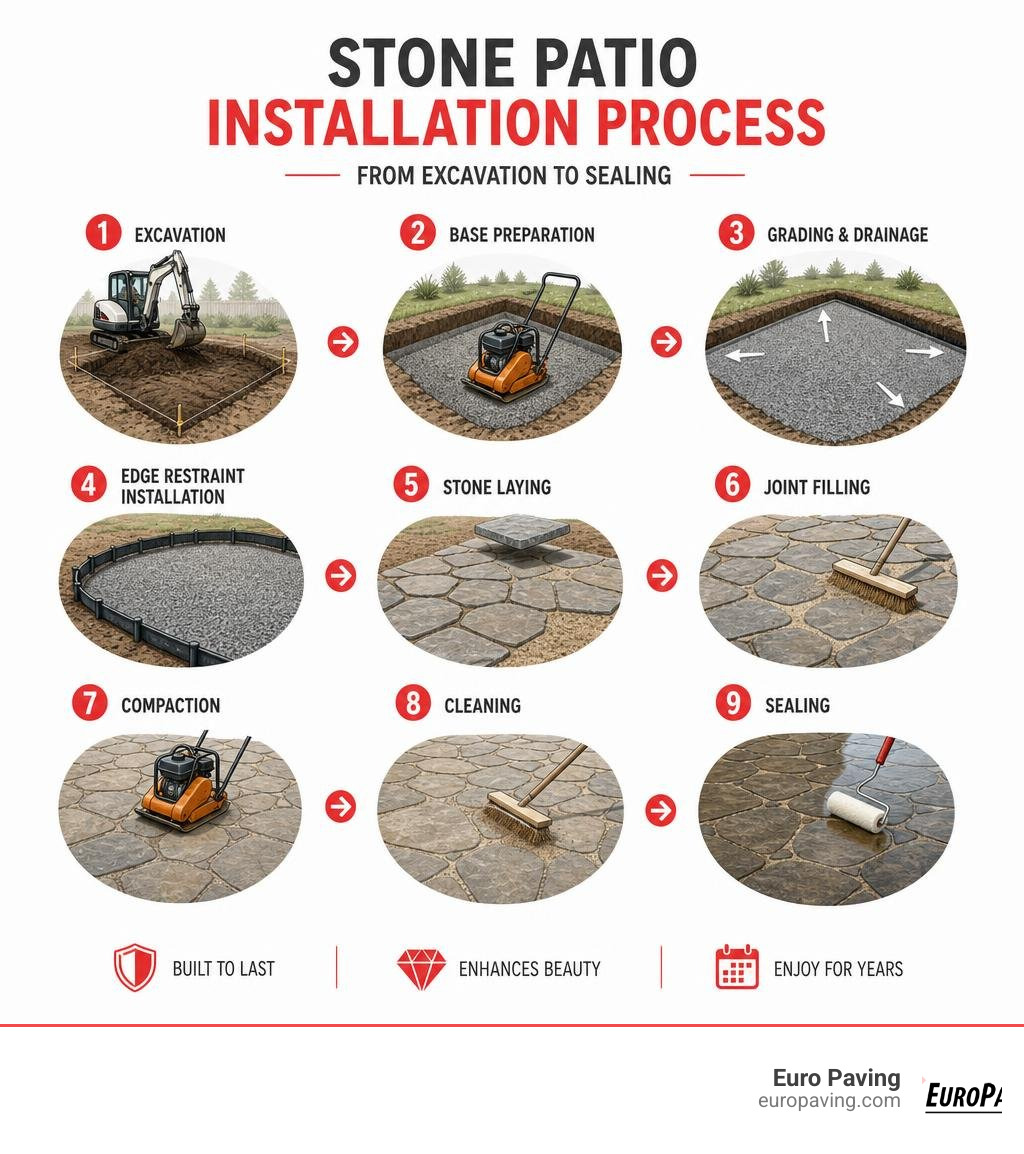
Easy stone patio contractors glossary:
Why Hire Professional Stone Patio Contractors for Your Hardscaping Project
Many home improvement projects make great weekend DIY endeavors. Building a stone patio, however, is not one of them. While laying down a few stones on top of dirt might look passable for a single summer, the harsh climate of the Chicago area will quickly expose any shortcuts taken during installation.
When you hire professional stone patio contractors, you are not just paying for the visible surface stones. You are investing in the invisible engineering beneath them.
The Importance of Sub-Surface Engineering
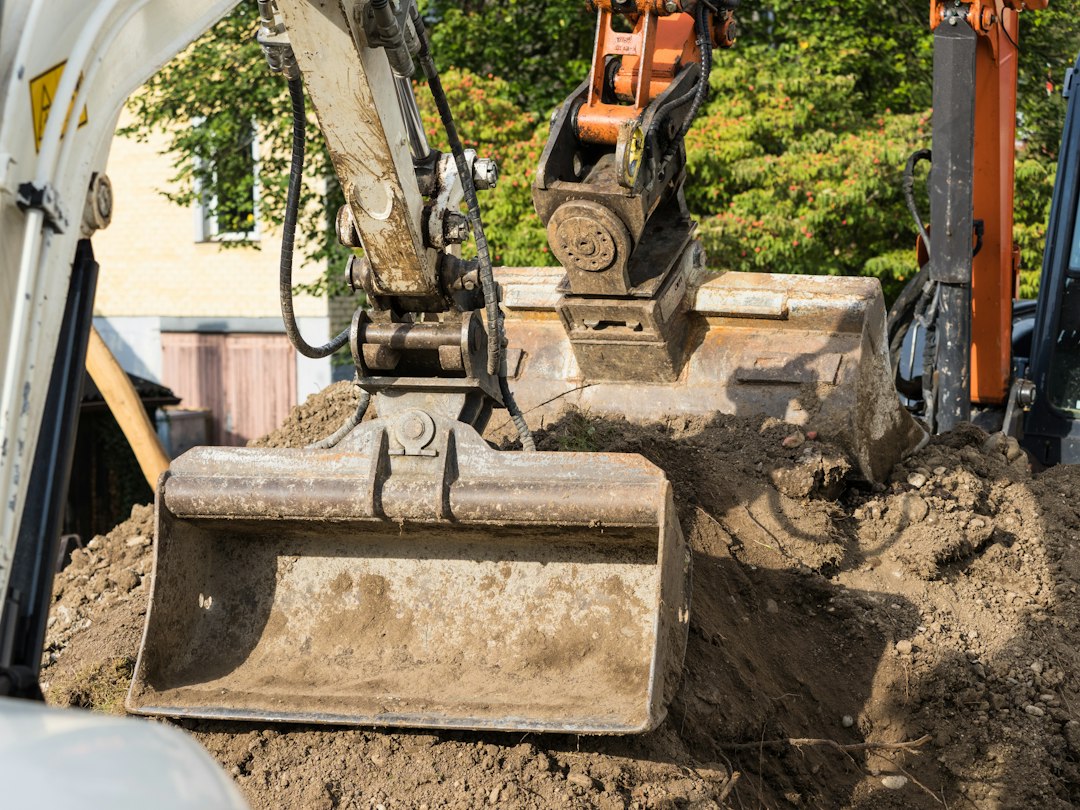
The lifespan of your patio is directly tied to the quality of its foundation. Professional hardscape construction requires deep excavation, heavy-duty soil compaction, and precise grading. Our team at Euro Paving ensures that the ground is prepared according to the highest industry standards to prevent shifting, sinking, and cracking over time.
- Excavation Depth: Standard ground preparation requires excavating 8 to 10 inches below the surface to clear out organic topsoil, which naturally shifts and decays.
- Soil Compaction: Subgrade soil must be thoroughly compacted using commercial plate compactors to create a stable, non-yielding platform.
- Geotextile Fabric: Laying professional-grade geotextile fabric over the subgrade prevents the native clay soil from mixing with your clean aggregate base, maintaining structural integrity.
- Drainage Planning: Water is the ultimate enemy of stone masonry. Professional installers calculate a precise slope—typically a 1.5% grade pitch away from your home’s foundation—to ensure rainwater drains safely.
Without this meticulous preparation, the heavy clay soils found in areas like Downers Grove, Lake Forest, and Arlington Heights will shift under the weight of the stone, turning your beautiful outdoor retreat into an uneven, pooling trip hazard. If you are researching how to vet the right team for this vital work, read our guide on Finding the Best Brick and Stone Patio Installers for Your Home.
Natural Stone vs. Interlocking Pavers
One of the first decisions you will make is choosing between natural stone and manufactured interlocking pavers. Both materials offer incredible aesthetic appeal and long-term durability, but they differ in installation complexity, maintenance, and how they handle the Midwest’s severe weather cycles.
| Feature | Natural Stone (Bluestone, Flagstone, Granite) | Interlocking Pavers (Unilock, Belgard) |
|---|---|---|
| Aesthetic | Organic, unique, timeless and classic | Clean, structured, modern and uniform |
| Durability | Decades to centuries; highly resistant to wear | 30 to 50+ years; engineered for high strength |
| Freeze-Thaw Performance | Excellent (if properly jointed and sealed) | Exceptional; interlocking units flex with soil movement |
| Installation Speed | Slower; requires custom hand-cutting and sorting | Faster; uniform shapes fit together systematically |
| Repairability | Moderate; matching natural variations can be tricky | Easy; individual pavers can be lifted and replaced |
| Cost Profile | Premium investment due to sourcing and labor | High-value, versatile pricing structures |
Understanding the Materials
Natural stone options like bluestone, flagstone, and granite bring an unmatched organic beauty to your yard. Because no two stones are identical, your patio becomes a completely unique work of art. However, because natural stones vary in thickness and shape, they require highly skilled hands to piece together.
On the other hand, interlocking concrete pavers are manufactured to precise dimensions. Brands like Unilock offer high-density pavers that mimic the look of natural stone while providing superior resistance to de-icing salts and heavy traffic. They are designed with built-in joints that allow the system to flex naturally during winter ground heaves without cracking.
To explore more about your material options and design layouts, check out our dedicated pages on Paver Patios and Backyard Patios.
Key Factors in Professional Stone Patio Construction
To ensure your investment stands the test of time, professional stone patio contractors follow a strict multi-step construction process. Skipping even one of these steps can compromise the entire project.
1. Excavation and Base Depth
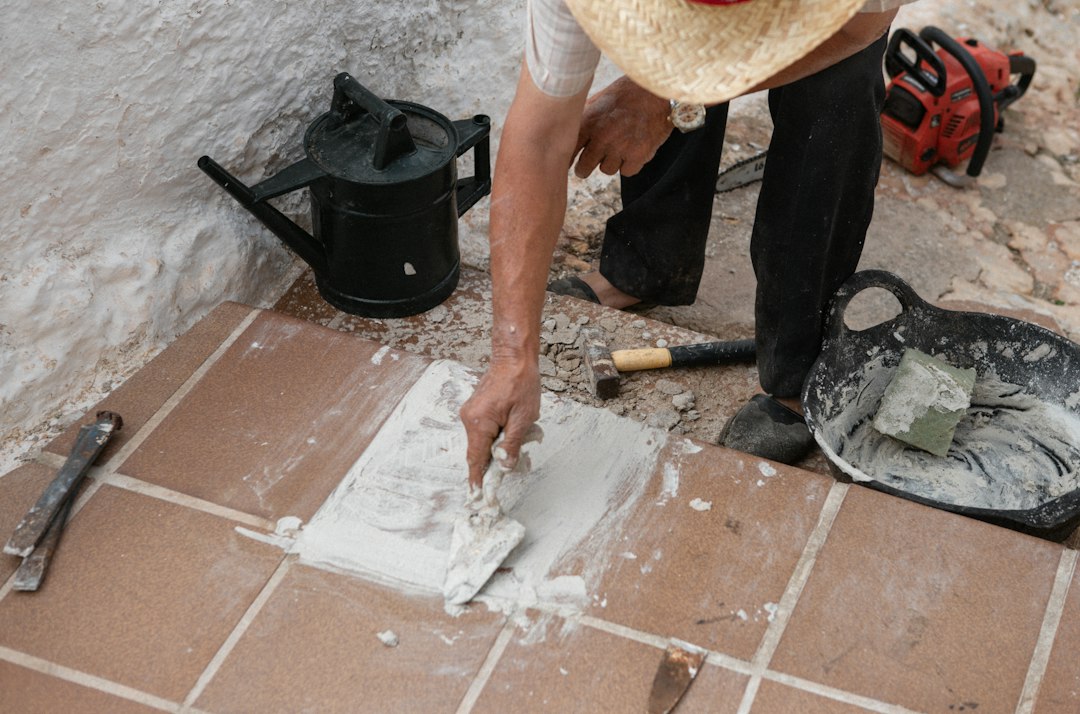
A premium patio requires an aggregate base of at least 6 to 8 inches of crushed limestone. This base must be laid in thin “lifts” (layers of 2 to 3 inches) and compacted thoroughly with commercial machinery. This ensures there are no air pockets or loose spots that could settle later.
2. Edge Restraints
Patios do not just sink; they can also spread outward over time. To lock the stones or pavers tightly in place, we install heavy-duty edge restraints. Modern installations often utilize advanced systems like Perma-Edge or concrete structural curbs rather than cheap plastic edging. This keeps the perimeter rock-solid for decades.
3. Polymeric Joint Sand
Once the stones are laid, the joints are filled with polymeric sand. This is not ordinary sand; it contains special chemical binders that activate when misted with water. Once cured, polymeric sand turns into a flexible, rubber-like barrier that:
- Prevents weed growth between stones.
- Keeps ants and other insects from nesting.
- Resists washouts during heavy rainstorms.
For homeowners in Norridge and the surrounding suburbs, we implement these exact engineering standards on every project. Learn more about our regional services by visiting Euro Paving.
Choosing the Right Materials for Chicago Climates
The Chicago climate is notoriously tough on hardscaping. Between scorching summer days and sub-zero winter nights, your patio will undergo dozens of freeze-thaw cycles every year. If water gets trapped inside a porous stone and freezes, it expands, causing the stone to flake, crack, or spall.
To prevent this, you must select materials proven to withstand local winter conditions:
- Bluestone: A stunning, dense sandstone that is highly popular across the North Shore. It handles cold weather beautifully but should be sealed to prevent surface flaking.
- Granite: Virtually indestructible and completely non-porous. Granite resists moisture absorption, making it immune to freeze-thaw cracking.
- Flagstone: Offers gorgeous, rustic, irregular shapes. It must be carefully sourced to ensure it is of high density and installed with proper drainage.
- Unilock Pavers: As a premium option, high-density concrete pavers are engineered specifically for cold-climate durability. They feature low absorption rates and are backed by lifetime material guarantees.
Selecting the right material is only half the battle; the layout must also complement your home’s architecture. Get inspired by browsing through our collection of Breath-taking Outdoor Living Spaces and Patio Layouts. When you are ready to design a space engineered for local weather, consult with our Euro Paving specialists.
Frequently Asked Questions About Stone Patio Installation
What Services Do Stone Patio Contractors Typically Offer?
Professional hardscape contractors provide comprehensive, end-to-end services. At Euro Paving, we do not just lay stones; we transform your entire backyard. Our services include:
- Custom 3D design planning so you can visualize your project before we dig.
- Hardscape integration, including structural retaining walls, steps, and pillars.
- Custom outdoor living features like built-in brick fire pits and outdoor kitchens.
- Grading, drainage remediation, and final landscape restoration.
To see how we can elevate your property, view our full range of Services Chicago Brick Pavers.
How Do I Choose Reputable Stone Patio Contractors in Chicago?
Your home is your largest investment, so you should only trust it to proven professionals. When vetting contractors in Cook County and DuPage County, look for the following credentials:
- Licensing and Insurance: Ensure they carry comprehensive liability insurance and worker’s compensation.
- Unilock Authorized Contractor Status: This certification proves the contractor has met strict guidelines for installation quality, business stability, and ongoing training.
- Written Warranties: Reputable contractors will offer clear installation warranties (typically 3 to 5 years or more) alongside lifetime material guarantees.
For a deeper dive into choosing the perfect partner for your project, read our expert guide on Choosing the Right Paving Pro. You can also verify local industry standards by researching regional directories, such as Houzz Chicago or Houzz Skokie.
Can Stone Patios Be Installed Over Existing Concrete?
The short answer is: sometimes, but it is rarely recommended.
While installing stone directly over an existing concrete slab saves on excavation costs, it introduces several long-term risks. If the underlying concrete cracks, shifts, or settles, those movements will transfer directly to the stone surface above. Furthermore, concrete slabs do not drain water. If moisture gets trapped between the concrete and the stone during a freezing winter, the stones will quickly pop loose.
A professional contractor will evaluate the structural integrity and drainage pitch of your slab. In most cases, the safest, most durable approach is to break up and remove the old concrete to build a proper compacted aggregate base from scratch.
Conclusion
A custom stone patio is one of the most rewarding investments you can make for your home. It extends your indoor living space, provides a beautiful setting for family gatherings, and significantly boosts your property’s resale value.
At Euro Paving, we specialize in turning backyard dreams into reality. From the initial 3D design to the final sweep of polymeric sand, we bring decades of hardscaping expertise to homeowners across Chicago, Norridge, Arlington Heights, and the surrounding suburbs.
Ready to upgrade your outdoor living space with a gorgeous, durable stone patio? Contact us today to schedule your personalized consultation, and let us build a space your family will enjoy for generations. Learn more about our premium options by visiting our Euro Paving Brick Paving Services page.