



Inspiring Brick Paver Walkway Ideas and Layout Patterns
Brick paver walkway ideas can completely transform the way your home looks and feels from the street. Whether you have a wide front yard in Elmhurst or a narrow garden path in Hinsdale, the right walkway design turns a plain stretch of grass into a standout feature that welcomes guests and boosts curb appeal.
Here are the most popular brick paver walkway ideas to inspire your next project:
- Herringbone pattern – Interlocking bricks laid at 45 degrees for maximum strength and visual interest
- Basketweave pattern – Classic pairs of bricks alternating direction for a timeless, old-world look
- Running bond – Simple offset rows ideal for clean, modern entrances
- Soldier course border – Upright bricks framing the edges for a formal, finished appearance
- Curved walkway with landscape borders – Gently winding paths softened by boxwood hedges or native grasses
- Mixed materials – Brick combined with natural flagstone or cobblestone accents for a custom look
- Circular medallion entry – A decorative focal point at the front door or patio entrance
A professionally installed brick walkway does more than look beautiful. It handles Chicago’s brutal freeze-thaw cycles, directs water away from your foundation, and can last 25 to 50 years with minimal upkeep. It’s one of the smartest hardscaping investments a suburban homeowner can make.
The ideas below cover everything from classic patterns to creative material combinations, so you can find the perfect fit for your home’s style and your family’s needs.
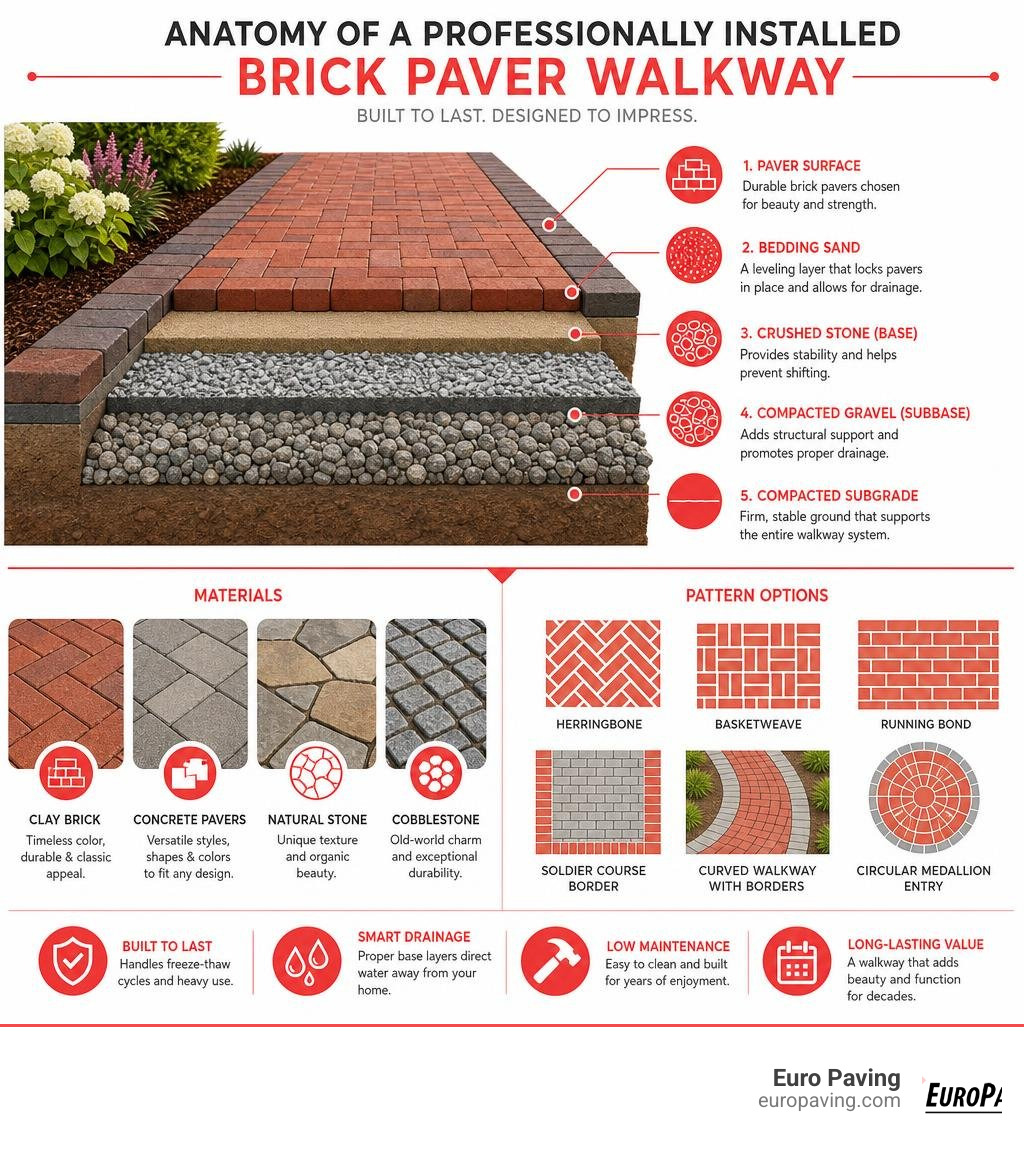
Brick paver walkway ideas terms simplified:
Choosing the right layout pattern is the foundation of any successful hardscaping project. The pattern you select dictates not only the visual rhythm of your front yard or garden but also the structural integrity of the path itself. When we design custom walkways for homes throughout the Chicago suburbs, we pay close attention to how the walkway pattern complements the home’s existing architecture.
Using premium materials like Unilock pavers allows us to achieve incredibly precise, beautiful patterns that stand the test of time. Unilock products offer unmatched durability and color retention, which is essential for withstanding the harsh northern Illinois climate. By selecting the right combination of textures, colors, and layout patterns, you can create a truly customized entrance. For more inspiration on how to elevate your home’s exterior, explore these Stunning Brick Paver Walkway Designs for Your Home.
Classic Herringbone Brick Paver Walkway Ideas
The herringbone pattern is widely regarded as the gold standard for high-traffic walkways and driveways. In this layout, rectangular brick pavers are laid at a 45-degree or 90-degree angle to create a continuous, interlocking zigzag.
From an engineering perspective, the 45-degree herringbone pattern offers superior interlocking strength. Because the joint lines do not run continuously in any single direction, the pavers lock together tightly, distributing weight evenly and resisting shifting under heavy foot traffic. This makes it an exceptionally durable choice for primary front entrances in busy households.
Beyond its structural benefits, the herringbone pattern adds a sense of dynamic visual movement. It naturally draws the eye forward, making it a perfect tool for directing visitors toward your front door. For a look at how this classic style is utilized in high-end projects across northern Illinois, check out Chicago Brick Pavers on Pinterest.
Traditional Basketweave and Running Bond Brick Paver Walkway Ideas
If you prefer a more traditional or relaxed aesthetic, the basketweave and running bond patterns are fantastic options.
The basketweave pattern features pairs of brick pavers laid side-by-side, alternating between horizontal and vertical orientations. This creates a woven, checkerboard effect that exudes historical charm. It is particularly well-suited for historic homes in areas like Lake Forest and Barrington, where preserving a classic, old-world look is often a priority.
The running bond pattern is characterized by simple, linear rows where the joints of each row are offset by half a brick. This clean, straightforward alignment is excellent for modern or contemporary homes, as it emphasizes long, sleek lines.
To elevate either of these patterns, we highly recommend adding a soldier course border. A soldier course consists of rectangular bricks laid standing upright, side-by-side along the outer edges of the path. This contrasting border acts as a visual frame, giving the walkway a polished, custom-tailored finish. Discover how these borders can redefine your front yard by reading about Sidewalk Paving Ideas That Will Make Your Neighbors Jealous.
Designing for Curb Appeal and Landscape Integration
A beautiful walkway should never look like an afterthought. Instead, it should seamlessly integrate with your home’s architecture and surrounding landscape, serving as a functional piece of art that guides visitors through your property.

When designing a walkway, we look at the natural flow of your yard. Straight, centered walkways work beautifully for formal, symmetrical homes with centered front doors. However, gently curving walkways are ideal for softening wide yards, navigating mature trees, or creating visual interest on long approaches. Curving paths feel more organic and inviting, encouraging guests to slow down and enjoy the journey to your door.
A well-planned walkway also frames your landscaping, creating neat borders for planting beds filled with boxwoods, lavender, or ornamental grasses. To understand how a professionally designed entry path can completely redefine your home’s first impression, read our guide on How to Add Curb Appeal With Brick Paver Walkways.
Combining Brick with Natural Stone and Landscaping Elements
To achieve a truly high-end, custom aesthetic, consider combining brick pavers with natural stone accents or distinct landscaping elements. Mixing materials adds texture, depth, and character that a single material simply cannot provide.
For example, bordering a classic red clay brick walkway with rustic cobblestones or natural flagstone accents creates an elegant, layered look. You can also design a stepping-stone style path where large-format stone slabs are bordered by neat brick bands.
Integrating softscaping is equally important. Framing your new brick walkway with low boxwood hedges provides a formal, English-garden feel, while flanking the path with native Illinois grasses and flowering perennials offers a softer, eco-friendly vibe. By balancing the hard, clean lines of the pavers with the soft, changing textures of nature, you create a harmonious front yard. To learn more about combining various paving materials for a cohesive outdoor living space, explore our section on Sidewalk Paving.
The Professional Engineering Behind Durable Walkways
While the design and pattern of your walkway are what you see on the surface, the true value of a brick paver walkway lies beneath the ground. In the Chicago area, our soils are heavy in clay, which retains moisture and undergoes massive volume changes during winter freeze-thaw cycles. Without professional engineering and precise installation, even the most beautiful walkway will quickly sink, buckle, and crack.
To prevent this, we construct a multi-layered, highly compacted foundation designed to drain water away and resist shifting. Below is a breakdown of the structural standards required for a residential walkway in Cook and DuPage Counties:
| Layer | Material | Recommended Depth | Purpose |
|---|---|---|---|
| Subgrade | Compacted Native Clay Soil | N/A | Provides the starting foundation; must be free of organic debris |
| Sub-base | Crushed CA-6 Limestone / Aggregate | 4 to 6 inches | Provides structural strength and allows water drainage |
| Bedding Layer | Coarse Sand | 1 inch | Creates a perfectly flat, smooth surface to set the pavers |
| Pavers | Premium Concrete or Clay Bricks | 2.375 inches (standard) | The wear-resistant, aesthetic surface layer |
| Joint Fill | Polymeric Sand | Gaps between pavers | Locks pavers together and prevents weed growth |
Why Proper Excavation and Base Depth Matter
The longevity of your walkway is directly tied to the depth and compaction of its base. For a standard residential walkway, we excavate at least 8 inches of soil. Skipping this step or digging a shallow trench is the number one cause of failed walkways.
Once excavated, we line the trench with heavy-duty stabilization fabric to prevent the native clay soil from mixing with our stone base. We then install 4 to 6 inches of crushed stone base (typically CA-6 aggregate). This base must be laid in thin layers (lifts) and compacted using a commercial plate compactor until it is rock-solid.
On top of the compacted stone, we screed a precise 1-inch layer of coarse bedding sand. This sand layer acts as a cushion, allowing us to set the pavers perfectly level. This meticulous base preparation is what prevents frost heave—the process where freezing ground moisture pushes pavers upward. For a closer look at how professional crews execute this technical process, review our Step-by-Step Guide to Laying a Stone Paver Sidewalk.
The Role of Edge Restraints and Polymeric Sand
Once the brick pavers are laid in your chosen pattern, they must be locked in place from the sides and the top.
To prevent the pavers from spreading outward over time, we install heavy-duty commercial edge restraints along the entire perimeter. These plastic or metal restraints are secured deep into the compacted stone base using 10-inch steel spikes spaced every 12 inches.
To lock the pavers from the top, we sweep polymeric sand into the joints. Polymeric sand contains special chemical additives that activate when misted with water. Once cured, it hardens like glue, keeping the pavers locked in tight while remaining flexible enough to handle minor ground movements. It also acts as an incredibly effective weed and insect barrier, ensuring you won’t have to spend your weekends pulling weeds from your path. Learn more about the long-term benefits of these professional installation techniques by reading about Brick Paving Sidewalks.
Selecting the Right Materials for Chicago Climates
The extreme weather in northeastern Illinois—ranging from humid, 90-degree summer days to freezing, snowy winter nights—demands materials of the highest caliber. When selecting pavers for your walkway, you must choose products with a severe weather rating.
At Euro Paving, we are proud to be a Unilock Authorized Contractor. Unilock concrete pavers are engineered with advanced technologies that make them highly resistant to de-icing salts, heavy snow shoveling, and repeated freeze-thaw cycles. They absorb far less water than standard concrete, meaning they won’t crack or spall when the temperature drops.
While natural clay brick remains a beautiful, classic option, modern concrete pavers from Unilock offer vastly superior design flexibility, slip resistance, and structural strength. Whether you live in Elmhurst, Hinsdale, or Norridge, choosing the right material ensures your walkway remains safe and beautiful all year long. To help you select the perfect material, check out our guide on Selecting Durable Pavers for Chicago Climates.
Popular Brick Paver Colors for Suburban Homes
When choosing a color palette for your walkway, we recommend selecting blends that complement your home’s siding, brickwork, and roofing. Here are some of the most popular color options we install:
- Classic Red & Heritage Clay – Perfect for traditional brick homes, colonial architectures, and historic properties.
- Charcoal & Slate Gray – Ideal for modern, ranch, or transitional homes looking for a clean, sophisticated contrast.
- Autumn Sunset & Sandstone Blends – Warm, earthy tones that blend beautifully with natural wood siding and lush landscaping.
- Granite & River Sand Blends – Textured, multi-tonal grays and tans that mimic natural stone and hide dirt exceptionally well.
Frequently Asked Questions about Brick Paver Walkways
Investing in professional hardscaping is a major decision. Here are answers to some of the most common questions we receive from homeowners in Cook and DuPage Counties.
How long does a professionally installed brick paver walkway last?
When designed and installed by a certified professional using a proper compacted stone base, a brick paver walkway can easily last 25 to 50 years. Unlike poured concrete, which inevitably cracks due to ground movement, individual pavers can flex and shift slightly without damage. Furthermore, if a single paver ever becomes stained or damaged, it can be easily removed and replaced without disturbing the rest of the walkway. Plus, with premium Unilock materials, you receive a lifetime material guarantee on your investment. Read more about selecting long-lasting materials in The Ultimate Guide to Large Sidewalk Pavers Design and Inspiration.
What is the best way to prevent weeds and shifting in brick walkways?
The secret to preventing weeds and shifting lies entirely in the installation process. We use a multi-step defense system:
- Laying a high-quality geotextile weed barrier beneath the stone base.
- Building a dense, highly compacted CA-6 crushed stone foundation that drains water quickly (weeds cannot thrive without standing water and soil).
- Using professional-grade polymeric sand to completely seal the joints between the pavers.
Do brick paver walkways increase home value in the Chicago area?
Yes, absolutely. High-quality hardscaping is one of the most reliable ways to increase your home’s resale value and curb appeal. According to real estate experts, professional paver installations can yield a return on investment (ROI) of 50% to 80%. In highly competitive suburban markets like Arlington Heights and Mount Prospect, a gorgeous, professionally paved entrance sets your home apart from the moment a potential buyer pulls up to the curb.
Conclusion
A brick paver walkway is much more than a simple path from point A to point B—it is an investment in your home’s beauty, safety, and long-term value. From classic 45-degree herringbone patterns to custom-curved walkways bordered by lush plantings, the design possibilities are virtually endless.
However, achieving a walkway that remains perfectly level through decades of harsh Chicago winters requires professional engineering, specialized heavy equipment, and deep industry expertise.
At Euro Paving, we specialize in turning your backyard and front yard dreams into reality. As a Unilock Authorized Contractor serving Chicago and its surrounding suburbs—including Hinsdale, Elmhurst, Arlington Heights, and Mount Prospect—we bring years of experience, a commitment to quality, and advanced 3D design planning to every project.
Ready to elevate your home’s curb appeal with a stunning new walkway? Transform your outdoor space with Euro Paving and contact us today to schedule your professional design consultation!