



First Impressions Start at the Steps: Brick Paver Steps Ideas for Chicago Homes
Looking for the best brick paver steps ideas to transform your home’s entryway or backyard? Here’s a quick overview of the most popular options:
- Classic Running Bond – timeless, easy to match with traditional brick homes
- Herringbone Pattern – eye-catching, great for formal front entries
- Multi-Tiered Landings – ideal for sloped yards, creates defined outdoor levels
- Rounded Steps – softens hard angles, works beautifully with curved walkways
- Natural Stone and Clay Hybrid – pairs limestone treads with clay paver risers for a refined, custom look
- Timber-Framed Brick Treads – rustic, organic feel for garden paths and backyard slopes
Your front steps are the first thing guests see. They set the tone for your entire home.
And yet, most homeowners in the Chicago suburbs treat them as an afterthought — a purely functional feature rather than a design opportunity.
That’s a missed chance. Well-designed brick paver steps do more than connect two levels. They boost curb appeal, improve safety, and add lasting value to your property. With proper installation, they can last 25 to 50 years — even through Chicago’s punishing freeze-thaw cycles.
Whether you’re dreaming of a grand front entryway in Hinsdale or a multi-tiered backyard retreat in Elmhurst, the right paver step design makes all the difference. And the material you choose — and how it’s installed — matters just as much as how it looks.
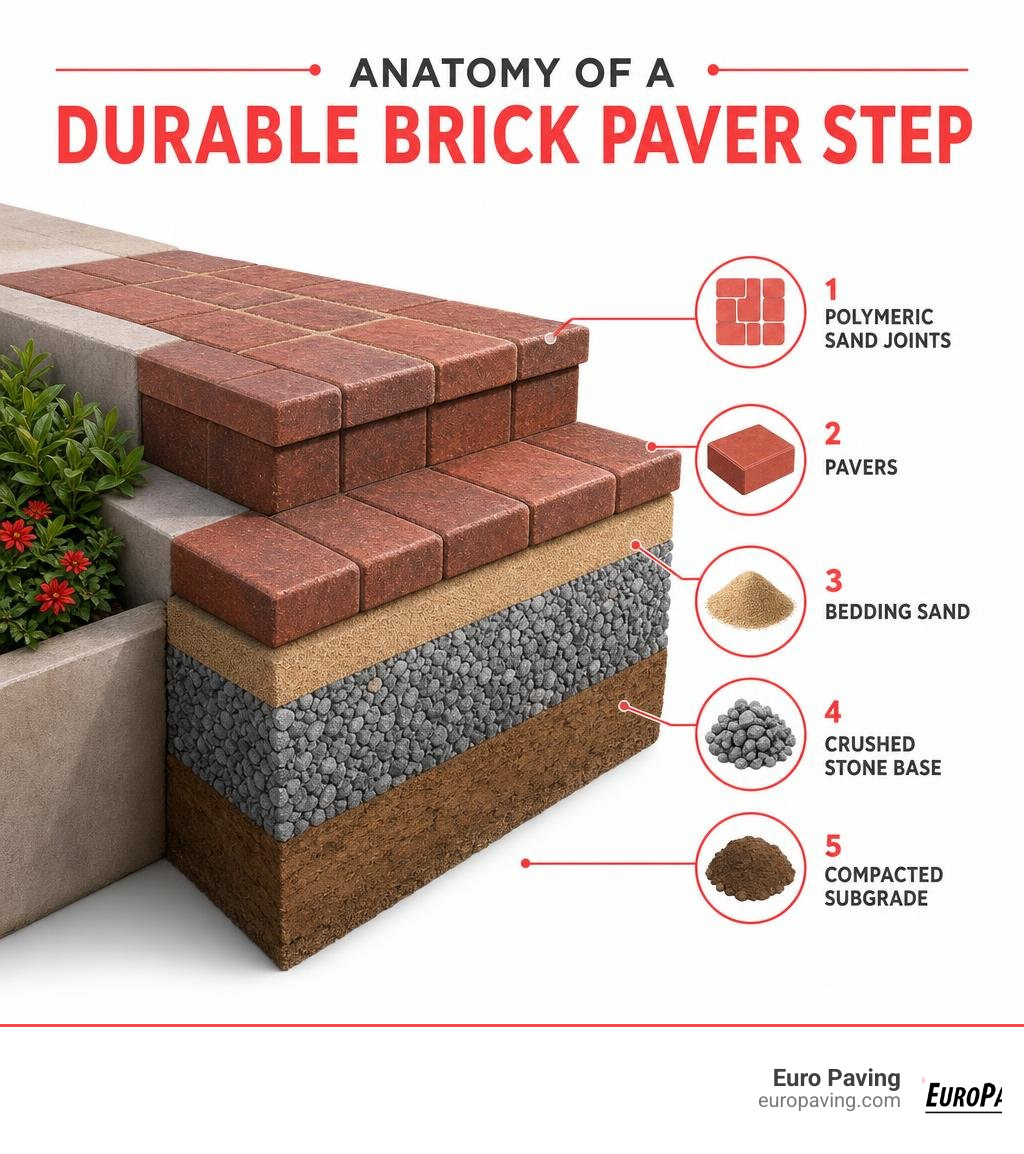
Important brick paver steps ideas terms:
Why Choose Brick Pavers for Your Outdoor Steps?
When planning an outdoor staircase, homeowners are often torn between poured concrete, natural stone, and brick pavers. While concrete is common, it is highly susceptible to the intense climate swings of Cook & DuPage Counties. Poured concrete expands and contracts as a single rigid slab, which inevitably leads to unsightly cracks, scaling, and structural settling.
Brick pavers, on the other hand, offer unmatched physical and aesthetic advantages:
- Exceptional Freeze-Thaw Resistance: Unlike rigid concrete, a paver step system consists of individual interlocking units. This allows the structure to flex slightly with ground movement and frost heave without cracking or shifting out of place.
- Slip-Resistant Textures: Safety is paramount during Chicago’s icy winters. High-quality pavers feature built-in, slip-resistant textures that provide secure footing even when wet or covered in light snow.
- Premium Unilock Materials: As certified installers, we utilize industry-leading Unilock materials. These pavers are engineered to withstand severe weather, resist de-icing salts, and maintain their rich color for decades.
- Lifetime Guarantees: When you invest in professional hardscaping, you deserve peace of mind. Our premium paver materials come with lifetime structural guarantees, ensuring your steps remain beautiful and secure for the long haul.
By choosing brick pavers, you are investing in a durable, low-maintenance solution that elevates your home’s exterior. To see how these materials look in real-world settings, you can Explore our brick paving gallery.
Inspiring Brick Paver Steps Ideas for Your Chicago Home
The beauty of working with brick pavers lies in their incredible design versatility. Whether your home features historic Chicago-style brick, a modern farmhouse facade, or a sleek contemporary design, there is a paver configuration to match.
To help our clients visualize their projects before any excavation begins, we use advanced 3D paving design software. This allows you to see exactly how different step heights, landing sizes, and color palettes will look against your existing architecture. From integrated planting beds to sweeping transition zones, we ensure your new steps harmonize beautifully with your surrounding landscape.
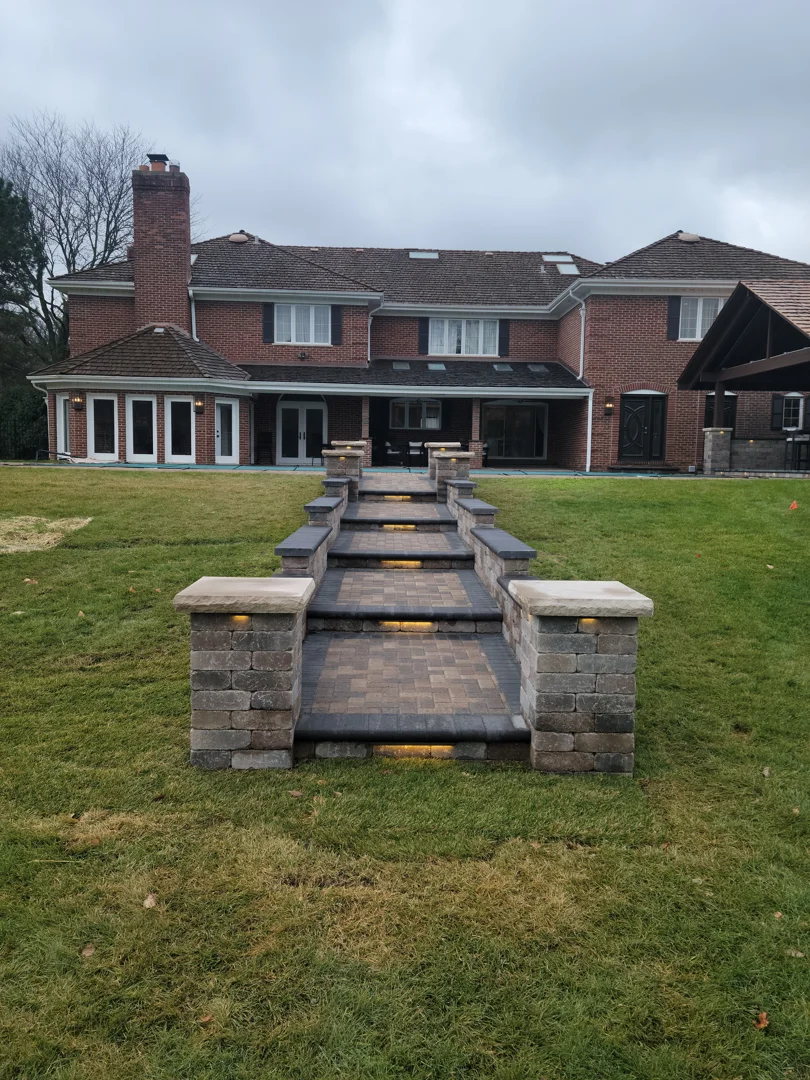
Classic Running Bond and Herringbone Brick Paver Steps Ideas
For traditional and historic homes—such as those found in the classic neighborhoods of Hinsdale and Lake Forest—you can never go wrong with time-tested patterns.
- The Running Bond Pattern: This clean, linear layout is highly popular for both treads and risers. It mirrors traditional brick masonry, making it an excellent choice for matching your home’s existing brick veneer.
- The Herringbone Pattern: If you want to make a bold statement at your front entryway, a 45-degree or 90-degree herringbone pattern adds instant sophistication. This pattern is highly interlocking, meaning the pavers distribute weight evenly, making it exceptionally stable for high-traffic steps and landings.
To achieve a weathered, historic charm, many homeowners opt for pavers that mimic reclaim-style bricks. For classic design inspiration, you can browse Old Chicago brick pavers on Pinterest. To understand how these patterns are structured for maximum stability, Learn about brick paving standards and patterns.
Modern Multi-Tiered and Rounded Brick Paver Steps Ideas
If your property features a sloped yard or a steep incline, standard steps can feel cramped and utilitarian. Modern landscaping embraces multi-tiered landings and rounded steps to turn these elevation changes into stunning design features.
- Multi-Tiered Landings: Instead of a continuous flight of narrow stairs, we design wide, sweeping landings. These tiered platforms break up the climb, provide comfortable transition zones, and offer beautiful spots to place potted seasonal flowers or integrated landscape lighting.
- Rounded and Curved Steps: Softening the sharp, angular lines of a home’s foundation is a great way to create a welcoming vibe. Rounded steps flare outward as they descend, creating a grand, open-concept entrance that guides visitors naturally toward your front door or backyard patio in Elmhurst.
For more visual concepts of curved and circular step designs, you can Discover rounded steps patio ideas on Pinterest. When building multi-tiered steps on sloped terrain, it is often necessary to pair them with retaining structures to prevent soil erosion. You can learn how we seamlessly merge these elements by reading about how to Incorporate brick paving retaining walls.
Natural Stone and Clay Paver Hybrid Steps
For the ultimate custom look, we love designing hybrid steps that combine the best of natural stone and kiln-fired clay. This style is incredibly popular for upscale properties in Arlington Heights and Glenview.
By pairing thick, solid limestone or bluestone treads with rich, dark clay paver risers, we create a striking visual contrast. The light gray or buff tones of the limestone highlight the stepping surface for improved safety, while the clay risers provide a warm, classic accent that ties the steps to the home’s brick accents.
Contrasting borders—such as using a dark charcoal sailor course along the edges of a cream-colored step—can also be used to frame the staircase beautifully. To see this stunning design style in action, View our brick paving steps project.
Key Engineering and Safety Standards for Professional Installation
While designing your new steps is the fun part, the engineering behind them is what determines whether they will stand the test of time. Over 80% of a hardscaping project’s long-term success relies on what is built underneath the visible pavers.
When building steps, we strictly adhere to local building codes and rigorous safety standards:
- Riser Height and Tread Depth: For maximum comfort and safety, step risers must be consistent, typically measuring between 6 and 7.5 inches. Treads should be at least 12 inches deep to allow full foot placement.
- Drainage Slope: To prevent water from pooling on the steps—which creates a major slip hazard during freezing weather—each tread must have a slight forward slope of roughly 1/8 to 1/4 inch per foot.
- Concrete Footings and Base Preparation: For heavy, structural masonry steps, the foundation must extend below the local frost line (which is typically 48 inches deep in the Chicago area) to prevent seasonal shifting. For independent landscape steps, we excavate 6 to 8 inches, compact the subgrade thoroughly, lay down heavy-duty geotextile fabric, and build a highly compacted dense-grade gravel base.
Here is a quick look at why professional installation is critical for outdoor steps:
| Feature / Risk | Professional Installation (Euro Paving) | DIY / Unlicensed Handyman |
|---|---|---|
| Foundation Depth | Built to local frost line standards to prevent shifting | Often too shallow, leading to rapid settling and tilting |
| Material Selection | Commercial-grade Unilock pavers with lifetime warranties | Standard retail-grade materials that may scale or crack |
| Safety Compliance | Exact, code-compliant riser heights and tread depths | Inconsistent step heights that present major tripping hazards |
| Water Management | Built-in 1-2% forward slope to shed water safely | Flat steps that pool water and turn into ice sheets in winter |
| Long-Term Durability | Expected lifespan of 25 to 50+ years | Often requires costly repairs or rebuilding within 2-3 years |
Cutting corners on step construction not only ruins your home’s curb appeal but also creates a significant liability. To ensure your project is handled by certified experts, Read our guide on choosing a brick paving contractor. For a deeper dive into the mechanical steps of building stable outdoor stairs, you can also Learn more about crafting stunning paver steps.
Frequently Asked Questions About Brick Paver Steps
Investing in new hardscaping is a major decision. Here are answers to some of the most common questions we receive from homeowners in the Chicago area.
Can you install brick pavers over existing concrete steps?
Yes, but only under the right conditions. This process is known as a concrete overlay.
The existing concrete steps must be structurally sound, level, and free of major settling or deep structural cracks. If the concrete is crumbling or shifting, laying pavers over it will only mask the problem temporarily; the pavers will quickly shift and crack along with the failing concrete underneath.
If the concrete is in good shape, we can overlay it by securing premium bullnose paver treads and risers directly to the concrete using high-strength, commercial-grade masonry adhesives. It is also crucial to ensure that the added height of the pavers does not interfere with the threshold of your doorway or violate local building codes regarding step height consistency.
How do you maintain brick paver steps in Chicago’s freeze-thaw climate?
Maintaining your brick paver steps is remarkably easy when they are installed correctly:
- Polymeric Sand: We use high-quality polymeric sand to fill the joints between the pavers. This sand contains special additives that harden when activated with water, locking the pavers in place, resisting erosion, and preventing weed growth and moss.
- Joint Sealing: Applying a breathable masonry sealer every 3 to 5 years protects the pavers from stains, enhances their natural color, and prevents moisture from penetrating the surface.
- Winter Care: Never use rock salt (sodium chloride) on brick paver steps. Rock salt causes chemical degradation and accelerates freeze-thaw damage. Instead, use calcium chloride-based de-icers or plain sand for traction.
How long do professionally installed brick paver steps last?
When designed and installed by a team of experienced professionals, brick paver steps can easily last 25 to 50 years or more. Because the system is flexible, it naturally accommodates the minor shifting of the soil during seasonal temperature swings. The key to this longevity is proper soil compaction, a robust aggregate base, and high-quality edge restraints that prevent the pavers from sprawling outward over time.
Conclusion
Your home’s entryway is more than just a transition zone—it is a reflection of your style and an investment in your property’s value. From classic herringbone patterns in Hinsdale to modern, multi-tiered backyard designs in Elmhurst, the right brick paver steps ideas can completely transform your outdoor living spaces.
At Euro Paving, we specialize in turning these visions into reality. Serving Mount Prospect, Norridge, Arlington Heights, and the wider Cook and DuPage Counties, our team brings years of expert craftsmanship, Unilock-authorized quality, and custom 3D designs to every project. Whether you want to upgrade a crumbling concrete stoop or build a family-friendly backyard oasis complete with a custom patio and fire pit, we are here to help.
Ready to step up your home’s curb appeal? Schedule a consultation for custom paver patios with the experts at Euro Paving today!