



Why Your Brick Patio Border Matters More Than You Think
The best brick patio border ideas do two things at once: they make your outdoor space look finished and polished, and they keep your pavers locked in place through Chicago’s brutal freeze-thaw winters.
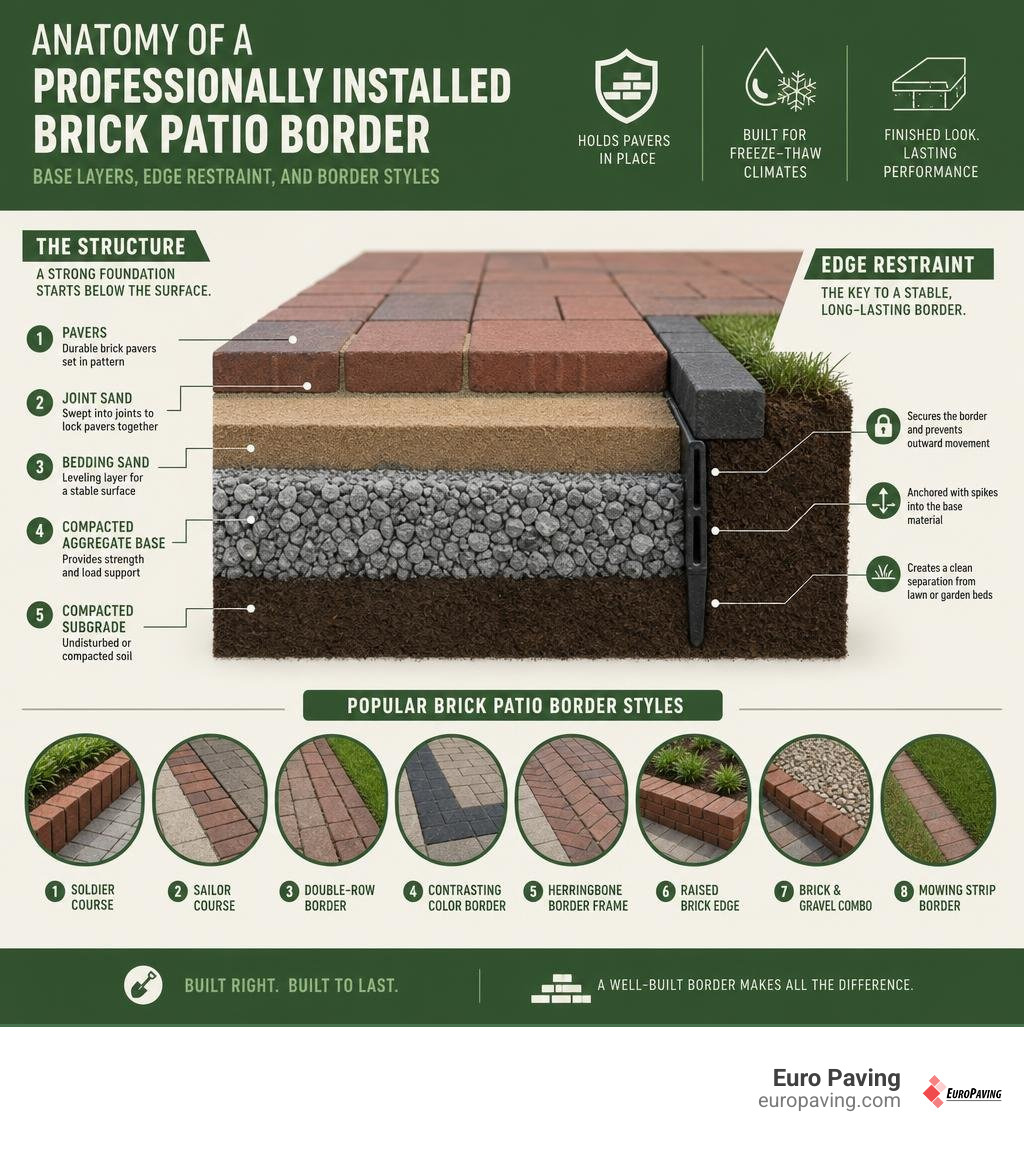
Here are the most popular brick patio border styles to consider:
- Soldier course – bricks stood on their long ends, lined up side by side around the perimeter
- Sailor course – bricks laid flat lengthwise along the edge for a low-profile, clean look
- Double-row border – two courses combined to prevent grass encroachment and add visual weight
- Contrasting color border – a charcoal or red brick frame around lighter grey or beige field pavers
- Herringbone border frame – interlocking angled bricks for high-traffic edges with superior structural strength
- Raised brick edge – two or three courses stacked to act as a retaining wall against garden beds
- Brick and gravel combo – a brick border containing pea gravel or crushed stone for a relaxed, textured look
- Mowing strip border – bricks set flush with the lawn so mower wheels glide right over the edge
A well-built border isn’t just decorative. It’s the restraint system that holds every interior paver in place. Without it, Chicago’s clay soils and freeze-thaw cycles will push your edge bricks outward — and gaps will follow, sometimes several feet into the patio.
A bricked patio can also increase your home’s resale value by 10% or more, so the border is worth getting right the first time.
Simple brick patio border ideas glossary:
Top Brick Patio Border Ideas for Chicago Homes
When we design custom patios for families in the Chicago suburbs, the border is often where the magic happens. It’s the frame around the artwork. By choosing the right laying pattern and color palette, we can transform a standard hardscape into a high-end, custom architectural feature.
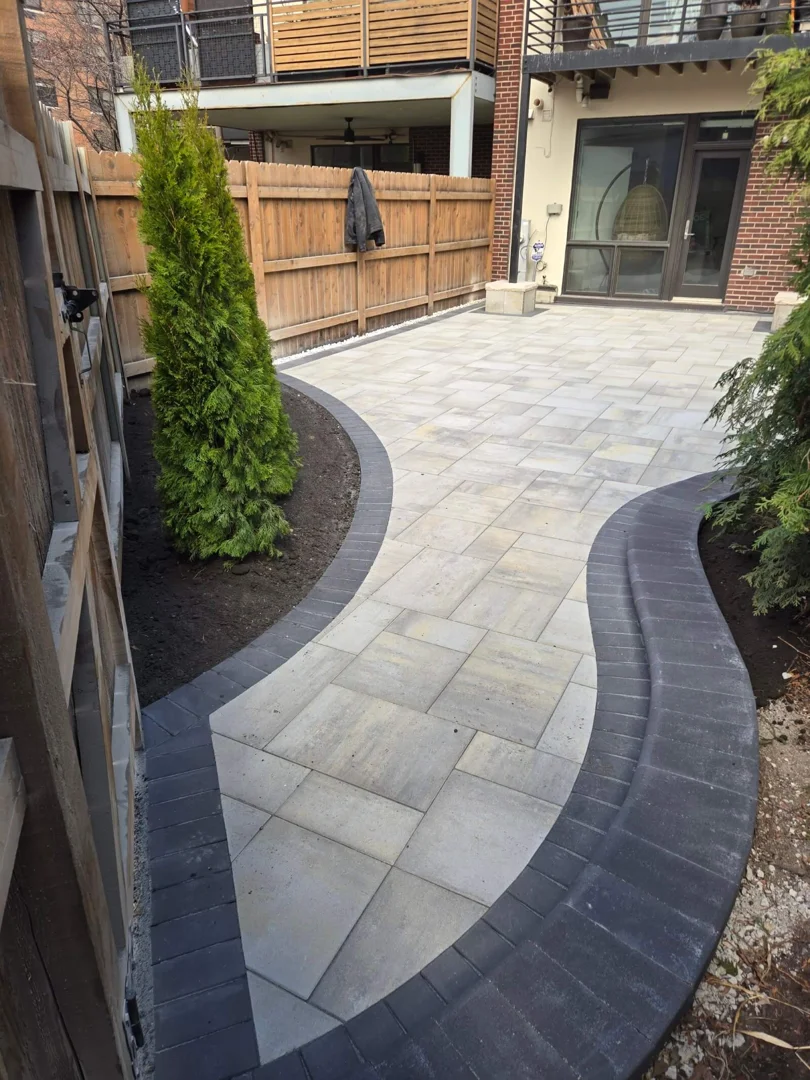
Here are the top border styles we recommend for local homes:
- The Classic Soldier Course: This is the undisputed king of borders. By standing the bricks vertically on their long ends, we create a strong, rhythmic band around your patio. It provides excellent lateral resistance and looks incredibly stately alongside traditional-style homes.
- The Sleek Sailor Course: If you prefer a more understated look, the sailor course lays the bricks flat, running lengthwise along the perimeter. It is a fantastic option for pathways and smaller patios where you want a clean frame without too much visual distraction.
- The Double-Row Border: For large, expansive backyards, a single border can sometimes get lost. We love combining a soldier course on the outside with a sailor course on the inside. This double-row approach adds incredible structural weight and serves as a highly effective barrier against invasive lawn grass.
- Contrasting Colors and Textures: One of the easiest ways to elevate your design is by using a high-contrast border. If your main patio features light grey, sand, or beige pavers, framing them with a dark charcoal or deep chocolate brown border creates an eye-catching, modern look.
As a premier Unilock authorized contractor Illinois, we have access to an incredible range of premium pavers that allow us to mix and match textures. For instance, pairing a smooth, modern field paver with a textured, tumbled brick border adds a layer of sophistication that standard concrete slabs simply cannot match. For more inspiration on how to pair these materials, explore these 30 Patio Paver Border Ideas for a Clean, Custom Edge Look and browse our gallery of 25 Stunning Brick Patio Designs for Your Backyard.
Structural Engineering: Preventing Shifting and Frost Heave
While aesthetics are fun to talk about, a patio is only as good as the engineering beneath it. In Cook County and DuPage County, our soils are notorious for their heavy clay content. Clay holds onto water, and when that water freezes during our bitter winters, it expands. This expansion creates immense vertical and horizontal pressure, a phenomenon known as frost heave.
If your patio border is treated as an afterthought, the expanding ice in the joints will push the outer bricks outward. Once those edges drift, the sand in the joints washes away, and the entire patio begins to sink and unravel.
To prevent this, we focus heavily on base preparation and professional-grade edge restraints.
Why the Base is Everything
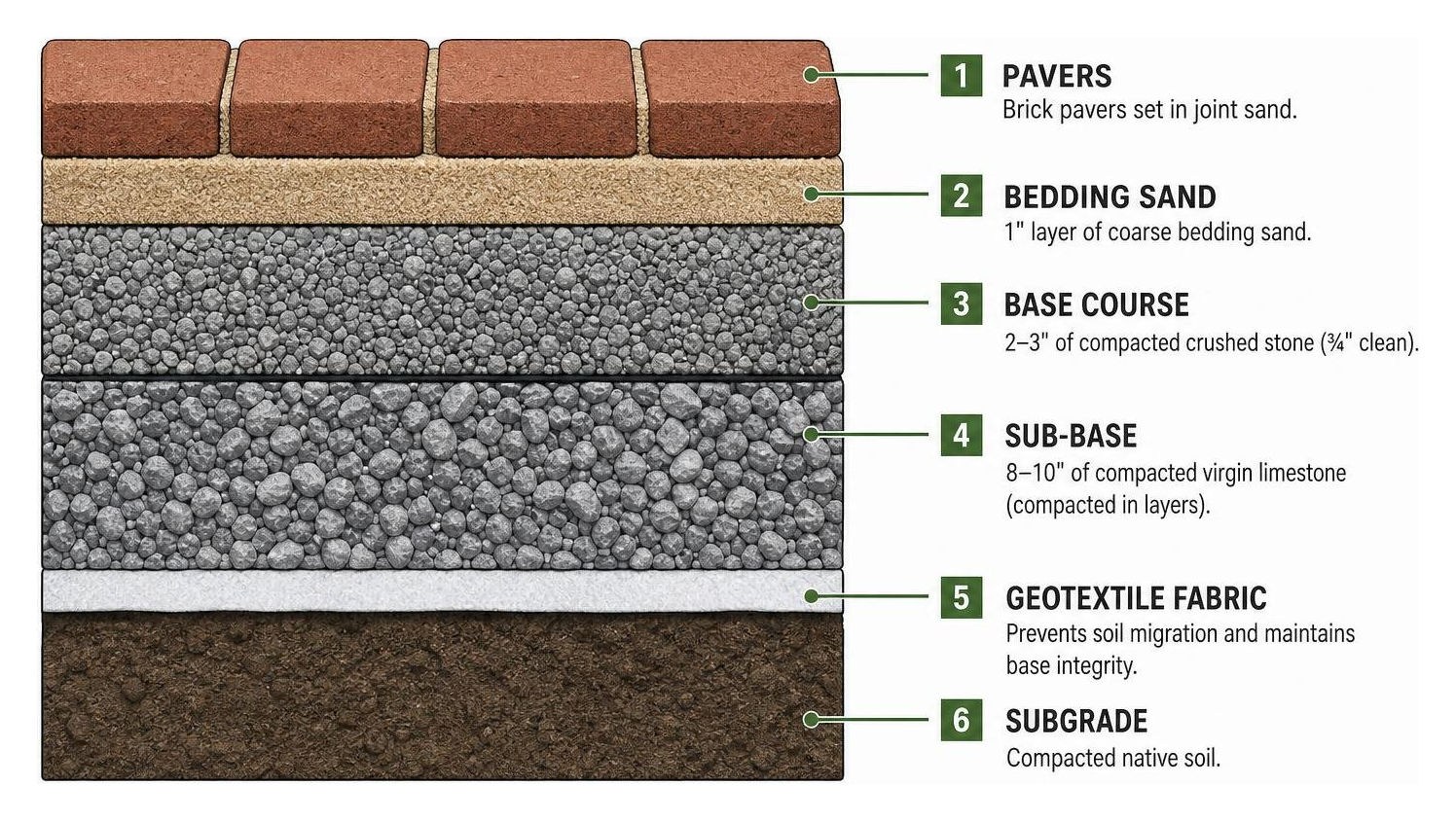
We don’t just dig a shallow trench. For a truly durable brick patio in the Chicago area, we excavate deep enough to allow for a massive, compacted gravel base. In freeze-thaw climates, we highly recommend a 10-inch compacted sub-base of virgin limestone. We compact this sub-base in thin layers to reach at least 95% of Standard Proctor Density. This ensure there are no air pockets where water can pool and freeze.
Edging Options: Commercial-Grade vs. DIY Quick Fixes
To hold the border bricks firmly in place, we install heavy-duty, commercial-grade edge restraints secured with long steel spikes driven deep into the compacted base.
Here is how different professional and retail edging options compare when subjected to Chicago’s harsh climate:
| Edging Type | Material Grade | Structural Stability | Freeze-Thaw Performance | Best Used For |
|---|---|---|---|---|
| Commercial Staked Restraints | Heavy-duty rigid plastic / PVC | Excellent (Resists horizontal drift) | Outstanding (Flexes slightly without breaking) | High-traffic patios, driveways, and walkways |
| Heavy-Duty Steel Edging | Commercial-grade steel with long spikes | Excellent (Perfect for straight lines) | High (Stays anchored deep in the sub-base) | Modern, minimalist borders and straight runs |
| Mortar Bedding (Concrete Beaching) | Wet-set structural concrete | Very High (Creates a solid masonry bond) | Medium-High (Requires perfect drainage underneath) | Cobblestone borders and raised masonry edges |
| Lightweight Retail Plastic | Thin, flexible rolled plastic | Poor (Easily bends and warps) | Very Poor (Spikes pop out during winter thaws) | Temporary garden beds only (Not for patios!) |
| Treated Wood Timbers | Landscaping wood | Medium (Heavy, but prone to rot over time) | Medium (Wood warps with moisture absorption) | Rustic garden borders (High maintenance) |
By skipping flimsy retail options and utilizing commercial-grade, staked restraints or concrete beaching, we ensure that your border remains perfectly straight for decades. For a deeper look at our professional installation methodology, read our guide on How to Build a Brick Paving Patio in 9 Steps.
Designing Brick Borders for Different Patio Styles
A great patio design should feel like a natural extension of your home’s architecture. Whether your home is a classic colonial in Hinsdale, a cozy craftsman in Downers Grove, or a sleek modern build in Northbrook, your brick border plays a massive role in establishing that style.
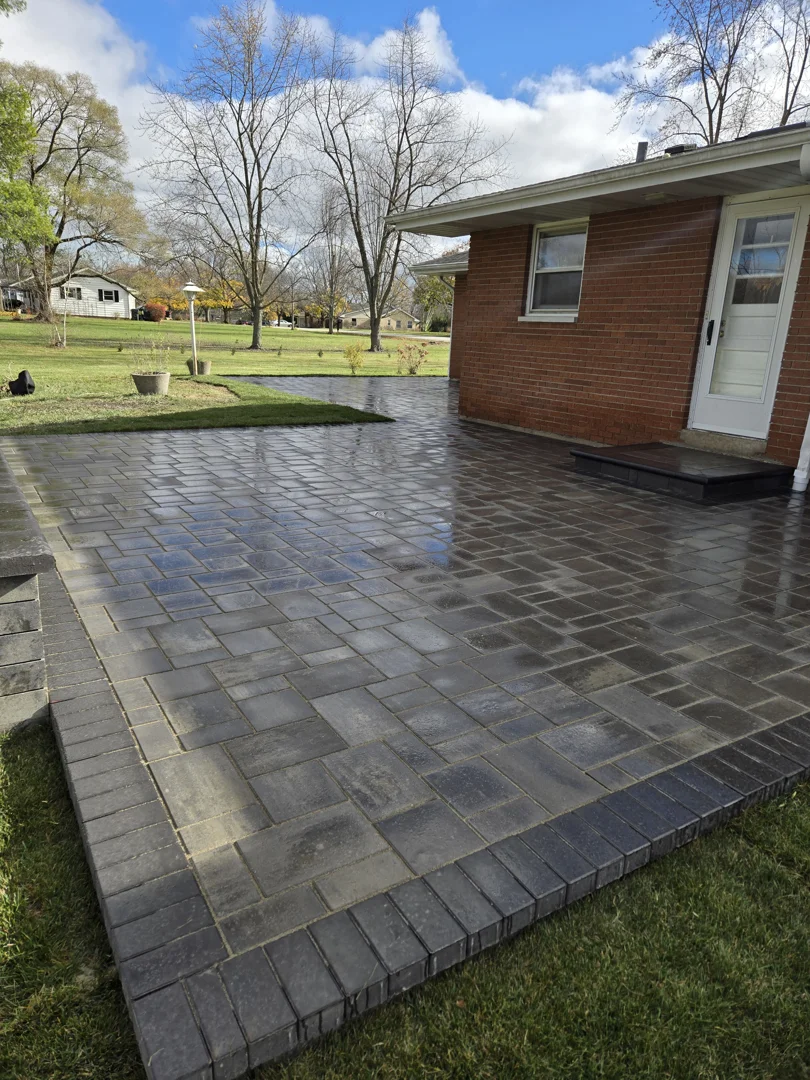
When selecting your border, we also consider how it transitions into the rest of your yard. For example, installing a flat mowing strip along the grass line allows your lawnmower wheels to glide right over the edge. This completely eliminates the need for tedious string trimming and keeps your lawn-to-patio transition looking incredibly crisp.
Let’s look at how we tailor these borders to different architectural styles. You can also explore our favorite Brick Patio Designs and Hardscaping Ideas for Modern Homes for more design inspiration.
Traditional and Rustic Brick Patio Border Ideas
For historic or traditional homes in communities like Hinsdale and Elmhurst, we love using rich, warm clay pavers or tumbled cobblestone borders.
- Tumbled Cobblestone: These pavers have slightly rounded, distressed edges that mimic old-world European streets. They pair beautifully with natural stone patios, such as bluestone or flagstone.
- Herringbone Border Inlays: While the herringbone pattern is highly popular for the main patio field, framing it with a solid, contrasting soldier course creates a timeless, elegant look.
- Warm Color Palettes: Classic red brick, deep terracotta, and warm brown tones bring a cozy, welcoming feel to rustic backyards.
If you love the rich, warm look of classic red brick, check out our favorite Red Hot Backyard Brick Design Ideas for Your Home.
Modern and Minimalist Brick Patio Border Ideas
For modern homes in Arlington Heights, Mount Prospect, or Glenview, the goal is clean lines, minimal joint lines, and striking color contrasts.
- Monochromatic Charcoal Borders: A deep charcoal or black basalt border paired with large-format, light grey field pavers creates a striking, high-contrast frame that looks incredibly sophisticated.
- Clean, Straight Lines: Instead of tumbled textures, we use sleek, smooth-faced pavers with micro-bevels to create razor-sharp lines.
- Hidden Edges: In some minimalist designs, we install the structural edge restraints slightly below the surface, allowing the lawn grass or decorative river rock to flush directly against the smooth paver edge for a seamless transition.
To see how we design stunning, modern borders for any project size, read about our Stunning Brick Patio Ideas for Every Budget.
Frequently Asked Questions about Patio Edging
Can standard house bricks be used for patio borders?
No, we strongly advise against using standard house bricks for any in-ground hardscaping project. House bricks are highly porous and are not manufactured to handle constant moisture contact or heavy foot traffic. When buried in the ground, they absorb water. During a typical Chicago winter, this trapped water freezes and expands, causing the house bricks to crack, flake, and crumble within just a few seasons.
Instead, we use SW (Severe Weather) grade clay pavers or high-strength concrete pavers. These specialized hardscaping materials are manufactured under extreme pressure and heat, making them incredibly dense, water-resistant, and fully capable of surviving decades of freeze-thaw cycles.
How deep should the compacted base be for a brick border in Illinois?
Because of the heavy clay soils found throughout Cook and DuPage counties, we recommend a minimum excavation depth of 10 to 12 inches for the patio and border base. This allows us to lay down a robust 10-inch sub-base of compacted crushed limestone, followed by a 1-inch bedding layer of clean sand.
This deep, compacted base acts as a giant drainage system, allowing water to flow away from the underside of your pavers so ice cannot form and push the border upward. Skipping this step or digging a shallow trench is the number one reason DIY patios fail after their first winter.
What is the best way to edge a brick patio against grass?
The most effective, low-maintenance way to transition from a brick patio to a lawn is by installing a flat mowing strip. This involves setting your outer border bricks completely flush with the top of the grass line.
By backing these flush bricks with commercial-grade, staked paver restraints hidden just below the soil, we keep the bricks perfectly stable. When it’s time to cut the grass, you can run your lawnmower’s wheels directly over the brick border, cutting every blade of grass perfectly without needing to pull out a string trimmer.
Give Your Patio the Frame It Deserves
An unfinished patio edge is a ticking clock. Without a robust, professionally designed border, soil movement and heavy rains will eventually cause your backyard oasis to shift.
At Euro Paving, we don’t believe in cutting corners. As a premier Unilock Authorized Contractor with nearly 20 years of experience in the Chicago area, we specialize in premium brick patio installation, custom outdoor kitchens, and backyard transformations. From our advanced 3D design process that lets you visualize your custom border before we make a single cut, to our lifetime-guaranteed Unilock materials, we build outdoor spaces that are engineered to last a lifetime.
Whether you need professional brick patio installation Chicago, stunning backyard hardscaping ideas, or are looking for trusted outdoor kitchen contractors Chicago suburbs, we are here to help.
Ready to transform your backyard? Schedule a consultation with our experts today and let’s design a outdoor living space you’ll love for decades.