



Stunning Brick Patio Ideas: What Chicago Homeowners Need to Know
Brick patio ideas are one of the most searched outdoor living topics — and for good reason. Brick delivers a combination of timeless beauty, durability, and curb appeal that few other materials can match.
Here’s a quick look at the most popular brick patio styles to consider:
- Herringbone pattern – Interlocking zigzag layout; strongest option for high-traffic areas
- Basketweave pattern – Classic, symmetrical; great for traditional homes
- Running bond – Clean, staggered rows; works well for modern and transitional styles
- Circular/whorled pattern – Ideal around fire pits or fountains as a focal point
- Stacked bond – Minimal, grid-like; suits contemporary designs
Key facts at a glance:
| Factor | Details |
|---|---|
| Typical cost | $15–$30 per square foot (professional install) |
| Best patterns for durability | Herringbone, running bond |
| Maintenance | Seal every 2–3 years; power wash as needed |
| Climate consideration | Freeze-thaw cycles in Chicagoland require proper base prep |
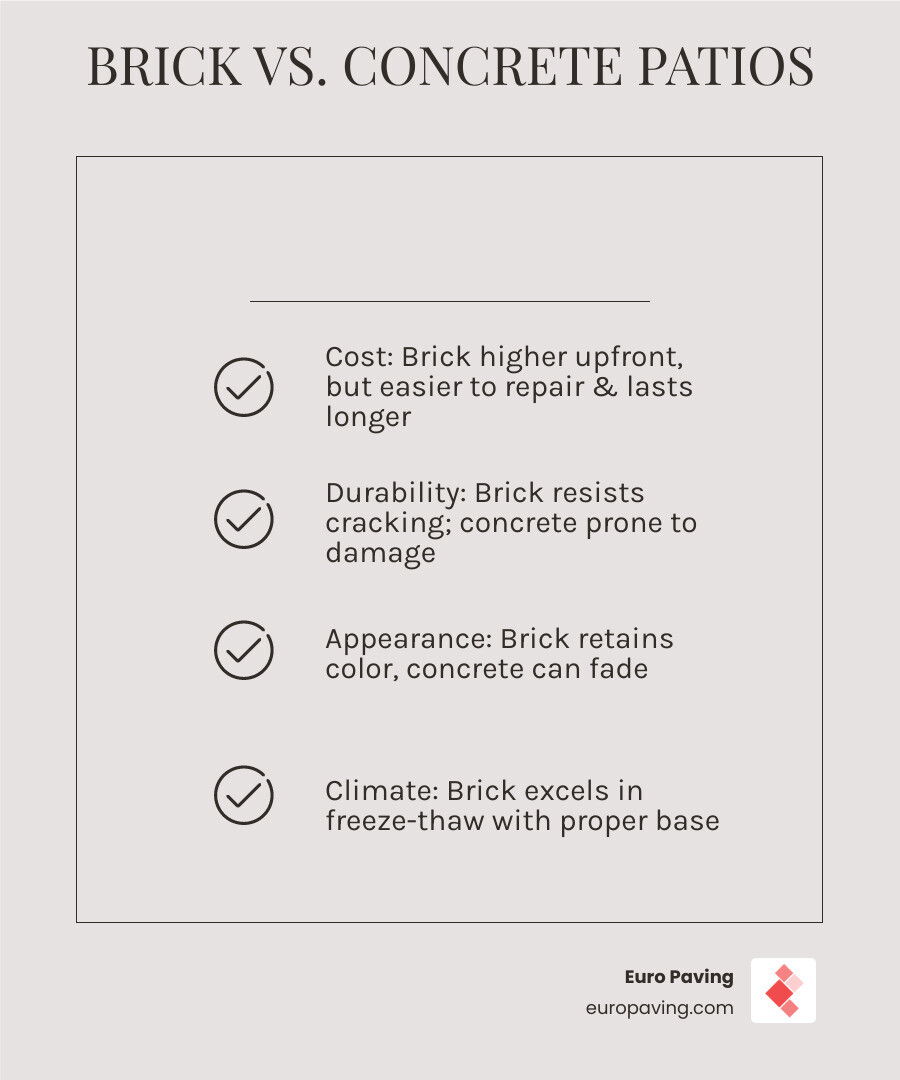
| Compared to concrete | Brick costs more upfront but is easier to repair and won’t fade as quickly |
For busy suburban homeowners in the Chicago area — from Hinsdale to Arlington Heights — a professionally installed brick patio can transform an underused backyard into a true outdoor living space. Whether you’re envisioning a cozy seating area for summer evenings or a full outdoor kitchen setup for family gatherings, the right brick patio design makes it possible.
It’s hard to beat the charm of a brick patio, lined with leafy greenery and anchored by durable, weather-resistant pavers that look great for decades.
In this guide, we’ll walk through the best brick patio ideas for every style and budget — and show you what professional installation looks like when it’s done right.
Important brick patio ideas terms:
Why Brick is the Premier Choice for Chicago Patios
When we talk about brick patio ideas in the Chicago area, we aren’t just discussing aesthetics. We are talking about survival. Our local climate, ranging from humid summers to the brutal freeze-thaw cycles of winter, demands a material that can flex without failing.
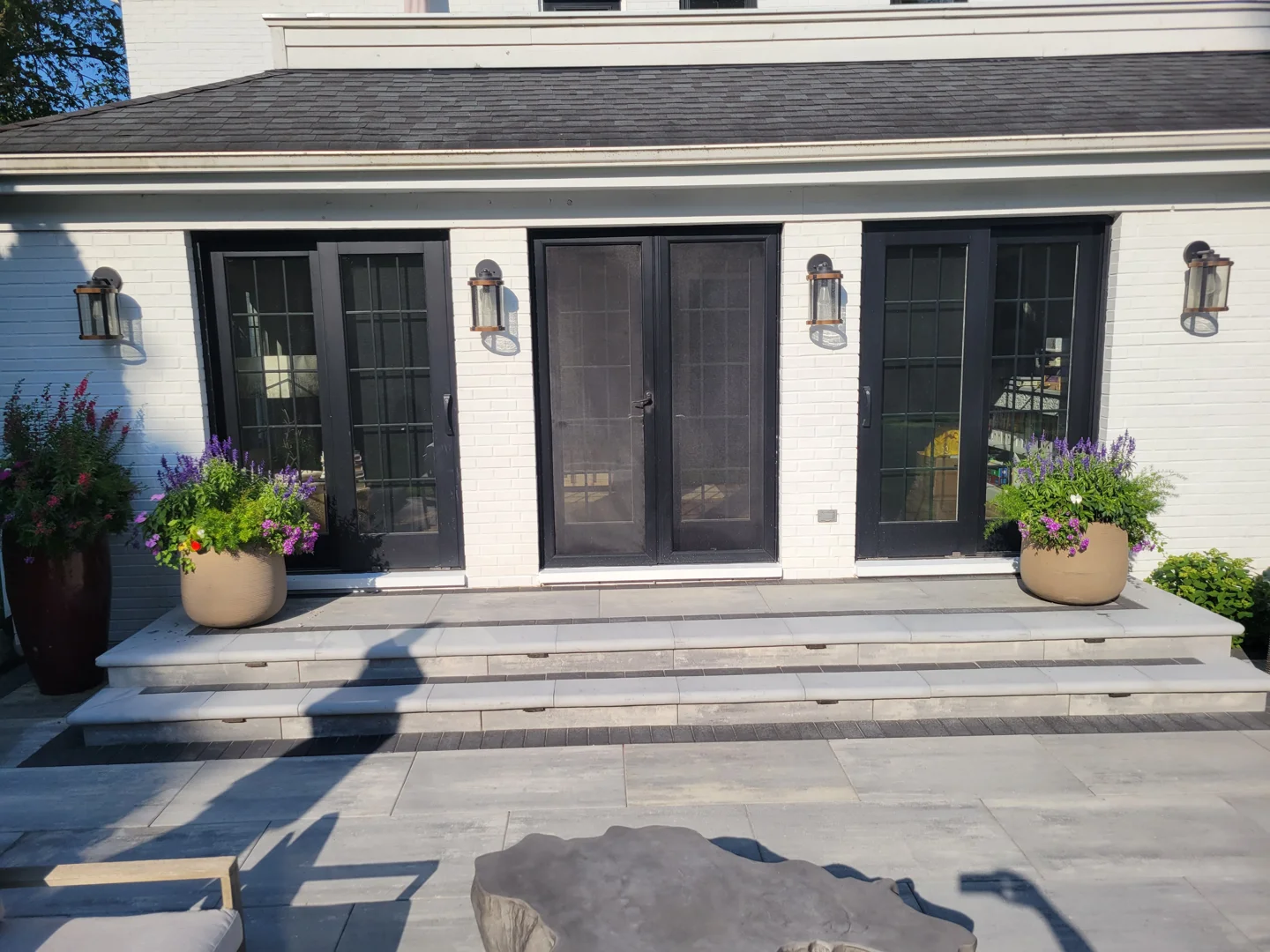
Brick pavers offer several distinct advantages over poured concrete or wood decks:
- Fade Resistance: Unlike stamped concrete, which relies on surface dyes that can bleach in the sun, clay bricks and high-end concrete pavers like Unilock have color throughout the material. This ensures your patio looks as vibrant in April 2026 as it did the day it was installed.
- Slip-Resistant Texture: Safety is a priority for family-friendly designs. Brick provides excellent natural traction, even when wet, making it the ideal choice for swimming pool decks.
- Structural Integrity: Poured concrete is almost guaranteed to crack in Chicago’s shifting soils. A brick patio is a “flexible” pavement system. Because the units are individual, they can move slightly with the earth and return to their position without unsightly surface cracks.
- Eco-Friendliness: Many modern brick systems allow water to permeate through the joints, reducing runoff and helping to manage drainage on your property.
Choosing this material provides numerous long-term benefits, including increased property value and a trend-proof style that never goes out of fashion.
Popular Brick Patio Ideas and Layout Patterns
The magic of brick lies in its geometry. How you lay the bricks determines the “vibe” of the entire backyard. While some homeowners prefer a simple look, others use patterns to create visual movement or define different “rooms” within a single patio.
The Strength of the Herringbone
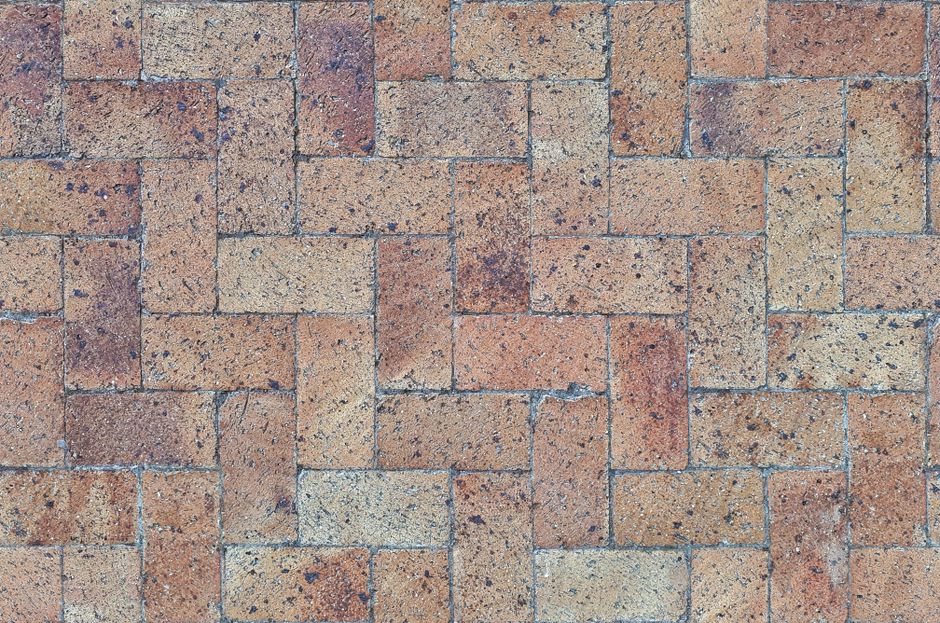
If you are planning an area for heavy traffic or want the most durable structure possible, the herringbone pattern is our top recommendation. Bricks are set at 45 or 90-degree angles to one another, creating an interlocking bond that resists shifting. It’s not just strong; it’s visually stunning and provides a rich texture that hides minor imperfections. You can explore more about these technical layouts in our guide to brick paving standards and patterns.
Choosing the Right Look for 2026
As we move into the 2026 season, we are seeing a shift toward mixing patterns. For example, using a running bond for the main floor and a soldier course (bricks standing side-by-side) for the border adds a professional, finished touch. For more inspiration, check out our latest brick patterns for patios 2024 and beyond.
Circular and Whorled Brick Patio Ideas
Nothing creates a focal point quite like a circular pattern. These “whorled” designs draw the eye inward, making them the perfect setting for a central feature.
- Fire Pit Hubs: A circular brick inlay naturally accommodates a custom fire pit, creating a cozy “campfire” feel in a sophisticated setting.
- Dining Anchors: Placing a round dining table on a circular brick pattern helps define the eating area in a large, open backyard.
Circular designs are technically demanding but offer some of the best visual rewards for high-end landscapes.
Modern and Minimalist Brick Patio Ideas
For modern homes in suburbs like Skokie or Northbrook, traditional red brick might feel too “country.” Modern brick patio ideas often lean toward:
- Gray and Charcoal Tones: Using gray pavers provides a sleek, slate-like appearance that complements contemporary architecture.
- Stacked Bond Patterns: By aligning bricks in a perfect grid rather than staggering them, you create clean, vertical and horizontal lines that scream “modern.”
- Large Format Pavers: Mixing standard bricks with larger 24×24 slabs can create a unique, minimalist hardscape that feels open and airy.
Custom Features for High-End Outdoor Living
A patio is just the floor; the features are what turn it into a living room. At Euro Paving, we specialize in adding those “wow” factors that make your neighbors in Hinsdale or Barrington a little bit jealous.
Outdoor Kitchens and Bars
Why run back and forth to the house for burgers? A built-in outdoor kitchen integrated into your brick design can include grills, pizza ovens, refrigerators, and even plumbing. We use matching brickwork for the base of the kitchen islands to ensure the entire space feels cohesive.
Seating Walls and Retaining Walls
If your yard has a slope, don’t see it as a problem—see it as an opportunity. Retaining walls can level out a space while doubling as “seating walls.” This eliminates the need for bulky patio furniture and provides a permanent place for guests to sit during large gatherings. As noted by Domino, using vertical space with brick walls adds a layer of “old-world flair” and privacy.
Professional Installation and Material Selection
One of the biggest mistakes homeowners make is thinking a brick patio is a simple weekend DIY project. While laying the bricks is the fun part, the success of the patio depends 100% on what is underneath.
The Power of 3D Design
Before we even move a shovel of dirt, we provide our clients with a 3D design model. This allows you to see exactly how the brick patio ideas will fit with your home’s architecture, how the drainage will flow, and where the sun will hit your seating area.
Base Preparation and Drainage
In the Chicago area, we have to deal with heavy clay soils. Professional installation involves:
- Excavation: Digging deep enough to remove organic soil.
- Base Layer: Compacting 4-6 inches of crushed gravel to provide a solid foundation.
- Sand Setting: A thin layer of leveled sand to cradle the bricks.
- Pitch: Ensuring the patio slopes at least 1/4 inch per foot away from your home to prevent basement flooding.
Clay Brick vs. Concrete Pavers
When selecting materials, it’s important to understand the two main options. Polywood style guides emphasize that while clay is traditional, modern concrete pavers offer more variety.
| Feature | Real Clay Brick | Concrete Pavers (e.g., Unilock) |
|---|---|---|
| Color Source | Natural kiln-fired clay | Mineral pigments |
| Durability | Extremely high; lasts centuries | Engineered for high PSI/impact |
| Shapes | Mostly rectangular | Wide variety of sizes and textures |
| Cost | Generally higher | Wide range (Budget to Luxury) |
| Maintenance | Low | Low (often easier to clean) |
Maintaining Your Investment in Chicagoland
Once your stunning patio is installed, you want it to stay that way. The harsh winters in Arlington Heights and Mount Prospect can be tough on masonry if it isn’t cared for.
Polymeric Sand: The Secret Weapon
We use polymeric sand in the joints of our patios. Unlike regular sand, this material contains a binder that “locks” when wetted. This prevents weeds from growing between bricks and stops ants from making homes in your joints. It also stays in place during heavy rains.
Cleaning and Sealing
To keep the colors popping, we recommend:
- Regular Sweeping: Don’t let wet leaves sit on the brick, as they can leave tannin stains.
- Power Washing: Every 2–3 years, a light power wash (around 3,000 PSI) can remove deep-seated grime.
- Sealing: Applying a clear masonry sealer protects against UV damage and oil stains. As This Old House suggests, sealing is a vital step in “finishing” the project for long-term beauty.
A well-maintained patio doesn’t just look good; it floors your guests with its pristine condition year after year.
Frequently Asked Questions about Brick Patios
What is the average cost per square foot for a brick patio?
In the Chicago market, a professional installation typically ranges from $15 to $30 per square foot. Several factors influence this:
- Material Choice: Standard clay bricks are more affordable than premium, textured Unilock pavers.
- Design Complexity: Circular patterns and herringbone layouts take more time to cut and lay than a simple running bond.
- Site Preparation: If we need to remove an old concrete slab or deal with significant drainage issues, the labor costs will increase.
- Features: Adding seating walls, lighting, or a fire pit will naturally increase the total investment.
How does brick compare to stamped concrete for durability?
While stamped concrete is popular, it has a major flaw in the Chicago area: it will crack. When it does, there is no way to “invisible-patch” it. Brick, however, is a modular system. If a single brick chips or a section settles due to a tree root, we can simply pull up those specific bricks, fix the base, and put them back. It is a lifetime solution compared to the 10-15 year lifespan of most concrete slabs.
Which brick patterns are best for high-traffic areas?
The herringbone pattern is the gold standard for high-traffic zones like walkways or areas near the back door. Because the bricks are locked in at 45-degree angles, they distribute weight more evenly and are less likely to shift under the weight of heavy patio furniture or frequent foot traffic.
Conclusion
Transforming your backyard doesn’t have to be a stressful process. By starting with the right brick patio ideas and choosing a team that understands the specific needs of Chicagoland landscapes, you can create an outdoor sanctuary that lasts a lifetime.
From the historic streets of Lake Forest to the modern neighborhoods of Downers Grove, Euro Paving has been the trusted partner for homeowners ready to upgrade their lifestyle. We don’t just lay bricks; we build spaces where families make memories around the fire pit and friends gather for summer BBQs.
Ready to see what’s possible for your home? Explore our brick paving gallery for real-world inspiration or search for patios near me to see our work in your neighborhood.
Contact our expert brick paving team today for a free consultation and 3D design of your dream patio!