



What Every Chicago Homeowner Should Know About Cracks in a Resin Driveway
Cracks in a resin driveway are one of the most frustrating problems a homeowner can face — especially after spending good money on what was supposed to be a durable, attractive surface.
Quick answer: Why does a resin driveway crack?
- Sub-base failure — the most common cause; cracks below the surface push through to the top
- Poor installation — incorrect mix ratios, bad weather during laying, or inexperienced contractors
- Thermal expansion — freeze-thaw cycles (very common in Chicago suburbs) cause the surface to expand and contract
- Ground movement — tree roots, clay soil shifting, or frost heave destabilize the base
- Heavy loads — vehicles repeatedly parking in the same spot stress the surface
- Laying over old cracked concrete — existing cracks reflect directly through the new resin layer
Resin driveways have a lot going for them — they look sharp, drain well, and require minimal upkeep when properly installed. But here’s the reality: the resin layer is only a few millimetres thick. It sits on top of whatever base is underneath. If that base moves, shifts, or cracks, the resin surface follows.
In the Chicago suburbs — from Elmhurst to Arlington Heights — the problem is made worse by 30 to 50 freeze-thaw cycles every winter. Water gets into tiny gaps, freezes, expands by roughly 9%, and forces those gaps wider. What starts as a hairline fracture in October can become a serious crack by March.
The good news? Most cracks can be repaired — and the ones that can’t be repaired point to a fixable root cause. This guide walks you through exactly what’s happening, what you can do about it, and how to make sure it doesn’t happen again.
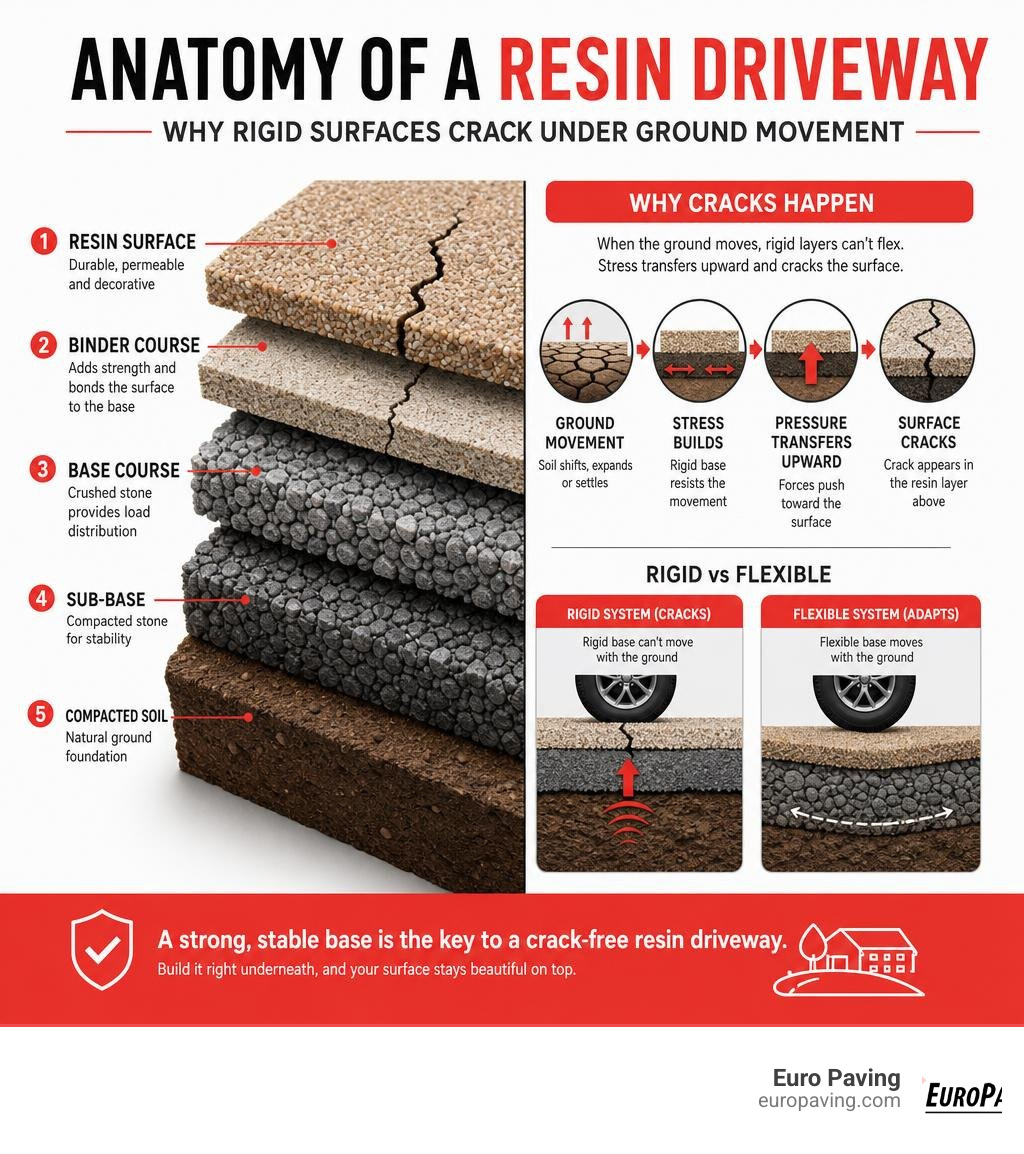
Learn more about cracks in resin driveway:
Why Cracks in Resin Driveway Surfaces Occur
To understand why a resin driveway cracks, we have to look past the beautiful gravel finish and examine the structure underneath. Resin-bound paving is a monolithic, non-flexible layer. While it has some slight natural give, it is not designed to absorb heavy structural shifts.
When a resin driveway begins to fail, it is rarely due to the aggregate stone itself. Instead, it is almost always a failure of the base material or environmental stress. The primary culprit is substrate movement. If the ground or the underlying base layer moves even a fraction of an inch, the rigid resin layer above cannot bend to accommodate it, leading to a visible split.
When these fractures show up, they instantly age your home’s exterior. As we often point out, structural Cracks Kill Your Curb Appeal, transforming a high-end driveway into an eyesore that can lower your property value.
Identifying Early Signs of Cracks in Resin Driveway Installations
Catching problems early is the key to preventing complete driveway failure. Homeowners should regularly inspect their driveways for the following warning signs:
- Hairline fractures: Tiny, web-like cracks that are barely visible but indicate the surface is beginning to experience stress.
- Surface pitting: Small spots where aggregate stones have popped loose, leaving minor craters. This indicates a weak resin-to-stone ratio or poor binding.
- Water pooling: Resin-bound driveways are designed to be permeable. If you notice water pooling in certain spots, it means the sub-base is either clogged, uneven, or beginning to sink.
- Loose aggregate: Finding loose stones on your lawn or near the edges of the driveway is a clear sign of surface wear.
For more advice on spotting these signs early, check out our guide on how to Don’t Let Your Driveway Crumble with These Maintenance Tips. Additionally, industry experts emphasize that addressing these small warning signs immediately is crucial to avoiding costly, full-scale structural failure.
Environmental Factors and Ground Movement in Northern Illinois
In Northern Illinois, our local environment presents unique challenges for rigid driveway systems. Homeowners in Chicago suburbs like Hinsdale, Skokie, and Glenview deal with heavy clay soils. Clay retains water, making it highly susceptible to shifting during extreme weather changes.
When winter arrives, the moisture trapped in this clay soil freezes. This triggers frost heave, an upward swelling of the soil that exerts immense upward pressure on concrete, asphalt, and resin sub-bases.
Furthermore, tree roots from mature oaks and maples common in Northbrook and Lake Forest can easily push underneath driveway bases, cracking the substrate. When drainage systems fail to channel water away from the driveway edges, the base becomes saturated and soft, leading to sinking. To protect your property, make sure you Don’t Let Your Driveway Go Down the Drain by maintaining proper grading and drainage channels.
Temperature swings and ground movement are the primary natural threats that compromise rigid resin installations.
The Mechanics of Sub-Base Failure and Reflective Cracking
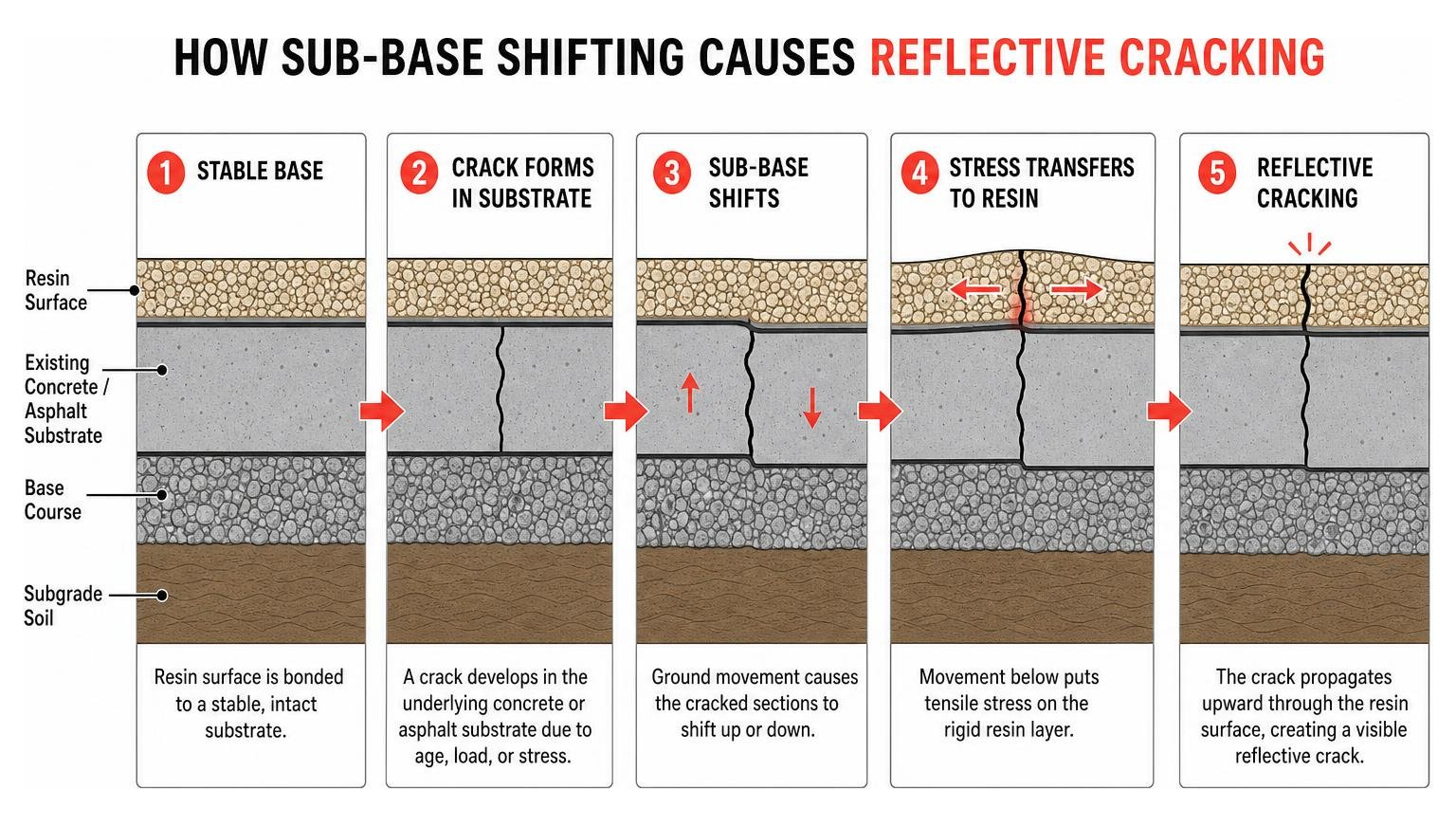
The most common structural failure in resin driveways is reflective cracking. This occurs when a crack in the underlying base layer (such as concrete or asphalt) propagates directly upward through the resin overlay. Because the resin layer is bonded directly to the substrate, any movement in the crack below exerts intense tensile stress on the thin resin surface, forcing it to split along the exact same path.
When planning a driveway project, proper preparation is everything. In our resource on Driveway Renovation Avoiding Common Problems, we highlight that skipping steps during the excavation and base-laying phases is the number one reason driveways fail prematurely.
This failure is typically a breakdown in interface mechanics. If the base shifts, the resin simply does not have the elastomeric capacity to stretch, resulting in a clean break.
The Danger of Laying Resin Over Old Cracked Concrete
Many homeowners choose resin because they want a quick cosmetic upgrade over their old, cracked concrete or asphalt driveway. However, laying a thin resin overlay directly over an unstable, cracked concrete base is a recipe for disaster.
The existing cracks in the concrete will continue to move with seasonal temperature changes. In Cook and DuPage Counties, where temperatures swing from sub-zero winters to humid 90-degree summers, this movement is guaranteed. This constant thermal movement creates high tensile stress directly above the concrete joints, leading to surface peeling, delamination, and severe reflective cracking. Without removing the old, compromised concrete and pouring a new, stable base, the new resin driveway will likely fail within its first two seasons.
The Role of Crack Reduction Membranes and Reinforcement
To mitigate the risk of reflective cracking, some installers use a crack reduction membrane or glass-fibre reinforcement mesh. This mesh is laid over joints or minor cracks in the sub-base before the resin aggregate is applied. Its purpose is to distribute tensile stresses across a wider area, reducing the concentration of force on the resin surface.
While a high-strength glass-fibre mesh can prevent minor cracks from reflecting through, it has clear limitations in high-freeze zones like Chicagoland. When heavy frost heave occurs, the sheer force of the shifting clay soil will easily overcome the tensile strength of a reinforcement membrane. While membranes offer excellent insurance for stable bases, they cannot save a driveway built on a fundamentally failing sub-base.
How to Repair and Prevent Resin Driveway Damage
When cracks appear, you must act quickly. If left untreated, water will penetrate the crack, wash away the supporting base material, and freeze during winter, rapidly expanding the damage.
To learn more about the step-by-step process of addressing structural damage, read our detailed guide on How to Repair Driveway Cracks. Additionally, paving experts emphasize that early intervention can save homeowners thousands of dollars in full resurfacing costs.
Professional Methods to Repair Cracks in Resin Driveway Systems
Repairing a resin driveway is a highly technical process. It requires precision to ensure the repair is structural, not just cosmetic:
- Chisel Preparation: The crack must be widened using a chisel or mechanical router. This creates a clean, vertical channel with enough surface area for the new resin to bond.
- Cleaning: All dust, loose stones, and debris are thoroughly cleaned out using a wire brush and high-pressure air.
- Resin-Bound Aggregate Mixing: A fresh batch of polyurethane resin and matching aggregate is mixed. It is crucial to use the exact same stone type and resin-to-aggregate ratio.
- Trowel Finishing: The mixture is packed tightly into the crack and troweled flush with the surrounding surface.
- Curing: The repaired area must be protected from all traffic and moisture for at least 24 to 48 hours to cure properly.
Using the right materials is essential. For a deep dive into the compounds used to seal driveway surfaces, see our review of how to Stop the Split with These Top Driveway Crack Fillers. For localized surface cracks, it is recommended to utilize specialized repair kits that match the original polymer formulation for maximum adhesion.
Long-Term Costs and Consequences of Neglecting Repairs
Ignoring cracks in resin driveway surfaces leads to severe consequences. Beyond ruining your home’s curb appeal, open cracks present a serious trip hazard for family and visitors. Over time, water infiltration will completely erode the sub-base, leading to localized sinking, potholes, and eventually, total structural failure.
| Feature / Cost | Minor Localized Repair | Full Driveway Replacement |
|---|---|---|
| Average Cost (Chicago Area) | $150 – $500 | $8,000 – $18,000+ |
| Time Required | 1 – 3 Hours | 3 – 5 Days |
| Visual Seamlessness | May show slight color variations | 100% uniform, brand-new look |
| Structural Longevity | Temporary fix (1-3 years) | Lifetime guarantee (with brick pavers) |
Frequently Asked Questions About Resin Driveway Failures
Can you patch a cracked resin driveway without it showing?
The short answer is: almost never perfectly.
While a professional can patch a crack using the exact same aggregate mix, matching the color is incredibly difficult. Over time, the sun’s UV rays naturally fade and weather the existing driveway. A fresh patch of resin and stone will look darker and cleaner, creating a highly visible “scar” across your driveway. Even minor color mismatches are highly visible on light-colored stone driveways.
How long does a repaired resin driveway last in Chicago winters?
In Cook and DuPage Counties, a patched resin repair rarely lasts more than one to two winters. Because the repair joint is a point of weakness, the extreme freeze-thaw cycles of Northern Illinois will quickly find any microscopic gaps. Once water penetrates the patch and freezes, the expansion force will split the repair open again.
What is the best alternative to avoid driveway cracking entirely?
If you want a driveway that is completely immune to cracking, the ultimate solution is a brick paver driveway.
Unlike monolithic, rigid surfaces like concrete, asphalt, or resin, a brick paver system is flexible. It consists of individual, high-strength pavers set on a compacted gravel base and locked together with specialized joint sand.
When the ground shifts, freezes, or experiences frost heave, the individual pavers flex and move independently, then settle back into place without cracking.
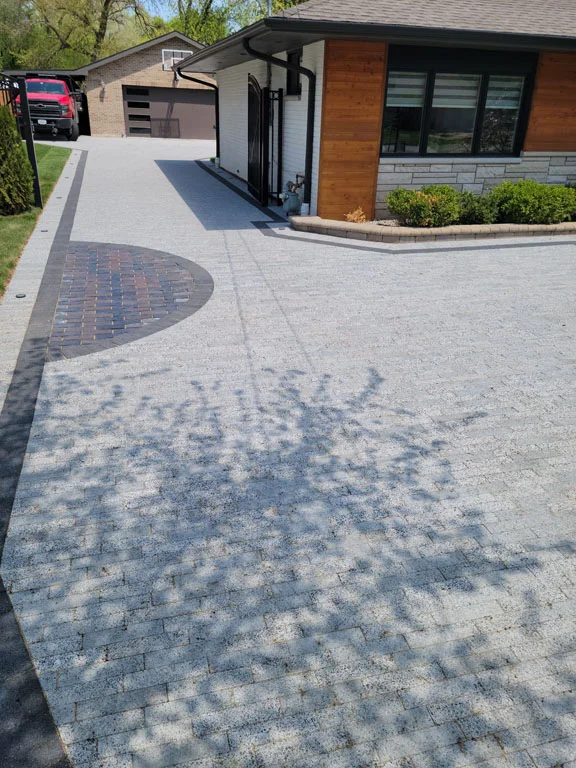
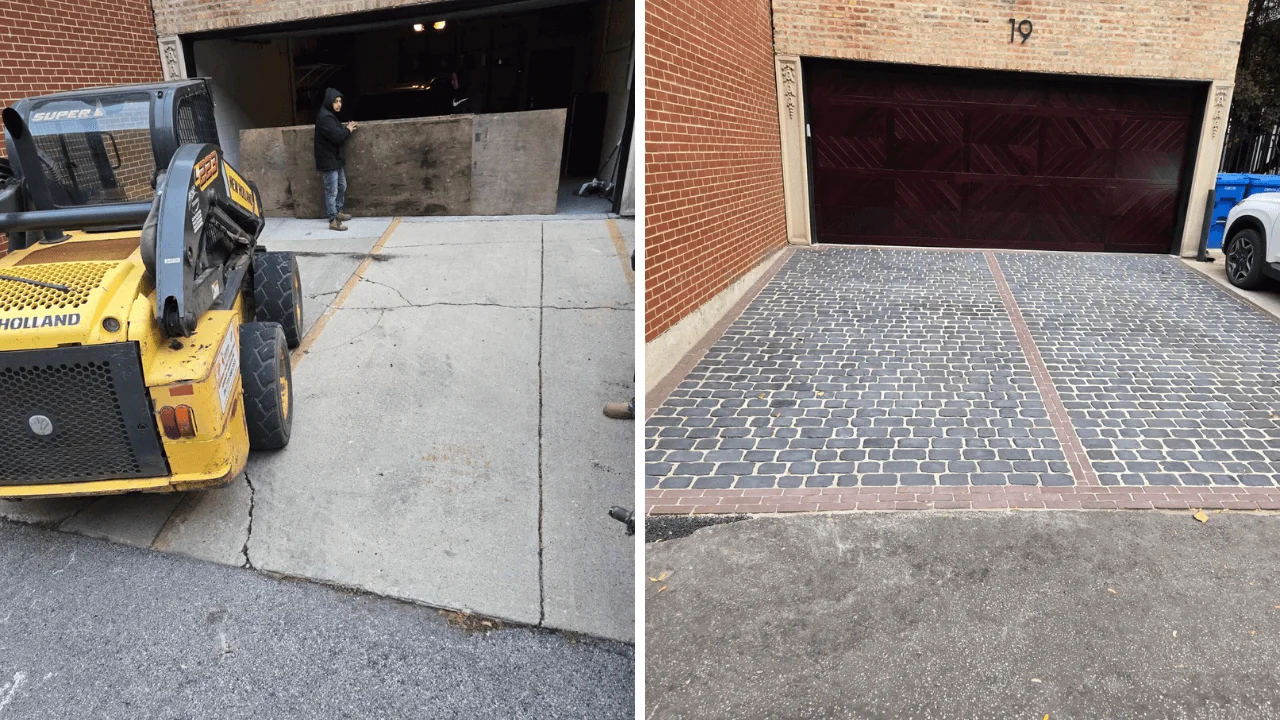
At Euro Paving, we are a premier Unilock authorized contractor Illinois homeowners trust. We specialize in installing premium Unilock brick paving systems that offer unmatched durability and a lifetime material guarantee. When you invest in a brick paver driveway, you are choosing a system engineered to easily withstand the harshest Midwest winters.
To explore the structural and aesthetic advantages of pavers, read our comprehensive guide on The Benefits of a Brick Driveway for Chicago Homes 2026 Guide. If you are already dealing with a failing resin surface, understanding the importance of a high-quality base is the first step toward a permanent solution.
Conclusion
Dealing with cracks in resin driveway installations can be a never-ending cycle of patching, sealing, and worrying about the next winter freeze. Because resin is a thin, rigid overlay, it simply isn’t built to handle the intense ground movement and freeze-thaw cycles of the Chicago suburbs.
If you are ready to upgrade to a permanent, crack-free solution that enhances your home’s value, Euro Paving is here to help. We bring nearly 20 years of experience to every project, offering premium brick patio installation Chicago, custom driveways, and breathtaking backyard hardscaping ideas.
From custom fire pit installation near me to designing functional outdoor spaces with the help of our expert outdoor kitchen contractors Chicago suburbs team, we handle everything from 3D design to final installation.
Don’t let a crumbling driveway ruin your home’s curb appeal. Schedule a professional brick paving consultation with Euro Paving today, and let us build a driveway that will last a lifetime.