



When Your Specialty Driveway Starts to Fail: What You Need to Know
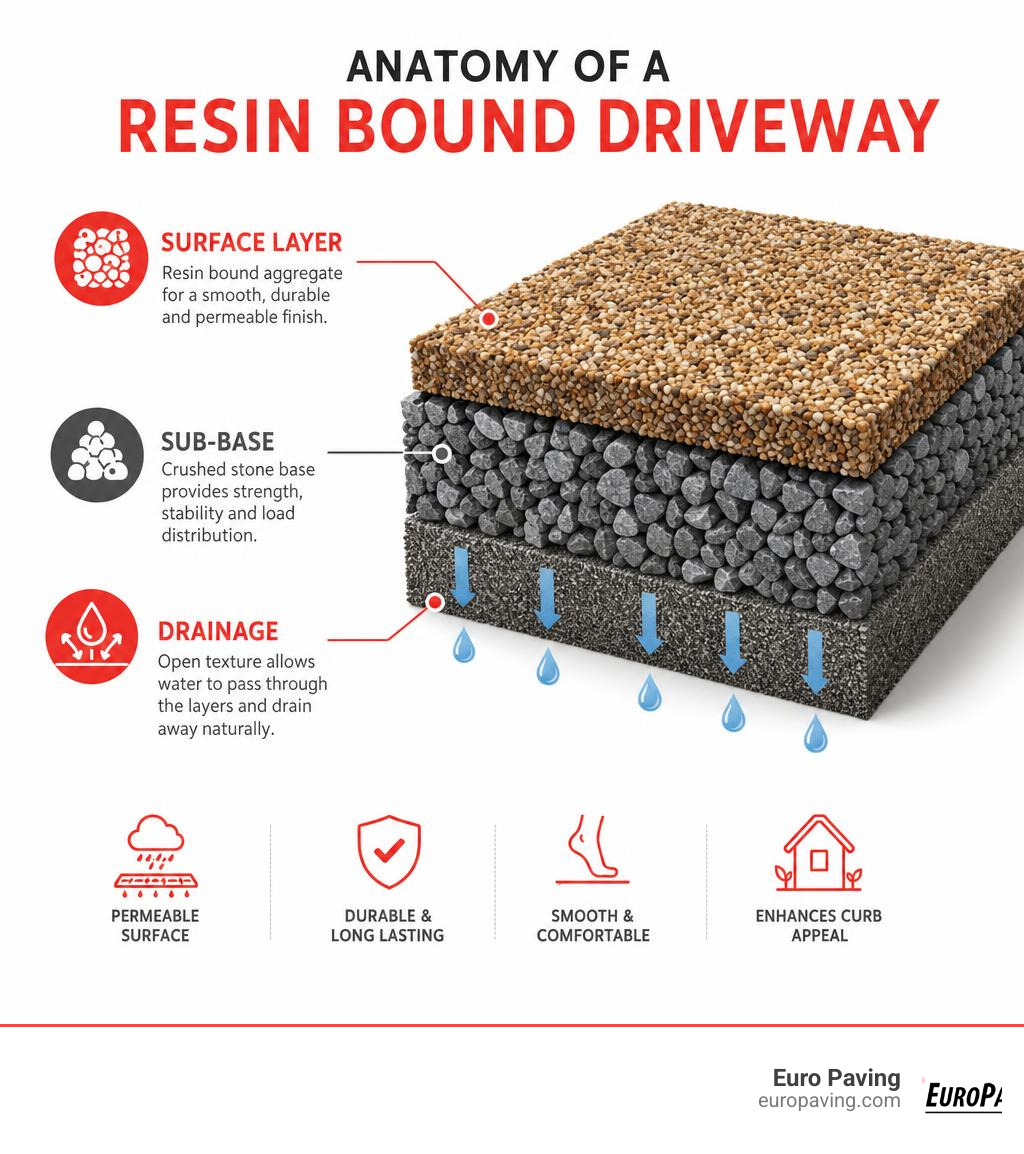
Resin bound driveway repair is the process of restoring damaged areas of a resin-and-aggregate surface — whether that means patching cracks, re-bonding loose stones, or addressing deeper structural issues beneath the surface.
Here’s a quick overview of the most common repair scenarios and what they involve:
| Problem | Likely Cause | Typical Solution |
|---|---|---|
| Cracks | Ground movement, poor sub-base | Chisel out, fill with matched resin mix |
| Loose stones | Low-quality resin or solvent damage | Remove and re-bond with fresh resin |
| Fading or discolouration | UV exposure over time | Replenishment or UV-stable resin coat |
| Weeds or moss | Wind-blown seeds, moisture buildup | Biocide treatment, then reseal |
| Widespread cracking | Base failure, frost damage | Full section or full replacement |
Resin bound driveways are known for their clean finish, permeability, and low maintenance. But even the best installations face real pressure from the elements — especially in climates with hard winters, freeze-thaw cycles, and heavy rainfall.
Most surfaces last 10 to 15 years, though many fail within 5 years due to poor installation or harsh weather. When damage appears, the question isn’t just how to fix it — it’s whether a patch repair will hold, or whether something deeper is going on.
This guide covers everything you need to know: from diagnosing the problem to understanding when a professional repair is the only real option.
Resin bound driveway repair further reading:
Common Causes of Damage and Wear on Specialty Driveways
To understand how to approach resin bound driveway repair, we must first look at why these specialized surfaces fail. While resin bound paving is highly durable, it is a rigid, thin-overlay system (typically only 15mm to 18mm thick). This makes it highly vulnerable to environmental factors and sub-base issues, especially in our local Chicago climate.
1. Freeze-Thaw Cycles and the Chicago Climate
For homeowners in Arlington Heights, Hinsdale, and the surrounding Chicago suburbs, the local weather is the ultimate test of any driveway. We experience rapid temperature swings and severe winter freeze-thaw cycles.
When water penetrates the porous structure of a resin bound driveway and freezes, it expands with immense force—up to 30,000 psi (207 MPa). Because the flexural strength of standard polyurethane resin is only between 580 and 1,300 psi (4 to 9 MPa), the freezing water easily overpowers the binder. This causes the aggregate to pop loose, creating small craters or deep structural cracks.
2. Clay Soils and Ground Movement
Much of Cook County and DuPage County features heavy clay soils. Clay soil retains water and undergoes dramatic shifting, swelling when wet and shrinking when dry. If a resin bound driveway is installed over a sub-base that cannot handle this movement, the rigid resin layer has nowhere to go. It will crack under the tension. Tree roots creeping under the driveway will cause the same destructive shifting.
3. Poor Sub-Base Preparation
A resin bound driveway is only as strong as the foundation beneath it. If the sub-base was poorly compacted, laid too thin, or constructed without proper drainage, the surface will quickly show signs of distress. In many cases, “reflective cracking” occurs. This is when cracks in the concrete or asphalt base layer reflect directly up through the decorative resin overlay.
4. Heavy Vehicle Loads and Wear
Resin bound surfaces are designed for standard residential traffic. Heavy delivery trucks, skips, or turning heavy vehicles in the exact same spot repeatedly will wear down the aggregate-to-resin bond. Stationary steering is a major culprit; turning your car wheels while parked grinds the stone and breaks the resin bonds.
For more details on protecting your exterior surfaces from seasonal wear, read our comprehensive driveway maintenance tips.
Professional Resin Bound Driveway Repair and Restoration
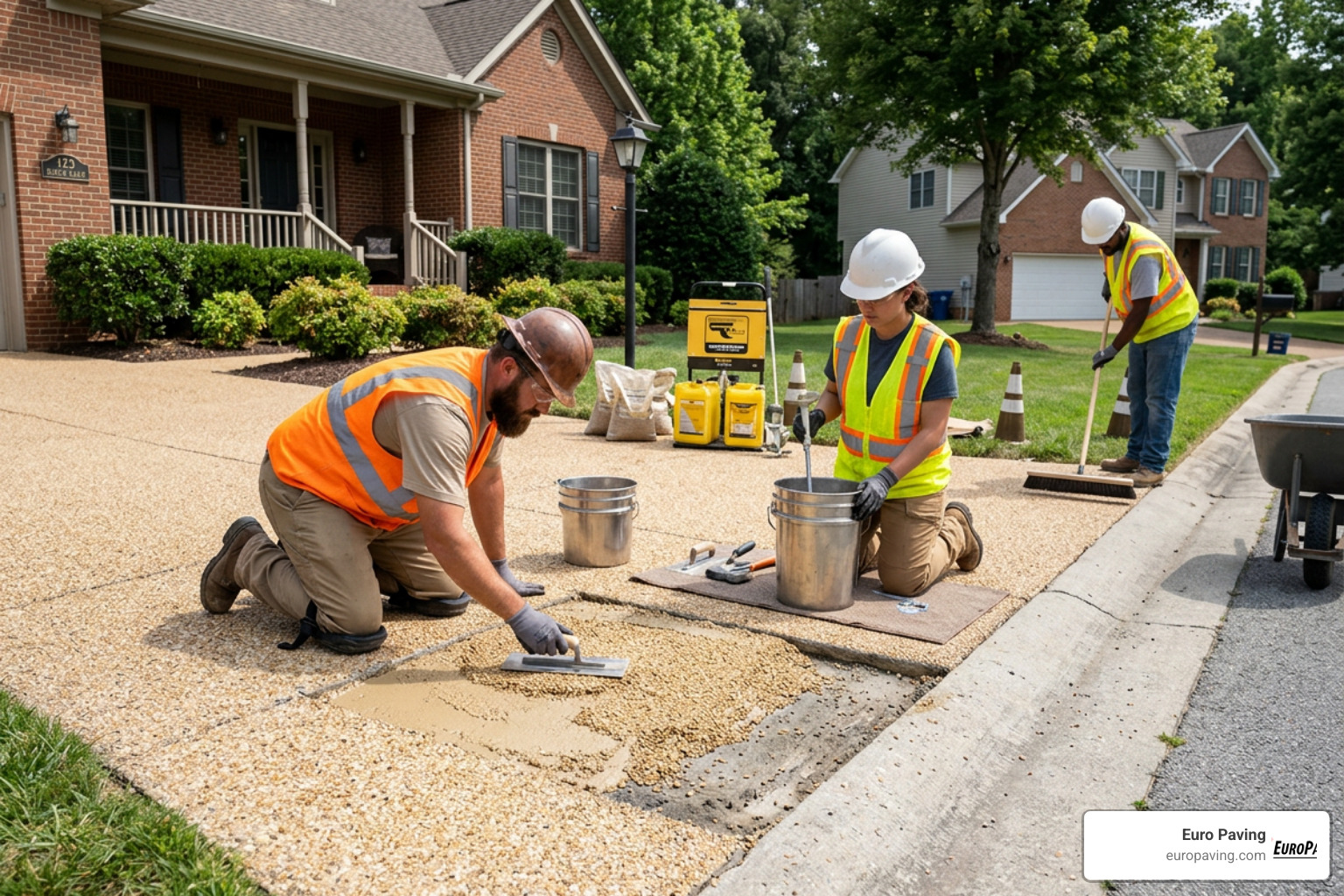
When a specialty driveway develops cracks, holes, or loose patches, a quick DIY fix rarely provides a lasting solution. Achieving a seamless, structurally sound resin bound driveway repair requires professional-grade materials, specialized tools, and precise environmental controls.
The Importance of Color Matching and Chemical Blending
One of the greatest challenges in repairing a resin bound surface is aesthetics. Natural aggregates are quarried products; stones from different quarry batches will vary in color, even if they are technically the same blend. Furthermore, the existing driveway has been exposed to UV radiation and weathering, which naturally wears off the shiny resin coating after about a year.
Our professional crews use on-site color-matching techniques. We source matching aggregate blends and adjust the mix to account for weathering. We also use premium, UV-stable aliphatic resin binders. Cheap aromatic resins yellow rapidly under sunlight, turning a gray or blue driveway into an unsightly patchy brown within a couple of seasons.
Restoring Structural Integrity
A professional repair doesn’t just mask the damage; it restores the strength of the system. This involves applying high-performance polyurethane primers to the cleaned, chiseled-out edges of the damaged area. The primer ensures a secure, chemical bond between the old resin surface and the newly applied aggregate mix, preventing water from seeping into the joint and causing future frost damage.
If you are seeing signs of wear on your driveway in Skokie, Norridge, or Mount Prospect, seeking professional help early can prevent minor cosmetic issues from turning into complete base failures. Explore your local options with our guide to finding driveway paving near me. Learn more about the core mechanics of patch repairs by reading these professional professional resin bound repair techniques.
The Technical Process of a Resin Bound Driveway Repair
To achieve a long-lasting, flush finish, our technicians follow a strict, multi-step technical protocol:
- Assessment & Edge Preparation: We begin by chiseling out the damaged section, removing all loose stones until we reach a solid, stable base. For cracks, we use specialized tools to widen the crack into a clean, V-shaped channel. This ensures there is enough space to pack the new aggregate mix tightly.
- Priming: The vertical edges and the base of the prepared area are primed with a premium polyurethane primer to guarantee maximum adhesion.
- Aggregate Blending: We carefully mix the dry, dust-free aggregate in a forced-action mixer. Dust is the enemy of resin; even a small amount of moisture or dust will prevent the resin from binding to the stone.
- Resin Mixing: We combine the two-part polyurethane binder using a drill and paddle mixer.
- Installation & Troweling: The mixed material is packed tightly into the prepared patch or crack. We trowel it flat, feathering the edges to blend seamlessly with the surrounding driveway.
- Curing Management: The working time of mixed resin is highly sensitive to temperature:
- At 32°C (90°F): The working time is only 6 minutes before the resin becomes untrowelable.
- At 20°C (68°F): The working time is approximately 20 minutes.
Because of these tight windows, repairs must be performed swiftly by an experienced team. You can read more about the chemical and physical specifications of these repairs in the official resin bound patch repair guidelines.
Why DIY Resin Bound Driveway Repair Often Fails
While DIY home improvement is popular in the Chicago area, attempting a self-repair on a resin bound driveway often leads to frustrating, highly visible failures.
- The “Square Patch” Aesthetic: Without professional blending equipment and weathering experience, DIY repairs almost always result in highly visible, mismatched patches. Instead of a beautiful, uniform driveway, you end up with a surface that looks like a patchwork quilt.
- Moisture Sensitivity: Polyurethane resin reacts violently with water during its curing phase. A single raindrop, high humidity, or morning dew can cause the resin to foam, turn white, and fail to bond. Professionals monitor humidity and surface temperature closely, installing only within safe weather windows.
- Incorrect Ratios: If the resin-to-aggregate ratio is off by even a fraction, the repair will either be too brittle (leading to immediate stone loss) or too soft (leading to sinking and stickiness).
- Ignoring the Root Cause: If a crack is caused by a settling sub-base or shifting clay soil, simply filling the crack with new resin is a temporary band-aid. The crack will return within months. A professional team will inspect the sub-base and determine if structural reinforcement is required.
For driveways suffering from crumbling borders or edge failures, read our guide on driveway edge repair to understand how we secure the perimeters of specialty installations.
Long-Term Maintenance and Damage Prevention
Regular maintenance is key to maximizing the lifespan of your specialty driveway and avoiding the need for frequent resin bound driveway repair.
Safe Pressure Washing Techniques
While resin bound driveways are low-maintenance, they do require periodic cleaning to prevent moss, algae, and dirt from clogging the permeable pores. However, improper pressure washing can destroy the surface.
- Maximum Pressure: Never exceed 150 bar of pressure.
- Nozzle Selection: Always use a fan-tip or flat nozzle. Never use a rotary “dirt blaster” nozzle, which will rip the stones right out of the resin.
- Safe Distance: Keep the nozzle at least 20cm (8 inches) away from the surface, sweeping in wide, gentle strokes.
Moss, Weed, and Stain Management
Wind-blown seeds and organic matter can settle in the pore spaces of the aggregate. If left unchecked, moss and weeds will expand, acting as a “frost trigger” by holding water directly against the resin. Treat the surface annually with an eco-friendly biocide or moss killer, then rinse it thoroughly.
For oil spills, act immediately. Apply a mild household degreaser or dish soap, let it sit for 10 minutes to break down the oil, and wash it away with warm water. For stubborn chewing gum, use a freezing spray to harden the gum, then gently scrape it off with a plastic wall scraper.
Winter Care in Chicago
To prevent ice buildup, you can safely apply rock salt to a resin bound surface. However, you should sweep and wash the salt away once the ice melts to prevent mineral staining. Avoid using metal snow shovels; always use a plastic shovel or a snowblower with rubber-edged blades to protect the resin coating.
Maintenance Comparison: Resin Bound vs. Brick Pavers
| Maintenance Task | Resin Bound Driveway | Custom Brick Paver Driveway |
|---|---|---|
| Routine Cleaning | Sweep regularly; light pressure wash (max 150 bar) | Sweep; standard pressure wash |
| Weed & Moss Control | High risk if pores clog; requires annual biocide | Low risk with polymeric joint sand |
| Repair Process | Rigid patch repairs; leaves visible lines/patches | Individual pavers can be lifted and replaced invisibly |
| Lifespan | 10 to 15 years; requires resealing every 3–5 years | 30 to 50+ years with lifetime material guarantees |
| Freeze-Thaw Resistance | Vulnerable to cracking under high frost pressure | Highly flexible; moves naturally with ground shifts |
To ensure water flows away from your home’s foundation and doesn’t pool on your driveway, check out our guide on driveway drainage solutions.
Resurfacing vs. Full Replacement: Making the Right Choice
If your driveway is showing advanced signs of wear, you must decide whether to invest in localized repairs, resurface the area, or opt for a complete replacement.
When Resurfacing is Viable
Resurfacing (applying a new 18mm overlay) is an option if the existing sub-base (concrete or asphalt) is structurally sound, free of major cracks, and drains properly. If the issues are purely cosmetic—such as surface fading or minor localized wear—resurfacing can extend the driveway’s life.
When Full Replacement is Necessary
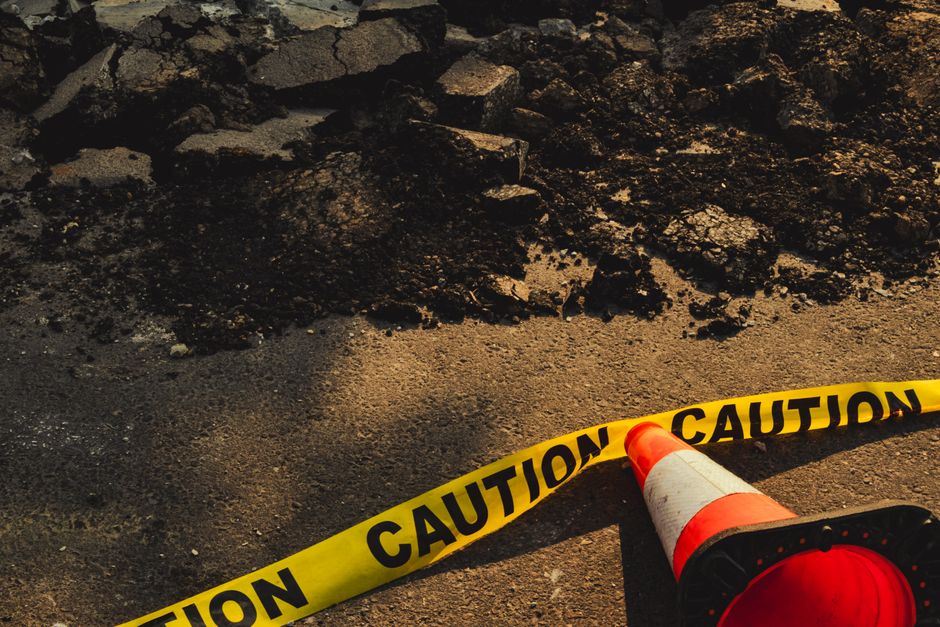
If your driveway has widespread “reflective cracking,” deep potholes, or areas that have sunk due to substrate settling, patching or resurfacing will not work. The underlying base has failed, and any new surface layer will quickly crack along the same lines.
In these situations, we recommend a complete replacement. For homeowners in Cook and DuPage counties, this is often the perfect opportunity to transition to a highly durable, flexible, and visually stunning custom brick paver driveway. Unlike rigid resin systems, individual brick pavers can expand and contract with Chicago’s extreme temperatures. If a paver ever cracks or settles, it can be lifted and replaced individually, leaving absolutely no visible patch marks.
To weigh your options between restoring your current surface or starting fresh, read our guide on whether to resurface or replace your driveway. You can also explore our professional asphalt repair and resurfacing services to see which material suits your property best.
Frequently Asked Questions about Specialty Driveway Repairs
How long does a resin bound patch repair take to cure?
At typical summer temperatures (around 20°C / 68°F), a resin bound patch repair will cure sufficiently to accept pedestrian traffic within 24 hours. However, you should keep vehicles off the repaired area for at least 48 hours. The chemical curing process continues for several days; the driveway will not achieve full chemical and solvent resistance until 7 days post-installation.
Can you pressure wash a resin bound driveway safely?
Yes, but you must follow strict guidelines to avoid tearing the aggregate from the binder. Keep the pressure washer set to a maximum of 150 bar, use a flat fan-spray nozzle, and maintain a minimum distance of 20cm (8 inches) from the surface. Avoid using narrow pencil-jet nozzles or rotary turbo nozzles, which can permanently gouge the surface.
Why is my resin driveway cracking, and can it be permanently fixed?
Cracking is almost always caused by movement in the sub-base below (such as clay soil shifting or concrete joint movement) or from freeze-thaw pressure. While minor cracks can be chiseled out and filled with a matching resin-and-stone mix, these repairs are rarely permanent if the sub-base continues to move. For a truly permanent solution to recurring cracks, the underlying foundation must be stabilized, or the driveway should be replaced with a flexible paving system like brick pavers.
Conclusion
A beautiful, functional driveway is the cornerstone of your home’s curb appeal and daily convenience. While resin bound driveway repair can resolve localized, minor issues, keeping a rigid resin surface pristine in our demanding Chicago climate requires constant vigilance and specialized care.
If your driveway is showing signs of structural failure, or if you are tired of dealing with temporary patch repairs that leave unsightly marks, it may be time to upgrade to a permanent solution.
At Euro Paving, we specialize in transforming residential driveways and backyards into durable, elegant spaces. As a premier Unilock authorized contractor, we design and install custom brick paver driveways, gorgeous patios, outdoor kitchens, and family-friendly fire pits. Our brick paver installations are built to withstand the harshest Chicago winters, moving naturally with freeze-thaw cycles and backed by lifetime material guarantees.
Whether you live in Hinsdale, Elmhurst, Arlington Heights, Mount Prospect, or Norridge, our team is ready to bring your vision to life with advanced 3D design planning and unmatched craftsmanship.
Don’t let a crumbling driveway detract from your home’s beauty. Schedule a consultation for your brick paving driveway project with our expert team today!