



Why Your Driveway Cracks — and What It’s Really Costing You
Using the right driveway crack filler is one of the smartest moves a homeowner can make to protect their property. Here’s a quick breakdown of what you need to know:
Quick Answer: Best Driveway Crack Filler by Situation
| Crack Type | Best Solution |
|---|---|
| Hairline cracks (under 1/4″) | Leave or monitor — filler won’t adhere properly |
| Small cracks (1/4″ – 1/2″) | Cold-pour rubberized filler or elastomeric sealant |
| Wider cracks (1/2″ – 1″) | Self-leveling polyurethane or hot-pour rubberized filler |
| Deep structural cracks | Professional assessment and repair required |
That small crack in your driveway? It’s not just cosmetic.
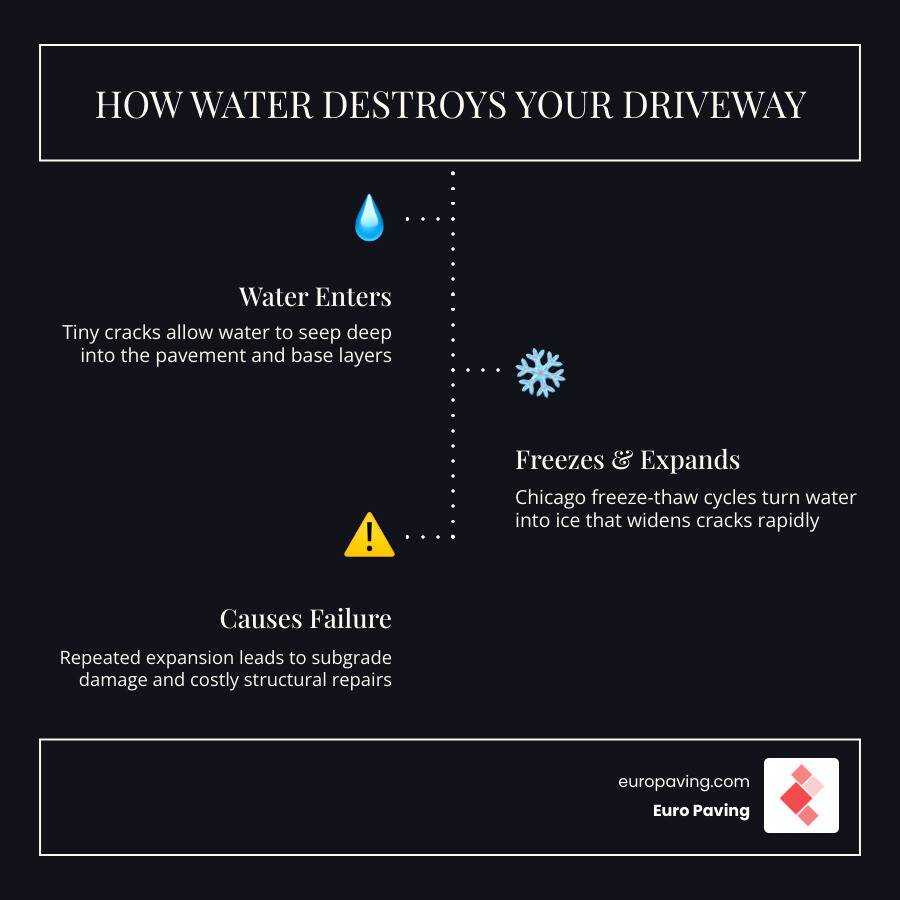
Water seeps in. It freezes. It expands. And in Chicago’s brutal freeze-thaw cycle, that tiny crack can split into a serious structural problem — fast.
Neglecting driveway cracks can quickly lead to far more costly repairs, including subgrade failure that requires full replacement rather than a simple patch job.
The good news: catching cracks early and sealing them properly can extend your asphalt’s life by 10 to 15 years. That’s a significant return on a small investment of time and materials.
In this guide, Euro Paving walks you through everything — from choosing the right product to applying it correctly — so your driveway stays strong through every Chicago winter.
Discover more about driveway crack filler:
Professional-Grade Crack Fillers and How They Protect Your Investment
When we talk about maintaining a driveway in the Chicago area, we aren’t just talking about making it look pretty. We are talking about the structural integrity of your pavement. The science behind a high-quality driveway crack filler involves asphalt emulsion and polymer modification. These aren’t just “black paint” in a bottle; they are engineered materials designed to create a flexible, waterproof bond.
In places like Arlington Heights and Skokie, the ground is constantly moving due to temperature swings. If a filler is too rigid, it will simply snap when the pavement expands in the summer or contracts in the winter. Professional-grade sealants are formulated to withstand these extreme fluctuations. By sealing these openings, we are preventing your driveway from crumbling by stopping oxidation—the process where UV rays and oxygen turn your flexible black asphalt into brittle, grey stone.
High-Performance Asphalt Sealants for Chicago Climates
For our residential and commercial clients in Northbrook and Lake Forest, we often recommend industrial-grade solutions. These include:
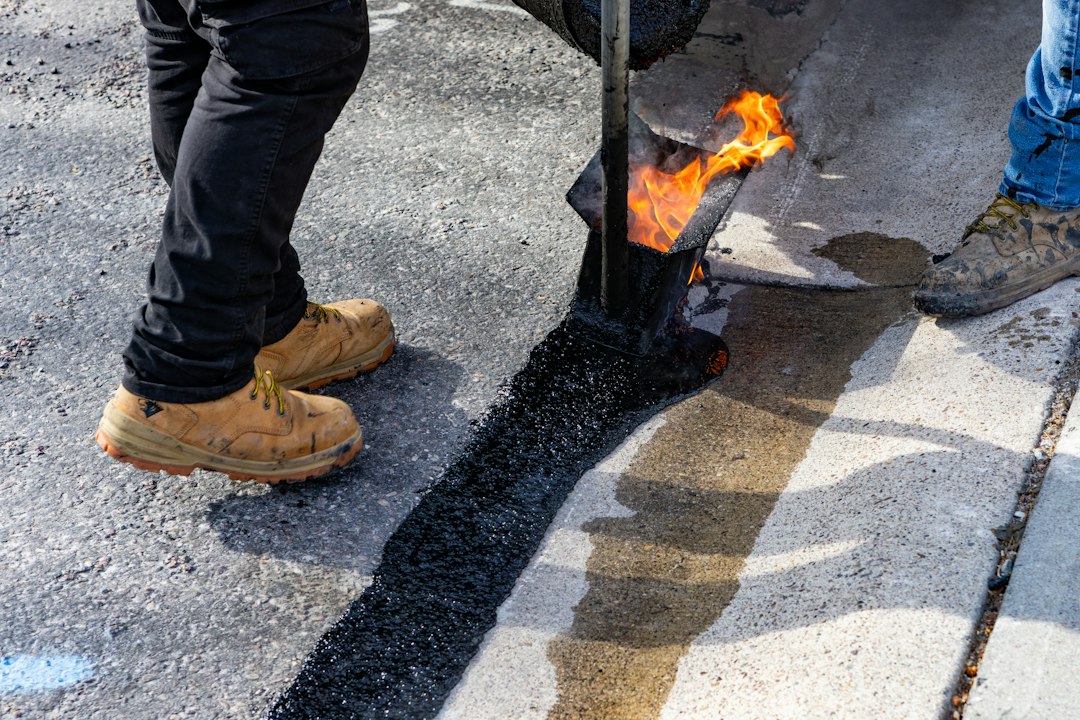
- Hot-Pour Rubberized Sealants: These are the gold standard. Heated to between 350°F and 400°F, these sealants melt into the crack, creating a permanent bond that can last up to 10 years. Unlike cold-pour “bucket” fillers that might only last a single season, hot-pour remains flexible even when the thermometer dips below zero.
- Self-Leveling Formulas: These professional liquids, such as Liquid Rubber Asphalt Crack Filler, flow into the deepest recesses of a crack without shrinking. Because they are often 100% solid material, they don’t “pull away” from the edges as they dry.
- UV and Non-Tracking Properties: High-quality fillers like Epoxyshield Ultimate Driveway Crack Filler are designed to be “non-tracking.” This means once they cure—often in as little as two hours—they won’t stick to your tires or your shoes and end up on your garage floor or living room carpet.
Advanced Concrete Repair for Rigid Pavements
Not every driveway in the Chicago area is asphalt. For those with concrete or brick paver systems, the repair needs are different. Concrete requires high-strength polyurethane sealants or industrial-grade masonry mortars.
Products like Sika Sikacryl Ready-Mix Concrete Patch or Quikrete Concrete Crack Seal are staples for minor repairs. However, for structural integrity, we look toward materials that achieve a massive 10,000 psi strength. This level of durability is essential for heavy-duty use, ensuring that repaired driveway cracks don’t just hold for a month, but for years. Precision color matching is also a hallmark of professional service, ensuring your repair doesn’t look like a “scar” on your beautiful walkway or patio.
Professional Equipment and Surface Preparation
If you’ve ever tried a DIY repair and found the filler peeling up six months later, the culprit was likely poor preparation. At Euro Paving, we know that the “secret sauce” isn’t just the driveway crack filler itself—it’s how the surface is prepped.
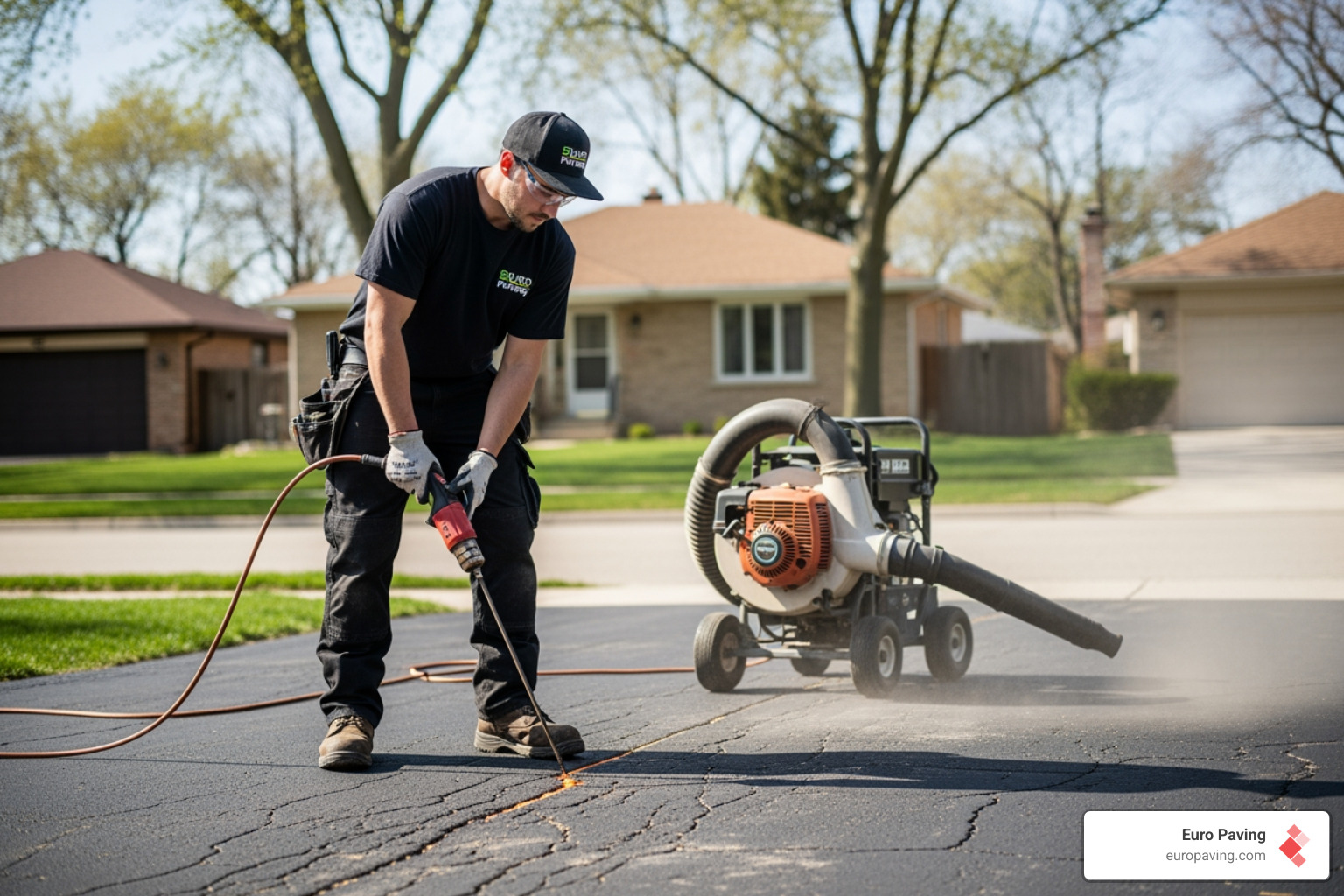
We use industrial-strength equipment that most homeowners simply don’t have in their garage. This includes heat lances to dry out deep moisture and high-pressure air blowers to remove every speck of dust. Without a clean, dry surface, even the most expensive sealant will fail to adhere.
| Feature | DIY Retail Tools | Euro Paving Professional Equipment |
|---|---|---|
| Cleaning | Wire brush and garden hose | High-pressure air lances and industrial blowers |
| Drying | Sun/Air dry (24-48 hours) | Heat lances (instant moisture removal) |
| Deep Cracks | Multiple layers of filler | Professional backer rods and hot-pour application |
| Bonding | Surface-level adhesion | Mechanical routing for deep structural bonding |
Properly avoiding common driveway renovation problems starts with treating oil spots. We use industrial-strength degreasers to ensure that oil and grease don’t prevent the sealant from “grabbing” the asphalt.
The Euro Paving Standard for Surface Preparation
Our process in towns like Barrington and Downers Grove follows a strict protocol:
- Debris and Vegetation Removal: We don’t just pull weeds; we treat the area to ensure roots don’t grow back through the new filler.
- Mechanical Routing: For wider cracks, we often use a router to create a clean “reservoir.” This gives the driveway crack filler more surface area to bond to, which is vital for long-term durability.
- Temperature and Moisture Monitoring: We never apply sealant if the pavement temperature is below 55°F or if rain is in the forecast. In Chicago, timing is everything.
- Backer Rods: For cracks deeper than 1/2 inch, we insert a foam backer rod. This prevents the filler from sinking to the bottom of the crack, saving material and ensuring the sealant stays where it belongs—at the surface.
The Professional Application Process for a Flawless Finish
Once the prep is done, the application begins. Whether we are using Henry 305 Driveway Elastomeric Crack Filler for its flexibility or a Premium Crack Filler for its fast-drying properties, the technique is what matters.
We use a “V-squeegee” or a professional pour pot to ensure the filler is level with the surface. A common DIY mistake is overfilling, which leaves a hump that your snowblower will catch in January. We aim for a “flush” finish or a slight “overband” (a thin, wide strip over the crack) that provides extra waterproofing.
Safety is also paramount. When dealing with hot-pour materials at 400°F, our crews wear full PPE, including heat-resistant gloves and eye protection. We also manage the “curing window.” While some products like Super Seal are dry to the touch in 30 minutes, we typically recommend a 24-hour traffic restriction to ensure the bond is fully set.
Why Professional Maintenance Outperforms DIY in Chicago
Living in the Chicago area—from Hillside to Winnetka—means your driveway faces some of the toughest weather in the country. While a bottle of Latex-ite Asphalt Crack Filler is great for a quick fix, it doesn’t address the underlying health of your pavement.
Our team at Euro Paving does more than just fill a gap. We assess the structural integrity of the entire surface. If we see “alligator cracking” (small, interconnected cracks that look like reptile skin), we know that a simple filler won’t work. That’s a sign of sub-base failure. In those cases, we might recommend that you resurface or replace your driveway to prevent a total collapse.
By choosing a professional service, you are getting:
- Hot-Pour Durability: Our rubberized sealants last 3-5 times longer than cold-pour retail products.
- Expert Diagnosis: We know the difference between a surface crack and a structural failure.
- Efficiency: We can seal a long driveway in a fraction of the time it takes to do it by hand with small tubes.
Frequently Asked Questions about Professional Driveway Repair
How long does professional-grade crack filler take to cure?
While many professional products are “traffic ready” in as little as 30 to 40 minutes (especially hot-pour varieties), we generally recommend waiting 24 hours before driving heavy vehicles over the repaired areas. This ensures the driveway crack filler has completely bonded with the asphalt walls.
Why is the Chicago climate particularly hard on driveway joints?
It’s all about the “Freeze-Thaw.” Chicago often sees temperatures swing from 40°F during a rainy day to 10°F at night. Water enters the crack, freezes into ice, and expands with incredible force. This expansion pushes the pavement apart. Professional-grade fillers are designed to be “elastomeric,” meaning they stretch and shrink with these cycles without breaking their seal.
How often should a professional inspection and sealing be performed?
We recommend a professional inspection every 2 to 3 years. Regular maintenance—including crack filling and sealcoating—can extend the life of your asphalt by over a decade. It is much cheaper to spend a few hundred dollars on maintenance now than tens of thousands on a full replacement later.
Conclusion
At Euro Paving, we are more than just a paving company; we are your neighbors in Chicago, Arlington Heights, Hinsdale, and throughout the Cook and DuPage county areas. We understand that your home is your biggest investment, and your driveway is its welcome mat.
Whether you are looking to fix a few nagging splits or you want a complete backyard transformation with a custom brick patio and fire pit, we bring the same level of professional expertise to every project. Don’t let cracks kill your curb appeal.
Contact Euro Paving for professional driveway and brick paving services today and let us help you protect your pavement for years to come.