



Why Round Brick Patio Design Transforms Ordinary Backyards
A round brick patio design is one of the most visually striking choices you can make for your backyard — and it’s also one of the most functional.
Quick answer: What makes round brick patios different from square or rectangular ones?
| Feature | Round Brick Patio | Square/Rectangular Patio |
|---|---|---|
| Visual appeal | Softer, organic focal point | Formal, structured look |
| Social layout | Encourages face-to-face seating | Linear seating arrangements |
| Landscape fit | Blends into curves and gardens | Best for angular spaces |
| Central feature | Ideal for fire pit or planter | Works better along walls |
| Brick cutting | More edge cuts required | Minimal cuts needed |
| Hardscape feel | Softens hard lines | Emphasizes structure |
Circular shapes are inherently attractive. They draw the eye, break up rigid landscape architecture lines, and create a natural gathering space — whether you’re hosting a summer barbecue or enjoying a quiet evening outdoors.
With over 7,789 photos of circular patios on Houzz alone, it’s clear this design style has serious staying power heading into 2026.
But getting it right takes more than inspiration. Material selection, base preparation, pattern choice, and precision layout all determine whether your round patio lasts decades — or starts shifting after the first Chicago winter.
This guide covers everything you need to know, from brick types and patterns to professional installation standards and long-term maintenance.
Glossary for round brick patio design:
Why Choose a Round Brick Patio Design for Your Backyard?
Choosing a circular layout is a deliberate design move that shifts the energy of your outdoor space. While rectangular patios often feel like an extension of the house’s interior floor plan, a round patio feels like a destination within the landscape itself. It acts as a powerful focal point that naturally draws people toward the center, making it the ultimate setting for social gatherings.
One of the primary benefits we see in our projects across Arlington Heights and Skokie is how circular geometry “softens” a backyard. Most homes are composed of hard, 90-degree angles. A round brick patio design breaks up these rigid lines, creating a more organic flow that mimics the curves found in nature.
Furthermore, a professionally installed circular patio significantly boosts property value. In the competitive Chicago suburbs real estate market, custom hardscaping suggests a level of sophistication and attention to detail that sets a home apart. It’s not just a place to put a chair; it’s an architectural statement.
Popular Round Brick Patio Design Patterns
The pattern you choose for your circular patio isn’t just about looks; it’s about structural integrity and the “vibe” of the space. Because you are working with a radius, some patterns are naturally more suited to the shape than others.
- Whorled Pattern: This is the quintessential circular design. Bricks are laid in concentric rings starting from a central point and moving outward. It is perfect for highlighting a central feature like a fountain or a fire pit. You can explore more about brick patterns for patios 2024 to see how these rings create a sense of movement.
- Herringbone: Known as the strongest brick pattern, herringbone is ideal for heavy-duty demands. While more complex to execute in a circle, it provides an interlocking zig-zag strength that is unmatched, especially in high-traffic areas.
- Running Bond: This involves laying bricks in a staggered, overlapping style. In a circular design, this often requires more precise cuts as the radius expands, but it offers a classic, timeless aesthetic.
- Basketweave: This decorative pattern mimics a woven texture. While beautiful, it is typically used in the center of a circle or in larger, expansive patios where the geometric repeat has room to breathe.
At Euro Paving, we utilize 3D design planning to help our clients in Northbrook and Lake Forest visualize these complex geometries before a single brick is laid, ensuring the scale and pattern perfectly match the backyard’s proportions.
Selecting the Right Pavers for a Round Brick Patio Design
The materials you choose must withstand the brutal freeze-thaw cycles of the Chicago area. While traditional clay bricks offer a classic, rustic charm, modern concrete pavers provide a level of durability and variety that is hard to beat.
As a Unilock Authorized Contractor, we prioritize high-performance materials that come with lifetime guarantees. Concrete paver patios are engineered to be stronger than poured concrete and are less likely to crack under the pressure of shifting soil.
For those looking for efficiency, Old Dominion circle kits are a popular choice. These kits come pre-sorted with the specific shapes needed to form a perfect circle, such as small and large wedges. A small kit typically covers about 39.27 square feet (roughly 6 feet in diameter), while larger kits can expand the diameter to over 9 feet. By blending different colors and textures, we can create natural transitions that look like they’ve been part of your garden for decades.
Professional Installation Standards and Technical Specifications
A beautiful round brick patio design is only as good as the foundation beneath it. In regions like Norridge and Downers Grove, the soil expands and contracts significantly with the seasons due to the freeze-thaw cycle. Without professional-grade preparation, your patio will become an uneven mess within two years.
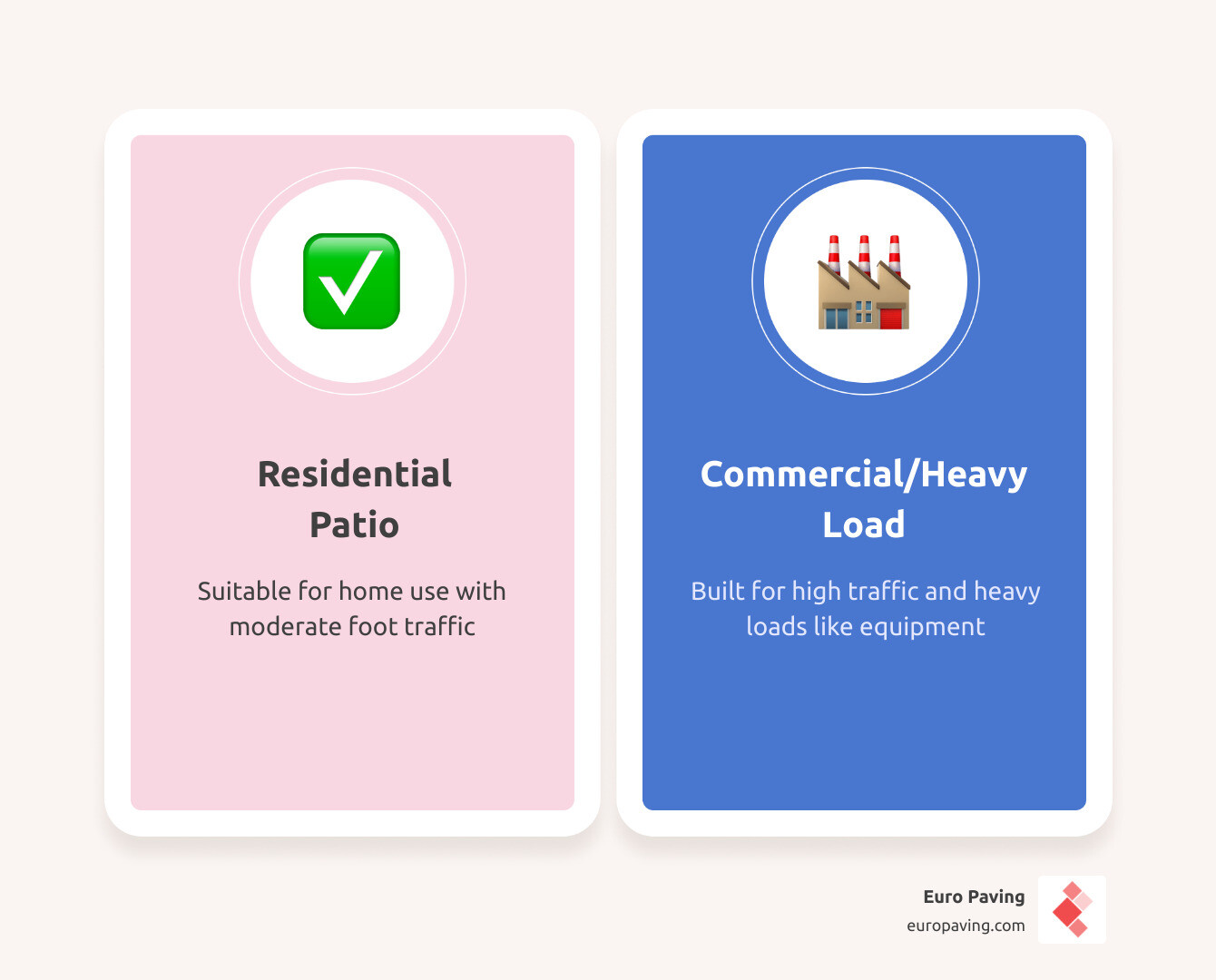
| Specification | Residential Requirement | Commercial/Heavy Load |
|---|---|---|
| Excavation Depth | 8 – 10 inches | 12+ inches |
| Gravel Sub-base | 4 – 6 inches (compacted) | 8+ inches (compacted) |
| Sand Bedding | 1 inch (leveled) | 1 inch (leveled) |
| Drainage Slope | 1-2% grade | 2% minimum grade |
The process begins with site excavation. We dig to a depth of at least 8 inches to account for the gravel base, sand, and the thickness of the brick itself. This depth is critical for stability in the Chicago climate. Following excavation, we lay a 4-inch layer of crushed gravel, which is mechanically compacted to create a rock-solid foundation.
Next comes the 1-inch sand bed. This layer acts as a “cushion” for the bricks, allowing for minor adjustments during the laying process. Proper drainage is non-negotiable; we ensure a 1-2% grade (roughly 1/8 to 1/4 inch per foot) to direct water away from your home’s foundation. This meticulous 9-step process is what separates a professional installation from a DIY attempt that might fail.
Precision Layout and Perimeter Edging
Marking a perfect circle requires more than a steady eye. We use advanced radius measurement techniques, often involving a central stake and a non-stretch mason’s line, to scribe the exact perimeter.
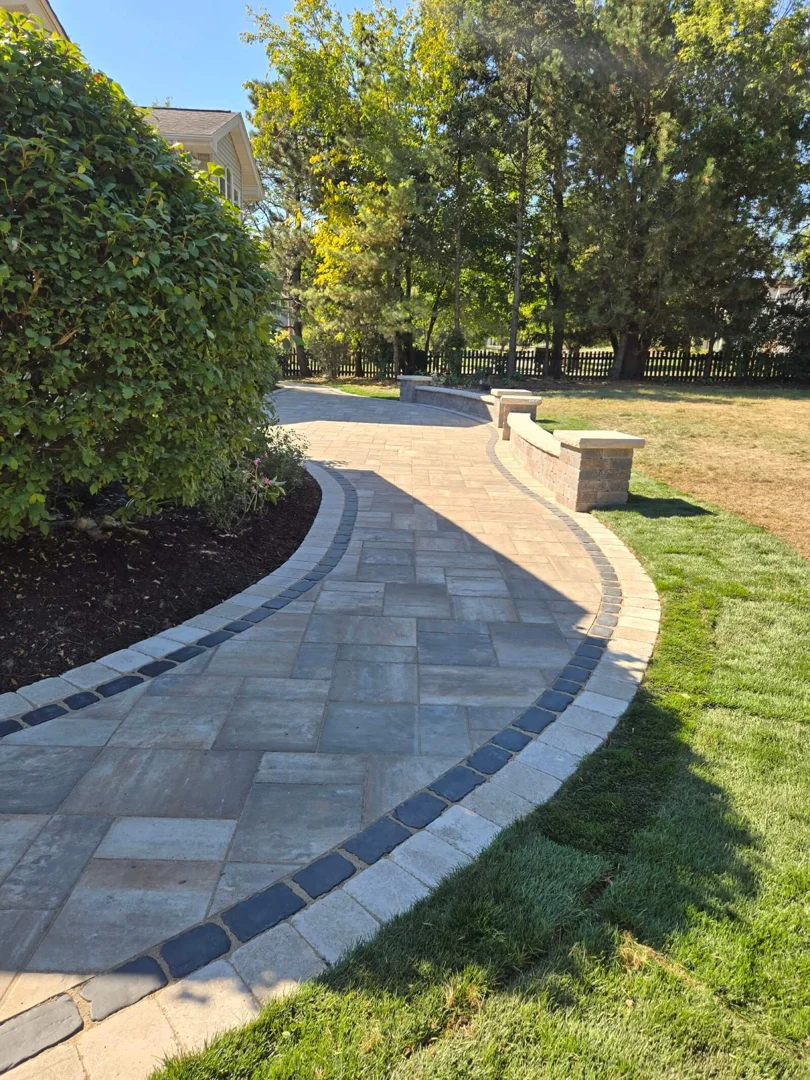
The perimeter is usually finished with a soldier course border. This involves laying bricks side-by-side (like soldiers in a row) around the edge. This isn’t just for aesthetics; it provides structural containment. To handle the curves, we use wet saws for precision cuts, ensuring each brick fits snugly without large, unsightly gaps. This wet saw accuracy is vital for maintaining the structural integrity of the curved edge, preventing the perimeter from shifting outward over time.
Joint Stabilization and Finishing
Once the bricks are laid, we fill the joints. For a high-quality brick paving patio, we exclusively use polymeric sand. Unlike regular sand, polymeric sand contains additives that, when misted with water, create a powerful bond.
This bond serves three purposes:
- Weed Prevention: It makes it nearly impossible for seeds to take root in the joints.
- Pest Resistance: It prevents ants and other insects from tunneling under your pavers.
- Moisture Resistance: It keeps water from washing away the bedding sand beneath.
Finally, we apply a professional-grade sealant. This protects the bricks from oil stains, salt damage during winter, and UV fading, ensuring long-term durability for our clients in Cook and DuPage Counties.
Integrating Custom Features into Your Circular Space
A round patio is rarely just a flat surface; it’s an ecosystem of relaxation. Because of its shape, it naturally accommodates built-in features that follow the curve of the design.
- Seating Walls: A curved stone seating wall provides permanent furniture and acts as a beautiful border for the patio.
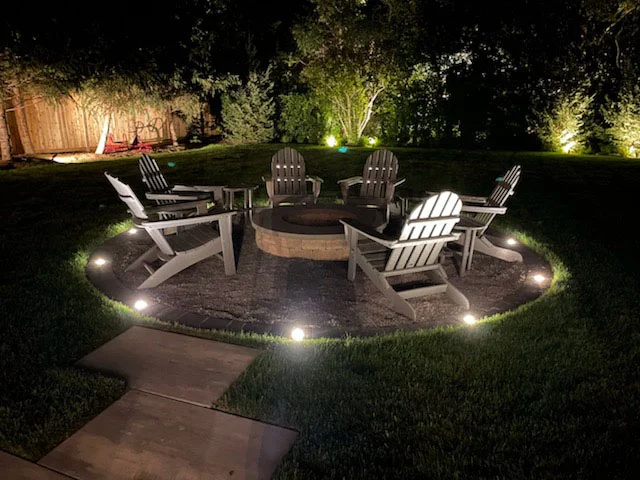
- Fire Pits: The most popular addition to a round brick patio design is a central fire pit. Whether it’s a wood-burning rustic pit or a modern gas-powered feature, the circular layout ensures everyone has the best seat in the house.
- Outdoor Kitchens: For larger spaces, we can integrate curved grill stations or bars that wrap around one side of the patio.
- Landscape Lighting: Low-voltage LED lights tucked under the cap of a seating wall or along the perimeter path can transform the space at night.
For more inspiration on how to maximize your backyard, check out our list of 25 stunning brick patio designs.
Maintenance and Longevity in the Chicago Climate
Living in the Chicago area means your patio has to survive everything from 100-degree summers to -20-degree winters. The biggest threat is the freeze-thaw cycle. When water gets into the joints, freezes, and expands, it can push pavers out of place if they weren’t installed correctly.
To protect your investment, we recommend a few simple maintenance steps:
- Re-sanding: Every few years, you may need to top off the polymeric sand in the joints.
- Power Washing: A professional power wash can remove deep-seated dirt and moss that might make the bricks slippery.
- Sealing: Re-applying a sealant every 3-5 years keeps the colors vibrant and the surface protected.
Whether you are in Hinsdale or Highland Park, these brick patterns and maintenance tips will help keep your patio looking brand new. We also offer scheduled professional inspections to catch minor issues before they become expensive repairs.
Frequently Asked Questions about Round Brick Patios
What is the most durable pattern for a circular patio?
The herringbone pattern is widely considered the strongest. Because the bricks interlock at 45 or 90-degree angles, they distribute weight more evenly and are less likely to shift under heavy furniture or foot traffic. However, for a circular design, a whorled pattern is often preferred for its visual impact and the way it highlights a central focal point.
How is the cost of a professional round brick patio determined?
Several factors influence the final price:
- Square Footage: Larger patios require more materials and labor.
- Material Selection: Premium Unilock pavers cost more than standard bricks but offer better longevity.
- Site Accessibility: If we have to move materials through a narrow gate or up a steep hill, labor costs may increase.
- Custom Features: Adding seating walls, fire pits, or complex lighting will increase the overall budget.
Are circle paver kits better than custom-cut bricks?
Circle kits are excellent for standard-sized features (like a 9-foot fire pit area) because they provide uniform aesthetics and installation efficiency. However, for a truly unique round brick patio design that needs to fit a specific backyard dimension or integrate with complex walkways, custom-cut bricks offer far more versatility.
Conclusion
A round brick patio design is more than just a home improvement project; it is an investment in your lifestyle and your property’s value. From the initial 3D design to the final sweep of polymeric sand, every step requires precision and an understanding of the local climate.
At Euro Paving, we pride ourselves on being Chicago’s hardscaping leaders. As a Unilock Authorized Contractor, we bring decades of experience to every backyard transformation, ensuring that your patio isn’t just beautiful today, but remains a gathering place for your family for a lifetime.
Ready to turn your backyard into a relaxing haven? Schedule a consultation for your professional paver patio project with our experts today and let us help you design the perfect circular retreat.