



The Honest Truth About Lowe’s Sidewalk Pavers (And What Busy Homeowners Should Know First)
Lowe’s sidewalk pavers are a popular starting point for homeowners planning a walkway project — and for good reason. With over 697 stones and paver products available, you can find everything from basic 12-in square concrete patio stones to textured cobblestone-style options from brands like Belgard and Pavestone.
Here’s a quick look at what Lowe’s offers:
| Paver Type | Common Size | Best For |
|---|---|---|
| Concrete patio stone | 12×12 in or 16×16 in | Simple paths, patios |
| Rectangular concrete paver | 8×4×2 in | Walkways, borders |
| Holland-style paver | 8×4×1 in | Overlay projects, patterns |
| Large-format step stone | 24×24 in | Statement walkways |
| Porcelain / flagstone | Varies | Decorative, upscale looks |
Prices range roughly from $0.50 per piece for basic concrete pavers up to $3.38+ per stone for premium Belgard styles.
But here’s what the product pages don’t tell you: buying the right pavers is only half the equation. The other half — base preparation, compaction, drainage slope, and polymeric sand — determines whether your sidewalk looks great five years from now or starts heaving and cracking after the first Chicago winter.
This guide covers what’s available at Lowe’s, how retail pavers compare to professional-grade materials, and why homeowners in the Chicago suburbs increasingly turn to professional hardscaping contractors for results that actually last.
Lowes sidewalk pavers vocab to learn:
Why Professional-Grade Materials Outlast Standard Retail Sidewalk Pavers
When planning a hardscaping upgrade, it is easy to get swept up in the convenience of big-box retail. You can walk into a local store, load up a cart with standard stones, and hope for the best. However, there is a fundamental difference between the materials engineered for mass retail distribution and the professional-grade products utilized by specialized hardscaping contractors.
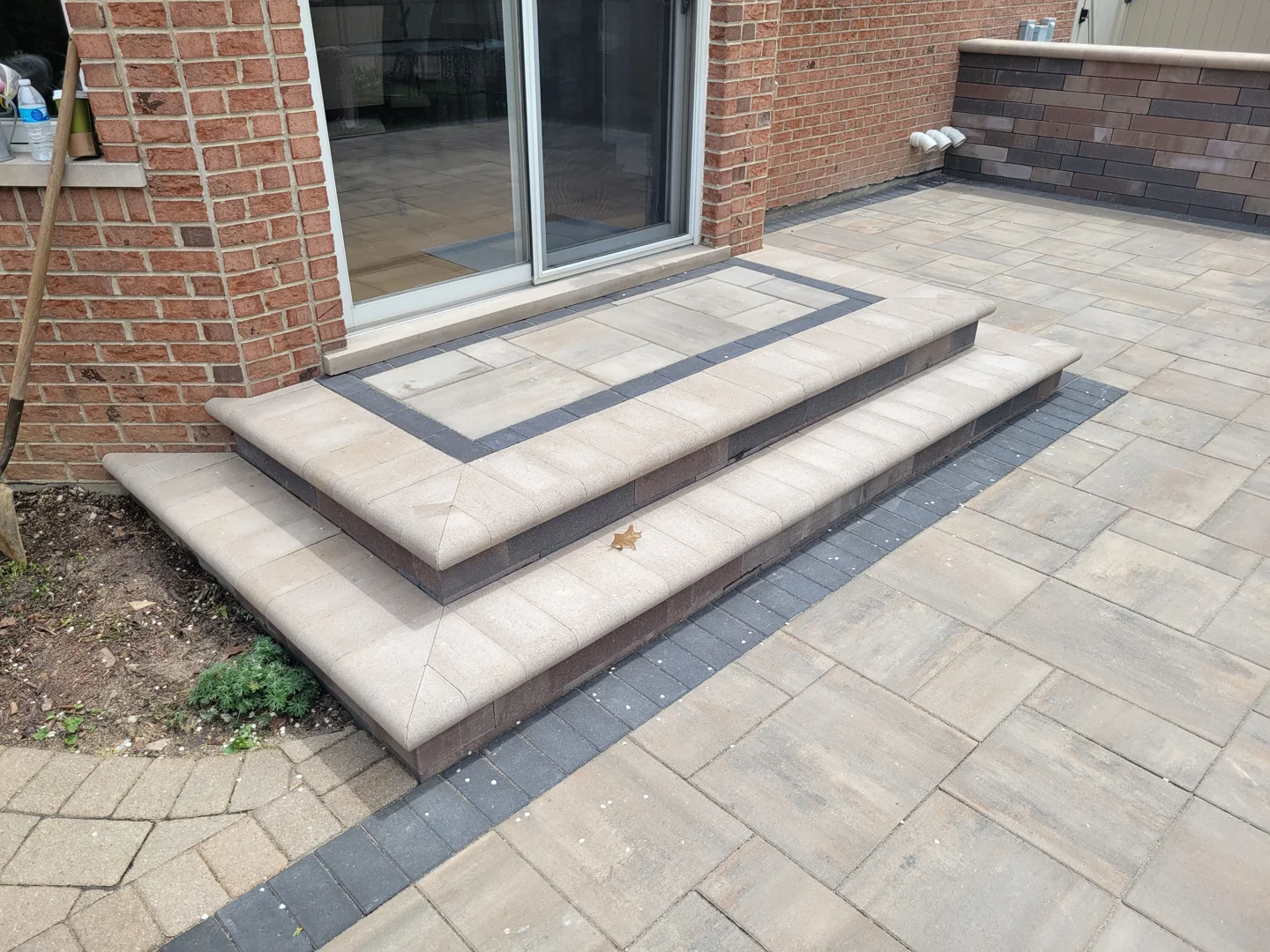
For a sidewalk that survives the heavy foot traffic of busy family life, choosing high-performance materials is paramount. While big-box retailers offer a variety of options, professional-grade paving stones represent a completely different tier of engineering. When we design and install outdoor walkways, our goal is to select the best paving stones for a sidewalk that lasts, focusing on structural density, color retention, and resistance to environmental wear.
In the Chicago area, our outdoor surfaces face some of the harshest seasonal swings in the country. From scorching summer heat waves to sub-zero winter temperatures, the ground beneath our feet is constantly moving. This is where retail-grade sidewalk pavers often reveal their limitations.
Standard retail pavers are typically manufactured using basic dry-cast concrete mixtures. They are pressed quickly and cured under standard conditions, which often leaves them with higher permeability. Over time, water penetrates these microscopic pores. When winter arrives, that trapped water freezes and expands, leading to surface flaking, pitting, and eventual structural failure.
In contrast, commercial-grade materials are engineered with advanced manufacturing technologies that minimize water absorption and maximize compressive strength, ensuring that your walkway remains smooth, stable, and visually stunning for decades.
The Durability Gap: Unilock vs. Standard Retail Pavers
To understand why professional-grade materials are superior, let’s compare standard retail products to high-performance Unilock systems.
Standard retail offerings, such as the 8-in L x 4-in W x 1-in H Rectangle Heritage Concrete Paver , are frequently used for quick overlay projects. While a 1-inch thick paver can work well when laid over an existing, perfectly level concrete slab, it lacks the structural integrity required for a load-bearing, ground-up sidewalk installation.
Similarly, larger retail options like the Country Stone 6-in L x 12-in W x 2-in H Rectangle Tan/Black Concrete Paver provide a standard 2-inch thickness suitable for basic pedestrian paths, but they lack the proprietary aggregate blends that prevent surface wear and fading.
When you look at the wider selection of products on the Shop Concrete Pavers & Patio Stones for Outdoor Spaces – Lowe’s page, you will find mass-produced concrete stones that serve basic utilitarian needs. However, these products simply cannot compete with Unilock’s proprietary technology. Unilock pavers are manufactured using specialized processes like EnduraColor™, which fuses a wear-resistant layer of high-performance minerals directly into the surface of the paver. This prevents the raw aggregates from showing through over time and keeps the colors vibrant.
Furthermore, if you want to get your path straight with these top-rated large walkway pavers, professional-grade concrete pavers offer significantly higher flexural strength. This structural resilience allows them to bridge minor subgrade movements without cracking, a feat that standard retail-grade stones cannot reliably replicate.
Elevating Your Curb Appeal Beyond Basic Retail Sidewalk Pavers
A sidewalk should be more than just a functional path from point A to point B; it should be an artistic transition that enhances your home’s architectural style. While standard retail pavers offer basic shapes and colors, they often limit your design potential to simple grid patterns or basic running bonds.
Opting for professional brick paving sidewalks opens up a world of sophisticated design possibilities. High-quality clay and concrete brick pavers provide a classic, timeless aesthetic that instantly elevates your property’s value. There are at least 11 benefits of adding a brick sidewalk to your home, including superior slip resistance, ease of individual stone replacement, and an elegant, upscale appearance that coordinates beautifully with existing brickwork.
When designing a custom walkway, professional designers focus on:
- Architectural Matching: Selecting paver textures and colors that complement your home’s siding, trim, and roof.
- Color Coordination: Blending multi-tonal pavers to mask natural outdoor dirt and debris.
- Custom Borders and Accents: Utilizing contrasting sailor or soldier courses to frame the sidewalk and add visual depth.
For those who prefer a bold, contemporary look, exploring the ultimate guide to large sidewalk pavers design and inspiration reveals how oversized slabs can create a sleek, minimalist aesthetic. Achieving these complex, high-end patterns requires a level of dimensional precision and material consistency that off-the-shelf retail products rarely deliver.
Professional Installation vs. DIY: Why Base Preparation Matters
It is a common hardscaping adage: A paver installation is only as good as the base beneath it. Many ambitious homeowners attempt to lay lowes sidewalk pavers over a weekend, only to find their new walkway sinking, shifting, or sprouting weeds by the following spring.
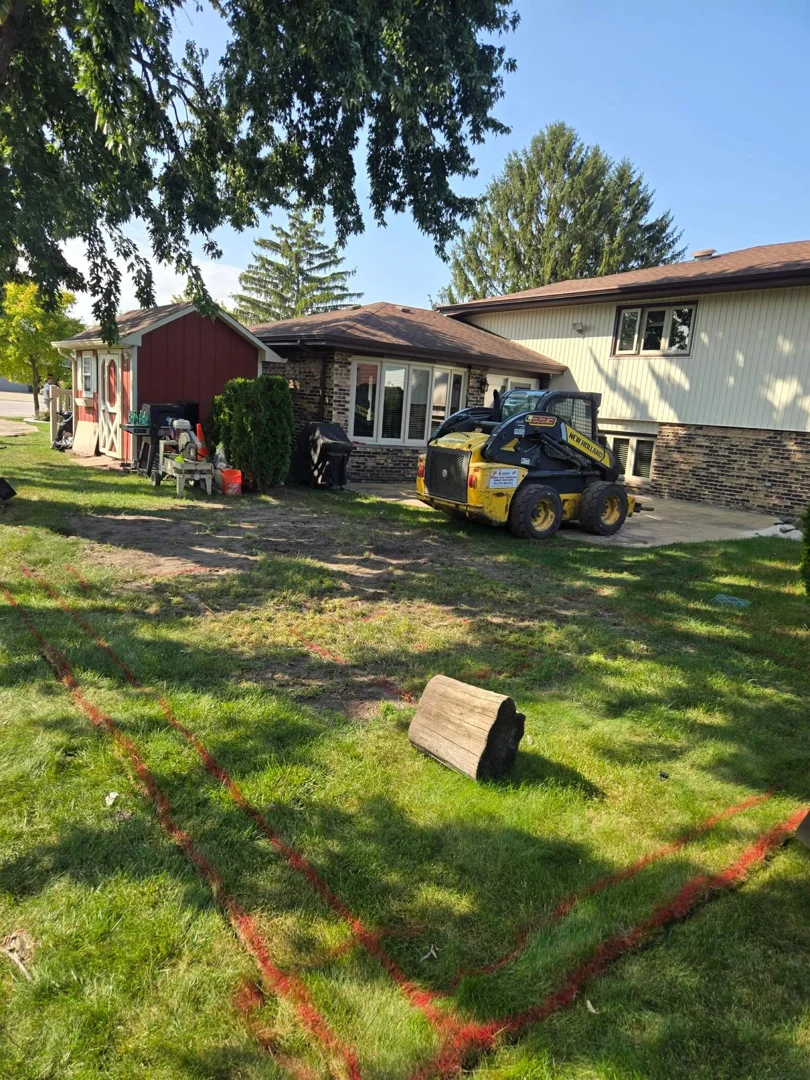
The secret to a lifetime-guaranteed walkway lies entirely in the excavation, sub-base preparation, and compaction. When undertaking a step-by-step guide to laying a stone paver sidewalk, professionals follow strict engineering standards to ensure long-term stability.
In the challenging Chicago climate—stretching across Norridge, Skokie, Glenview, and Arlington Heights—the ground undergoes intense freeze-thaw cycles. If water pools beneath the pavers, it will freeze, expand, and force the stones upward.
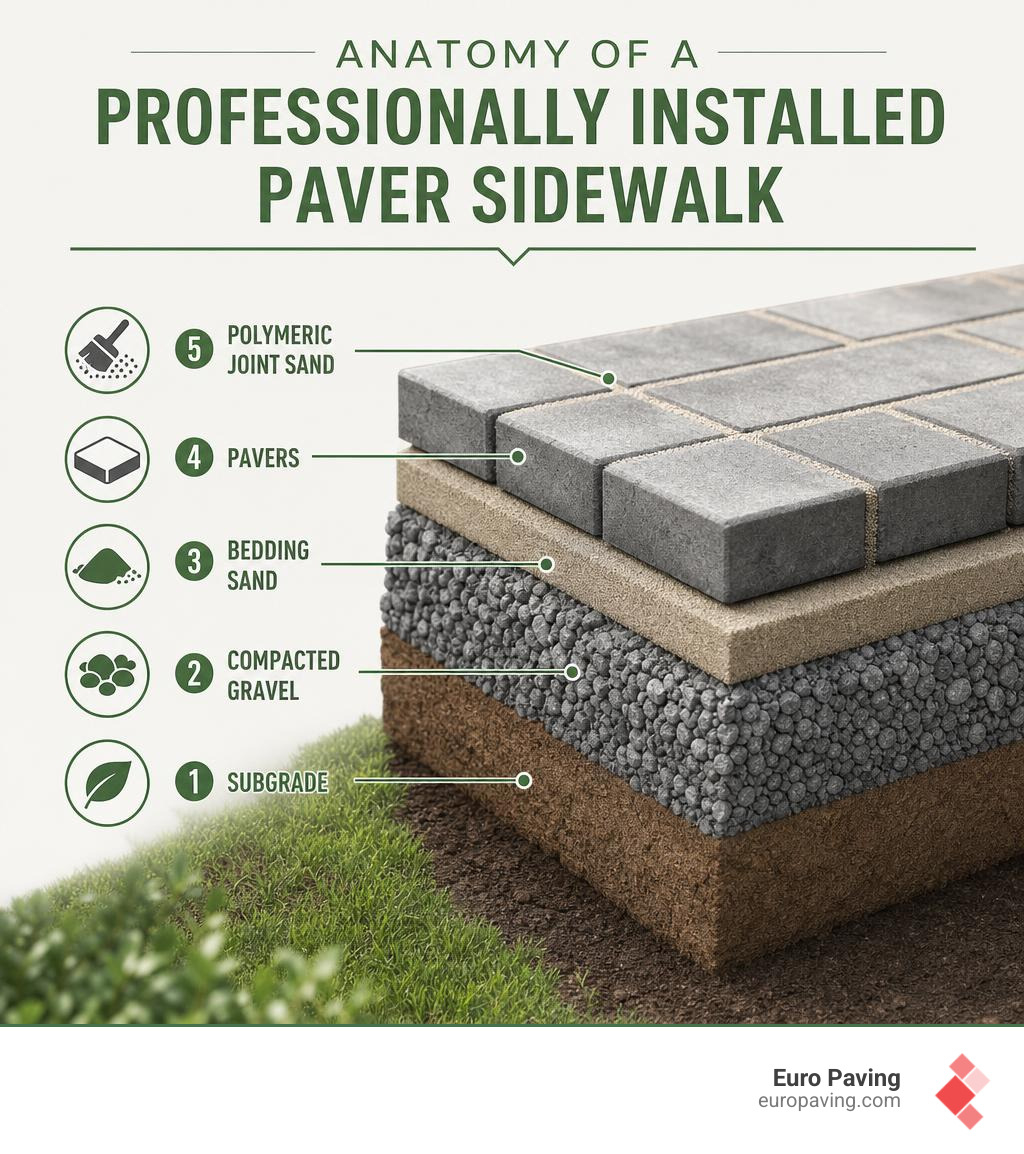
Professional installation prevents this through multi-layered sub-base engineering:
- Deep Excavation: Digging down 6 to 8 inches to reach stable, undisturbed subsoil.
- Geotextile Fabric Installation: Laying commercial-grade stabilization fabric to prevent the soil from mixing with the gravel base.
- Compacted Gravel Base: Adding 4 to 6 inches of crushed dense-graded aggregate, compacted in 2-inch lifts using heavy-duty commercial plate compactors.
- Screeded Sand Layer: Applying a perfectly level 1-inch layer of clean concrete sand.
- Edge Restraints: Securing the perimeter with heavy-duty structural edging and steel spikes to prevent lateral shifting.
- Polymeric Joint Sand: Sweeping in advanced polymeric sand, misting it to activate the binders, and allowing it to cure into a flexible, weed-resistant barrier.
To illustrate the differences between a DIY attempt and hiring a professional team like Euro Paving, consider the following comparison:
| Project Aspect | DIY Retail Installation | Professional Euro Paving Installation |
|---|---|---|
| Excavation Depth | Often too shallow (2-3 inches) due to manual labor limits. | Engineered depth (6-8+ inches) using professional machinery. |
| Base Material | Often uses improper sand or uncompacted dirt. | Crushed aggregate compacted to 98% Standard Proctor Density. |
| Edge Restraints | Plastic retail edging secured with light garden staples. | Heavy-duty commercial restraints pinned deeply into the subgrade. |
| Jointing Compound | Standard play sand or low-grade retail polymeric sand. | High-performance, commercial-grade polymeric jointing sand. |
| Weed & Pest Control | High risk of weed growth and ant infestations within 1-2 seasons. | Sealed joints and sterilized base layers prevent biological growth. |
| Warranty | None (retail return policies do not cover installation failure). | Lifetime material guarantees and comprehensive structural warranties. |
Cost Factors and Material Estimation for Sidewalk Projects
When budgeting for a hardscaping project, looking at individual paver prices at retail stores can be misleading. A single concrete paver might cost under a dollar, but the raw stone represents only a small fraction of the total project investment.
To calculate the true cost of a durable, beautiful sidewalk, you must account for:
- Excavation and Disposal: Hauling away tons of excavated sod, dirt, and old concrete.
- Sub-Base Aggregates: Tons of crushed gravel and bedding sand delivered to the site.
- Edge Restraints and Fasteners: Heavy-duty spikes and professional-grade border restraints.
- Polymeric Joint Sand: High-performance compounds to lock the system together.
- The Waste Factor: Adding 5% to 10% to the total square footage to account for custom cuts, curves, and angles.
By investing in professional hardscaping, you are not just purchasing stones; you are securing Unilock authorized craftsmanship, advanced design planning, and a long-term return on investment (ROI). A professionally paved walkway dramatically boosts your home’s curb appeal, making it a highly desirable feature for future buyers.
Moreover, you can explore creative, custom sidewalk paving ideas that will make your neighbors jealous, such as integrating integrated lighting, sweeping curves, and custom-designed entryways that perfectly frame your home.
Frequently Asked Questions about Sidewalk Pavers
How do I calculate how many pavers I need for my sidewalk?
To estimate your materials, first calculate the total square footage of your walkway by multiplying the length by the width (for example, a 30-foot walkway that is 3 feet wide equals 90 square feet). Next, look at the coverage specifications of your chosen stone. For instance, if a specific paver covers 0.5 square feet, you will need 180 stones. Always add a 10% waste margin (18 extra stones in this case) to account for cuts, breaks, and future replacements. For curved walkways, a professional 3D design consultation is highly recommended to ensure precise ordering.
What is the best base material for a durable paver sidewalk?
A durable paver sidewalk requires a dual-layer base. The foundation must consist of 4 to 6 inches of compacted crushed gravel (often referred to as CA-6 or road gravel), which provides structural strength and allows water to drain away. On top of this compacted gravel, a 1-inch layer of clean concrete sand (not fine play sand) is screeded to provide a smooth bed for setting the pavers. Finally, high-quality polymeric joint sand must be swept into the joints to lock the stones in place.
How do Chicago freeze-thaw cycles affect paver sidewalks?
The Chicago climate is notorious for shifting soils. During winter, moisture in the ground freezes and expands, causing the soil to push upward. When the ground thaws in spring, it settles back down. Standard poured concrete sidewalks often crack under this stress because they cannot flex.
A professionally installed paver sidewalk is a flexible pavement system. Because the individual stones are set on a compacted gravel base and joined with flexible polymeric sand, the entire system can rise and fall slightly with the freeze-thaw cycle without cracking or breaking.
Conclusion
While shopping for lowes sidewalk pavers is a great way to explore basic colors and textures, a truly spectacular, long-lasting walkway requires professional-grade materials and expert execution. A beautifully paved front entrance or garden path is an investment in your home’s value, safety, and daily enjoyment.
At Euro Paving, we specialize in transforming residential outdoor spaces across the Chicago suburbs—including Elmhurst, Hinsdale, Mount Prospect, Norridge, Arlington Heights, and throughout Cook & DuPage Counties. As Unilock authorized contractors, we combine decades of local experience with lifetime material guarantees to deliver walkways, patios, and outdoor living spaces that stand the test of time.
If you are ready to elevate your home’s landscape with a stunning, professionally engineered walkway, skip the heavy lifting and the DIY guesswork. Let our family-friendly design team bring your vision to life.
Take the first step toward a beautiful home entrance today. Finding the best sidewalk paving contractors in your area is easy when you work with local experts. Schedule a professional consultation for your sidewalk paving project with Euro Paving, and let us design a space your family will love for generations.