



Why Property Owners Hire Professional Sidewalk Paving Contractors
Sidewalk paving contractors are the professionals you hire to install, repair, or resurface walkways on residential and commercial properties — and choosing the right one makes all the difference between a path that lasts decades and one that cracks within a few years.
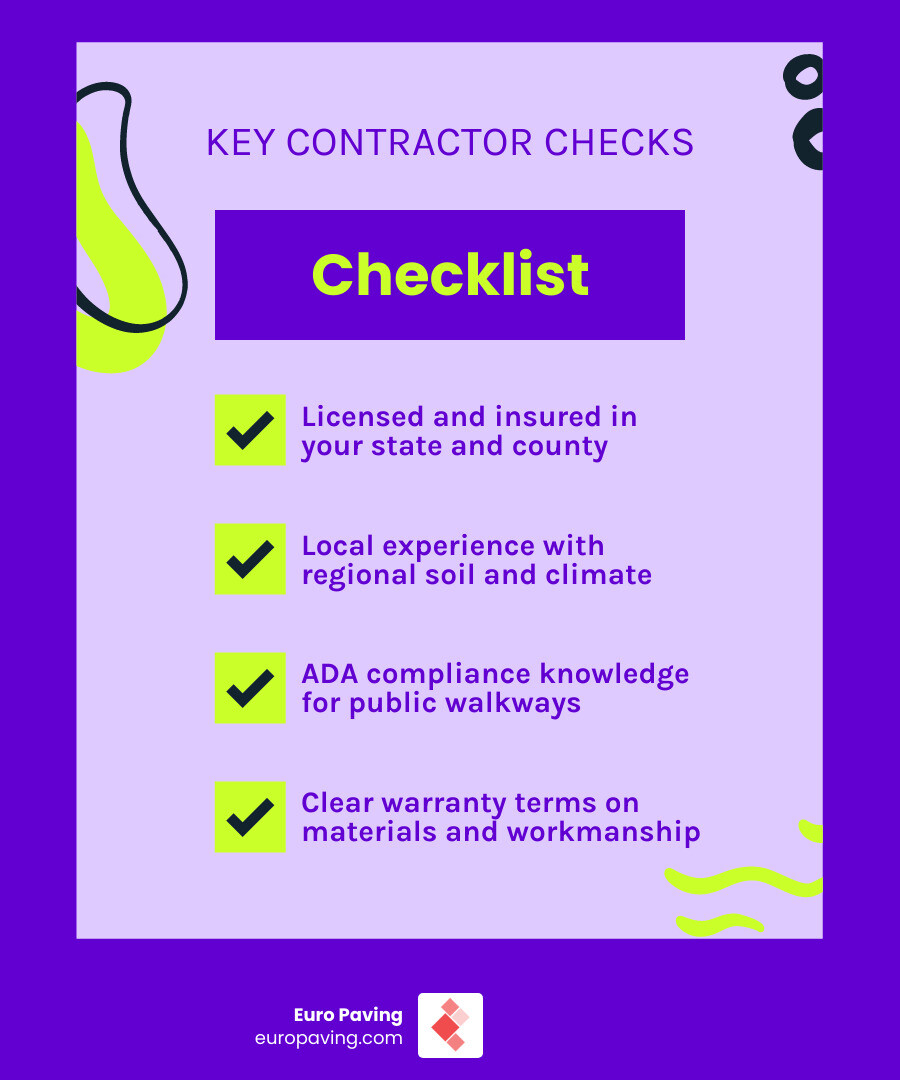
Here’s what to look for when hiring sidewalk paving contractors:
- Licensed and insured in your state and county
- Local experience with your region’s soil and climate (especially important in Chicago’s freeze-thaw conditions)
- ADA compliance knowledge for any public-facing walkways (adhering to federal ADA standards)
- Portfolio of completed projects — ask for before-and-after examples
- Clear warranty terms on both materials and workmanship
- Transparent process — subgrade prep, joint placement, and curing plan included
A smooth, well-built sidewalk is more than just a path. It’s a safety feature, a legal requirement in many cases, and a direct reflection of your property’s curb appeal.
Tree-lined streets with smooth sidewalks are a hallmark of a walkable, welcoming neighborhood — and that same principle applies to your own front yard or commercial property entrance.
Whether you’re a suburban homeowner in Elmhurst or Hinsdale looking to upgrade your outdoor space, or a property manager in the Chicago metro area needing ADA-compliant walkways, the contractor you choose will define the outcome.
This guide breaks down exactly how to find, vet, and hire the best sidewalk paving contractors in your area — so you get a result that’s built to last.
When it comes to your property, “good enough” rarely is. Hiring professional sidewalk paving contractors is a strategic decision that protects your investment and your peace of mind. Unlike a DIY weekend project, professional installation ensures that the walkway remains structurally sound for decades, rather than failing after the first harsh Illinois winter.
The primary reason we see clients moving away from DIY or “handyman” fixes is liability reduction. A single trip-and-fall accident on an uneven slab can lead to costly legal headaches. Professionals understand the nuances of sidewalk paving and how to create surfaces that are not only beautiful but safe and legally compliant.
Furthermore, a professionally installed sidewalk offers a significantly higher long-term ROI. By using high-quality materials and proven engineering techniques, the need for frequent repairs is minimized. Whether it is a winding pathway through a commercial campus or a clean residential entrance in Mount Prospect, professional craftsmanship adds tangible value to the property’s appraisal.
Avoiding the Pitfalls of Non-Professional Sidewalk Paving Contractors
It might be tempting to hire someone with a truck and a shovel who offers a “too good to be true” price, but the hidden costs of amateur work are steep. Non-professional contractors often skip the most critical step: subgrade preparation. Without a properly compacted base, the concrete or brick will inevitably shift, leading to differential settling. This creates those annoying (and dangerous) “lip” edges where one slab is higher than the next.
Improper drainage is another hallmark of poor workmanship. If a sidewalk isn’t pitched correctly, water will pool on the surface or, worse, seep underneath the slab. In the Chicago area, this trapped water freezes and expands, causing “heaving” that destroys the walkway from the inside out. Code violations are also a major risk; if your new sidewalk doesn’t meet local municipal standards in Norridge or Skokie, you may be forced to tear it out and start over at your own expense.
The Essential Role of ADA Compliance and Safety
For commercial property owners and multi-family developers, ADA (Americans with Disabilities Act) compliance is not optional—it is the law. Professional sidewalk paving contractors are well-versed in these accessibility standards, which cover everything from the specific slope of a ramp to the “truncated domes” (those bumpy tactile pads) used at crossings.
Proper pedestrian flow management and slip resistance are also key safety factors. We ensure that the finish on the concrete or the texture of the brick provides enough traction to prevent slips during rain or light snow. By prioritizing these standards, you aren’t just following the law; you’re creating a welcoming environment for everyone, regardless of their mobility level.
The Professional Installation Process for Durable Walkways
The secret to a sidewalk that lasts 30 years isn’t just the material on top; it’s the engineering underneath. The process begins with rigorous site preparation. This includes soil testing to determine if the ground can support the weight of the pavement and the expected foot traffic. In many parts of the Chicago area, clay-heavy soils require extra attention to prevent future shifting.
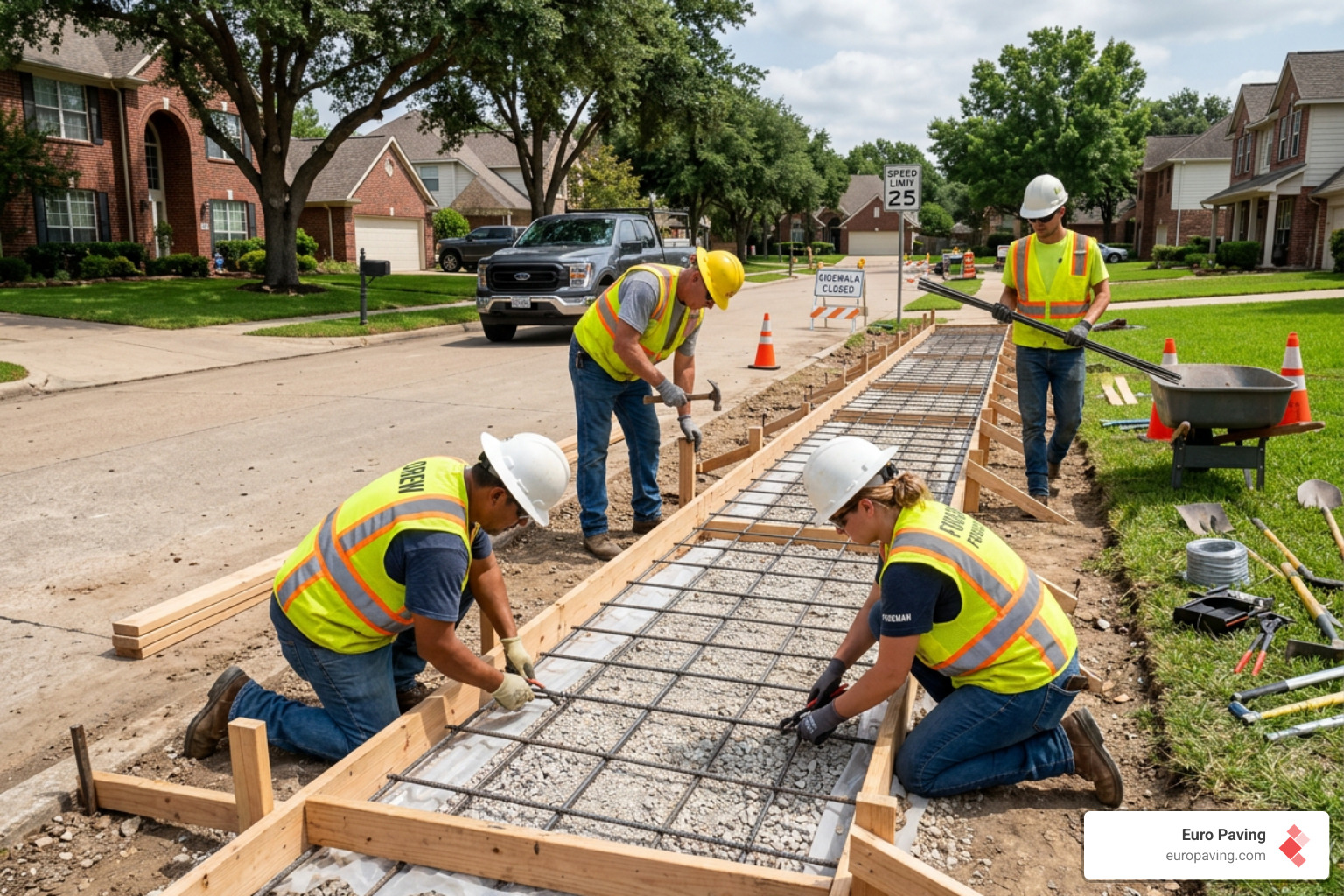
Once the site is cleared, we focus on subgrade compaction. We use heavy machinery to ensure the soil is packed tight, removing air pockets that could cause the sidewalk to sink later. After the subgrade is ready, we set the formwork—the “molds” that define the sidewalk’s shape—and install the necessary reinforcements.
Engineering for Longevity: Joints and Reinforcements
Concrete is incredibly strong, but it has one major quirk: it wants to crack. Professional sidewalk paving contractors manage this by “telling” the concrete where to crack using control joints. These are the deep lines you see every few feet. By creating a weakened plane, we ensure that if a crack occurs, it happens neatly at the bottom of that joint rather than spider-webbing across the surface.
Expansion joints are equally vital. These are filled with a flexible material that allows the concrete slabs to expand and contract as temperatures swing from 90°F in July to -10°F in January. Without these “breathing rooms,” the slabs would push against each other and shatter. For added strength, we often incorporate rebar or wire mesh reinforcements, which hold the concrete together and prevent slabs from separating even if a small crack does appear.
Advanced Equipment Used by Sidewalk Paving Contractors
You can tell a lot about a contractor by the tools they bring to the job. Experienced teams don’t just rely on shovels and wheelbarrows. We utilize Bobcats and skid steers for precise excavation and site leveling. To ensure the surface is perfectly flat and the subgrade is solid, we use vibration tools and compaction rollers that reach depths a hand-tamper never could.
For the finishing touches, laser levels are used to verify the “pitch” for drainage, ensuring water always flows away from your building’s foundation. Power screeds help level the wet concrete quickly and uniformly, while diamond-blade saws are used to cut clean, precise control joints once the material has reached the right hardness. This level of equipment ensures a professional finish that simply can’t be replicated with basic hand tools.
Selecting the Right Material: Concrete vs. Brick Pavers
Choosing between concrete and brick pavers often comes down to a balance of aesthetics, budget, and intended use. Both materials are highly durable, but they offer different benefits for Chicago-area properties.
| Feature | Poured Concrete | Brick Pavers |
|---|---|---|
| Durability | High (30+ years) | Very High (50+ years) |
| Maintenance | Low (occasional sealing) | Moderate (sanding/weeding) |
| Repairability | Difficult (patching shows) | Easy (individual bricks) |
| Aesthetic | Clean, modern, or stamped | Elegant, classic, custom |
| Initial Cost | Lower | Higher |
Enhancing Curb Appeal with Custom Brick Paving
At Europa Paving, we specialize in brick paving sidewalks that do more than just provide a path—they make a statement. Using premium Unilock materials, we can create intricate patterns like herringbone or running bond that complement the architecture of your home or business.
Brick pavers are particularly resilient in the Illinois climate. Because they are individual units, they can shift slightly with the freeze-thaw cycle without cracking the way a solid concrete slab might. Plus, if a single brick is damaged or stained by oil, it can be swapped out individually, keeping the walkway looking brand new for decades. You can explore our beautiful brick sidewalk gallery to see how these designs transform ordinary spaces into extraordinary ones. To help you visualize the final result, we even offer 3D design planning for your backyard or entrance.
Specialized Services Beyond New Installations
Reliable sidewalk paving contractors don’t just build new things; they also save existing ones. If your sidewalk is in decent shape but has some minor issues, specialized repairs might be the answer. Concrete grinding is a great way to shave down “trip hazards” where a slab has lifted slightly. For sidewalks that have sunk, leveling (sometimes called mudjacking or poly-leveling) can pump material under the slab to float it back to its original height.
Resurfacing and crack sealing are also essential maintenance tasks. By catching a small crack early and sealing it against moisture, you can prevent it from turning into a massive pothole. You can view before and after sidewalk projects to see how a professional “facelift” can restore a weathered path to its former glory.
How to Vet and Select a Reputable Paving Partner
Finding a contractor is easy; finding a partner is harder. Start by verifying their credentials. Any legitimate contractor working in Arlington Heights, Barrington, or Downers Grove should be fully licensed and carry significant insurance (both general liability and workers’ comp). This protects you from being held responsible if a worker is injured on your property.
A portfolio review is your next step. Don’t just look at photos on a website; ask for addresses of projects completed five or ten years ago. This allows you to see how their work stands up to the brutal Chicago winters over time. A reputable contractor will be proud to show off their local expertise in Cook County and DuPage County.
Key Questions to Ask Your Sidewalk Paving Contractors
Before signing a contract, get specific. Here are the questions that separate the pros from the amateurs:
- What is the specific warranty? Does it cover just the materials, or the labor too?
- What is the project timeline? How long will my entrance be blocked?
- Who is actually doing the work? Do you use your own crew or do you hire subcontractors?
- How do you handle permits? Will you assist with the local municipal paperwork in Hinsdale or Winnetka?
Regional Considerations for Chicago
Our region presents unique challenges. The soil composition in the Chicago area varies wildly, from sandy patches to heavy, moisture-retaining clay. This means a “one size fits all” approach to subgrades doesn’t work here. We also have to account for the extreme freeze-thaw cycles. In a single winter, the ground can freeze and thaw dozens of times, putting immense pressure on any paved surface.
In places like Lake Forest or Highland Park, we also consider the impact of mature trees. Root management is a critical part of sidewalk design; we often recommend root barriers or specific slab thicknesses to prevent those beautiful oaks from lifting your new walkway.
Frequently Asked Questions about Sidewalk Paving
What is the typical timeline for a sidewalk project?
Most residential sidewalk projects take between 3 to 5 days, depending on the weather. Day one is usually excavation and site prep. Day two involves setting forms and reinforcements. Day three is the “pour” or the laying of bricks. While you can often walk on a concrete sidewalk within 24 to 48 hours, it takes about 28 days to reach full structural strength. Brick pavers can be used immediately after the sand is swept into the joints!
How do contractors prevent sidewalk cracking?
Prevention starts at the bottom. We ensure the subgrade is uniform and use a thick base layer of crushed stone to provide drainage and a solid foundation. Proper joint placement is the second line of defense. Finally, we manage the water-to-cement ratio strictly—too much water makes concrete easier to pour but much more likely to crack as it dries.
What maintenance is required for new sidewalks?
For concrete, we recommend sealing the surface every 2 to 3 years to protect it from salt and moisture. For brick pavers, you may need to add a bit of polymeric sand to the joints every few years to keep them tight and prevent weed growth. Regular power washing keeps both materials looking fresh. Most importantly, avoid using harsh chemical de-icers in the winter; sand is much friendlier to your pavement’s surface!
Conclusion
Investing in a high-quality walkway is an investment in your property’s future. Whether you are looking for the clean, industrial strength of concrete or the timeless, custom elegance of brick, the key is choosing sidewalk paving contractors who understand the technical demands of the Chicago landscape.
At Europa Paving, we take pride in our professional craftsmanship and our ability to transform backyards into relaxing, family-friendly spaces. From 3D design planning to the final sweep of sand, we handle every detail with the care your property deserves. If you’re ready to upgrade your curb appeal or ensure your commercial property is safe and compliant, schedule a consultation with sidewalk paving contractors today. Let’s build something that lasts.