



Why Hardscaping Patio Ideas Are the Smartest Backyard Upgrade in 2026
If you’re exploring hardscaping patio ideas for your backyard, here’s a quick look at the most popular options to get you started:
Top hardscaping patio ideas at a glance:
- Brick fire pit lounge – circular paver patio with built-in seating walls
- Outdoor kitchen and grill zone – masonry base with dining flow
- Dining patio off the kitchen – seamless indoor-outdoor connection
- Terraced retaining wall patio – ideal for sloped Chicago-area yards
- Garden-room patio – walkways, borders, and inlays for visual zones
- Poolside or water-view deck – slip-resistant paving with cool surfaces
- Modern courtyard – large-format pavers with low-maintenance design
- Lit evening patio – pergola, step lights, and string lighting layered together
- Full-property hardscape – driveways, walkways, and patios tied together
Your backyard is one of your home’s most underused assets. Most suburban homeowners have the space for a beautiful outdoor retreat — they just haven’t connected the dots between what they want and what’s actually possible.
A well-designed patio doesn’t just look good in photos. It gives your family a real place to gather, cook, relax, and unwind on summer evenings. And the numbers back this up: hardscaping projects can increase property value by 5–20%, with patios delivering an average ROI of 70–80%. Homeowners who add a hardscaped patio also report spending 15–25% more time outdoors during warmer months.
In the Chicago suburbs — where freeze-thaw cycles, clay soil, and heavy rain are facts of life — the right materials and right installation make all the difference between a patio that lasts decades and one that cracks after a single winter.
This list covers nine practical hardscaping patio ideas, plus material comparisons, planning steps, and climate-specific tips for homeowners in Elmhurst, Hinsdale, Arlington Heights, and the broader Cook and DuPage County area.
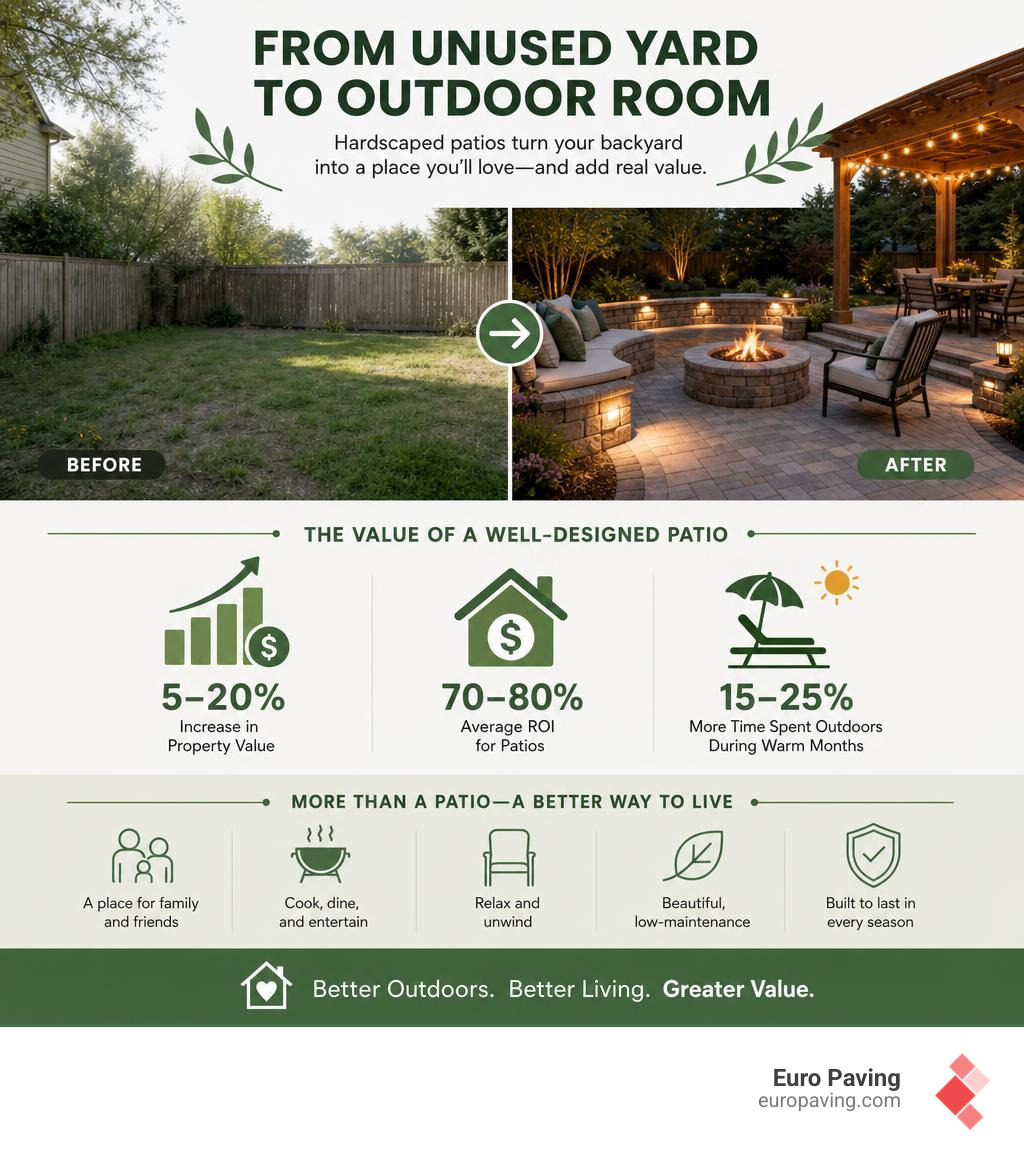
Know your hardscaping patio ideas terms:
9 Hardscaping Patio Ideas for a More Relaxing Backyard
The best backyard patios feel like outdoor rooms, not random slabs of paving. They have a purpose, a comfortable layout, durable materials, and a few thoughtful details that make you want to stay outside longer.
For more visual inspiration, explore our custom outdoor patio ideas and backyard patio designs.
1. Hardscaping patio ideas for a cozy brick fire pit lounge
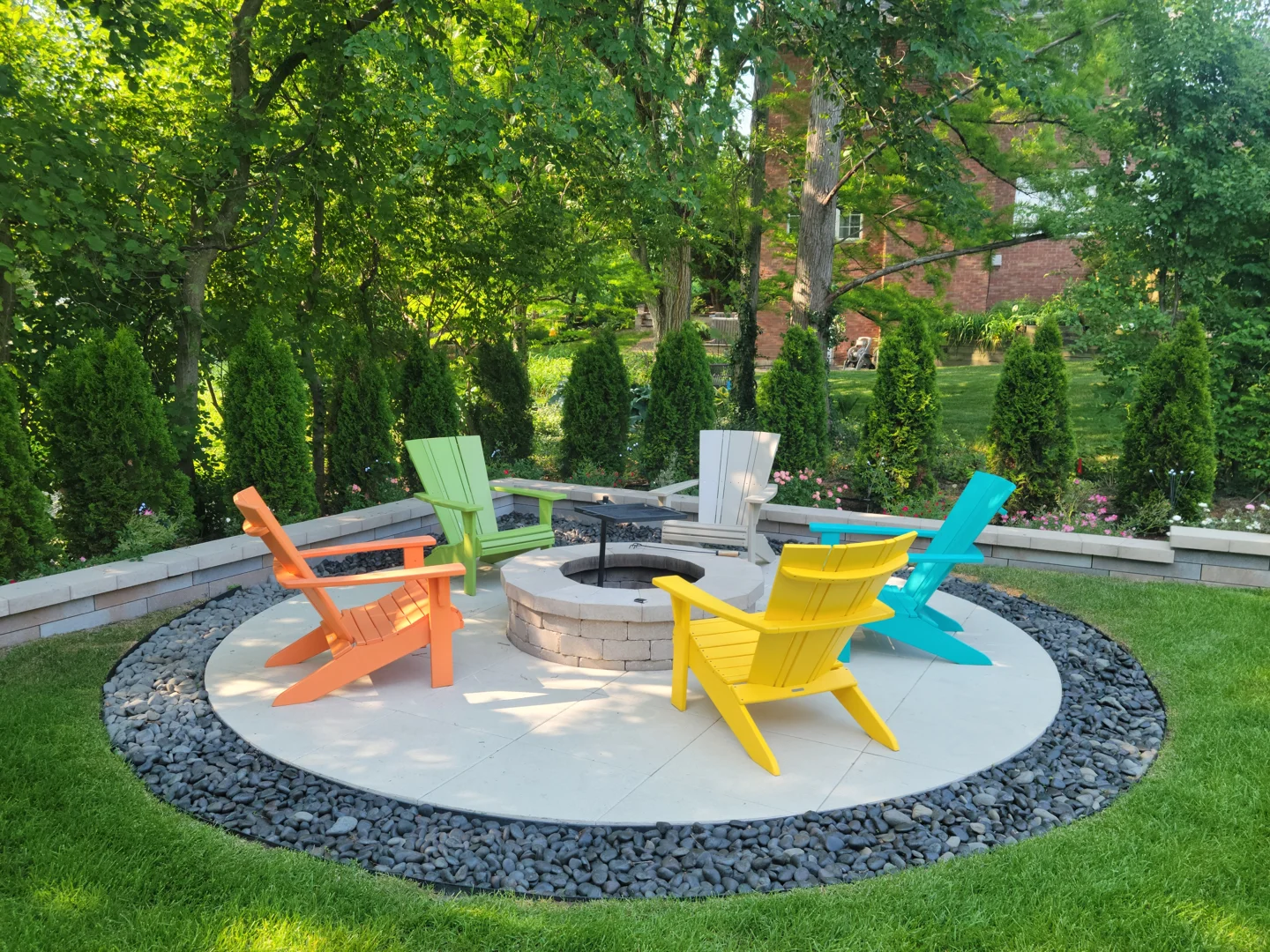
A brick fire pit lounge is one of the most relaxing patio designs because it gives the yard an obvious gathering point. Think circular or semi-circular brick pavers, a built-in fire pit, curved seating walls, and enough room for chairs without making everyone do the awkward sideways shuffle.
For Chicago-area homes, we often recommend:
- Interlocking brick pavers that flex better through freeze-thaw cycles
- A circular or herringbone field pattern for strength and visual movement
- Contrasting border pavers to define the lounge area
- Built-in seat walls at a comfortable height, often around 18 inches
- Safe clearances from fences, structures, trees, and furniture
Wood-burning fire pits bring the classic campfire feel. Gas fire pits offer cleaner operation and easier on-off control. Either way, the patio base, fire-rated materials, and local requirements matter. This is not the place for guesswork, unless your design goal is “surprise sparks near the cushions.”
See more ideas in our guides to brick fire pit designs and safe, stylish brick fire pits.
2. Hardscaping patio ideas for an outdoor kitchen and grill zone
If your family already gathers around food, an outdoor kitchen may be the smartest upgrade. A well-planned grill zone keeps smoke away from seating, creates prep space, and makes entertaining easier.
A strong outdoor kitchen patio includes:
- A built-in grill set into a masonry base
- Counter space for prep and serving
- Dining space nearby, but not directly in the smoke path
- Utility planning for gas, electric, and lighting
- Durable patio paving that handles foot traffic, spills, and heat
- A layout close enough to the indoor kitchen to avoid marathon trips with trays
Brick pavers and concrete pavers work especially well because they can be repaired in sections if needed. Stainless appliances, masonry walls, and stone or paver details help the kitchen feel permanent rather than temporary.
For more planning ideas, visit our guides to outdoor kitchen designs and built-in grill patio benefits.
3. Build a peaceful dining patio just off the kitchen
A dining patio works best when it feels effortless. If it is too far from the kitchen, people use it twice a year. If it is close, shaded, and easy to walk to, it becomes part of daily life.
For sizing, a small bistro patio can work around 12 by 12 feet. A larger family dining patio or multi-zone space often needs 20 by 20 feet or more. The key is not just table size. You also need room to pull out chairs, walk behind guests, carry food, and avoid bumping elbows like you are eating in an airplane row.
Good dining patio features include:
- A rectangular layout for easy furniture placement
- A direct path from the kitchen or back door
- Shade from a pergola, umbrella, or nearby structure
- Privacy screens, planting beds, or seat walls
- Slip-resistant paving for rainy days
- Low-voltage lighting for evening meals
If you are ready for a patio that feels connected to your home, learn more about our brick patio paving services.
4. Use seating walls, retaining walls, and terraces for sloped yards
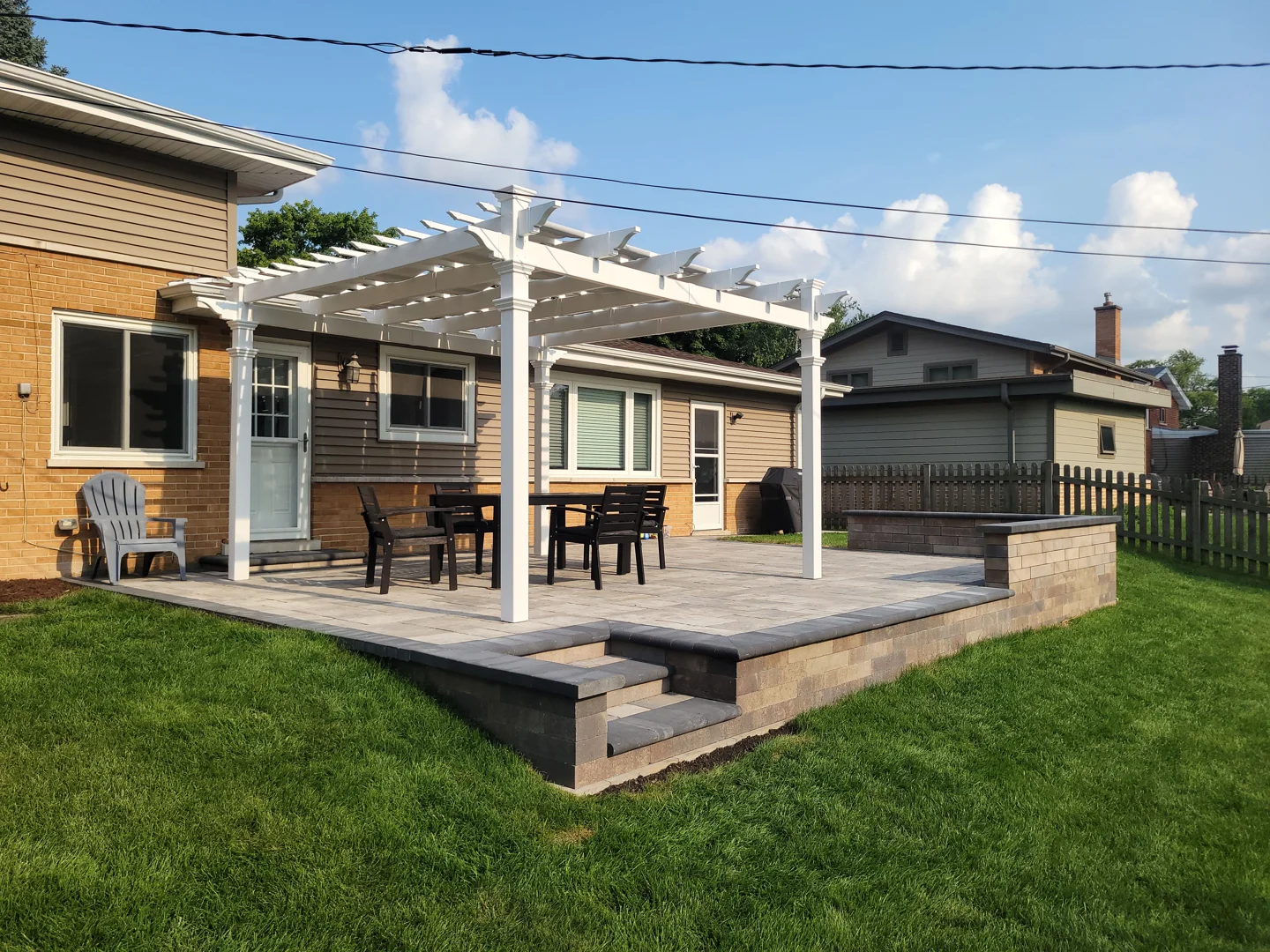
Many yards in Hinsdale, Barrington, Lake Forest, Northbrook, and surrounding suburbs have slopes or grade changes. Instead of fighting the slope, use it.
Terraced patios turn uneven ground into usable outdoor rooms. A retaining wall can support the grade, control erosion, and double as seat wall space when designed correctly.
Important details include:
- Proper drainage stone behind retaining walls
- Weep holes or drainage outlets to relieve water pressure
- Compacted base layers under each patio level
- Steps with consistent riser heights
- Seat walls that feel comfortable and proportional
- Railings where height and code require them
Drainage matters because water behind a wall creates hydrostatic pressure. In plain English: trapped water pushes hard, and walls do not enjoy that. Professional engineering helps the patio last through heavy rain, snowmelt, and freeze-thaw cycles.
For style inspiration, browse our backyard brick design ideas.
5. Mix walkways, borders, and inlays to create a garden-room feel
A patio feels more relaxing when it has defined zones. You can create those zones without building walls by using paver borders, inlays, walkways, and planting edges.
Popular design options include:
- Running bond patterns for clean, classic movement
- Basket weave for traditional charm
- Herringbone for strength and visual texture
- Circular inlays around fire pits or dining areas
- “Paver rug” borders under lounge furniture
- Walkways leading to gardens, pools, garages, or side yards
This approach works especially well when you want a backyard that feels collected over time rather than dropped in from a catalog. A walkway can lead guests from the driveway to the patio. A border can separate the grill zone from the lounge. A circular inlay can make a fire pit feel intentional.
Explore more pattern ideas in our articles on brick patio patterns and creative brick paver designs.
6. Add a poolside or water-view patio with slip-resistant paving
Pool areas and water-view patios need materials that are comfortable, stable, and slip-resistant. Smooth surfaces may look sleek, but around water they can become a backyard skating rink, minus the applause.
Good poolside paving choices include:
- Textured concrete pavers
- Brick pavers with appropriate surface grip
- Travertine or natural stone with a non-slip finish
- Permeable pavers for improved drainage
- Lighter color blends that stay more comfortable in sun
Drainage is critical around pools. Water should move away from the house, away from structures, and toward proper drains or permeable areas. Lounge zones should also be sized for chairs, umbrellas, and safe walking space.
For more ideas, visit our pool deck paving guide and browse lakeside patio inspiration for layout concepts.
7. Design a modern low-maintenance courtyard with large-format pavers
Large-format pavers and porcelain slabs are popular in 2026 because they create clean lines and a calm, uncluttered look. They work especially well with modern homes in Chicago, Glenview, Highland Park, Winnetka, and nearby suburbs.
A low-maintenance courtyard may include:
- Large concrete pavers or porcelain slabs
- Gravel or decorative stone joints
- Built-in planters
- Simple seat walls
- Permeable paving where drainage is a priority
- Low-water planting beds with ornamental grasses and shrubs
Porcelain slabs are non-porous and resist staining, fading, and scratching, but they require expert installation and the right base system. Large-format pavers also need precise grading because small installation errors are easier to see on big, clean surfaces.
8. Layer lighting, shade, and comfort features for evening use
Lighting and shade are what turn a nice patio into a patio you actually use.
The best lighting plans use layers:
- Path lights for walkways
- Step lights for stairs and level changes
- Wall lights or sconces near doors
- String lights for atmosphere
- Under-cap lights on seat walls
- Smart controls for easy scheduling
Shade matters just as much. Afternoon sun can turn a beautiful patio into a stylish frying pan. Pergolas, umbrellas, shade sails, and roof extensions help keep the space comfortable.
The smartest time to plan lighting is before installation. We can run conduit sleeves, low-voltage wiring paths, and utility access before pavers are installed. Future-you will be grateful. Future-you may even brag about past-you at dinner.
9. Extend the hardscape into driveways, walkways, sidewalks, and parking areas
The best properties feel cohesive from front curb to back patio. That is why many homeowners pair patio paving with driveway installation, walkway paving, sidewalk repair, retaining walls, or front entry upgrades.
For residential properties, this may mean:
- A brick paver patio in the backyard
- A matching front walkway
- A rebuilt driveway apron
- Retaining walls that frame planting beds
- Safe, even sidewalks around the home
For commercial properties, cohesive hardscaping can include parking lots, asphalt paving, concrete sidewalks, accessible walkways, and durable entry areas.
In Cook County and DuPage County communities, a full-property plan helps improve curb appeal, function, drainage, and long-term maintenance.
Compare the Best Patio Hardscape Materials Before You Choose
The right material depends on your home style, budget tier, maintenance expectations, drainage needs, and Chicago-area climate.
For more detail, see our guides to paver patios and why a brick paving patio can outperform a wood deck.
| Material | Durability | Cost tier | Maintenance | Repairability | Drainage | Chicago-area climate fit |
|---|---|---|---|---|---|---|
| Brick pavers | High | Moderate to premium | Sweep, joint sand, seal as needed | Excellent | Good with proper slope | Excellent for classic homes and freeze-thaw movement |
| Concrete pavers | High | Moderate | Sweep, sand joints, seal optional | Excellent | Good; permeable options available | Excellent when installed on proper base |
| Natural stone | High | Premium | Depends on stone type and finish | Good | Good with proper joints | Excellent with correct stone selection |
| Porcelain slabs | High | Premium | Low; stain resistant | Moderate | Requires precise installation | Good with professional base prep |
| Poured concrete | Moderate | Low to moderate | Seal, clean, monitor cracks | Limited | Depends on slope and joints | More crack-prone in freeze-thaw conditions |
| Permeable pavers | High | Moderate to premium | Vacuum or clean joints periodically | Excellent | Excellent | Strong choice for stormwater management |
| Gravel | Moderate | Low | Rake, refresh, control migration | Easy | Excellent | Useful for informal areas, less ideal for main dining zones |
Brick pavers and clay brick for timeless patios
Brick pavers are a natural fit for traditional Chicago-area architecture. They offer rich color, classic patterns, and individual unit replacement if a section ever needs repair.
Benefits include:
- Strong curb appeal
- Excellent pattern options
- Long lifespan with proper installation
- Good color retention
- Easy repair compared with poured slabs
Learn more about the benefits of brick patios and see how a brick paver patio can transform a backyard.
Concrete pavers and permeable pavers for versatile layouts
Concrete pavers are flexible in shape, color, texture, and layout. They can support patios, walkways, and even driveway-grade applications when specified correctly.
Permeable pavers are especially useful where stormwater management matters. They allow water to filter through joints into a prepared base, helping reduce runoff and puddling.
We also use professional planning tools, including 3D paving design, so homeowners can preview layout, borders, colors, and features before installation begins.
Natural stone, flagstone, bluestone, and travertine for premium texture
Natural stone adds variation and character that manufactured materials cannot fully duplicate. Flagstone feels rustic and organic. Bluestone offers a refined, timeless look. Travertine can be comfortable underfoot and naturally textured.
The tradeoff is that natural stone requires careful selection. Thickness, finish, porosity, and installation method all affect performance in freeze-thaw weather.
Poured concrete, stamped concrete, porcelain, and gravel: where they fit
Poured concrete can work for simple patios, but it is harder to repair invisibly when cracking occurs. Stamped concrete adds texture, though cracks can still travel through the slab.
Porcelain slabs are excellent for modern spaces and low-maintenance courtyards, but they need professional installation. Gravel works well for informal paths, side yards, and drainage-friendly garden zones, though it is less stable under dining chairs.
Professional Planning Steps That Make a Patio Last
A relaxing patio starts long before the first paver is set. It begins with purpose, layout, drainage, base preparation, and the right construction plan.
For a helpful overview of patio planning principles, see this patio planning guide. For Euro Paving project inspiration, explore our custom brick patios and backyard paving ideas.
Step 1: Match the patio design to your home and landscape
A patio should look like it belongs. We consider rooflines, brick color, siding, trim, window shapes, and existing landscape beds.
Common matches include:
- Rectangular patios for formal homes
- Curved patios for garden-heavy yards
- Circular focal points for fire pits
- Brick borders that echo the home exterior
- A balanced mix of hardscape and softscape
A healthy balance often keeps the yard from feeling too paved over. Plants soften edges, reduce heat, and make the patio feel alive.
Step 2: Size the patio for real furniture and movement
A common mistake is designing for the furniture when it is pushed in, not when people are using it.
We plan for:
- Chair pullout space
- Grill safety clearance
- Walkways around furniture
- Kids and pets moving through the area
- Accessibility and step-free routes where possible
- Multi-zone layouts for cooking, dining, and lounging
If the patio is too small, it feels cramped. If it is too large without zones, it can feel like an airport runway with a table on it.
Step 3: Prepare the site with excavation, base, edge restraints, and compaction
The base is the part you do not see, but it decides how long the patio lasts.
Professional installation includes:
- Excavation to the correct depth
- Subgrade evaluation
- Proper aggregate base
- Mechanical compaction
- Bedding sand or setting bed as appropriate
- Edge restraints to prevent spreading
- Joint sand or polymeric sand where suitable
Compaction is especially important in the Chicago area because clay soil expands, contracts, and holds moisture. A weak base leads to settling, low spots, and uneven pavers.
Step 4: Engineer drainage, slope, and water management first
Drainage is not glamorous, but it is the quiet hero of every long-lasting patio.
Most patios need a slope of about 1% to 2%, or roughly 1/8 inch to 1/4 inch per foot, directed away from the house. The exact solution depends on the site.
Water management may include:
- Downspout extensions
- French drains
- Catch basins
- Permeable paver systems
- Proper grading away from foundations
- Drainage stone behind retaining walls
Poor drainage causes puddles, ice hazards, paver movement, and foundation concerns. In winter, trapped water freezes and expands. That is when small installation shortcuts become big repair bills.
Step 5: Plan utilities, lighting, fire features, and future upgrades before paving
Before paving, we plan for what the patio may need later:
- Low-voltage lighting
- Gas lines for fire pits or grills
- Electrical conduit
- Outdoor kitchen utilities
- Irrigation adjustments
- Speaker wiring
- Future pergolas or seat walls
It is much easier to install sleeves and utility paths before the patio is finished than to disturb beautiful paving later.
Mistakes, Climate Factors, and Local Rules to Check in 2026
Chicago-area patios need to be built for real Midwest conditions: freeze-thaw cycles, clay soil, heavy rain, snow removal, summer heat, and local rules.
For more local context, read our guide to brick patios in Chicago.
Common hardscaping patio ideas that fail without the right foundation
The most common patio problems usually come from hidden mistakes:
- Poor base preparation
- Weak compaction
- No edge restraints
- Low spots that collect water
- Slope toward the house
- Ignored downspouts
- Wrong material for the climate
- No shade planning
- Patio too small for furniture
- Utility conflicts discovered too late
The design may be beautiful, but if the base and drainage are wrong, the patio will not age well.
Climate-smart choices for Chicago and nearby suburbs
In Chicago, Arlington Heights, Norridge, Skokie, Barrington, Downers Grove, Lake Forest, Northbrook, Highland Park, Winnetka, Hinsdale, Mount Prospect, Lombard, Glenview, Roselle, and nearby communities, climate-smart choices include:
- Flexible paver systems instead of large rigid slabs where movement is expected
- Permeable pavers for drainage-sensitive areas
- Breathable sealers when sealing is appropriate
- Plastic shovels for snow removal to reduce surface scratching
- Cautious use of deicing salts
- Proper joint sand maintenance after winter
Freeze-thaw durability is not just about the paver. It is about the entire system underneath.
Regulations and professional checks before construction
Before construction, check local requirements for:
- Permits
- Impervious surface limits
- Setbacks
- Stormwater rules
- Retaining wall height
- Electrical work
- Gas lines
- HOA guidelines
- Right-of-way sidewalks
- Commercial paving standards
Utility locating is also essential before excavation. Professional planning protects your property, your schedule, and your investment.
Frequently Asked Questions About Hardscaping Patio Ideas
What hardscaping material is best for a patio?
For most Chicago-area homes, brick pavers, concrete pavers, and permeable pavers are excellent choices because they are durable, attractive, and repairable. Natural stone is best when you want premium texture and are comfortable with more material variation. Porcelain slabs suit modern, low-maintenance spaces. Poured concrete can work, but it is harder to repair when cracks appear.
The best choice depends on your home style, drainage needs, maintenance tolerance, and how the patio will be used.
How much value can a hardscaped patio add?
A professionally designed hardscaped patio can increase property value by about 5-20%, depending on design quality, materials, and installation. Patios and outdoor living spaces also average roughly 70-80% ROI.
The lifestyle value matters too. Homeowners often spend 15-25% more time outdoors after adding a patio, and replacing high-maintenance lawn areas with hardscaping can reduce yard maintenance costs by up to 30% annually.
How do I maintain a patio so it lasts for decades?
Good patio maintenance is simple but consistent:
- Sweep weekly to remove leaves and debris
- Clean spills before they stain
- Refill joint sand when needed
- Reseal suitable pavers every 3-5 years
- Check drainage after heavy rain
- Inspect for winter movement each spring
- Use plastic snow shovels instead of metal
- Avoid harsh deicing products when possible
- Repair individual pavers before small issues spread
A properly installed paver patio is designed to be serviceable, which is one of its biggest advantages.
Conclusion
The most relaxing hardscaping patio ideas are not just pretty. They are planned around how your family actually lives.
A cozy brick fire pit lounge gives everyone a place to gather. An outdoor kitchen makes hosting easier. A dining patio off the kitchen turns weeknight meals into something special. Retaining walls, walkways, lighting, and permeable paving make the space safer, more useful, and longer lasting.
At Euro Paving, we specialize in brick paving, patio paving, outdoor kitchens, fire pits, driveways, walkways, retaining walls, sidewalks, asphalt paving, commercial parking lots, 3D paving design, and Unilock material options for homes and businesses across Chicago and the surrounding suburbs.
If you are ready to turn your yard into a relaxing outdoor room, schedule expert brick patio paving with Euro Paving.