



Why Sidewalk Border Pavers Are Essential for Chicago Hardscapes
Sidewalk border pavers are the finishing edge that keeps your walkway looking sharp, sitting level, and holding together through Chicago’s brutal freeze-thaw winters.
What are sidewalk border pavers? Sidewalk border pavers are edging units — made from concrete, natural stone, clay brick, metal, or plastic — installed along the outer edge of a walkway to:
- Lock the main paving units in place and prevent lateral spreading
- Define a clean visual boundary between the sidewalk and surrounding lawn or garden
- Protect the base layers from erosion and washout
- Add a decorative contrast that frames the whole hardscape
Nearly 58% of homeowners are planning outdoor renovations to boost curb appeal. A well-chosen border is one of the fastest ways to get there — and one of the most overlooked.
Here’s the problem most homeowners run into: pavers without a proper border edge don’t stay put. Foot traffic, soil movement, and freeze-thaw cycles push them outward. Once one paver shifts, the whole surface starts to crack, sink, and let weeds in.
This guide covers everything you need to make the right choice — from materials and installation depth to managing curves and surviving Illinois winters.
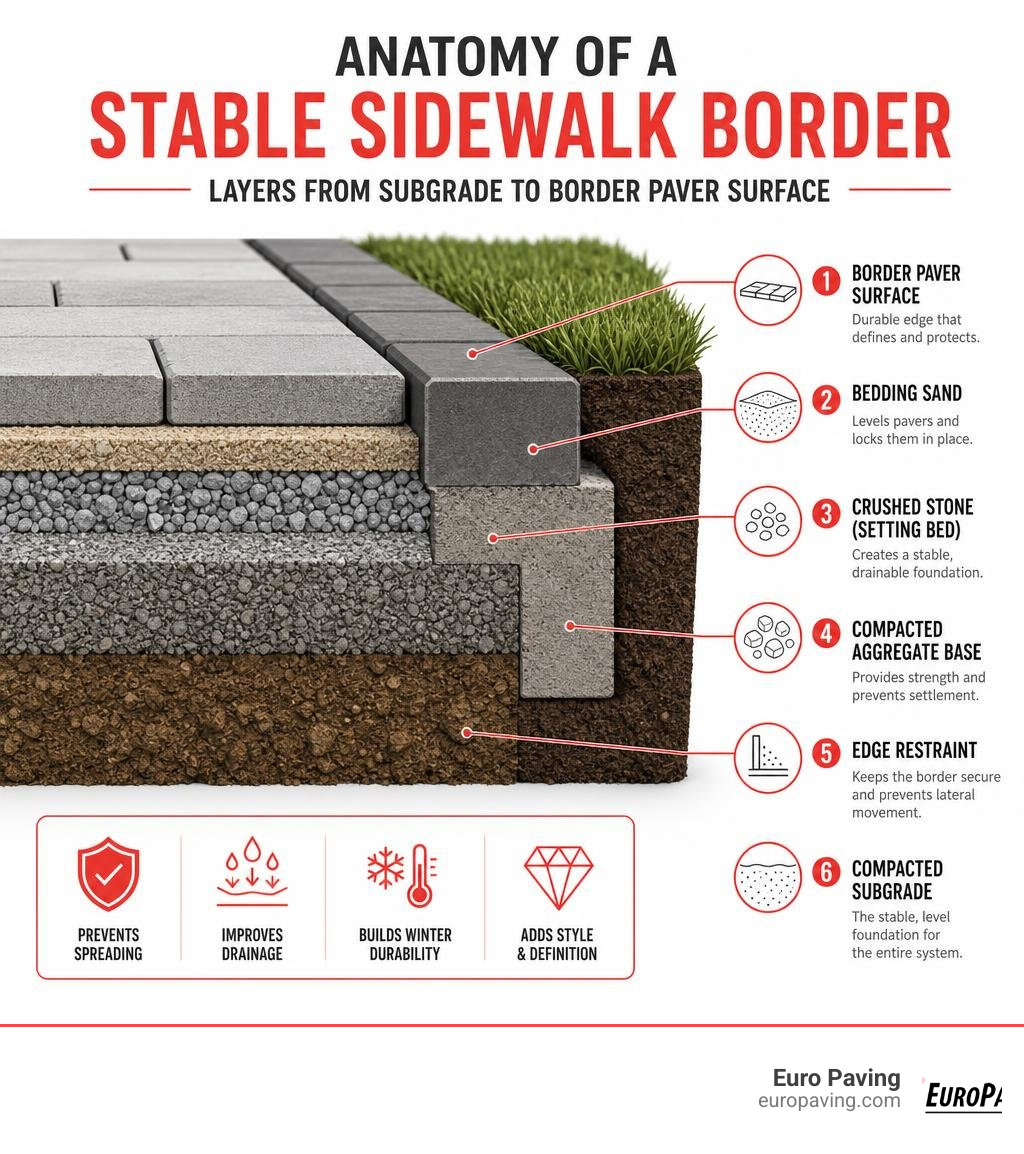
Sidewalk border pavers vocab explained:
When we design and build walkways in the Chicago area—from historic estates in Lake Forest to modern family homes in Downers Grove—we always emphasize that a sidewalk is only as stable as its edges.
The native clay-rich soils of northeastern Illinois are notorious for retaining water. When the winter frost hits, this trapped water expands, creating massive upward pressure known as frost heave. During the spring thaw, the soil softens, leading to uneven settling. Without an engineered edge restraint, the lateral forces from foot traffic and soil movement will cause the pavers to drift outward.
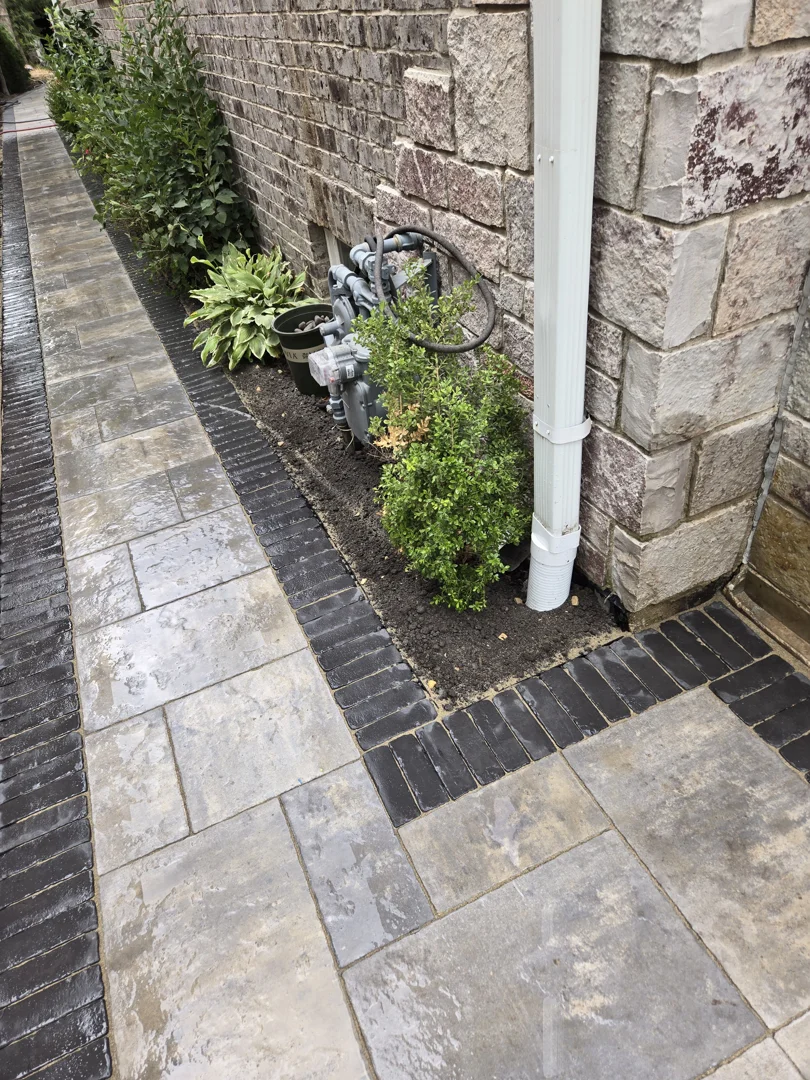
Investing in high-quality sidewalk border pavers protects your hardscape from these forces. A professional border acts as a structural frame, keeping the interlocking system tight and distributing weight evenly across the entire surface. This structural integrity is one of the primary 11 Benefits of Adding a Brick Sidewalk to Your Home. Furthermore, a solid border prevents the bedding sand layer from washing away during heavy summer downpours, which is a common cause of localized sinking.
Beyond structural stability, borders offer incredible design flexibility. By utilizing contrasting textures, shapes, and colors, we can turn a simple path into an architectural statement. For inspiration on how to elevate your property’s exterior, explore these Sidewalk Paving Ideas That Will Make Your Neighbors Jealous.
Enhancing Curb Appeal with Sidewalk Border Pavers
The visual impact of a beautifully bordered walkway cannot be overstated. When designing your sidewalk, we look at the architecture of your home to select a border style that complements its character. There are two primary layout patterns used for border pavers:
- Soldier Course: Pavers are laid perpendicular to the edge of the path, side-by-side. This creates a strong, formal frame that visually widens the walkway. It is highly popular for traditional homes in areas like Hinsdale and Winnetka.
- Sailor Course: Pavers are laid end-to-end, parallel to the edge of the path. This provides a sleeker, more modern aesthetic that works beautifully with contemporary homes in Arlington Heights.
To make the border stand out, we often recommend choosing a contrasting color or texture. For instance, pairing a light grey main walkway with a deep charcoal frame creates a striking, crisp border. Premium materials like the EP Henry Coventry Edgestone Border Pewter Blend (240 pc./pallet) offer a beautifully chiseled, natural look that adds immediate depth and sophistication to any front entry.
Preventing Lateral Shifting and Soil Erosion
The structural magic of an interlocking paver system relies on friction. When joint sand is swept between the pavers and compacted, the individual units lock together to form a flexible but incredibly strong pavement. However, if the outer edges are allowed to move even a fraction of an inch, that interlock is lost.
A professionally installed border system, backed by heavy-duty commercial edge restraints, keeps the joints under constant tension. This prevents lateral shifting and ensures the polymeric sand remains locked in place.
Additionally, a robust border manages water runoff. By shaping the surrounding turf slightly below the border level, water can drain cleanly off the paved surface without eroding the underlying subgrade. This careful management of water flow prevents the base materials from washing out over time.
Selecting the Right Materials for Walkway Edging
Choosing the right material for your sidewalk border depends on your home’s architectural style, the expected foot traffic, and your budget. Here is how the most common professional-grade materials stack up:
| Material | Compressive Strength | Best Suited For | Key Advantage |
|---|---|---|---|
| Manufactured Concrete | 8,000+ PSI | Modern & Suburban Walkways | Exceptional durability, color consistency, and freeze-thaw resistance. |
| Kiln-Fired Clay | 10,000+ PSI | Historic & Traditional Homes | Deep, fade-resistant color and classic architectural appeal. |
| Natural Stone (Granite/Bluestone) | Varies by stone type | Luxury Estates & Garden Paths | Unique natural textures, unmatched luxury, and lifetime durability. |
| Commercial-Grade Plastic/Metal | N/A (Hidden Restraint) | Invisible borders and tight curves | Highly flexible, holds pavers tightly without visible edging. |
For detailed insights into choosing the best surface materials, check out our guide on The Best Paving Stones for a Sidewalk That Lasts.
Concrete and Clay Sidewalk Border Pavers
Manufactured concrete pavers are the workhorses of modern hardscaping. Because they are produced under extreme pressure, they boast a compressive strength of at least 8,000 PSI—nearly double that of standard poured concrete. We utilize premium concrete pavers from industry leaders like Unilock to ensure your walk can withstand heavy use and winter salting. To source the finest regional materials, we work closely with trusted suppliers such as Landscape Supply – Arlington Heights – Lurvey .
Kiln-fired clay brick is another outstanding option, particularly for historic homes in older suburbs. Fired at temperatures exceeding 2,000°F, clay bricks possess a compressive strength of over 10,000 PSI. Their rich red and earth-toned colors are running all the way through the brick, meaning they will never fade, even after decades of exposure to harsh UV rays and snow.
Natural Stone and Granite Borders
For high-end residential entries in North Shore communities like Lake Forest, Northbrook, and Highland Park, nothing matches the prestige of natural stone. Quarried bluestone, granite, and limestone bring an organic elegance to the landscape.
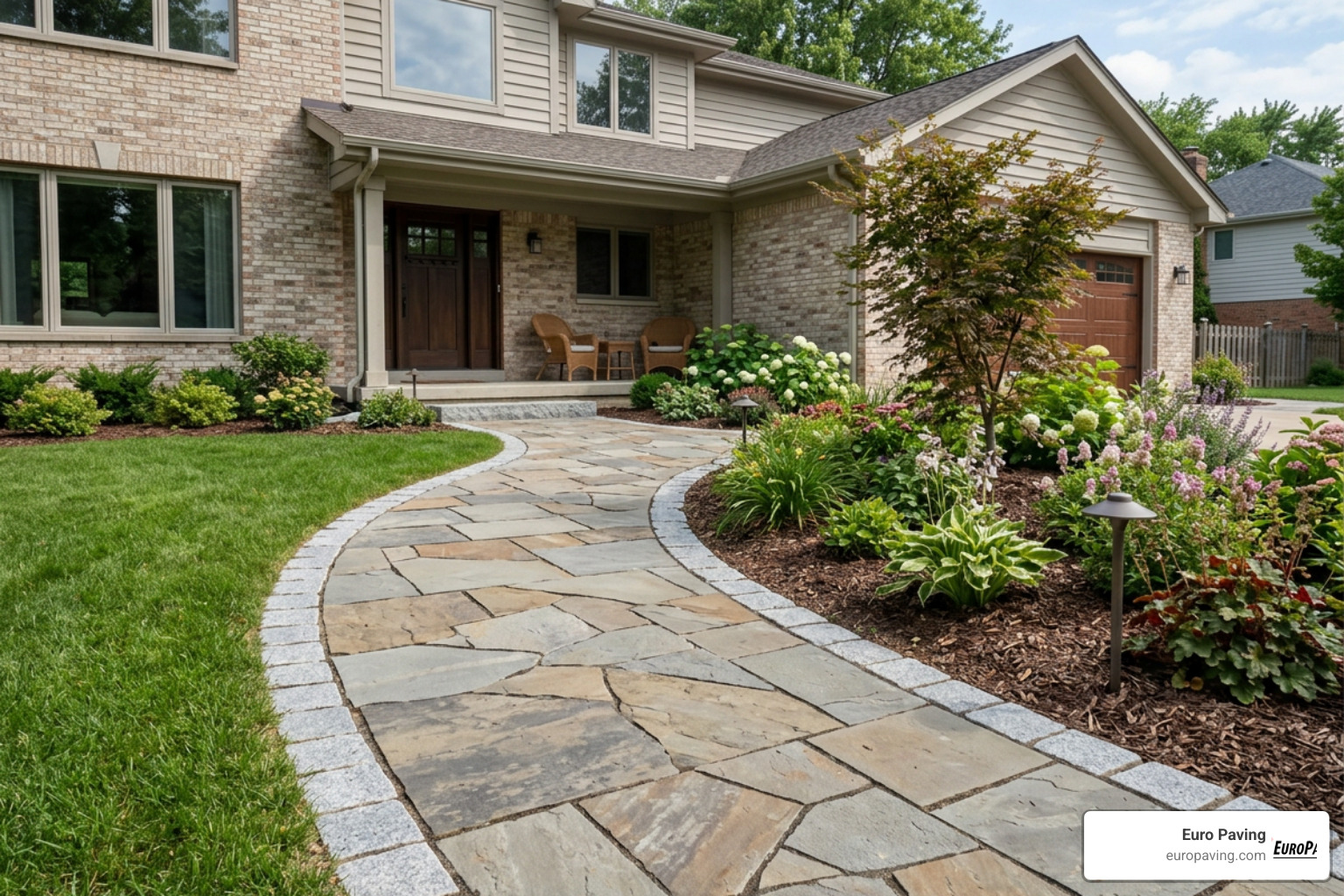
These stones are hand-selected and precisely cut to form a seamless, durable frame. Granite, in particular, is virtually impervious to the freeze-thaw cycle and resists chemical weathering from winter de-icing agents, making it one of the lowest-maintenance options available for luxury homes. You can see stunning examples of these high-end installations in our portfolio of Lake Forest Pavers .
Commercial-Grade Restraints (Plastic and Metal)
Sometimes, the design calls for an “invisible” border where the pavers meet the lawn directly without a visible stone frame. In these cases, we rely on heavy-duty, commercial-grade hidden restraints like ProFlex or the B.E.A.S.T. paver restraint system.
Made from construction-grade recycled vinyl or aluminum, these restraints are pinned directly into the compacted aggregate base using heavy-duty steel or nylon anchoring spikes. This system holds the pavers in a vice-like grip while remaining completely hidden beneath the sod line. For projects with unique architectural requirements, such as elevated terraces or complex layouts, professional-grade hidden restraints are essential. You can see how these systems are integrated into complex landscape designs by viewing the Chicago Rooftop Garden – Lawn Edging, Paver … project.
Engineered Installation: How Professionals Secure Sidewalk Borders
Achieving a perfectly level, long-lasting sidewalk border requires meticulous ground preparation and engineering. At Euro Paving, we follow a strict, multi-step installation process designed to withstand the challenging Illinois climate.
Here is a breakdown of how our professional crews install a durable, high-performance walkway:
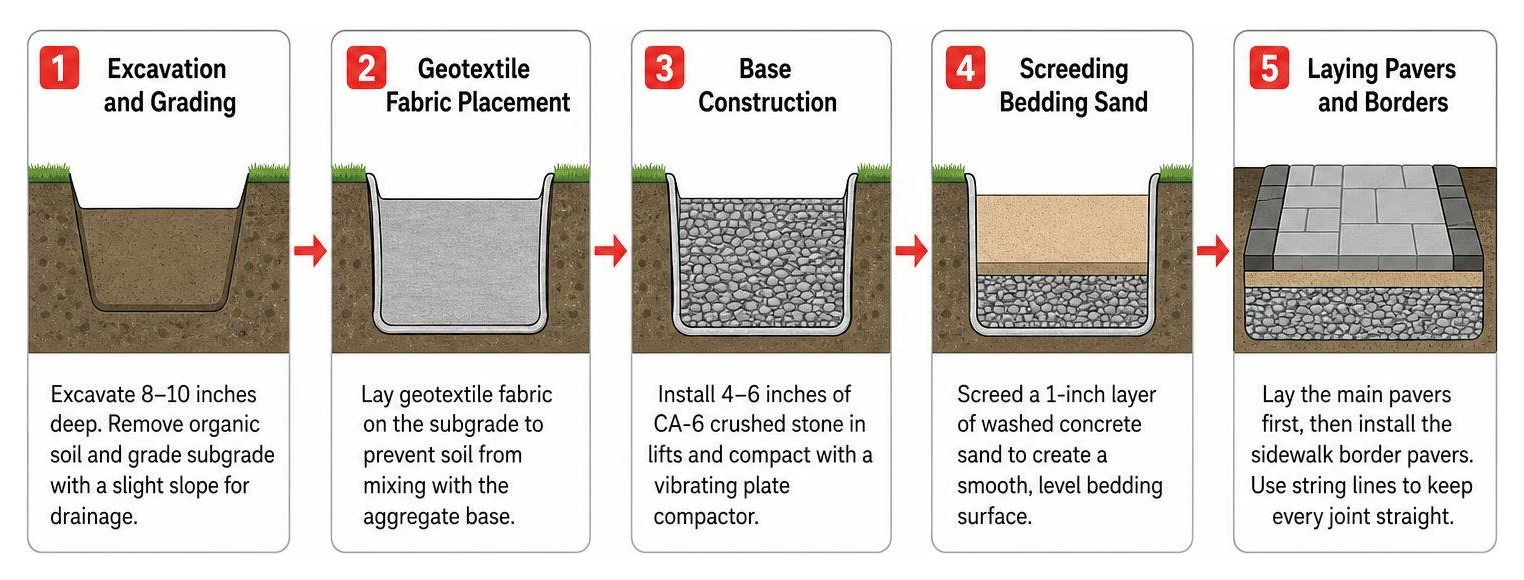
- Excavation and Grading: We excavate the walkway corridor to a depth of 8 to 10 inches, ensuring we clear out all organic soil, sod, and clay. We grade the subgrade to ensure a slight slope away from your home’s foundation to facilitate proper drainage.
- Geotextile Fabric Placement: We lay a commercial-grade geotextile soil-separation fabric along the bottom of the trench. This prevents the native clay soil from mixing with our clean aggregate base, preventing future settling.
- Base Construction: We build a 4-to-6-inch base using CA-6 crushed stone. This base is applied in controlled lifts and compacted using a heavy-duty vibrating plate compactor to eliminate air pockets and guarantee a rock-solid foundation.
- Screeding Bedding Sand: A precise 1-inch layer of washed concrete sand is screeded over the compacted base. This sand acts as the cushion that allows us to set the pavers perfectly flat.
- Laying the Pavers and Borders: The main walkway pavers are laid first, followed by the installation of the sidewalk border pavers. Our crews use string lines to ensure every joint is perfectly straight.
- Installing Edge Restraints: Heavy-duty restraints are placed tight against the border pavers and anchored deep into the aggregate base with steel spikes.
- Joint Sand and Compaction: We sweep high-performance polymeric sand into the joints, run the plate compactor over the surface to lock the pavers into the sand bed, and then mist the joints with water to activate the polymers. This process is detailed in our Step-by-Step Guide to Laying a Stone Paver Sidewalk.
Managing Curves, Corners, and Transitions
Curved walkways add a beautiful, organic flow to your landscaping, but they require expert craftsmanship to execute correctly.
To form smooth curves with hidden plastic or metal restraints, our installers make precise “spine cuts” along the back of the restraint, allowing it to bend smoothly without sacrificing structural strength. For the stone borders themselves, we use professional wet miter saws to make clean, precise cuts on each border paver. This ensures the joints remain tight and uniform throughout the entire curve, preventing wide sand gaps that are prone to weed growth.
Additionally, where the walkway transitions to steps or meets the home’s foundation, we install a self-adhering rubberized asphalt membrane flashing. This creates a vital capillary break, protecting your home’s masonry and foundation from moisture damage.
Anchoring and Securing the Edging
To ensure the border never moves, the edge restraints must be anchored correctly. We drive heavy-duty, 10-inch steel or nylon spikes through the restraint and deep into the compacted aggregate base—not into the soft topsoil.
For high-traffic areas or commercial applications, we often use a method called “concrete haunching.” This involves placing a wet concrete wedge (or toe) along the outside edge of the border pavers. The concrete is sloped downward so that topsoil and sod can grow right up to the edge of the stone, providing an incredibly strong, permanent barrier against lateral movement.
Frequently Asked Questions About Sidewalk Edging
How deep should sidewalk border pavers be installed?
To ensure maximum stability, the excavation for a pedestrian walkway must go down 8 to 10 inches. This allows space for a 4-to-6-inch compacted aggregate base, a 1-inch bedding sand layer, and the thickness of the pavers themselves (typically 2-3/8 inches). The top of the border pavers should sit flush with the main walkway and about 1/2 inch to 1 inch above the surrounding soil level to prevent mud and water from washing onto the sidewalk.
Can border pavers prevent weed growth along walkways?
While border pavers themselves do not stop weeds, the system we use to install them does. By placing a professional geotextile fabric beneath the base and filling the joints with high-quality polymeric sand, we create an incredibly hostile environment for weeds. The polymeric sand hardens like concrete when activated with water, preventing windblown weed seeds from taking root in the joints.
What is the lowest-maintenance border material for Illinois winters?
Porcelain, granite, and high-density manufactured concrete pavers (such as those manufactured with Unilock’s proprietary technologies) are the lowest-maintenance options for our climate. These materials have incredibly low water absorption rates, meaning they do not crack or flake during the freeze-thaw cycles. They are also highly resistant to de-icing salts and fading from UV exposure.
Conclusion
A professionally designed and installed walkway does more than connect your driveway to your front door—it frames your home, elevates your curb appeal, and provides a safe, stable path for your family and guests. By investing in high-quality sidewalk border pavers and an engineered installation, you protect your investment from Chicago’s harsh climate and prevent costly shifting and sinking down the road.
At Euro Paving, we bring over two decades of expert craftsmanship to every residential and commercial project. Whether you are looking to build a welcoming front entry in Mount Prospect, a luxurious natural stone path in Hinsdale, or a family-friendly backyard patio in Elmhurst, our team is ready to bring your vision to life.
Ready to transform your outdoor living space with a beautiful, long-lasting walkway? Contact Euro Paving today for a professional consultation and quote on our premium Sidewalk Paving Services.