



Fix Resin Driveway Cracking Before It Spreads
Resin driveway cracking should be inspected at the base level before anyone fills the visible gap. Small, isolated cracks may be repairable by removing loose material, stabilizing the affected area, and placing a color-matched resin-and-aggregate repair. But cracks that return, widen, or sit beside sinking and standing water usually point to sub-base movement, poor drainage, or freeze-thaw damage.
For Chicago, Cook County, and DuPage County properties, fast action matters. Water can enter an open crack, weaken the foundation below, and make the repair larger after another Midwest winter. A professional assessment should check the crack pattern, driveway edges, drainage, and vehicle load areas before choosing repair or replacement.
Euro Paving helps homeowners and commercial property owners across Elmhurst, Hinsdale, Mount Prospect, Norridge, and Arlington Heights diagnose failing driveway surfaces and plan durable upgrades. Where a resin surface cannot be structurally saved, our Unilock certified team can create a 3D paving design for a long-lasting brick paving driveway backed by lifetime material guarantees.
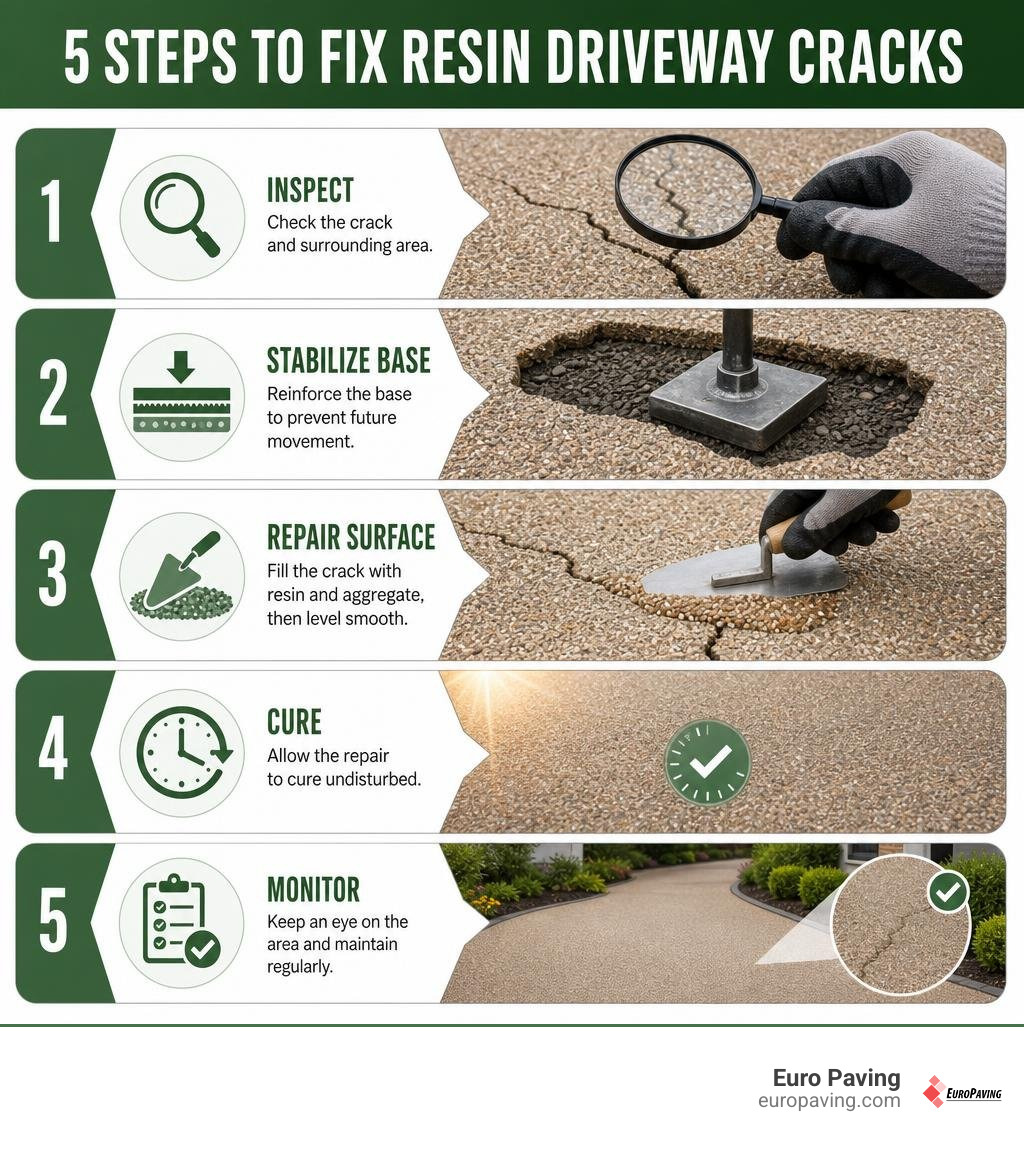
Resin driveway cracking terms at a glance:
Understanding the Primary Causes of Resin Driveway Cracking
A resin-bound surface relies entirely on the structural foundation beneath it. While polyurethane binders provide flexibility, a resin matrix is typically installed at a depth of only 15 to 20 millimeters (around three-quarters of an inch). Because this overlay is a continuous, monolithic surface without built-in expansion seams, any movement within the substrate generates massive tensile stress. When this internal stress exceeds the flexural tensile strength of the cured polyurethane binder, surface fractures occur.
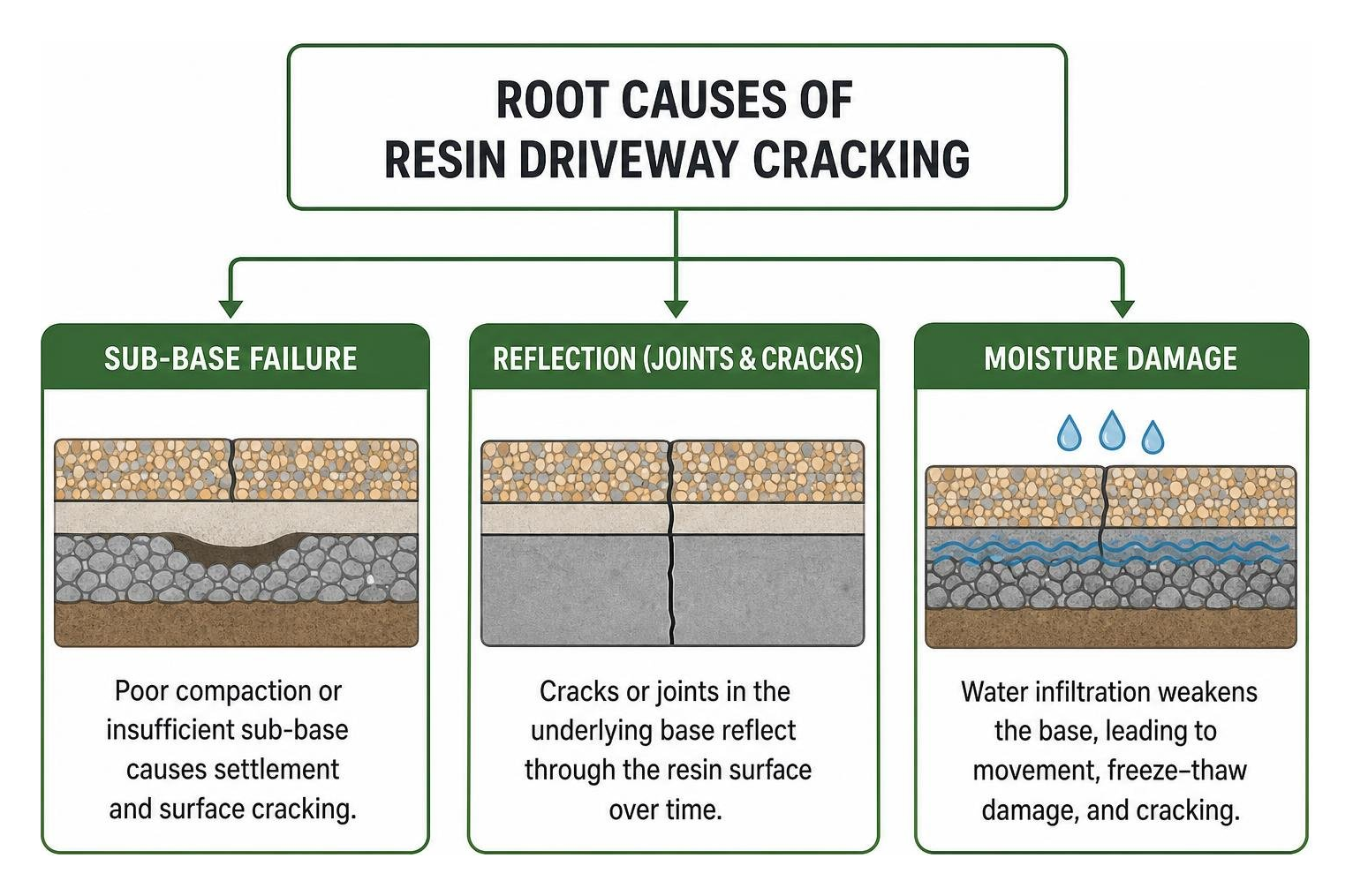
Sub-base shifting remains the leading factor behind widespread fractures. If an underlying foundation lacks sufficient aggregate depth or uniform mechanical compaction, vehicle loads exert downward pressure that causes localized settlement. Clay-rich soils across the Chicago area expand and contract dramatically between wet spring months and dry summers, generating cyclic upward and downward movement.
Vehicular shear loads also accelerate cracking along standard travel paths. When passenger vehicles or delivery trucks execute tight turns at low speeds, the stationary turning tires exert rotational torque against the surface. Without continuous support from the sub-base, the thin aggregate layer breaks away from the foundation. Understanding these dynamics is essential for preventing and repairing resin driveway cracks over the lifespan of a property.
How Reflective Fractures Trigger Resin Driveway Cracking
Reflective cracking occurs when movement within an underlying concrete or asphalt base telegraphs directly into the resin overlay. When contractors install a resin topcoat over an existing concrete driveway without treating existing expansion joints or pre-existing fractures, those sub-surface breaks act as active stress points.
As the underlying concrete slabs expand and contract under fluctuating temperatures, the crack or control joint opens and closes. Because the resin layer is bonded to both slabs across the joint line, it experiences localized shear and tensile forces. Without an elastomeric stress-absorbing interlayer, micro-fissures appear on the surface, directly mirroring the crack path underneath.
How Poor Drainage and Moisture Cause Resin Driveway Cracking
Resin-bound surfaces are engineered to be permeable, allowing stormwater to filter downward into a porous base course. However, if the underlying sub-base is non-permeable, poorly pitched, or compacted with fine silts that block drainage, water collects directly beneath the resin layer.
- Subsurface Washouts: Trapped water erodes granular sub-base aggregates, creating underground voids that collapse under vehicle weight.
- Hydrostatic Pressure: Trapped water beneath the resin pushes upward during warm afternoons, weakening the mechanical adhesion between the resin matrix and base.
- Frost Heave: Trapped moisture freezes during cold winter months, expanding by roughly 9% in volume and lifting the pavement course through frost heaving.
- Chemical Blistering: Substrate moisture rising through unbonded resin layers can trigger chemical foaming reactions that weaken the compressive strength of uncured binders.
The 5-Step Professional Process to Repair Cracked Resin Driveways
Remediating fractures in a resin bound driveway requires an engineered, multi-step approach that stabilizes the underlying foundation before addressing the surface layer. Cosmetic surface coatings fail quickly because they leave the underlying structural movement unaddressed.
Addressing perimeter edges is equally vital during structural restoration; our team applies specialized techniques for remediating crumbling driveway edges to ensure boundaries resist lateral vehicle kick-out.
Step 1: Comprehensive Substrate and Base Inspection
Our certified technicians map all active fractures across the driveway. Using non-destructive diagnostic tools, we measure moisture levels in the sub-base, determine the exact depth of every fracture line, and assess perimeter deflection along high-load vehicle lanes. We examine whether the crack is isolated to the top matrix or extends into the concrete or asphalt substrate.
Step 2: Precision Excavation and Perimeter Chiseling
To ensure the new patching material locks into place, our crew chases out the crack using mechanical diamond-blade saws and pneumatic chisels. We widen the crack to a sound width, creating sharp, vertical 90-degree edges rather than rounded, beveled edges. We then clean the structural slot using industrial dry-vacuum units and compressed air to eliminate all dust, fractured stone, and organic debris.
Step 3: Sub-Base Stabilization and Crack Reduction Membrane Application
Where underlying sub-base voiding or joint movement is detected, our crew stabilizes the base with high-density polymer injections or re-compacts granular sub-base material. Over active control joints and hairline fractures, we apply a heavy-duty, polymer-coated glass-fiber Crack Reduction Membrane. This membrane absorbs thermal shear stresses, preventing movement in the base from transferring into the new surface patch.
Step 4: Color-Matched Polymer Resin and Aggregate Matrix Placement
We blend high-grade, UV-stable aliphatic polyurethane resin with kiln-dried, BBA-certified aggregate to match your existing driveway’s color blend and stone profile. The matrix is placed into the prepared channel and hand-troweled with consistent mechanical pressure, ensuring complete aggregate compaction and a flush, seamless transition with the surrounding surface.
Step 5: Chemical Curing and Protective Resealing
The repaired area is shielded from moisture and left to cure under controlled conditions for 12 to 24 hours depending on ambient humidity. Once cured, we apply a high-traction, transparent polyurethane wear layer blended with fine aluminum oxide or glass bead media to restore surface slip resistance, UV resilience, and moisture protection.
Residential vs. Commercial Resin Driveway Crack Remediation
Repairing damaged resin flatwork requires assessing vehicle weights, turning frequencies, and daily traffic volumes. The table below highlights how structural demands vary across applications:
| Engineering Parameter | Residential Driveways | Commercial Parking Lots & Access Lanes |
|---|---|---|
| Typical Daily Traffic | 2–6 light passenger vehicles | Hundreds of passenger and utility vehicles |
| Primary Failure Cause | Stationary tire turning and poor drainage | Heavy axle loading, commercial deliveries, and sub-base fatigue |
| Sub-Base Structural Depth | 6–8 inches compacted base | 10–14+ inches reinforced aggregate with concrete underlayment |
| Reinforcement Needs | Localized glass-fiber membrane over joints | Full-coverage structural geogrid and elastomeric stress membranes |
| Cure Time Before Heavy Traffic | 24–48 hours | 48–72 hours with compressive load testing |
Residential Driveway Repairs in Chicago Suburbs
Residential driveways in Elmhurst, Hinsdale, and Norridge often show localized cracking at vehicle turning points and perimeter entries. Our repair teams focus on stabilizing vehicle turn zones, correcting localized drainage slopes, and blending repair matrices to restore curb appeal.
“Euro Paving evaluated the structural cracking on our suburban driveway and clearly explained why our base was moving. Their crew resolved our drainage issues, corrected the base, and delivered craftsmanship that has held up through tough Chicago winters.”
— Mark D., Homeowner in Hinsdale, IL
Commercial Pavement Reinforcement and Heavy Traffic Demands
Commercial properties across Mount Prospect and Arlington Heights require higher-strength paving solutions. Heavy delivery trucks, waste collection vehicles, and constant customer traffic exert substantial dynamic loads on commercial flatwork.
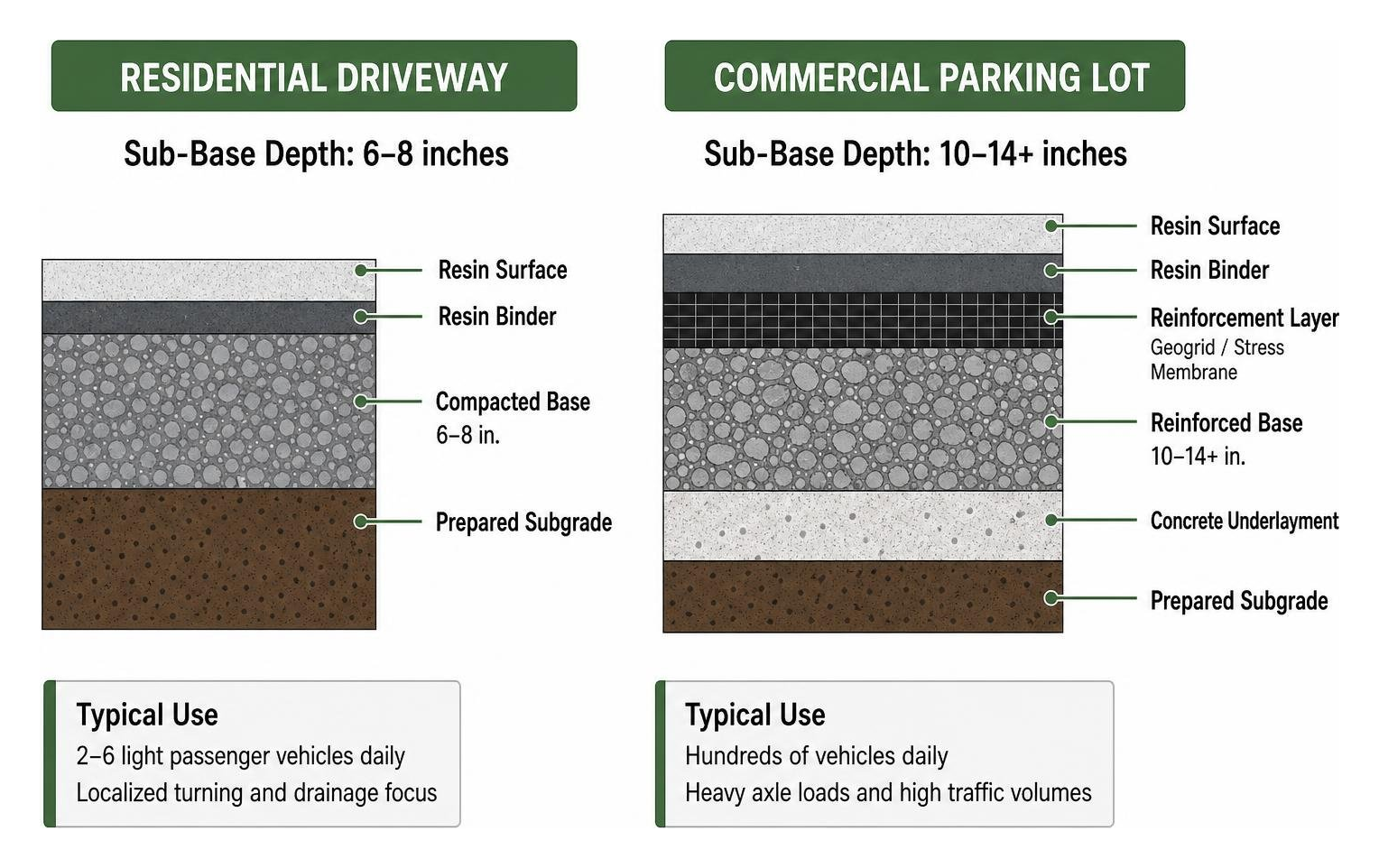
Commercial repairs require heavy-duty sub-base stabilization, engineered stress-relief interlayers, and high-tensile aliphatic polyurethane systems designed to withstand heavy axle traffic without rutting or shearing.
Structural Repair vs. Full Replacement: Upgrading to Interlocking Paving
While localized hairline cracks can be professionally patched, widespread cracking usually indicates that the structural foundation has failed completely.
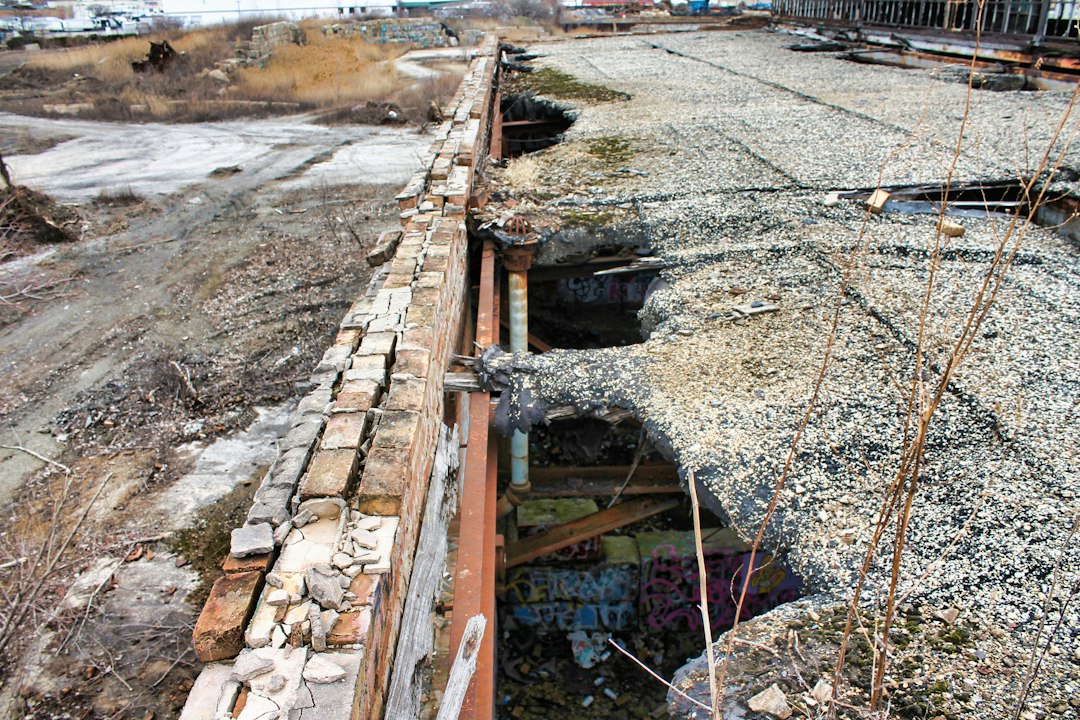
Homeowners dealing with extensive base damage often explore professional crack filling and sealing methods for temporary stabilization, but long-term structural integrity requires an engineered rebuild.
Identifying Unrecoverable Sub-Base Failure
Full surface replacement is necessary when a driveway shows severe structural deterioration, including:
- Widespread Fatigue Cracking: Interconnected crack patterns across the main parking areas, indicating sub-base collapse under dynamic loads.
- Extensive Base Subsidence: Depressions exceeding two inches where vehicle tires park, indicating washout or inadequate aggregate base depth.
- Severe Delamination and Peeling: Large sections of the resin surface debonding from the substrate due to sub-surface moisture and chemical breakdown.
- Recurring Reflective Cracks: Cracks that re-open along identical paths shortly after repairs, proving the underlying slab is continuously shifting.
Long-Term Value of Interlocking Brick Driveways
For properties with failing resin or broken concrete, converting to an interlocking brick paver system eliminates cracking issues entirely. Unlike monolithic resin, concrete, or asphalt surfaces that fracture under thermal expansion, interlocking brick pavements consist of individual, high-density concrete units laid over a flexible, engineered aggregate foundation.
- Natural Expansion Joints: Joints between pavers absorb freeze-thaw shifts without surface cracking.
- Exceptional Compressive Strength: Unilock commercial-grade pavers achieve compressive strengths exceeding 8,000 to 10,000 PSI—substantially higher than poured concrete or thin resin surfaces.
- 3D Design Visualization: We use 3D paving design modeling to allow homeowners to visualize patterns, textures, retaining walls, and integrated landscape features before ground is broken.
- Unmatched Material Warranties: Unilock materials include a transferable Lifetime Guarantee against structural manufacturing defects.
- Effortless Underground Access: If utility work or sub-surface repairs are ever required, individual pavers can be removed and reinstated without visible patch marks.
Frequently Asked Questions About Cracked Resin Surfaces
Can a sunken resin driveway be repaired without full replacement?
Yes, localized depressions can be repaired if the surrounding sub-base remains structurally sound. The repair process requires excavating the sunken resin matrix along with an additional half-meter perimeter beyond the visibly sunken area. The underlying ground must be inspected for organic voids or moisture accumulation, backfilled with high-grade aggregate, compacted to 98% Proctor density, and topped with a fresh resin-and-stone matrix.
Simply filling a low spot with a surface patch without excavating and stabilizing the sunken sub-base is an ineffective cosmetic fix; vehicle weight will compress the un-compacted ground again within months.
What is the difference between crack sealing and crack filling for resin surfaces?
Crack filling is a standard repair approach that places a relatively rigid aggregate-and-resin mixture directly into non-working cracks to restore an even surface. It is designed for stationary micro-cracks that experience minimal thermal movement.
Crack sealing utilizes specialized, highly elastic polymer formulations designed to bridge active joints. The elastomeric sealant expands and contracts with shifting substrate temperatures, preventing moisture intrusion while accommodating base movement.
When should a cracked resin driveway be fully replaced?
A resin driveway should be fully replaced when structural cracking covers more than 20% to 30% of the total surface area, or when alligator cracking and base subsidence are widespread.
If fractures stem from an unstable, deteriorating concrete base, or if water is trapped beneath the surface course throughout winter freeze-thaw cycles, patching will deliver only short-term aesthetic improvements. In these scenarios, replacing the failing surface with an engineered sub-base and interlocking pavers is the most dependable, cost-effective investment.
Conclusion
Resin driveway cracking compromises the structural integrity and curb appeal of your property. Addressing surface fractures early prevents moisture from penetrating the foundation and causing widespread sub-base failure during Midwest winters.
Euro Paving brings nearly 20 years of hardscaping expertise to residential and commercial properties throughout Chicago, Cook County, and DuPage County. As a premier Unilock Authorized Contractor, we specialize in durable, high-performance paving solutions—from complete sub-base remediation to custom patio paving, commercial parking areas, retaining walls, and brick paving driveway installations.
Our team pairs end-to-end service with interactive 3D paving design and lifetime material guarantees, ensuring your home or business receives a beautiful outdoor surface built to last.
Contact Euro Paving for your next brick or driveway project and schedule a consultation with our paving experts today.