



Why a Paver Brick Driveway Is One of the Best Investments for Your Home
A paver brick driveway is one of the fastest ways to transform the front of your home — boosting curb appeal, increasing property value, and creating a surface built to last for decades.
Here’s a quick snapshot of what you need to know before buying driveway paver bricks:
| Factor | Details |
|---|---|
| Material options | Clay brick pavers or concrete pavers |
| Cost range | $10–$20 per sq ft installed (clay brick) |
| Lifespan | 25–50+ years with proper maintenance |
| Common patterns | Herringbone, basketweave, running bond |
| Maintenance | Reseal every 3–5 years, occasional power washing |
| Best for | Durability, aesthetics, weather resilience |
Choosing the right paver bricks isn’t just about looks. The materials, base preparation, pattern, and installation quality all affect how long your driveway lasts — especially through Chicago’s harsh freeze-thaw winters.
This guide walks you through every major buying decision: material types, design options, what professional installation looks like, and how to maintain your investment over time.
Whether you’re replacing a cracked concrete slab or starting fresh, Euro Paving’s team of Unilock authorized contractors is ready to help homeowners across Chicago, Elmhurst, Hinsdale, Norridge, and the surrounding Cook and DuPage County suburbs create a driveway that delivers real, lasting value.
The Benefits of a Paver Brick Driveway
When we talk to homeowners in Arlington Heights or Downers Grove about their driveways, the conversation often starts with aesthetics but quickly moves to performance. A paver brick driveway isn’t just a pretty face; it is a sophisticated engineering system designed to handle the heavy weight of SUVs and delivery trucks without the structural failures common in other materials.
Superior Weight Distribution and Crack Resistance
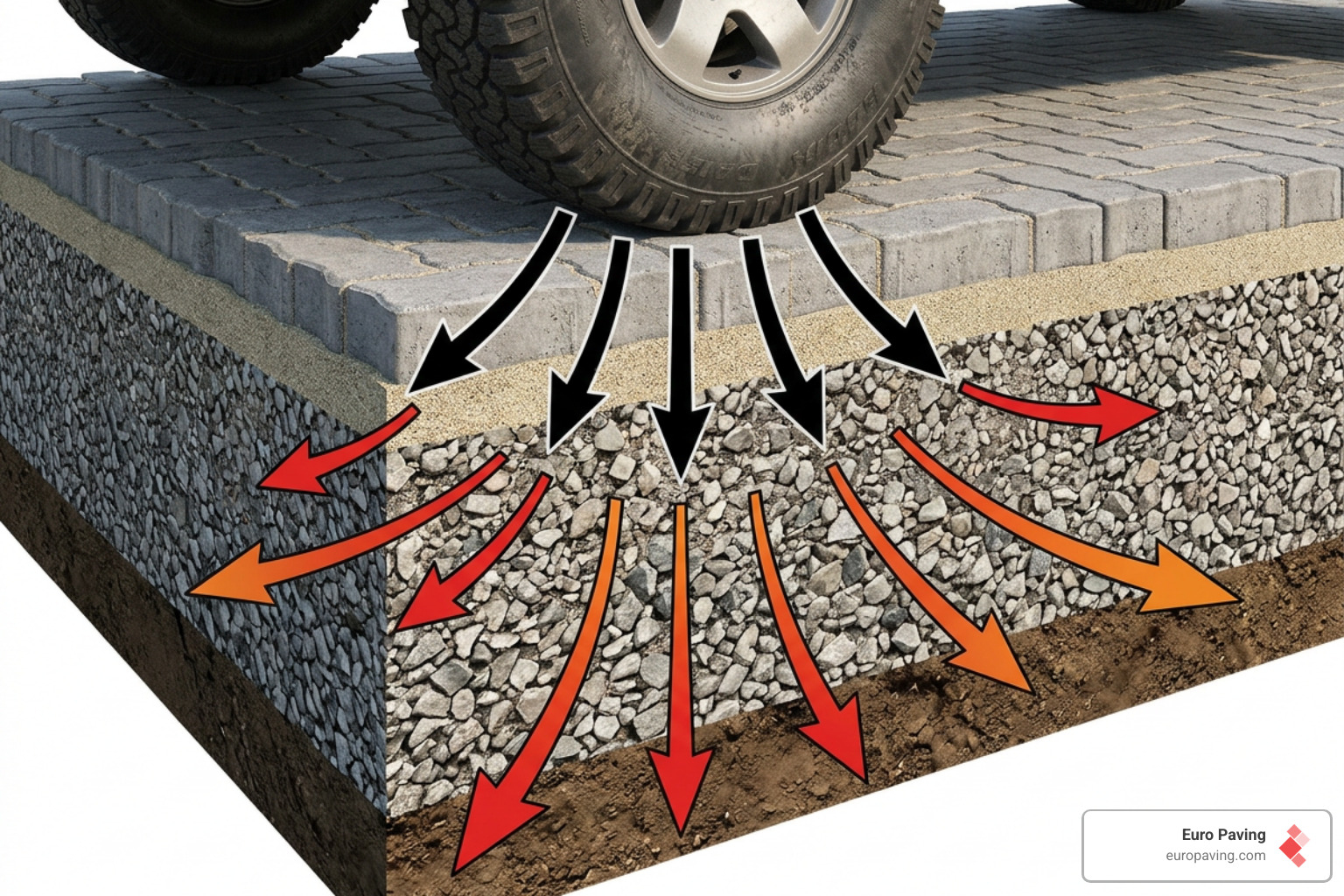
Unlike a solid slab of concrete or a layer of asphalt, a paver driveway is composed of individual units. These units are sand-jointed, creating an interlocking system that allows for minor movement. This flexibility is the secret to its longevity. When a heavy vehicle parks on the surface, the load is distributed across the entire system.
According to research on the 8 Benefits of Having Brick Driveway Instead of Asphalt Driveway, this interlocking nature prevents the surface from cracking under pressure. While asphalt may rut and concrete may snap during ground shifts, pavers simply “breathe” with the earth.
Weather Resilience: Surviving Chicago Winters
In the Chicago area, our driveways face a brutal cycle of freezing and thawing. Moisture seeps into cracks in concrete, freezes, expands, and shatters the material from the inside out. Brick pavers are high-density units that resist this cycle. Furthermore, for our clients in Lake Forest and Northbrook, we often recommend darker-colored pavers which help absorb solar heat to melt snow faster.
A Long-Term Investment
While the initial cost of a paver brick driveway is higher than asphalt, the return on investment is significantly better. You are looking at a lifespan of 25 to 50 years, compared to the 12 to 20 years typically seen with asphalt. There are 4 reasons to choose brick pavers that stand out: they don’t require the messy bi-annual sealcoating of asphalt, they don’t “spall” or flake like concrete, they offer immediate curb appeal, and they are incredibly easy to repair if a single unit ever becomes stained or damaged.
Clay vs. Concrete: Choosing the Best Driveway Paver Bricks
One of the most common questions we hear at our Hinsdale and Skokie projects is whether to choose clay or concrete. Both are excellent choices for a paver brick driveway, but they offer different advantages depending on your budget and design goals.
The Case for Clay Brick Pavers
Clay pavers are the “authentic” choice. Made from natural clay and kiln-fired at extremely high temperatures, these bricks are solid all the way through.
- Color Longevity: Because the color is natural to the clay, it will never fade. A clay driveway in Winnetka today will look the same in 40 years.
- Durability: Clay bricks have a higher compressive strength than many concrete options, often lasting for generations.
- Texture: They offer a classic, elegant look that is hard to replicate.
The Case for Concrete Pavers
Concrete pavers are molded from a mixture of cement and aggregates. They are the most versatile option for modern driveway renovation.
- Design Variety: Concrete pavers come in a staggering array of shapes, sizes, and colors. You can find concrete pavers that mimic natural stone, slate, or even weathered wood.
- Cost: Generally, is a brick driveway cheaper than concrete? No—concrete pavers are typically more budget-friendly, ranging from $8 to $15 per square foot installed, whereas clay often starts at $10 to $20.
- Dimensional Accuracy: Because they are molded, concrete pavers have very consistent dimensions, which can make for a tighter, more uniform fit in modern linear designs.
Performance Comparison Table
| Feature | Clay Brick Pavers | Concrete Pavers |
|---|---|---|
| Material | Kiln-fired natural clay | Molded concrete and pigment |
| Color | Natural, never fades | Pigmented, may fade slightly over decades |
| Strength | Very high (8,000+ PSI) | High (typically 8,000 PSI) |
| Salt Resistance | Excellent | Good (requires sealing) |
| Standard | Timeless/Historic | Versatile/Modern |
For commercial-grade durability, we often look to Belgard Commercial standards, which ensure that the pavers used in high-traffic areas meet rigorous thickness and strength requirements.
Design Patterns and Customization for Chicago Homes
Design is where your personality shines. In the Chicago suburbs, the architectural style of your home should dictate your paver choice. A Victorian home in Evanston might call for a classic clay look, while a mid-century modern home in Highland Park might benefit from large-format concrete slabs.
Popular Laying Patterns
The pattern you choose isn’t just for looks; it affects the structural integrity of the driveway.
- Herringbone (45 or 90 degrees): This is the gold standard for driveways. The interlocking angles provide the best resistance to vehicle tires turning and braking. It’s a classic look that never goes out of style.
- Basketweave: Great for a historic, “old-world” feel. It uses pairs of bricks laid at right angles to each other.
- Running Bond: Simple and clean, this pattern uses staggered rows. It’s often used for walkways but can be used for driveways with proper edge restraints.
Color Blending and Borders
We often suggest using a “border” or “soldier course” in a contrasting color to frame the driveway. This adds a level of sophistication that distinguishes a professional installation from a DIY project. Mixing colors from different pallets during installation is a pro tip for designing a driveway—it prevents “color banding” and ensures a beautiful, variegated look across the entire surface.
Unilock Materials and Architectural Matching
As Unilock authorized contractors, we have access to premium materials that are engineered specifically for the Illinois climate. Whether you are looking for the weathered look of tumbled stones or the sleek finish of contemporary planks, we can create a custom brick paving driveway that matches your home’s existing stone or brickwork perfectly.
Professional Installation Standards and Maintenance
A paver brick driveway is only as good as the foundation it sits on. At Euro Paving, we follow a rigorous installation process to ensure your driveway doesn’t sink or shift over time.
The Anatomy of a Professional Installation
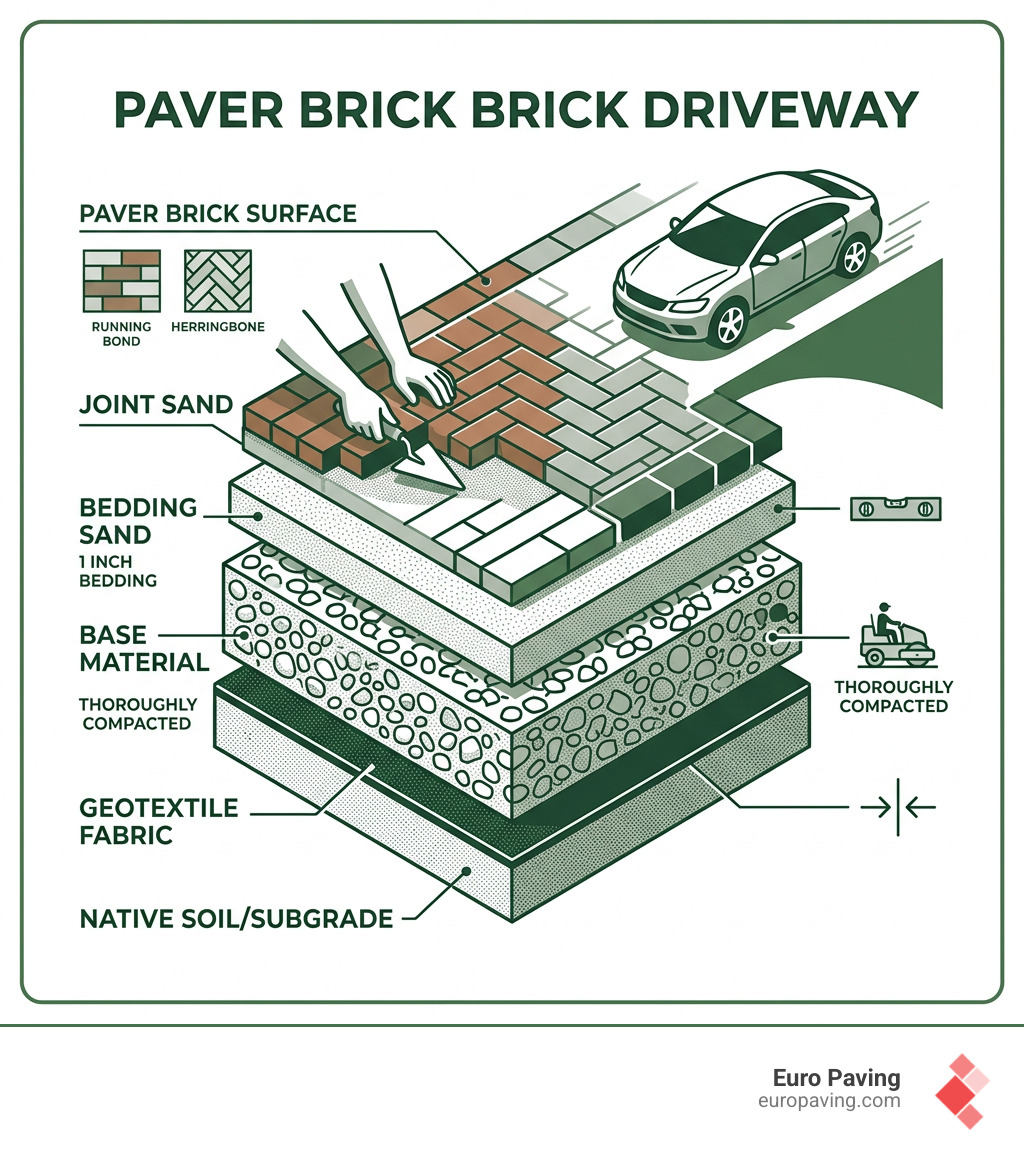
- Subgrade Preparation: We excavate the area to a depth of approximately 12 inches. The soil is then compacted to create a firm “floor.”
- Gravel Base: We add 8 to 12 inches of crushed gravel, compacting it in layers (lifts). This base provides the structural strength and allows for drainage.
- Sand Bedding: A 1-to-1.5-inch layer of washed sand is leveled over the gravel. This is the “cushion” the pavers sit in.
- Paver Placement: We lay the pavers in your chosen pattern, ensuring tight joints.
- Edge Restraints: Concrete or heavy-duty plastic borders are installed to prevent the pavers from migrating outward over time.
- Polymeric Sand: This special sand is swept into the joints and misted with water. It hardens to lock the pavers in place and prevent weed growth.
Learning how to lay a brick driveway properly requires specialized equipment like plate compactors and masonry saws, which is why most homeowners in Mount Prospect and Lombard choose professional installation.
Long-Term Maintenance
Maintenance for a paver brick driveway is surprisingly simple.
- Cleaning: An occasional power wash (once or twice a year) keeps the surface looking new.
- Sealing: We recommend applying a siloxane-based sealer every 3 to 5 years. There are 7 benefits of sealcoating, including protection against oil stains, salt damage, and UV fading.
- Repairs: One of the best features of pavers is that if one gets damaged, you can simply “pop” it out and replace it with a new one without having to tear up the whole driveway.
Frequently Asked Questions
How Much Does a Paver Brick Driveway Cost?
The cost of driveway paving varies based on the size of the area, the type of paver selected, and the complexity of the design. Generally, you can expect to pay between $10 and $20 per square foot for a professionally installed clay or high-end concrete paver driveway. While this is more than asphalt, the 50-year lifespan and lack of expensive annual maintenance make it a more cost-effective choice in the long run.
How Long Do Driveway Paver Bricks Last?
With a solid base and regular sealing, a paver brick driveway is built to last 25 to 50 years. Clay bricks, in particular, have been known to last for over a century in some historic Chicago neighborhoods. The key is the maintenance of the joint sand and the sealer, which protects the integrity of the units.
Are Paver Brick Driveways Environmentally Friendly?
Yes! Many of the pavers we install are part of a permeable system. Permeable pavers have slightly wider joints filled with small stones, allowing rainwater to seep directly into the ground rather than running off into the storm sewers. This helps recharge local groundwater and prevents the “puddling” often seen on concrete driveways after a heavy Chicago downpour.
Conclusion: Transform Your Home with Euro Paving
Choosing a paver brick driveway is a decision to invest in quality, durability, and unmatched beauty. From the classic charm of clay bricks to the modern versatility of Unilock concrete systems, the options for your home are nearly limitless.
At Euro Paving, we pride ourselves on being more than just installers; we are craftsmen. As a Unilock authorized contractor, we bring decades of experience to every project, whether we are working on a custom driveway in Arlington Heights, a family-friendly backyard in Norridge, or a luxury patio in Hinsdale. Our specialty is transforming outdoor spaces into relaxing environments that your family will enjoy for generations.
If you are ready to elevate your home’s curb appeal and install a surface that can handle everything the Chicago climate throws at it, we are here to help. Our team serves the entire Chicago area, including Roselle, Glenview, Hillside, and beyond.
Contact Euro Paving for your professional paver brick driveway installation today and let us help you bring your vision to life with a 3D design consultation and expert craftsmanship.