



Why Choosing the Right Patio Stone Installers Near Me Makes or Breaks Your Backyard
Finding trusted patio stone installers near me is the first — and most important — step toward turning your backyard into the outdoor living space your family actually uses.
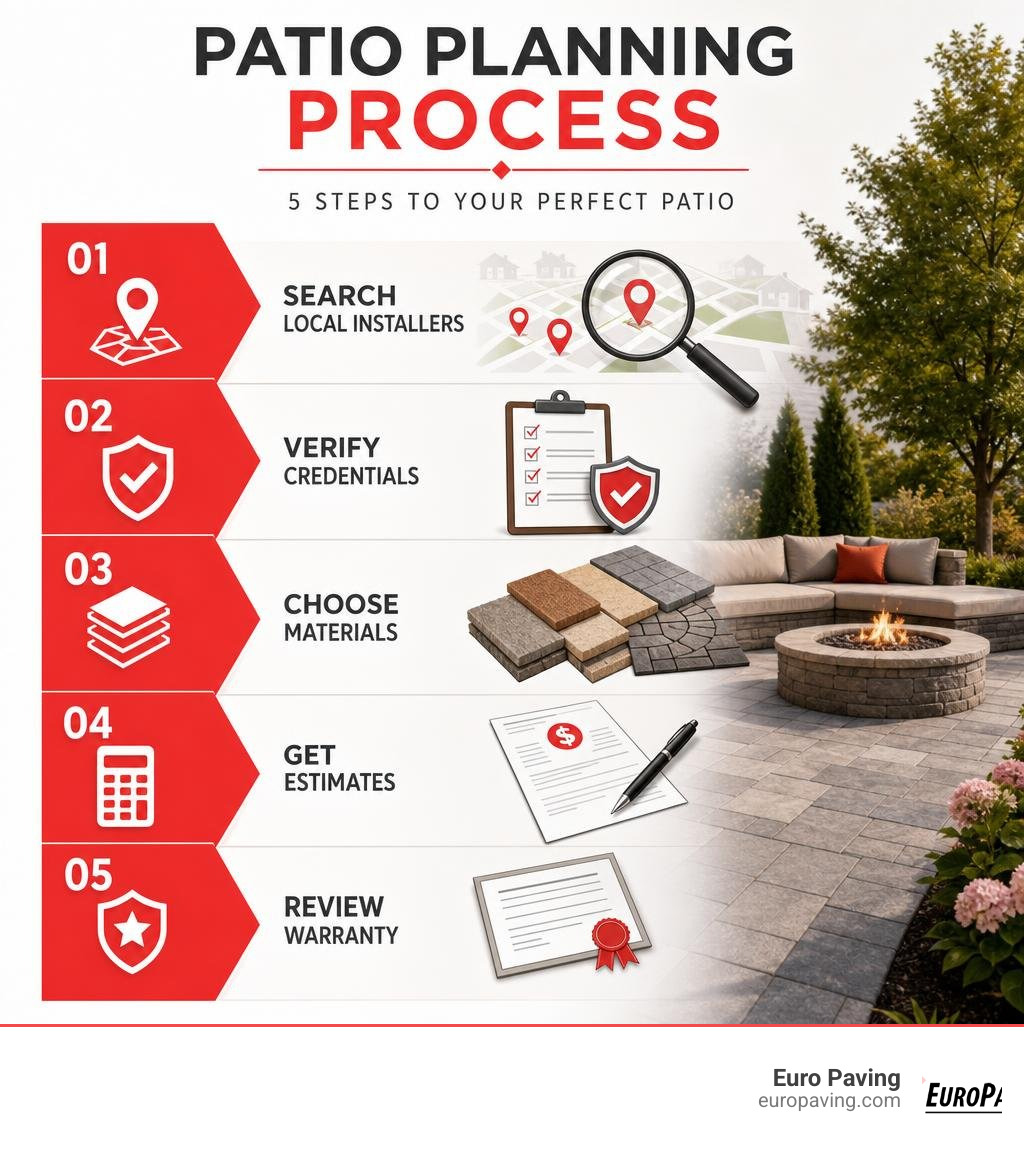
Quick answer: How to find and hire patio stone installers near you
- Search locally — Look for licensed, insured contractors serving your area (Chicago suburbs, Cook County, DuPage County)
- Check credentials — Verify licensing, insurance, and manufacturer certifications (like Unilock authorized contractor status)
- Review past work — Ask for a portfolio of completed patio projects similar to yours
- Get written estimates — Compare itemized quotes from at least two or three specialists
- Confirm warranties — Look for written craftsmanship guarantees on both labor and materials
- Hire a specialist — Choose a dedicated hardscape contractor over a general landscaper or handyman
A professionally installed paver patio can last 30 to 50 years with proper maintenance — and significantly boost your home’s curb appeal and resale value. But only if it’s built right from the ground up.
The problem? Not every contractor who calls themselves a “patio installer” has the masonry expertise, proper equipment, or base preparation knowledge to deliver a patio that survives Chicago’s brutal freeze-thaw winters.
This guide gives you a complete checklist — from materials and base prep to costs, timelines, and red flags to avoid — so you can hire with confidence.
Learn more about patio stone installers near me:
Finding the Best Patio Stone Installers Near Me
When searching for the best patio stone installers near me in the Chicago metropolitan area, you are looking for professionals who understand the specific soil conditions, local zoning regulations, and climate demands of northeastern Illinois. From the historic homes in Lake Forest and Highland Park to the family-friendly neighborhoods of Arlington Heights, Mount Prospect, and Downers Grove, every municipality has its own character and construction requirements.
Finding a local contractor who operates right in your neighborhood ensures they are familiar with the permitting processes of Cook and DuPage Counties. For instance, if you live in the northern suburbs, you might look at local resources such as Stone, Paver & Concrete Contractors Near Lake Forest – Houzz or check regional professionals in Skokie, IL – Houzz .
By narrowing your search to local experts who regularly work in Chicago, Norridge, Roselle, and Hinsdale, you can ensure your project is built to withstand local weather conditions while adhering to suburban municipal codes. To browse broader regional listings, you can consult resources like the Best 15 Stone, Paver & Concrete Contractors in Chicago, IL | Houzz .
Why Hire Specialized Patio Stone Installers Near Me
It is common for homeowners to wonder whether they should hire a general handyman, a standard landscaper, or a specialized brick and stone hardscaping contractor. Hardscaping is a highly technical branch of masonry that requires specialized machinery, precise engineering, and heavy physical labor.
A general handyman may be excellent at minor repairs, but they lack the heavy-duty compaction equipment, transit levels, and deep engineering knowledge required to excavate and grade a yard correctly. General landscapers focus primarily on softscaping—such as plantings, sod, and lawn maintenance. While they may offer patio installations as an add-on service, they often do not dig the base deep enough or use the correct aggregate materials.
A specialized hardscaping contractor focuses exclusively on structural stone and brick installations. We bring specialized masonry expertise, ensuring precision alignment, proper pitch for water runoff, and a deep, stable foundation. Investing in a specialist ensures your hardscape remains perfectly level for decades. For more details on the differences, explore our guide on professional paver patios.
Key Credentials to Verify Before Hiring
Before signing a contract with any hardscaping team, you must verify their professional credentials to protect your property and investment:
- Licensing and Insurance: Ensure the contractor holds a valid business license in your specific municipality (such as Arlington Heights, Hinsdale, or Lombard) and carries comprehensive general liability insurance alongside workers’ compensation. This protects you from liability in the event of accidental property damage or worker injuries.
- Manufacturer Certifications: Look for contractors who hold elite industry certifications, such as being a Unilock Authorized Contractor. This status is granted to fewer than 5% of hardscape professionals and indicates rigorous training, regular field inspections, and adherence to strict manufacturer installation guidelines.
- Written Warranties: A reputable installer should offer a clear, written craftsmanship warranty (typically 3 to 5 years) covering any shifting, settling, or structural issues, in addition to the lifetime material guarantees provided by premium manufacturers.
Selecting the Ideal Hardscape Materials for Your Chicago Home
The materials you choose will define the beauty, durability, and maintenance requirements of your new outdoor living space. In Chicagoland, your patio materials must be able to withstand extreme temperature swings—from blistering July heat to freezing January blizzards.
| Material Type | Average Cost Range | Durability | Appearance & Style | Best Used For |
|---|---|---|---|---|
| Concrete Pavers | Moderate | Very High (Resists cracking/fading) | Extremely versatile; mimics natural stone or brick | Modern patios, high-traffic pool decks, and driveways |
| Clay Brick | Moderate to High | High (Rich color that never fades) | Classic, timeless, warm, and organic | Traditional patios, historical walkways, and borders |
| Natural Limestone | High | High (Keep cool underfoot) | Sophisticated, light grey/buff tones | Elegant dining patios and pool surrounds |
| Flagstone / Bluestone | High | High (Organic texture) | Earthy, irregular or dimensional shapes | Rustic retreats, garden paths, and custom fire pit areas |
| Granite Slabs | Very High | Maximum (Highly scratch-resistant) | Luxurious, speckled, modern, and bold | High-end contemporary patios and heavy-use outdoor kitchens |
Comparing Concrete, Brick, and Natural Stone
Each material has unique characteristics that make it suitable for different design styles and functional needs:
- High-Density Concrete Pavers: Manufactured under extreme pressure, modern concrete pavers from premium brands like Unilock are stronger than poured concrete. They offer consistent dimensions, making installation highly precise. They are engineered with advanced surface technologies that resist oil stains, UV fading, and de-icing salts.
- Kiln-Fired Clay Bricks: Made from natural clay baked at high temperatures, traditional brick pavers offer rich, warm colors that run completely through the material, meaning they will never fade. They provide a timeless look that beautifully complements classic Chicago architecture. Discover creative ways to integrate these into your yard with our patio brick design ideas.
- Natural Stone (Bluestone, Limestone, Granite): Sourced from natural rock formations, natural stone offers unmatched organic beauty. No two stones are identical, giving your patio a custom, high-end appearance. Natural stone stays cooler underfoot during hot summer days and provides excellent slip resistance. Learn more about selecting the right premium options with our guide to brick patio paving services.
Lifespan and Return on Investment (ROI)
A professionally installed paver or natural stone patio is a high-return investment for your home. Unlike wood decks that rot, warp, and require constant staining, a stone paver patio easily lasts 30 to 50 years—or even longer with minimal maintenance.
From a financial perspective, professional hardscaping significantly boosts your home’s curb appeal and market value. Homebuyers in the Chicago suburbs view premium hardscaping as a luxury extension of the indoor living space. By integrating popular outdoor features like custom stone fire pits, seating walls, and fully equipped outdoor kitchens, you transform an ordinary backyard into a functional family retreat. Read about planning this type of project in our article on backyard transformations.
The Professional Installation Process: Base Preparation and Drainage
The longevity of your patio is entirely determined by what lies beneath the surface. While laying the stones looks like the most satisfying part of the job, 80% of the critical work happens during excavation and base preparation.
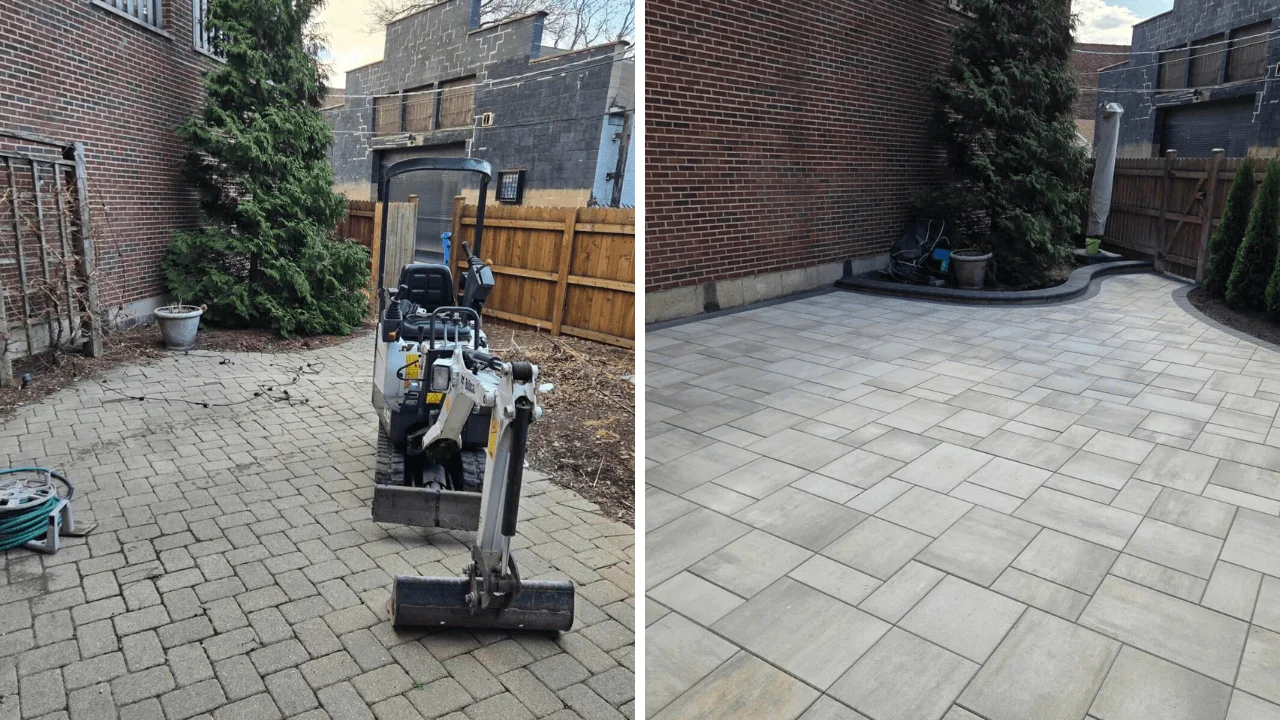
A professional installation follows these precise steps:
- Excavation and Soil Removal: We excavate the patio footprint to a depth of 8 to 10 inches, removing unstable topsoil and clay.
- Geotextile Fabric Installation: A commercial-grade woven geotextile fabric is laid down to separate the underlying soil from the new gravel base, preventing soil migration and settling.
- Compacted Aggregate Base: We place 6 to 8 inches of crushed limestone base (CA-6), compacting it in 2-inch layers (lifts) using heavy-duty vibrating plate compactors to create a rock-solid foundation.
- Bedding Sand Layer: A precise 1-inch layer of clean, coarse concrete sand is laid and screeded to provide a smooth bed for the pavers.
- Paver Laying & Edge Restraints: The pavers are laid in the selected design pattern. Heavy-duty snap-edge restraints are secured around the perimeter with steel spikes to prevent the stones from shifting outward over time.
- Polymeric Joint Sand: High-performance polymeric sand is swept into the joints, compacted, and activated with water to lock the pavers together and block weed growth.
Mitigating Frost Heave in Cold Climates
In cold climates like Downers Grove, Hinsdale, and Norridge, the soil expands and contracts violently during winter freeze-thaw cycles. If a patio is installed on a shallow base or over simple sand, water will collect beneath the stones, freeze, expand, and push the pavers upward. This results in an uneven, dangerous tripping hazard by spring.
To prevent this, we dig our bases twice as deep as standard landscapers (8 to 10 inches instead of just 4 inches) and use clean, crushed limestone instead of unwashed road gravel. This deep aggregate base allows water to drain away from the surface before it can freeze, absorbing the movement of the earth and protecting your patio from frost heave. If you are planning a project in the western suburbs, you can read more about local standards in Paver Contractors Downers Grove IL – Unilock.
Permeable Pavers and Water Management
Proper drainage is critical for protecting both your patio and your home’s foundation. Patios must always be graded with a subtle pitch (at least 1 inch of drop for every 8 feet of length) away from your home’s foundation.
In many densely populated Chicago suburbs, local zoning laws place strict limits on the amount of “impervious surface” (surfaces that do not absorb water) you can add to your property. Permeable pavers are an excellent solution to this challenge. Designed with wider joints filled with small, clean stone aggregates, permeable pavers allow rainwater to drain directly through the patio surface into a specialized stone reservoir below. This manages heavy rainfall on your property, prevents standing water, and helps you easily meet municipal zoning requirements. For a step-by-step look at how we build these durable systems, check out how to build a brick patio.
Cost Factors and Project Timelines Explained
Understanding the budget and timeline of your hardscaping project helps ensure a smooth, stress-free experience from start to finish.
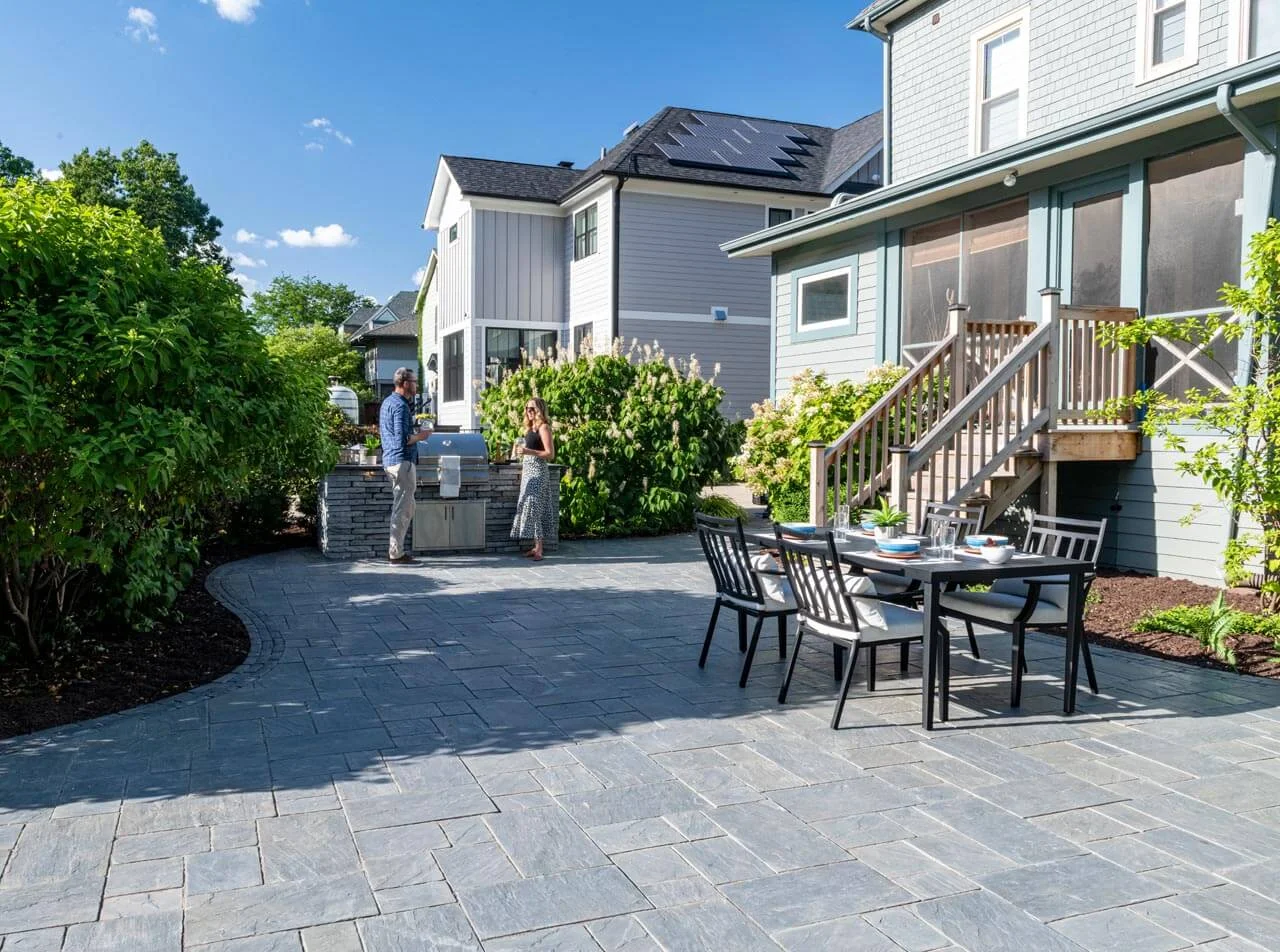
Typical Cost Ranges and Influencing Factors
Every custom brick or stone patio is unique, and the final investment depends on several key variables:
- Project Size (Square Footage): Larger patios require more materials and labor, though the cost per square foot often decreases slightly on larger footprints due to mobilization efficiencies.
- Material Selection: High-density concrete pavers are generally the most budget-friendly premium option, while natural bluestone, imported limestone, and granite slabs represent a higher material investment.
- Site Conditions and Accessibility: If our crews have to navigate narrow gates, steep slopes, or tight spaces between homes (common in historic areas like Norridge or Skokie), the extra manual labor can affect the budget.
- Permits and Engineering: Municipal permit fees and any required civil engineering plans (for complex grading or retaining walls) will influence the overall cost.
To explore design options that fit your specific financial plans, read our guide on brick patio ideas for every budget.
Project Timelines and Potential Delays
A standard professional paver patio installation typically takes two to five days to complete, depending on the size and complexity of the design. A typical timeline looks like this:
- Day 1: Site layout, excavation, soil hauling, and geotextile installation.
- Day 2: Base gravel delivery, grading, and multi-stage compaction.
- Day 3: Screeding bedding sand, laying pavers, and installing edge restraints.
- Day 4-5: Applying polymeric joint sand, final compaction, clean-up, and final walkthrough.
While we work efficiently to minimize disruption to your home, certain factors can cause delays. Heavy, continuous rainfall can saturate the clay soil, making excavation and compaction impossible until the ground dries. Delays can also occur if custom-ordered premium pavers are held up in transit, or if municipal inspectors take extra time to sign off on open permits.
Long-Term Maintenance: Pavers vs. Concrete Slabs
Many homeowners compare the cost of a paver patio to a poured or stamped concrete slab. While concrete slabs may have a lower initial installation cost, they represent a much higher maintenance burden and a shorter lifespan in the Midwest.
Poured concrete is rigid. When the ground shifts during Chicago’s winter freeze-thaw cycles, solid concrete has no room to move, which inevitably leads to cracking within 5 to 10 years. Stamped concrete suffers from the same issues, and once it cracks, repairing it seamlessly is nearly impossible—often requiring you to tear out and replace the entire slab.
In contrast, a paver patio is a flexible pavement system. Because it is made of individual interlocking stones, the patio can flex and move slightly with the ground without cracking. If a single paver is ever stained by grease or damaged by a heavy impact, it can be easily removed and replaced with a new one in minutes, without disturbing the surrounding stones.
To keep your paver patio looking brand new, we recommend a simple maintenance routine:
- Regular Sweeping: Keep the surface free of leaves, dirt, and organic debris to prevent surface staining.
- Occasional Power Washing: Gently wash the surface with a mild paver cleaner and a fan-tip pressure washer once a year to restore its original luster.
- Joint Sand Replenishment: Check the joints every 3 to 5 years. If the polymeric sand has worn down, simply sweep in a fresh layer of sand and mist it with water to lock it back in place.
- Sealer Application (Optional): Applying a breathable paver sealer every 3 to 5 years will enhance the stone’s natural colors and provide extra protection against oil spills, grease, and de-icing salts.
Frequently Asked Questions
Frequently Asked Questions for Patio Stone Installers Near Me
FAQ 1: Do I need a permit for a paver patio in Chicago suburbs?
Yes, in most Chicago suburbs—including Arlington Heights, Downers Grove, Hinsdale, and Mount Prospect—you will need a building permit for any new patio construction. Municipalities require these permits to ensure the patio does not exceed impervious surface limits, block natural water drainage, or encroach on property setbacks. A professional contractor should handle the entire permitting process, including drawing up site plans and submitting the paperwork to your local village hall.
FAQ 2: Can pavers be installed over an existing concrete patio?
Yes, pavers can be installed over an existing concrete patio, but only if the concrete is in excellent structural condition. The existing slab must be stable, level, free of major structural cracks, and properly sloped away from your home. We install a thin bed of sand or specialized adhesive over the concrete before laying the pavers. However, if the concrete is sinking, crumbling, or sloping toward your house, it must be completely excavated and replaced with a proper gravel base.
FAQ 3: What is the best pattern for high-traffic paver patios?
For high-traffic areas, the herringbone pattern (set at either 45 or 90 degrees) is widely considered the strongest interlocking pattern. Because of the way the rectangular pavers nest together, the herringbone pattern distributes weight evenly across the surface and prevents the stones from shifting under heavy outdoor furniture or foot traffic. For larger, modern patios, multi-piece ashlar patterns are also highly durable and offer a beautiful, natural stone look.
Explore more about designing your layout in our guides to backyard patios and finding premium patios near me.
Conclusion
Investing in a custom brick or natural stone patio is one of the most rewarding ways to elevate your home’s beauty, functionality, and long-term value. By partnering with specialized patio stone installers near me, you ensure that your backyard transformation is built on a rock-solid foundation designed to withstand the harshest Chicago winters.
At Euro Paving, we specialize in custom brick patios, outdoor kitchens, and backyard paving ideas. Our passion is transforming ordinary backyards into relaxing, family-friendly spaces complete with custom fire pits, seating walls, and elegant dining areas. Serving Chicago and the surrounding suburbs—including Elmhurst, Hinsdale, Mount Prospect, Norridge, and Arlington Heights—we bring decades of hardscaping expertise and a commitment to quality to every project.
Ready to start planning your dream backyard? Schedule a consultation with Euro Paving today, and let’s design an outdoor living space your family will cherish for decades to come.