



Why a Herringbone Brick Driveway Is One of the Smartest Upgrades You Can Make
A herringbone brick driveway is one of the most durable and visually striking paving choices available to homeowners today. The pattern arranges rectangular bricks at 45-degree angles to create interlocking V-shapes — and that structure is what sets it apart from nearly every other option.
Here’s what makes herringbone driveways stand out:
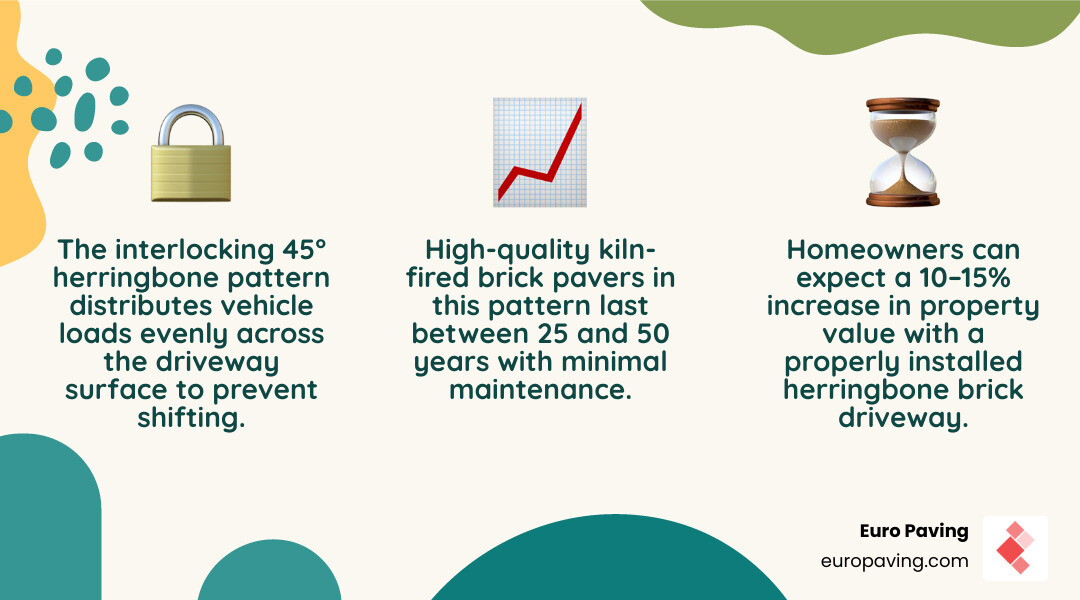
- Pattern strength — The interlocking angle distributes vehicle weight evenly across the surface, reducing shifting and cracking
- Curb appeal — A timeless design that complements both traditional and modern architecture
- Longevity — High-quality brick pavers installed correctly can last 25 to 50 years
- Property value — Herringbone brick driveways can increase home value by up to 10–15% compared to standard asphalt or concrete
- Low maintenance — Individual bricks can be replaced without tearing up the entire surface
This guide walks you through everything — from how the pattern works, to installation steps, material choices, and what it costs in the Chicago area in 2026. Whether you’re replacing a cracked asphalt driveway or starting fresh, Euro Paving’s team brings the professional craftsmanship this type of project demands.
Herringbone brick driveway glossary:
The Appeal and Durability of a Herringbone Brick Driveway
When we talk about a herringbone brick driveway, we aren’t just talking about a pretty face. This pattern is a workhorse. Historically, herringbone paving dates back to the Roman Empire, where it was used to build roads that could withstand the constant movement of heavy chariots and legions. In 2026, those same principles apply to your SUV or family sedan.
The primary appeal lies in its interlocking nature. Because the bricks are laid in a zigzag fashion, they “lock” into one another. This prevents the pavers from moving independently when a vehicle turns its wheels or brakes suddenly. For homeowners in the Chicago area and the North Shore, this structural integrity is vital. Our local architecture, ranging from historic brick tudors to sleek modern estates, benefits from the Everything You Need to Know About Brick Paver Driveways that we provide.
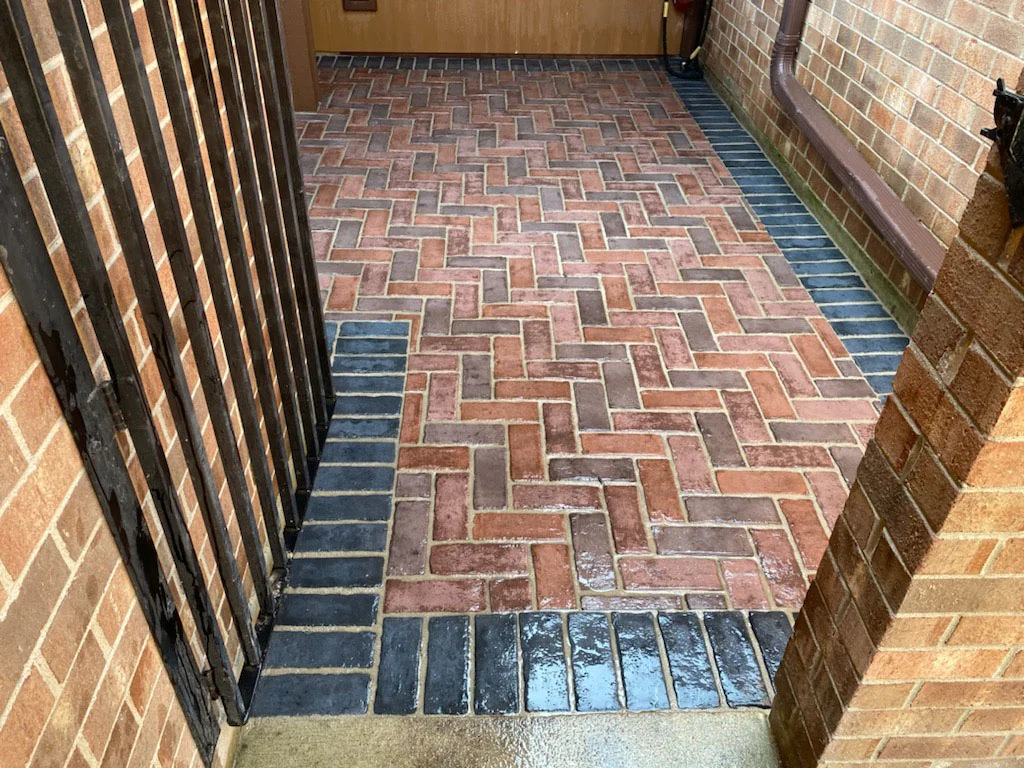
Using materials like reclaimed clay street pavers adds a layer of vintage charm that feels right at home in Lake Forest or Hinsdale. The rich, earthy tones of clay paired with the sophisticated geometry of the herringbone layout create a driveway that looks like it has been there for a century, yet performs with modern efficiency.
Benefits of Interlocking Patterns
Why do over 60% of homeowners prefer herringbone for their driveways? It comes down to physics.
- Weight Distribution: The 45-degree or 90-degree orientation ensures that the load from a heavy vehicle is spread across a larger surface area than a standard running bond pattern.
- Shifting Resistance: Because each brick is “trapped” by its neighbors on all sides, the likelihood of pavers sinking or spreading over time is significantly reduced.
- Value Increase: A professionally installed brick driveway can boost your property value by 10-15%. In high-end markets like Barrington or Winnetka, this ROI is a major factor for savvy homeowners.
Drawbacks and Considerations
While we love this pattern, it is important to be realistic about the requirements. A herringbone brick driveway is labor-intensive. It requires a high volume of precise cuts, especially along the edges (the soldier course). This isn’t a weekend DIY project; it requires professional expertise to ensure the lines stay perfectly straight over a long distance. Additionally, because of the complexity and the extra material needed for cuts (usually a 10% overage), the initial material and labor costs are higher than simpler patterns.
Comparing the Herringbone Pattern to Other Paving Styles
To appreciate the herringbone brick driveway, it helps to see how it stacks up against the competition. Common alternatives include the running bond (bricks laid end-to-end like a wall), basketweave (bricks laid in pairs at right angles), and stack bond (bricks aligned in perfect rows and columns).
While a basketweave looks charming on a garden path, it lacks the interlocking strength required for a driveway. Running bond is easier to install but can “creep” or shift under the weight of heavy vehicles. If you are looking for Tips for Designing a Driveway with Brick Pavers, the herringbone remains the gold standard for structural performance.
| Feature | Herringbone | Running Bond | Basketweave |
|---|---|---|---|
| Interlocking Strength | Excellent | Moderate | Low |
| Visual Complexity | High | Low | Moderate |
| Load Bearing | Superior | Good | Fair |
| Installation Speed | Slow | Fast | Moderate |
Structural Superiority for Vehicles
The “lateral resistance” of the herringbone pattern is its secret weapon. When a car accelerates or brakes, it exerts horizontal force on the ground. In a running bond pattern, this force can push the bricks forward. In a herringbone pattern, the zigzag layout acts as a mechanical anchor. This prevents “tire scuffing” and keeps the driveway flat and even for decades.
For a visual reference for paving patterns, you can see how the 45-degree angle creates a continuous flow that guides the eye toward the home’s entrance, making the space feel larger and more welcoming.
Aesthetic Versatility in 2026
In 2026, we are seeing a shift toward “modern traditionalism.” Homeowners are using classic patterns like herringbone but updating them with contemporary colors. For example, using a sleek charcoal gray paver in a herringbone pattern with a crisp, light-colored border (soldier course) creates a look that is both timeless and trendy.
Professional Installation Process for a Herringbone Brick Driveway
A beautiful driveway is only as good as what lies beneath it. At Euro Paving, we follow a rigorous Professional Guide to Paving a Brick Driveway to ensure your investment stands the test of time and the harsh Illinois climate.
Site Preparation and Drainage
The process begins with excavation. For a driveway in the Chicago area, we typically excavate to a depth of 12 inches. This allows for:
- The Sub-Base: 6 to 8 inches of crushed stone, compacted to 98% density.
- The Base: 2 inches of finer gravel or sand for leveling.
- The Pavers: The bricks themselves.
Proper grading is essential to ensure water flows away from your home’s foundation. In areas like Norridge or Arlington Heights, managing stormwater is a priority. We often recommend permeable herringbone pavers which can reduce runoff by up to 90%, helping you comply with local Cook County regulations while preventing puddles and ice patches.
Laying the Herringbone Brick Driveway Pattern
Once the base is perfectly level and compacted, the artistry begins. We use string lines to maintain a perfect 45-degree alignment across the entire span.
- Precision Laying: Each brick is placed by hand. We check the alignment every few feet to ensure the “V” shapes aren’t drifting.
- Edge Restraints: We install heavy-duty concrete or plastic restraints around the perimeter to keep the pattern from spreading.
- Jointing Sand: Fine, dry sand (often polymeric sand) is swept into the joints.
- Final Compaction: We use a plate compactor over the finished surface to “set” the bricks into the bedding sand and lock the joint sand in place. This is a critical step in our Step-by-Step Brick Paving Guide.
Material Selection and 2026 Design Trends
Choosing the right “brick” for your herringbone brick driveway is a balance of aesthetics and engineering. While traditional clay is beautiful, modern concrete pavers have come a long way in terms of durability and style.
Trending Colors and Finishes for a Herringbone Brick Driveway
For 2026, the “natural” look is dominating. We are seeing high demand for:
- Tumbled Finishes: These pavers have distressed edges that mimic the look of aged cobblestone.
- Multi-Tone Blends: Colors like “Autumn Mix” or “Burgundy Red” provide a varied, organic look that hides tire marks and dirt better than solid colors.
- Matte Sealants: Gone are the days of the “wet look” high-gloss shine. Homeowners now prefer a natural matte finish that protects the brick without looking artificial.
For more Inspiration for Brick Paving Patterns, consider a dark charcoal border to frame a lighter-toned herringbone center. It’s like a tuxedo for your home!
Climate-Specific Materials for Illinois
Living in the Chicago area means our driveways face the “freeze-thaw cycle.” Water seeps into pores, freezes, expands, and cracks the material. That’s why we use high-density concrete pavers or kiln-fired clay bricks that have incredibly low absorption rates. In places like Lake Forest, where salt use is heavy in winter, we recommend pavers that are specifically engineered to resist salt damage and thermal expansion.
Maintenance and Longevity in the Chicago Climate
A herringbone brick driveway is a 25 to 50-year investment, but it does require a little love to stay looking its best. Our Homeowners Guide to Driveway Brick Pavers outlines the simple steps to preserve your hardscape.
Seasonal Care and Repair
- Spring Cleaning: A gentle power wash every couple of years removes dirt and moss.
- Sealing: We recommend applying a penetrating sealant every 3–5 years. This protects against UV fading and oil stains.
- Winter Safety: When clearing snow from your Skokie brick driveway, use a plastic shovel or a snowblower with a rubber blade to avoid scratching the surface. Avoid using harsh rock salt; instead, use calcium chloride-based de-icers which are gentler on the masonry.
One of the best features of brick is repairability. If a heavy delivery truck happens to crack a paver, or if a tree root causes a small section to heave, we can simply pull up the affected bricks, fix the base, and lay them back down. You can’t do that with a concrete slab!
Frequently Asked Questions about Herringbone Driveways
How much does a herringbone brick driveway cost in 2026?
In 2026, the cost for a professional installation in the Chicago area typically ranges from $15 to $30 per square foot. Factors that influence this price include the choice of material (clay is generally more expensive than concrete), the depth of excavation required, and the complexity of the site (slopes or curved edges). While the upfront cost is higher than asphalt, the 50-year lifespan makes it significantly cheaper over time.
How long does the installation process take?
For a standard two-car driveway, the process usually takes 5 to 10 business days. This includes a few days for excavation and base preparation, 2-3 days for laying the herringbone pattern, and a final day for cutting the edges, sanding, and compacting.
Can herringbone patterns be used for permeable driveways?
Absolutely. In fact, herringbone is an ideal pattern for permeable systems because the wide joints between the pavers allow water to filter directly into the ground. This is a popular choice for homeowners in Barrington who want to combine luxury aesthetics with eco-friendly drainage solutions.
Conclusion
A herringbone brick driveway is more than just a place to park your car; it is a statement of quality and a commitment to your home’s long-term value. At Euro Paving, we take pride in transforming ordinary driveways into extraordinary entrances. From the initial 3D design to the final sweep of sand, our team ensures every brick is placed with precision.
Whether you are in Arlington Heights, Hinsdale, or anywhere in the Chicagoland area, we are ready to help you design a space that your family will enjoy for decades.
Ready to elevate your curb appeal? Transform your home with a professional brick paving driveway by contacting Euro Paving today for a consultation.