



Landscaping Around Brick Patio Edges That Look Finished and Stay Functional
The best landscaping around brick patio edges combines a clean border, low-maintenance plants, and drainage that moves water away from the home. Start with a defined planting bed or gravel strip, keep plant crowns a few inches back from the pavers, and use metal edging to hold soil and mulch in place. Finish beds with 2 to 3 inches of mulch or decorative stone to reduce weeds and help soil hold moisture.
A brick patio should feel like an outdoor room, not a hard rectangle set in the lawn. Layer low plants near the edge, add shrubs or ornamental grasses for height, and use containers where a planting bed would take up too much space. Just as important: maintain a slope of about 1/4 inch per foot away from the house so water does not collect along the patio perimeter.
For homeowners in Chicago, Elmhurst, Hinsdale, Mount Prospect, Norridge, Arlington Heights, and throughout Cook and DuPage Counties, smart perimeter landscaping also helps protect pavers through wet springs and freeze-thaw winters. Euro Paving can pair durable Unilock pavers with a 3D design plan, so you can see how planting beds, fire features, lighting, and patio borders work together before installation begins.
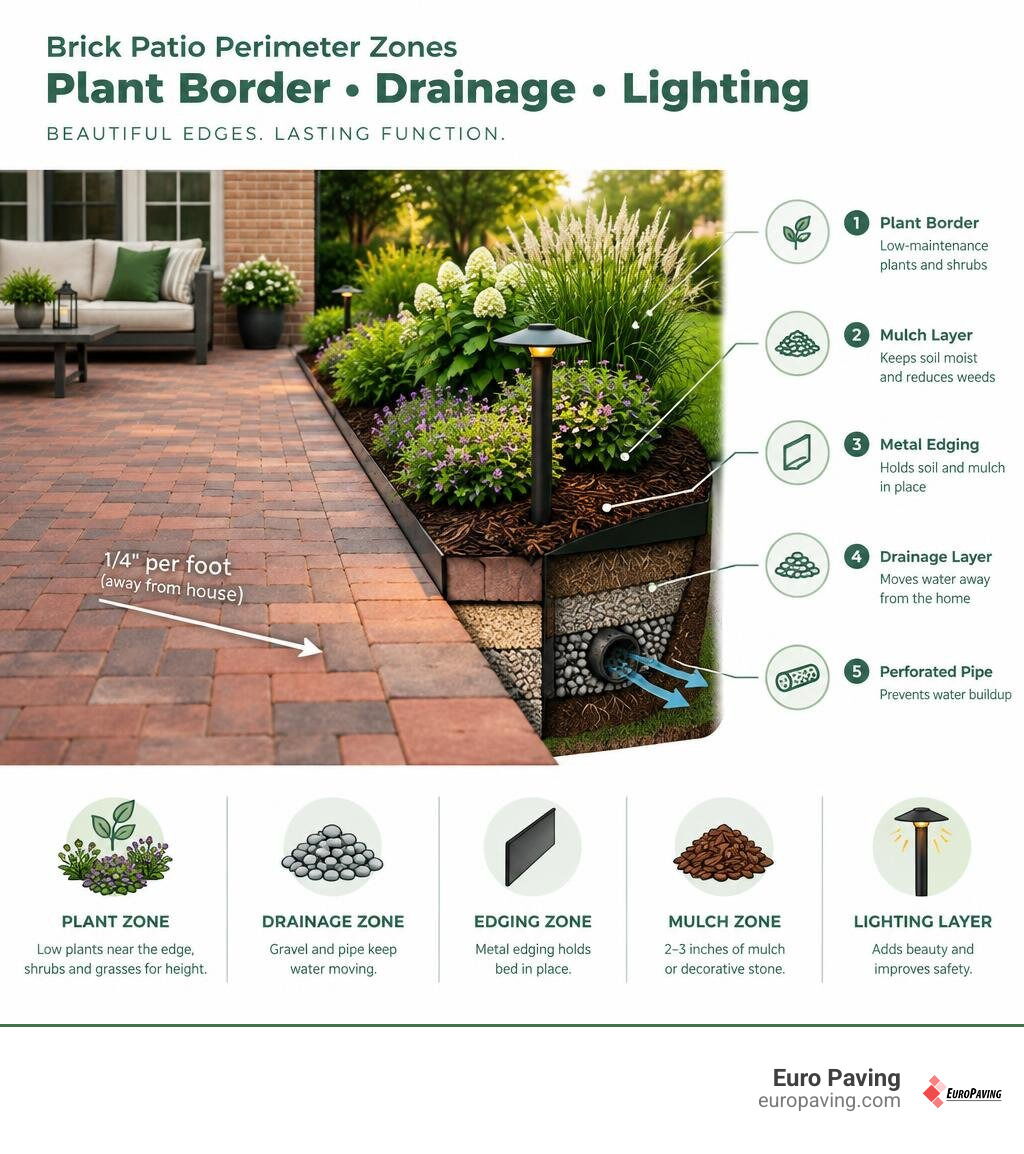
Essential landscaping around brick patio terms:
Essential Principles for Landscaping Around Brick Patio Edges
Surrounding a paved terrace with rich greenery requires structural planning to ensure the hardscape remains rock-solid for decades. Without adequate transitions, lawn mowers can chip exterior brick edges, turf grass can creep into the joints, and shifting soil can undermine perimeter pavers. Achieving a clean, durable border begins with understanding structural base layers and secure mechanical edge restraints.
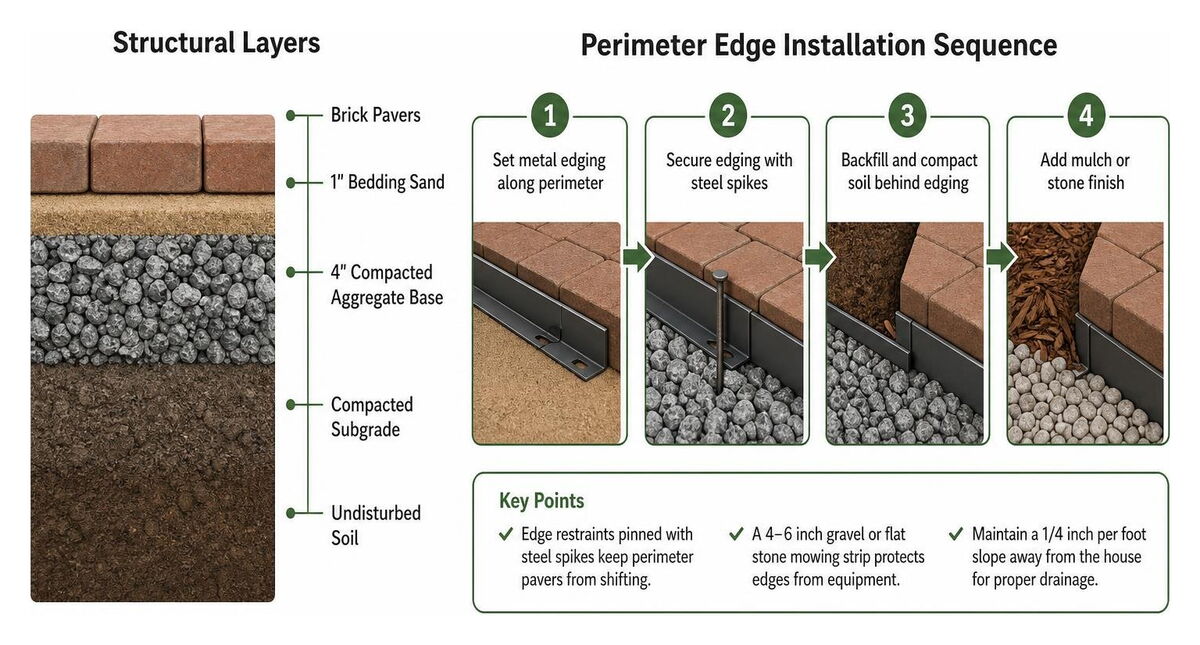
Commercial-grade edge restraints, pinned with heavy-duty steel spikes into a compacted crushed stone base, keep perimeter units from wandering over time. As detailed in classic guides on how to lay an appealing brick patio, a stable base layer typically requires at least 4 inches of compacted aggregate topped with 1 inch of bedding sand. When edging meets planting beds, we establish a clean mowing strip—a 4-to-6-inch band of decorative gravel or flat border stones—so maintenance equipment never strikes the brickwork.
Applying a clear, breathable masonry sealer every 2 to 3 years shields the brick from moisture absorption, prevents organic staining from fallen leaves, and deters ant colonies and weeds from taking root in the joint sand. Maintaining a 2-to-3-inch layer of hardwood bark mulch over well-compacted soil in the adjacent beds seals in ground moisture while preventing soil splatter onto the clean brick during heavy Midwest downpours.
Selecting Low-Maintenance Plants for Landscaping Around Brick Patio Borders
The right plant selection brings life to hardscape perimeters without demanding endless pruning or dropping messy fruit onto dining spaces. In the variable climate of Cook and DuPage Counties (spanning USDA Hardiness Zones 5b and 6a), structural evergreens paired with drought-tolerant perennials deliver multi-season interest.
- Dwarf Boxwoods (Buxus): Provide tailored, year-round green borders that frame patio corners and define walkways cleanly.
- Ornamental Grasses (Carex, Feather Reed Grass): Bring natural movement, soft textures, and vertical contrast that soften rigid stone angles.
- Creeping Thyme & Sedum: Serve as durable, fragrant groundcovers along perimeter borders that tolerate radiant heat reflected off the pavers.
- Hardy Perennials (Coneflower, Black-Eyed Susan, Catmint): Supply long-lasting summer blooms while resisting local summer droughts.
When installing perimeter flora, always maintain a 2-inch plant crown clearance from the hardscape. This critical gap prevents expansive woody root systems from lifting edge bricks while promoting proper air circulation, which discourages fungal growth along damp stone surfaces.
Adding Vertical Layers and Living Privacy Screens
A well-balanced outdoor living room utilizes vertical depth to foster intimacy and screen out neighboring properties. Rather than planting a single row of monotonous shrubs, modern landscape design layers varying plant heights against hardscape structures.
Tall columnar arborvitae (Thuja occidentalis) or upright junipers act as evergreen perimeter walls that block northern winter winds. For tighter footprints in suburban lots like those in Norridge or Skokie, wooden trellises woven with flowering climbing clematis produce lush privacy screens without taking up excessive ground square footage.
Integrating raised masonry seat walls built with structural Unilock wall units provides dual benefits: creating built-in perimeter seating for large gatherings while doubling as elevated planters that establish distinct microclimates for delicate perennials. Large, frost-resistant container pots positioned at patio thresholds add seasonal color, drawing the eye upward while making transitions between the patio and open lawn feel entirely natural.
Managing Drainage and Soil Grading Along Brick Paver Perimeters

Managing surface runoff is the single most vital factor in extending the lifespan of a brick patio in the Chicago area. Because clay-heavy soils across northeastern Illinois retain moisture, unmanaged runoff can quickly pool against brick foundations, degrade joint sand, and cause catastrophic frost heave during winter freeze-thaw cycles.
All paved surfaces must incorporate a positive pitch, sloping away from structural foundations at a rate of roughly 1/4 inch per foot (a 3-inch drop across a 12-foot span). Polymeric joint sand activated during installation creates an elastic, weather-resistant barrier that sheds water toward the perimeter rather than letting it pool beneath the pavers.
| Perimeter Border Type | Drainage Efficiency | Maintenance Needs | Weed & Turf Suppression | Freeze-Thaw Resistance |
|---|---|---|---|---|
| Decorative Gravel / River Rock | Superior (Instant infiltration) | Very Low | High (When paired with geotextile) | Excellent |
| Organic Bark Mulch Bed | Moderate (Retains moisture) | Moderate (Annual top-off) | Moderate (Requires weeding) | Good |
| Direct Turf / Sod Edge | Low to Moderate (Runoff barrier) | High (Regular edging/mowing) | Low (Grass creeps into joints) | Fair |
Resolving Water Pooling and Soil Erosion Around Hardscape
When patio perimeters intercept high volumes of roof runoff or slope downward toward the yard, specialized drainage strategies are necessary to protect the surrounding landscape:
- Gravel French Drains: Installed along low patio edges, perforated pipes wrapped in geotextile fabric and backfilled with washed river stone whisk subsurface water away to dry wells or municipal drainage points.
- Dry Creek Beds: Utilizing rounded river gravel and fieldstone boulders, dry creek beds provide a decorative garden feature during dry spells while channeling storm surges during torrential rainstorms.
- Downspout Diverters: Routing roof gutter downspouts beneath the patio base via solid PVC piping ensures that thousands of gallons of roof runoff never spill across the paved surface or wash out adjacent garden beds.
Excavating surrounding plant beds to a depth of 12 to 18 inches and amending compacted clay with gravel and organic compost improves base drainage, ensuring deep root growth while eliminating saturated soil zones around the hardscape foundation.
Creative Hardscape and Lighting Additions for Patio Perimeters
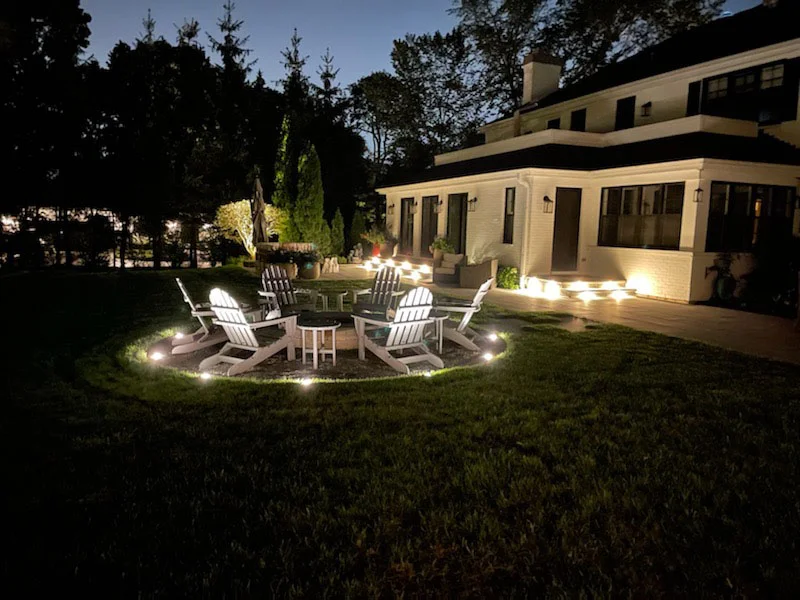
Elevating a brick patio beyond the ordinary involves weaving functional masonry elements and energy-efficient illumination directly into the perimeter layout. Combining living borders with custom vertical structures creates an inviting ambiance that transitions effortlessly from day to night. Explore creative brick patio garden ideas & plant picks to visualize how masonry seat walls, built-in fire features, and outdoor kitchens integrate seamlessly into perimeter plantings.
Low-voltage LED path lights placed along garden borders cast gentle illumination across the brick texture without blinding guests. Uplighting specimen ornamental trees, such as Japanese maples or serviceberries, casts dynamic architectural shadows across Unilock retaining walls, bringing dramatic vertical dimension to the perimeter after sunset.
Commercial vs Residential Landscaping Around Brick Patio Spaces
Perimeter landscaping demands tailored engineering depending on whether the project serves a residential backyard or a commercial venue:
- Residential Backyards (Hinsdale, Arlington Heights, Elmhurst): Focus on private, comfortable retreats featuring custom fire pits, cozy seat walls, fragrant perennial borders, and soft turf transitions designed for family recreation.
- Commercial Outdoor Dining (Chicago, Downers Grove, Northbrook): Require durable, high-traffic perimeter buffers. Commercial installations prioritize wide, ADA-compliant masonry walkways, heavy-duty Unilock commercial pavers, bollard lighting, and salt-tolerant, low-litter shrubs capable of enduring intense foot traffic and rigorous seasonal maintenance.
Euro Paving manages both residential and commercial scales across Cook and DuPage Counties, ensuring that every project meets local municipal building codes, ADA accessibility guidelines, and commercial stormwater engineering requirements.
Frequently Asked Questions About Brick Patio Landscaping
How do I keep plant roots and soil from damaging my brick patio?
To prevent root intrusion and soil wash-out, install commercial-grade aluminum or heavy poly edge restraints secured with 10-inch steel spikes along the excavated stone base. Maintain a 2-inch to 3-inch buffer between plant crowns and the brick edge, and use high-performance polymeric joint sand to seal all gaps against wandering roots and soil displacement.
What are the best low-maintenance shrubs for Chicago patio perimeters?
Top-performing low-maintenance shrubs for Chicago, Hinsdale, and Elmhurst include ‘Green Velvet’ Boxwoods, Dwarf Korean Lilac, ‘Little Lime’ Hydrangea, and ‘Gro-Low’ Sumac. These varieties withstand heavy winter snow loads, resist localized freeze-thaw cycles, and maintain compact profiles without aggressive pruning.
How far should plants and mulch be placed from patio edge restraints?
Mulch and plant crowns should sit approximately 2 to 3 inches away from the active paver edge restraint. This small gap prevents moist soil and decomposing organic matter from sitting against the brick faces, eliminating moisture staining, mold growth, and weed migration into perimeter joint lines.
Conclusion and Professional Installation Next Steps
Smart landscaping transforms a brick patio into a luxurious, functional outdoor living space that boosts property value and stands strong against Midwest weather. By incorporating proper soil grading, durable edge restraints, functional drainage systems, and climate-resilient plants, your outdoor living area will remain pristine and level for decades.
With nearly 20 years of hardscaping experience, Euro Paving delivers unmatched design craftsmanship across Chicago, Elmhurst, Hinsdale, Mount Prospect, Norridge, Arlington Heights, and the surrounding suburbs. As a certified Unilock Authorized Contractor, we back our paving installations with lifetime material guarantees and advanced 3D paving design technology, allowing you to walk through your customized patio, seating walls, fire features, and perimeter landscaping before ground is ever broken.
Ready to bring your outdoor vision to life with flexible financing through the Unilock DO-IT-NOW Program? Schedule a design consultation with our hardscape specialists today to start planning your custom paver patio installation.