



Your Backyard Deserves Better: A Homeowner’s Guide to Hiring local patio layers
Finding trusted local patio layers in the Chicago suburbs? Here’s what you need to know:
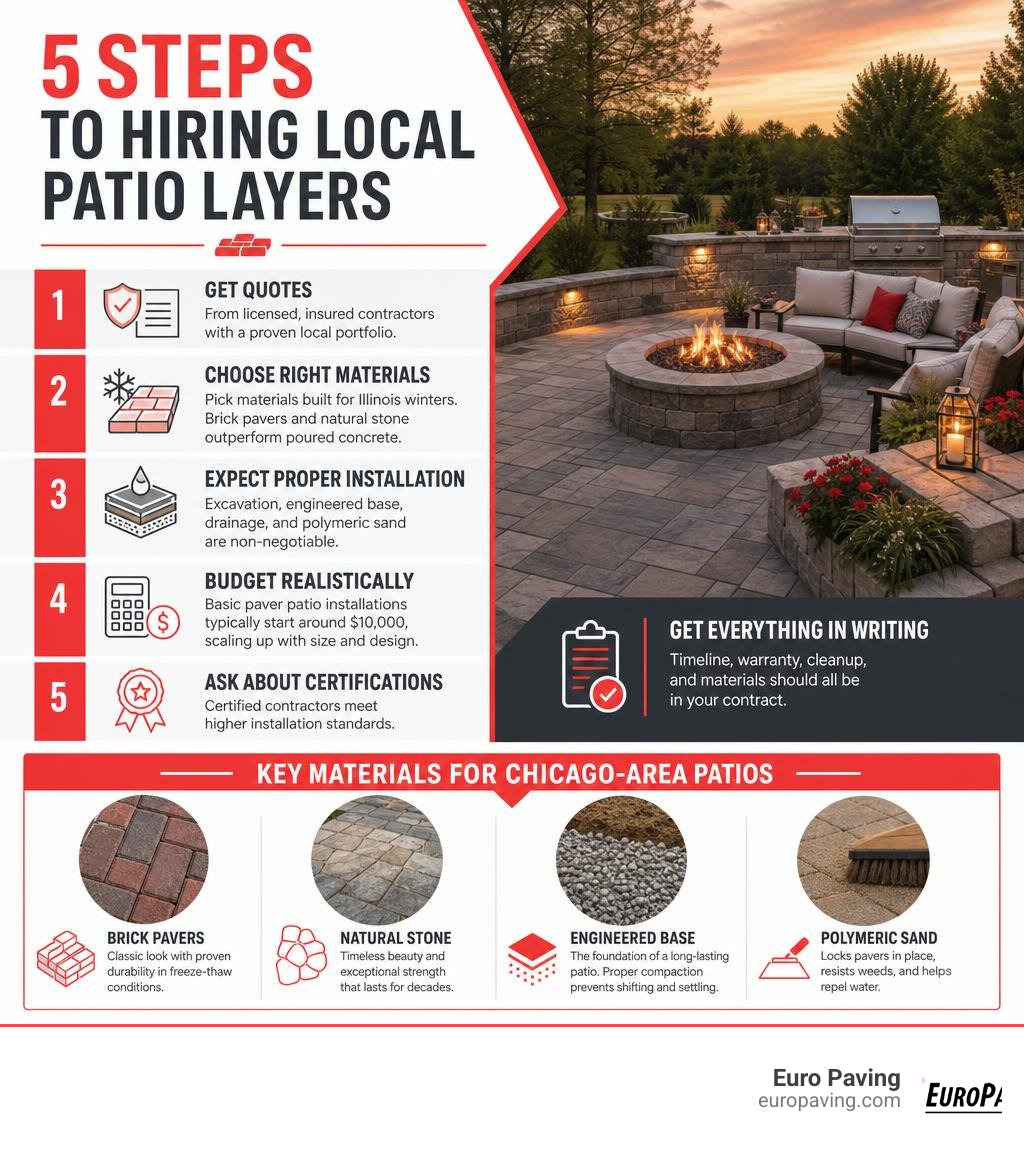
- Get quotes from licensed, insured contractors with a proven local portfolio
- Choose materials built for Illinois winters — brick pavers and natural stone outperform poured concrete in freeze-thaw conditions
- Expect a proper installation process — excavation, engineered base, drainage, and polymeric sand are non-negotiable steps
- Budget realistically — basic paver patio installations typically start around $10,000, scaling up with size and design complexity
- Ask about certifications — Unilock authorized contractors meet higher installation standards
- Get everything in writing — timeline, warranty, cleanup, and materials should all be in your contract
Picture this: it’s a warm summer evening in the Chicago suburbs. Your family is gathered outside, the fire pit is glowing, and dinner is coming off the outdoor grill. That’s the backyard most homeowners dream about — but never quite get around to building.
The gap between the dream and reality is usually one thing: finding the right contractor.
Hiring a patio builder is a bigger decision than it looks. A poorly installed patio cracks, shifts, and floods. A well-built one lasts 25 to 50 years and actually adds value to your home. The difference almost always comes down to who does the work and how they do it.
This guide walks you through everything — materials, costs, red flags, questions to ask, and what a professional installation actually looks like — so you can hire with confidence and get the outdoor space your family deserves.
Local patio layers terminology:
Why a Custom Paver Patio is the Best Outdoor Investment for Your Chicago Home
When you are planning your backyard transformation in 2026, you will likely weigh the differences between building a deck, adding a porch, or investing in a custom paver patio. Each option offers distinct advantages, but for long-term value, durability, and lifestyle integration in the Chicago area, a custom hardscape is often the superior choice.
To understand why, let’s look at the differences:
- Porches: Typically built on the front or back of a house, porches are covered by a roof. While they offer excellent shelter from rain and sun, they are limited in footprint and generally require substantial structural framing. Adding a porch can provide a high return on investment (ROI) of up to 84%, but their construction is highly complex and costly.
- Decks: Usually elevated structures built of wood or composite materials. The average cost to build a deck is $8,025, ranging from $1,500 to $22,000 (or roughly $30 to $60 per square foot). While adding a deck can provide an ROI of up to 80%, wood decks require constant maintenance. You will find yourself power washing, staining, and sealing them every two to three years to prevent rot. Even with composite decking, the structural wood frame underneath remains vulnerable to moisture over time.
- Patios: Built directly on the ground over an engineered base of gravel and sand. Patios offer a seamless transition to the rest of your yard, creating an organic flow for outdoor living. Unlike decks, there are no stairs to navigate, no wood to rot, and no structural joists to fail.
For homeowners in communities like Downers Grove, Hinsdale, and Skokie, a brick paver patio is the ultimate low-maintenance solution. While wood and composite decks are subjected to the brutal freeze-thaw cycles of Northern Illinois, a professionally installed paver patio moves dynamically with the ground. Individual pavers flex with seasonal ground movement, preventing the cracking and splitting common in poured concrete slabs.
Furthermore, a well-designed patio elevates your home’s curb appeal and significantly boosts its resale value. By utilizing premium hardscaping, you create functional “outdoor rooms” that prospective buyers view as additional square footage. If you are looking for design inspiration, you can explore some Backyard Patios ideas to see how these spaces seamlessly integrate with your existing landscape.
Choosing the Right Materials with Professional Local Patio Layers
Selecting the right material is the foundation of a successful hardscape project. The climate of the Chicago suburbs demands materials that can withstand sub-zero winter temperatures, heavy snow, and humid summer heat. Poured concrete often fails under these conditions, cracking as the clay-heavy soil expands and contracts.
This is why experienced local patio layers strongly advocate for brick pavers and natural stone. Let’s look at the premier materials we work with:
Brick Pavers
Kiln-fired clay and high-density concrete pavers are the gold standard for Midwest hardscaping. Brands like Unilock manufacture pavers engineered specifically for freeze-thaw durability. These materials are colored throughout the stone, ensuring that the surface never wears off or fades. With endless colors, shapes, and textures, you can design anything from a classic herringbone pattern to a modern, clean-lined layout. To see the sheer variety of designs available, take a look at these Lay It On Me: 25 Stunning Brick Patio Designs for Your Backyard and find the perfect match for your home’s architecture.
Natural Stone
For a high-end, timeless aesthetic, natural stone like bluestone, granite, and thermal stone is unmatched. Natural stone ages beautifully, developing a rich patina over the years. It is highly durable and naturally slip-resistant, making it perfect for custom walkways and dining areas.
| Material Feature | Brick Pavers (Concrete/Clay) | Natural Stone (Bluestone/Granite) | Poured/Stamped Concrete |
|---|---|---|---|
| Durability | High (Flexes with soil movement) | High (Extremely dense and strong) | Low to Medium (Prone to cracking) |
| Aesthetics | Versatile (Endless patterns & colors) | Timeless, luxurious, and organic | Mimics stone but looks artificial over time |
| Maintenance | Low (Occasional joint sand top-off) | Low (Simple sweeping and washing) | Medium to High (Requires regular sealing) |
| Repairability | Excellent (Replace individual pavers) | Excellent (Reset individual slabs) | Poor (Requires patching or full demolition) |
| Midwest Climate Suitability | Outstanding | Outstanding | Poor |
For the best results, we recommend utilizing Unilock authorized materials. These products come with lifetime material guarantees, giving you peace of mind that your investment is protected. Whether you are looking for a rustic, old-world charm or a sleek, contemporary floor, choosing high-quality Paver Patios ensures your outdoor space remains structurally sound and visually stunning for decades.
The Cost of Building a Custom Patio in the Chicago Area
When planning a hardscape project in Cook County or DuPage County, understanding the cost factors is essential for setting a realistic budget. Unlike simple home improvements, custom hardscaping is an investment-grade project that requires extensive ground preparation, heavy machinery, and skilled manual labor.
While a standard concrete patio might cost between $4 and $12 per square foot installed, its lifespan in Illinois is notoriously short due to cracking. On the other hand, a high-quality brick paver or natural stone patio represents a higher upfront cost but offers vastly superior longevity and ROI.
Basic professional paver patio installations in the Chicago area typically start around $10,000. The final price of your project will depend on several key variables:
- Site Conditions and Excavation: Clay-heavy soils in towns like Arlington Heights and Mount Prospect require deeper excavation (typically 6 to 10 inches) to establish a stable crushed stone base. If your yard has a slope, we must build retaining walls to level the area and manage water runoff, which adds to the overall cost.
- Material Selection: Premium pavers (such as Unilock) and natural stone (like imported bluestone) carry higher material costs than standard concrete pavers. However, their durability and lifetime warranties make them more cost-effective over time.
- Design Complexity: Curved borders, multi-level layouts, inlaid patterns, and custom border bands require intricate cutting and additional labor.
- Integrated Features: Adding elements like built-in seating walls, fire pits, outdoor kitchens, or pergolas will increase the investment but fully transform your backyard into an entertainment hub.
For inspiration on how to maximize your budget, you can check out these Stunning Brick Patio Ideas for Every Budget to find a design that fits your financial and aesthetic goals.
How to Hire Reputable Contractors and Avoid Bad Hardscape Builders
The Chicago area has no shortage of contractors offering paving services, but not all of them possess the specialized training required to build a hardscape that survives Illinois winters. Hiring the wrong crew can lead to a patio that settles unevenly, pools water against your home’s foundation, or sprouts weeds within a single season.
To protect your home and your wallet, you must thoroughly vet any potential contractor. When searching for local patio layers, always look for a local specialist with a deep understanding of Cook and DuPage County soils and municipal codes.
First, verify that the contractor is fully licensed, bonded, and insured. Hardscape construction involves deep excavation and heavy equipment; a reputable builder will carry comprehensive liability insurance and workers’ compensation to protect you from any on-site accidents.
Second, ask to see their portfolio of completed local projects. A trustworthy company will gladly show you real-world examples of their craftsmanship in nearby towns like Hinsdale, Elmhurst, or Lake Forest. You can also explore our professional brick paving services to see the standards of quality and design we bring to every home.
Red Flags to Watch Out For When Hiring Local Patio Layers
- Unlicensed or Uninsured Crews: If a contractor cannot immediately provide proof of insurance and local licensing, walk away.
- Extremely Low Bids: If a quote is significantly lower than competitors, they are likely cutting corners on excavation depth, base compaction, or material quality.
- No Written Contract: A professional builder will always provide a detailed, written contract outlining the scope of work, materials, payment schedule, and timeline. Never rely on verbal agreements.
- Lack of References or Local Reviews: Reputable contractors should have a solid footprint of positive reviews from homeowners in your immediate area.
Essential Questions to Ask Your Local Patio Layers Before Signing
- What warranty do you offer on your workmanship? (A reliable contractor should back their installations with a written structural warranty).
- What is the estimated project timeline, and how do you handle weather delays?
- What are your cleanup and site restoration procedures? (The job isn’t done until your yard is left clean and free of construction debris).
- Are you a certified installer for premium manufacturers like Unilock? (Certification indicates the crew is trained in industry-best installation techniques).
The Professional Patio Installation Process and Timeline
A beautiful patio is only as good as the foundation underneath it. At Euro Paving, we follow a meticulous, multi-step installation process to ensure your hardscape remains perfectly level and beautiful for decades. Here is what you can expect when you partner with professional local patio layers:
- 3D Design Planning: Before a single shovel touches the ground, we work with you to create a custom 3D design of your new outdoor space. This allows you to visualize exactly how the pavers, outdoor kitchen, or fire pit will look against your home, preventing any surprises during construction.
- Site Evaluation & Utility Marking: We evaluate your yard’s drainage patterns, soil type, and access points. We also contact local utility services to mark underground lines before excavation begins.
- Excavation: We excavate the area to a depth of 6 to 10 inches, depending on the soil conditions and planned usage. This step is critical to remove unstable topsoil.
- Base Preparation: We lay down a thick layer of crushed aggregate stone, compacting it in lifts using professional-grade vibratory plate compactors. This engineered base provides the strength to resist freeze-thaw shifting.
- Drainage and Slope: We carefully pitch the base (typically 1 inch for every 8 feet) away from your home’s foundation to ensure proper water runoff.
- Edge Restraints and Bedding Sand: We install heavy-duty edge restraints to lock the perimeter in place, followed by a precise 1-inch layer of washed concrete sand.
- Paver Installation: Our skilled craftsmen lay the pavers in your chosen pattern, making precision cuts around borders and features.
- Polymeric Sand & Final Compaction: We sweep polymeric sand into the joints and run a compactor over the surface to lock the pavers together. We then mist the patio with water, activating the polymers to create a durable, weed-resistant barrier.
Most residential patio projects take between 3 to 7 days to complete, depending on size and complexity. For a deeper look at how we execute these steps to perfection, check out our Brick Patio Paving Services for a Perfect Outdoor Living Space.
Upgrading and Maintaining Your Hardscape for Illinois Winters
One of the greatest benefits of a brick paver patio is how easy it is to maintain, even through harsh Chicago winters. Unlike wood decks that require seasonal staining, or concrete that requires expensive patching, pavers need very little upkeep to stay looking brand new.
To protect your hardscape from winter freeze-thaw cycles, we recommend a few simple best practices:
- Sealing: While not strictly required, applying a professional-grade sealer every 3 to 5 years enhances the color of your pavers and protects them from oil spills, grill grease, and UV fading.
- Joint Sand Replenishment: Over time, heavy rains can slowly wear down the polymeric sand in the joints. Every few years, have a professional sweep in fresh polymeric sand to keep the joint barrier intact and prevent weed growth.
- Winter Care: When clearing snow from your patio, use a plastic shovel rather than a metal one to avoid scratching the surface of the stones. Avoid using harsh chemical de-icers or rock salt, which can degrade concrete pavers over time. Instead, use clean kitty litter or sand for traction.
By taking these minor steps, you ensure your outdoor living area remains pristine. To learn more about protecting your investment, read our guide on how to Transform Your Backyard with a Stunning Brick Paver Patio.
Elevating Your Space with Custom Outdoor Kitchens and Fire Pits
A patio is more than just a flat surface to place lawn chairs; it is the foundation for your ultimate outdoor lifestyle. In 2026, the hottest design trends focus on creating fully integrated “staycation” backyards that bring the comforts of indoor living outside.
When designing your hardscape, consider incorporating these custom features to maximize your enjoyment:
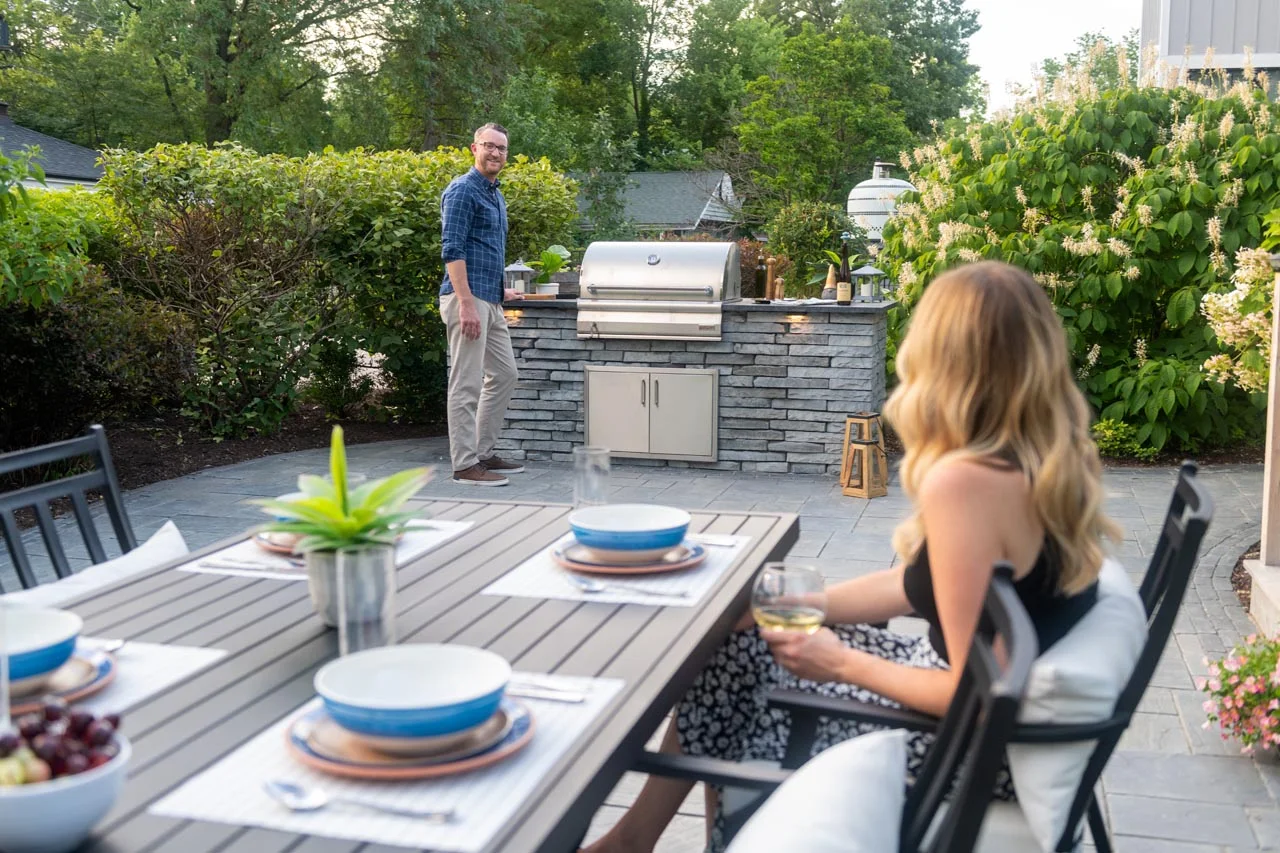
- Custom Outdoor Kitchens: Take your backyard barbecues to the next level with built-in grills, stainless steel refrigerators, stone countertops, and outdoor sinks. An outdoor kitchen keeps the chef in the center of the action and makes hosting seamless.
- Fire Pits and Outdoor Fireplaces: Extend your outdoor season into the cool autumn months with a custom brick fire pit or a grand outdoor fireplace. Whether gas-powered or wood-burning, a fire feature creates an instant focal point and a cozy gathering spot for family and friends.
- Pergolas and Pavilions: Add architectural interest and much-needed shade with a wood or vinyl pergola. These structures define your dining or lounge areas and can be outfitted with lighting, fans, and outdoor audio systems.
By blending these elements into a cohesive, family-friendly layout, you create a multifunctional space that you will use day and night. For design inspiration and to explore what is possible for your home, check out our resource on Custom Brick Patios Outdoor Kitchens Backyard Paving Ideas.
Frequently Asked Questions About Patio Construction
Can you lay pavers over an existing concrete patio?
In many cases, yes! If your existing concrete patio is structurally sound, level, and free of major settling or deep cracks, we can install a paver overlay. This process involves laying a thin bedding layer over the concrete, placing the pavers, and securing the perimeter. This can save you money by avoiding demolition and disposal costs. However, we must carefully evaluate height clearances around doors and steps, as well as drainage patterns, to ensure an overlay is a viable option for your home.
Do I need a permit for patio construction in the Chicago suburbs?
Yes, most municipalities in the Chicago suburbs — including Elmhurst, Hinsdale, Mount Prospect, and Arlington Heights — require building permits for new patio construction. These regulations ensure that your project complies with local zoning laws, setback requirements, and stormwater management policies. As professional contractors, we handle the entire permitting process for you, submitting detailed site surveys and engineering plans to ensure full compliance with your local village hall.
How long does a professionally installed paver patio last?
When designed and installed correctly by certified professionals, a brick paver patio can easily last 25 to 50 years. Because the individual stones are highly dense and flex dynamically with the ground, they do not suffer from the cracking and structural failures that plague poured concrete. Occasional cleaning, sealing, and joint sand maintenance are all that is required to keep your patio looking as beautiful as the day it was installed.
Conclusion
Your backyard is an extension of your home, and you shouldn’t have to settle for a cracked concrete slab or a high-maintenance wood deck. By hiring professional local patio layers who understand the unique demands of the Chicago climate, you can transform your yard into a stunning, low-maintenance oasis that your family will enjoy for decades.
At Euro Paving, we are proud to be the trusted hardscaping experts for homeowners in Elmhurst, Hinsdale, Mount Prospect, Arlington Heights, and throughout the Chicago area. As a Unilock authorized contractor, we bring elite craftsmanship, 3D design planning, and lifetime material guarantees to every project we touch.
Ready to bring your dream backyard to life? Schedule a consultation with our experts today and let’s start designing your custom brick patio or outdoor kitchen.