



Why Brick Paver Fire Pits Are the Backyard Upgrade Chicago Homeowners Are Choosing
The best brick paver fire pit ideas turn an ordinary backyard into a year-round gathering space — and the options are more varied than most homeowners realize.
Here’s a quick look at the most popular styles to consider:
| Style | Best For | Key Feature |
|---|---|---|
| Circular with seating wall | Families, entertaining | 360° seating, cozy focal point |
| Square/rectangular | Modern, geometric patios | Clean lines, space-efficient |
| Integrated patio fire pit | Full outdoor living spaces | Connects to kitchen, dining area |
| In-ground recessed | Low-profile, natural look | Blends into landscape |
| Corner fire pit | Small yards | Maximizes usable space |
Fire pits are consistently among the most requested features in landscape and hardscape designs — and it’s easy to see why. A well-built brick paver fire pit extends your outdoor season into fall, creates a natural gathering spot, and can return 80–100% of its cost in added home value.
But not all fire pits are built the same. The materials you choose, the placement, the size, and how it connects to your broader patio design all determine whether you end up with something you love for decades — or something that cracks, crumbles, or sits unused.
This guide walks through the best brick paver fire pit designs, materials, safety rules, and integration ideas for Chicago-area backyards.
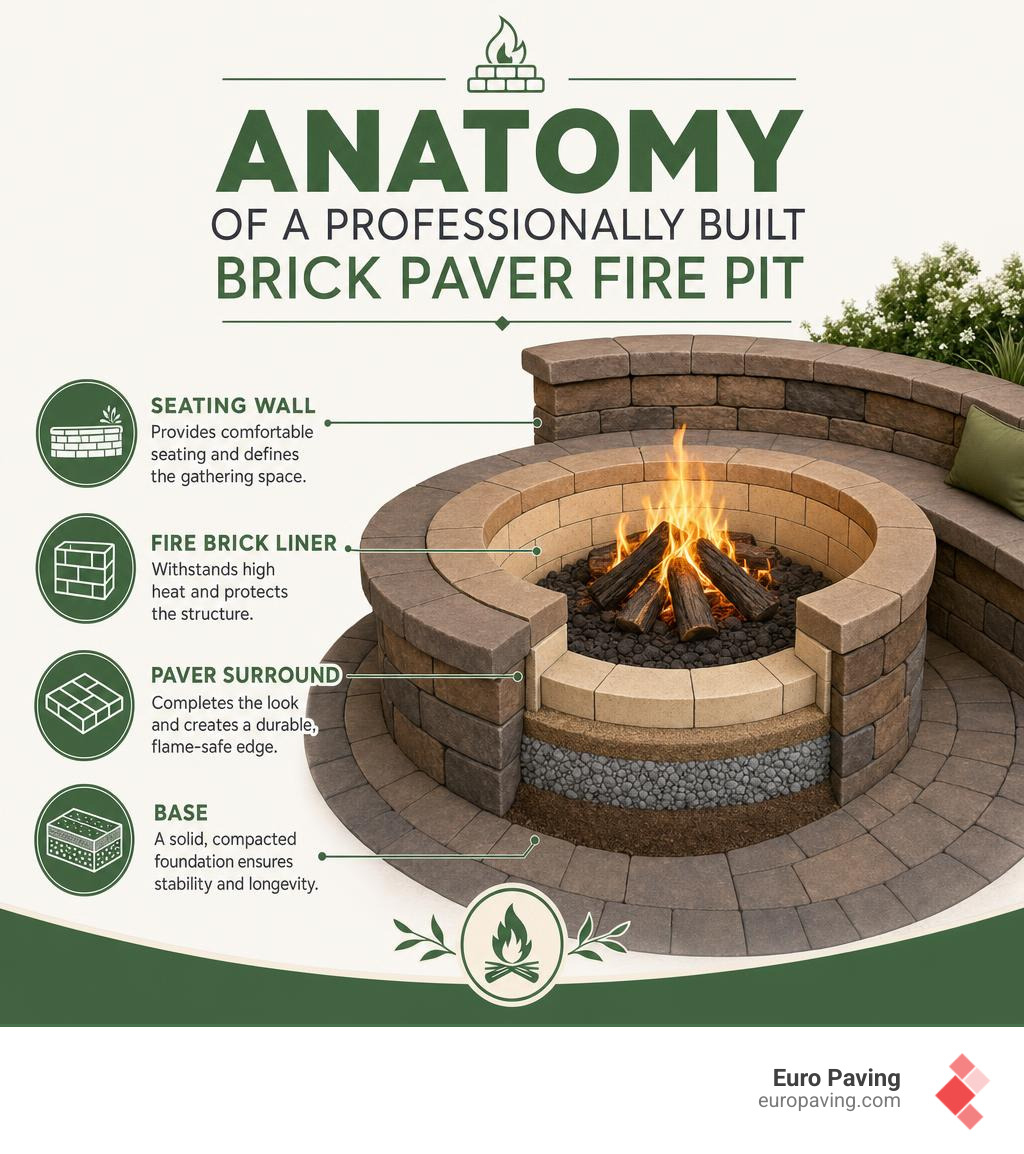
Simple brick paver fire pit ideas word guide:
Inspiring Brick Paver Fire Pit Ideas for Chicago Backyards
When exploring brick paver fire pit ideas, the first step is matching the design to your home’s architecture and your yard’s layout. A fire pit should never look like an afterthought; it should feel like a natural extension of your outdoor living area.
Circular Brick Paver Fire Pit Ideas with Seating Walls
There is a reason the classic round fire pit remains a favorite. It mimics the timeless campfire experience, allowing everyone to sit in an equal circle, share conversation, and toast marshmallows.
To elevate this design, we frequently pair circular fire pits with built-in curved seating walls. In communities like Hinsdale and Arlington Heights, homeowners love this approach because it provides permanent, maintenance-free seating while adding privacy and wind protection.
For visual inspiration on how a circular setup can anchor a backyard, you can browse our Euro Paving Custom Patio and Fire Pit Gallery. A great real-world example of this design in action is this Beautiful Unilock Brick Paver Patio with Fire Pit Paving Contractor Hinsdale IL, which showcases how seamlessly a circular fire feature integrates with structured seating.
If you are looking to combine overhead structures with your fire feature, you can also explore how a gazebo or pergola can frame the space, as seen in this project highlighting an Arlington Heights Gazebo, Patio and Firepit. For those in the northwest suburbs, check out these ideas for Barrington Custom Outdoor Fire Pits to see how different circular paver borders can define your fire pit zone.
Modern Square and Rectangular Brick Paver Fire Pit Ideas
If your home features clean, contemporary architecture, a square or rectangular fire pit is the perfect complement. These geometric layouts align beautifully with modern hardscaping trends, offering a sleek, minimalist aesthetic.
Rectangular fire pits are also highly functional. They can act as elegant dividers between different patio “rooms”—such as separating an outdoor dining area from a lounge space. When built with wide, flat stone ledges, the top of a square or rectangular fire pit can double as a convenient place to rest drinks or small plates when the fire is unlit. To see how these clean lines can transform a modern yard, take a look at The Hottest Custom Fire Pits for Your Outdoor Space and explore creative layouts with these 30 Stone Fire Pit Ideas – HGTV.
Selecting Premium Materials for Durability and Safety
Choosing the right materials is the single most important factor in ensuring your fire pit is both safe and durable. While a standard brick or concrete paver is excellent for a patio floor, direct exposure to open flames will quickly damage standard materials.
Why Professional Grade Materials Outlast DIY Kits
Many homeowners wonder why they cannot simply stack leftover patio blocks to make a fire pit. The answer lies in thermal expansion. When materials heat up, they expand. Regular concrete blocks, limestone, and sandstone hold moisture. When subjected to intense heat, the moisture inside these stones expands rapidly, causing them to crack, flake, or even violently pop (spall).
To prevent this, a professionally built fire pit utilizes a double-walled construction method:
- The Interior Liner: The inner core must be lined with specialized clay fire bricks (refractory bricks) joined with refractory mortar, or protected by a heavy-gauge steel fire ring insert. This absorbs the brunt of the heat and protects the outer stone.
- The Exterior Wall: High-quality concrete pavers (like Unilock) or volcanic stones like granite are used for the visible exterior. Granite is highly dense and handles temperature shifts naturally, making it an excellent choice for outdoor hardscaping.
- The Base and Fill: Clean crushed gravel is used for drainage. Never use pea gravel or river rocks inside the combustion chamber, as these smooth stones trap moisture and can explode when heated.
For a deeper dive into choosing safe components, read A Complete Guide to Safe and Stylish Brick Fire Pits.
If you love a vintage, weathered look, you can also incorporate reclaimed materials. For example, check out how Old Bricks Turned This Empty Backyard Corner Into a Fire Pit That Looks Decades Old to see how historical charm meets modern outdoor design. For those interested in the raw material supply process, you can learn more about sourcing at DIY Fire Pits – Menoni & Mocogni.
Key Planning, Safety, and Placement Guidelines
Before we break ground on any project in Cook County or DuPage County, we carefully evaluate safety clearances and local municipal codes. A fire pit is a beautiful addition, but only when installed with strict adherence to safety guidelines.
| Feature | Wood-Burning Fire Pits | Gas/Propane Fire Pits |
|---|---|---|
| Minimum Setback | 10–25 feet from structures | 5–10 feet from structures |
| Overhead Clearance | 10 feet (no branches or awnings) | 8–10 feet (requires proper venting) |
| Interior Material | Fire brick or heavy steel liner | Fire-rated media (lava rock, fire glass) |
| Best For | Traditional campfire feel, high heat | Instant ignition, smoke-free convenience |
Professional Placement and Installation Standards
When we design and install a custom brick paver fire pit, we follow a rigorous, proven process to ensure structural integrity:
- 3D Design Planning: We map out the entire space digitally to ensure perfect scale and flow before any excavation begins.
- Excavation & Base Prep: We excavate 6 to 8 inches of soil to create a stable foundation. Dirt is highly unpredictable, so a compacted crushed gravel base is essential to prevent settling and ensure proper water drainage.
- Leveling and Laying: We establish a perfectly level paver sand layer. The first ring of blocks is carefully leveled, as any minor tilt will compound as the walls go up.
- Securing the Structure: Exterior blocks are secured using high-strength, heat-resistant concrete adhesive.
- Finishing Touches: We apply polymeric sand to lock the surrounding patio pavers in place and prevent weed growth, followed by a high-temperature sealer to protect the stone from soot and ash.
For professional assistance in the western suburbs, you can explore Outdoor Firepit & Fireplace Services Downers Grove. If you are located in the northern suburbs, check out our guide on Brick Paver Installation in Lake Forest, IL | Patio & Hardscape to see how we handle site preparation and permitting for high-end residential properties.
Integrating Your Fire Pit with a Custom Patio Design
The most successful brick paver fire pit ideas treat the fire pit as one zone within a larger, cohesive outdoor living space.

When we design a custom patio, we often integrate the fire pit area with other outdoor features:
- Outdoor Kitchens & Grills: Position your fire pit far enough from your cooking station to prevent smoke overlap, but close enough to allow guests to drift easily between the chef and the fire.
- Multi-Level Patios: Placing your fire pit on a slightly lower tier or a secondary terrace creates an intimate, cozy “destination” zone away from the main dining area.
- Lush Landscaping: Framing your paver fire pit pad with ornamental grasses, boxwoods, or perennials adds a natural sense of privacy and softens the hardscape edges.
To discover how to lay out these zones, read our guide on Lay It on Me: 25 Stunning Brick Patio Designs for Your Backyard. For homeowners working with specific budgets, you can find inspiration in Stunning Brick Patio Ideas for Every Budget. You can also gather professional layout concepts from these 61 Fire Pit Landscaping Ideas Our Designers Love – Yardzen.
Frequently Asked Questions about Brick Paver Fire Pits
What is the ideal size and depth for a custom fire pit?
For a comfortable gathering of 2 to 6 people, the ideal interior diameter is 3 to 4.5 feet (36 to 54 inches). This size allows for a robust, warm fire while keeping guests close enough to converse without shouting.
The ideal depth/height is about 1 foot (12 inches) to 18 inches above the patio surface. This height allows those sitting around the pit to easily see both the dancing flames and each other, while also serving as a comfortable footrest. Keep all patio furniture legs at least 6 to 7 feet away from the outer edge of the fire pit for safe movement.
Do I need a permit for a permanent brick fire pit in the Chicago area?
Yes, most municipalities in the Chicago area—including Elmhurst, Mount Prospect, and Norridge—have specific building codes and fire ordinances regarding permanent outdoor fire features. Some villages restrict wood-burning pits entirely but allow natural gas or propane systems. Others require specific setbacks from property lines, fences, and dwellings.
Because we work daily in these communities, we provide full permitting support and ensure your design meets every local municipal code.
How do you maintain and protect a brick paver fire pit over time?
To keep your fire pit looking like new:
- Keep it Clean: Regularly scoop out ash (for wood-burning pits) once they have completely cooled. Wet ash becomes highly acidic and can etch concrete pavers over time.
- Protect the Joints: Ensure the polymeric sand between the surrounding pavers remains intact to keep weeds and ants out.
- Seal the Exterior: Apply a high-temperature resistant sealer to the exterior stonework every 3 to 5 years to protect against soot, food spills, and harsh Chicago winter freeze-thaw cycles.
- Winterize: If you have a gas fire pit, turn off the gas line, clear any debris from the burner, and use a heavy-duty, waterproof cover to protect the media and burner assembly during the snowy winter months.
Conclusion
A custom brick paver fire pit is more than just a home improvement project; it is an investment in your lifestyle. By selecting premium, heat-safe materials, planning for proper safety clearances, and integrating the feature into a beautifully designed patio, you create a warm, inviting retreat that your family will enjoy for decades.
As a certified Unilock authorized contractor, Euro Paving specializes in bringing these custom backyard dreams to life across Chicago and the surrounding suburbs. Ready to start planning your perfect outdoor retreat? Contact Euro Paving for your next brick patio project today, and let’s build a better glow together.