



Paving Materials Supplier in Chicago, Illinois
Choosing the wrong materials for a Chicago paving project is an expensive mistake. A paver rated for mild climates scales and flakes after two winters. Base material that doesn’t drain properly holds water, freezes, and heaves the surface above it. Sealer applied to the wrong product type traps moisture instead of shedding it. In Chicago’s climate, material selection isn’t a secondary decision — it’s what determines whether a paved surface lasts five years or fifty. This page covers paving material supply for Chicago homeowners, contractors, and property managers. Each section explains a specific material category, who needs it, and what to look for when specifying materials for a Chicago-area project. When you’re ready to discuss your project, get in touch for a consultation.
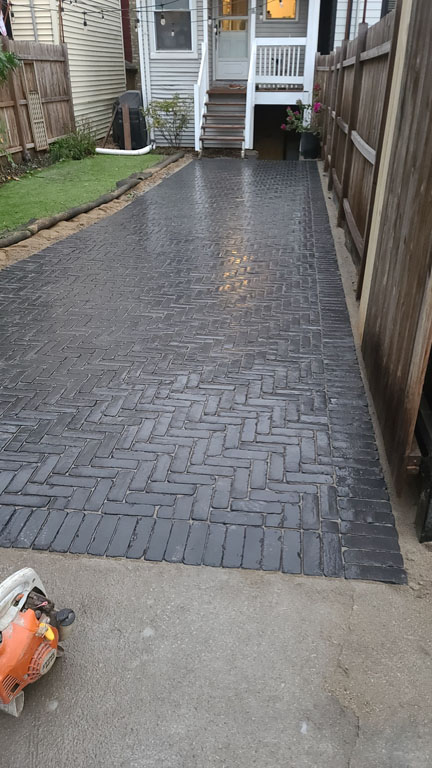
Premium Brick Pavers in Chicago
Not all brick pavers are manufactured the same way. The differences that matter in Chicago — freeze-thaw resistance, surface hardness, dimensional consistency, and color stability — vary significantly between product lines and manufacturers. A paver that performs well in a mild climate can scale, crack, and lose its finish after a few Chicago winters if it wasn’t engineered for freeze-thaw cycling.
Premium brick pavers are manufactured to tight dimensional tolerances and tested specifically for cold-climate performance. The concrete mix is denser. The compressive strength is higher. The water absorption rate is lower — which is what matters most in a freeze-thaw climate. Water that can’t penetrate the paver surface can’t freeze inside it and break it apart.
Color is integrated through the full thickness of the unit, not applied as a surface coating. That means the color stays consistent as the surface wears over decades rather than fading to a different tone as the top layer abrades away.
Lifetime material guarantees on premium paver lines aren’t marketing language — they reflect the manufacturer’s confidence in the product’s performance under documented conditions. When a contractor supplies materials through an authorized channel, that guarantee stays intact. When materials are sourced through a discount supplier outside the authorized network, it often doesn’t.
Homeowners and contractors sourcing pavers for high-visibility projects in Hinsdale and Burr Ridge consistently specify premium paver lines. The performance ratings are documented. The color and profile selections are consistent across production runs. And the material quantities needed for a full project can be confirmed before installation begins.
Concrete & Stone Paver Supply in Chicago
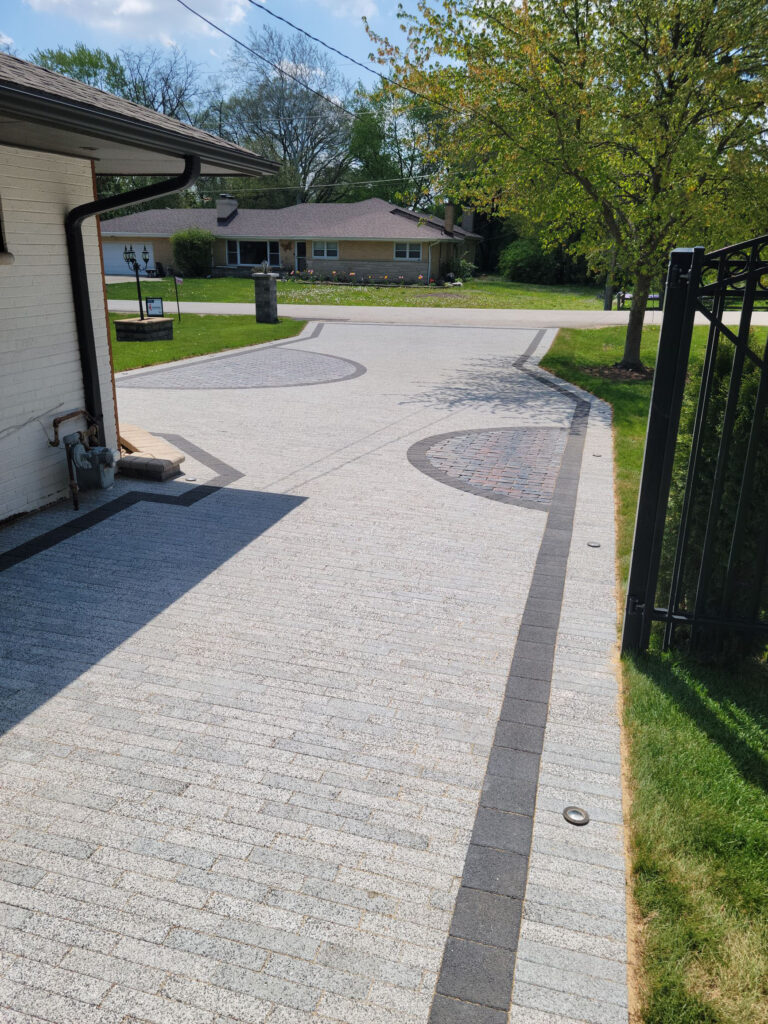
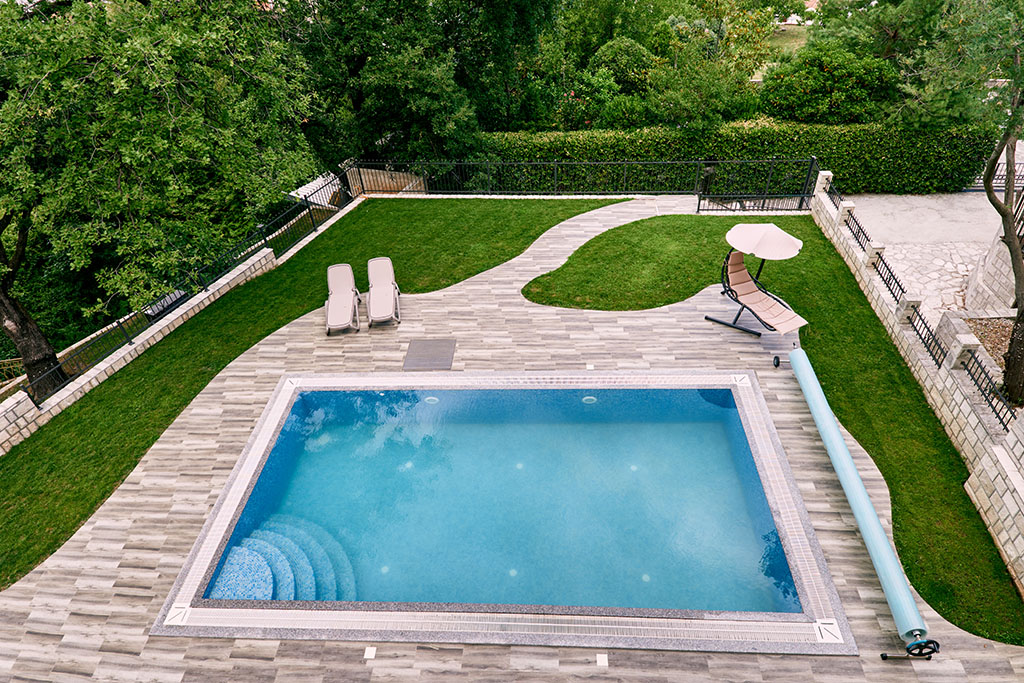
Concrete pavers and natural stone cover a wide range of applications — from standard residential driveway units to large-format patio slabs, pool surrounds, and commercial entry plazas. The right product depends on the project’s load requirements, the design intent, and how much maintenance the owner is prepared to do over the life of the surface.
Concrete pavers are manufactured in consistent dimensions and a broad range of profiles. Standard rectangular units in running bond or herringbone are the most common for driveways and walkways. Large-format concrete slabs — 24 by 24 inches and larger — are increasingly popular for contemporary patio designs where clean lines and minimal joint spacing are the goal. Tumbled finishes give a more informal, aged appearance suited to traditional landscape styles.
Natural stone supply includes bluestone, limestone, and granite in cut and irregular formats. Bluestone is the most common choice for Chicago-area patios and walkways — it’s dense, slip-resistant, and holds up well through freeze-thaw cycling when properly sealed. Limestone is softer and more porous — it requires more maintenance and careful sealer selection in cold climates. Granite is the most durable natural stone option and the most resistant to surface wear and freeze-thaw damage.
Material selection for a large project involves more than picking a product. Units need to be ordered in the right quantities with allowance for cuts and waste. Lead times vary by product and season — premium lines in popular colors can run several weeks out during peak spring and summer ordering season.
Large hardscape projects across Elmhurst, Wheaton, and Naperville regularly require coordinated supply of concrete pavers and natural stone across multiple surface areas in a single project scope. Getting all materials confirmed and on order before installation begins keeps the project on schedule.
Ready to start your project? Contact us for a free estimate on any paving project in Chicago or the surrounding suburbs.
Driveway and Patio Paving Materials in Chicago
Homeowners planning a driveway or patio project often start with a visual preference — a color, a pattern, a finish they’ve seen on a neighbor’s property or in a design gallery. That’s a fine starting point. But the material that looks right also needs to perform right for the specific application it’s going into.
Driveway paving materials carry vehicle loads. That means the units need to be rated for vehicular traffic — typically 3 1/8 inches thick for standard passenger vehicle driveways, thicker for heavier loads. Patio materials carry foot traffic and furniture loads. They can be thinner and are selected more for appearance, texture, and slip resistance than structural capacity.
Both driveway and patio materials need to be matched to the base system underneath. A paver set in sand over a compacted gravel base performs differently than a paver set in mortar over a concrete slab. The material spec and the installation method have to be designed together — not selected independently and combined later.
Drainage affects material selection too. A paver with tight joints and low permeability needs the grade to be set so water runs off the surface. A permeable paver system with open joints allows water to pass through the surface into the base — which changes both the base specification and the joint filler material.
North Shore homeowners replacing aging concrete driveways and deteriorated decks are actively sourcing paver and slab materials before selecting a contractor. In this market, material choice drives contractor selection. Knowing what you want — and why it’s right for your application — puts you in a stronger position when evaluating bids.
Retaining Wall Blocks & Stones in Chicago
Retaining wall material selection is a structural decision as much as an aesthetic one. The block profile, the wall height, the soil conditions behind the wall, and the drainage system all interact. Choosing the wrong block for the application produces a wall that looks right on day one and starts failing within a few seasons.
Segmental concrete retaining wall systems are the most common choice for residential and commercial applications in Chicago. These are engineered block systems — each manufacturer specifies the maximum wall height, the required setback per course, and the geogrid reinforcement requirements for walls above a certain height. Following the manufacturer’s engineering specifications isn’t optional. It’s what keeps the wall standing.
Smaller decorative garden wall block is a different product category from structural retaining wall block. Decorative units are designed for low walls — typically under 24 to 36 inches — where the primary function is visual definition rather than soil retention. Using decorative block for a structural retaining application is a common mistake that leads to wall failure.
Natural stone retaining walls — dry-stacked fieldstone or cut limestone — have a different character than manufactured block. They’re more labor-intensive to build but produce a wall that looks established and permanent in naturalistic landscape settings. Dry-stack stone walls require careful selection of unit size and shape to produce a stable, interlocking structure without mortar.
Sloped lots across Norridge, Park Ridge, and Des Plaines generate consistent demand for retaining wall block as homeowners manage grade changes between driveways, yard areas, and neighboring properties. Material quantities are calculated based on wall face dimensions, block profile, and base course depth — get those numbers confirmed before ordering.
Bulk Sand, Gravel, & Sealer Supply in Chicago
The base and bedding materials under a paved surface are invisible once the job is done. That makes them easy to underspecify or substitute with whatever is cheapest and most available. It also makes them the most common source of paving failures that show up two or three years after installation.
Bedding sand for paver installation needs to be washed concrete sand — clean, angular, and consistently graded. Bedding sand that contains silt or clay fines compacts unevenly, holds moisture, and allows the pavers above it to shift and settle at different rates. The surface looks fine at installation and starts showing dips and unlevel areas within a season or two.
Gravel base material needs to be clean, angular crushed stone — not rounded river gravel. Angular stone locks together when compacted and stays locked. Rounded stone compacts less effectively and can shift under load. Base depth depends on the application — a pedestrian patio needs less base depth than a vehicular driveway, which needs less than a commercial parking area.
Sealer selection depends on the surface material. Penetrating sealers are the right choice for natural stone — they protect without changing the surface appearance or creating a film that can peel or trap moisture. Film-forming sealers work on concrete pavers — they protect the joint sand, enhance color, and create a surface barrier against staining. Applying the wrong sealer type to the wrong material produces problems — peeling, whitening, or moisture trapping — that require full removal to fix.
Contractors working across Cook and DuPage County consolidate bulk base material and sealer procurement as part of larger project supply orders. It reduces sourcing lead time, keeps project schedules on track, and ensures material consistency across the full job site rather than mixing products from multiple suppliers.
Frequently Asked Questions
The two key specs are compressive strength and water absorption rate. Higher compressive strength means the unit resists cracking under load and freeze-thaw stress. Lower water absorption means less water enters the unit — and less water inside the unit means less freeze-thaw expansion damage. Look for pavers that meet or exceed ASTM C936 standards for interlocking concrete pavers, which include freeze-thaw durability testing.
Measure the square footage of the area to be paved. Add 5 to 10 percent for cuts and waste on standard rectangular patterns. Add 10 to 15 percent for diagonal or herringbone patterns, which generate more cut waste at the edges. Order a consistent batch — pavers from different production runs can vary slightly in color and dimension, which shows in the finished surface.
Yes. Some homeowners source materials independently and hire a contractor for labor only. The risk is material compatibility — if the paver spec, base spec, and installation method aren’t coordinated, problems can emerge that are difficult to assign responsibility for. A contractor who supplies the materials takes full responsibility for the finished result. Split procurement splits that accountability.
Regular joint sand is plain washed sand swept into paver joints. It stabilizes pavers but washes out over time, allowing weed growth and joint erosion. Polymeric sand contains binding agents that activate with water and harden the joint. It resists washout, resists weed germination, and stabilizes the surface more effectively. Polymeric sand is the right choice for most paver installations — regular sand is a cost-cutting substitution that requires more ongoing maintenance.
Film-forming sealers on concrete pavers typically need reapplication every two to three years, depending on traffic and UV exposure. Penetrating sealers on natural stone last three to five years before reapplication. The indicator is water behavior — when water no longer beads on the surface and instead absorbs into the material, the sealer has depleted and reapplication is due.
Yes. A standard pedestrian patio typically requires four to six inches of compacted gravel base. A residential driveway requires six to eight inches minimum. A commercial parking area or surface carrying heavy vehicle loads requires eight inches or more, sometimes with additional sub-base preparation depending on soil conditions. Base depth is determined by load — undersizing the base for the application is the most common cause of premature paving failure.
GET A FREE ESTIMATE
Material selection sets the foundation for everything that follows. Getting it right before installation begins is far less expensive than correcting it afterward.
We supply paving materials and provide installation services across Chicago and the surrounding suburbs — including Hinsdale, Burr Ridge, Elmhurst, Wheaton, Naperville, Norridge, Park Ridge, Des Plaines, and the broader Cook and DuPage County areas.
Call us: (773) 988-2353 Email: contact@europaving.com Address: 2210 W Chicago Ave, Chicago, IL 60622
Hours: Monday – Friday: 9:00 AM – 6:30 PM Saturday – Sunday: Closed
Call during business hours or reach out online at europaving.com. We’ll discuss your project, walk you through material options, and help you source the right products for the application.
No guesswork. No substitutions. Just the right materials for a Chicago project built to last.