



Parking Lot Asphalt Installation in Chicago — Built for Heavy Use, Built to Last
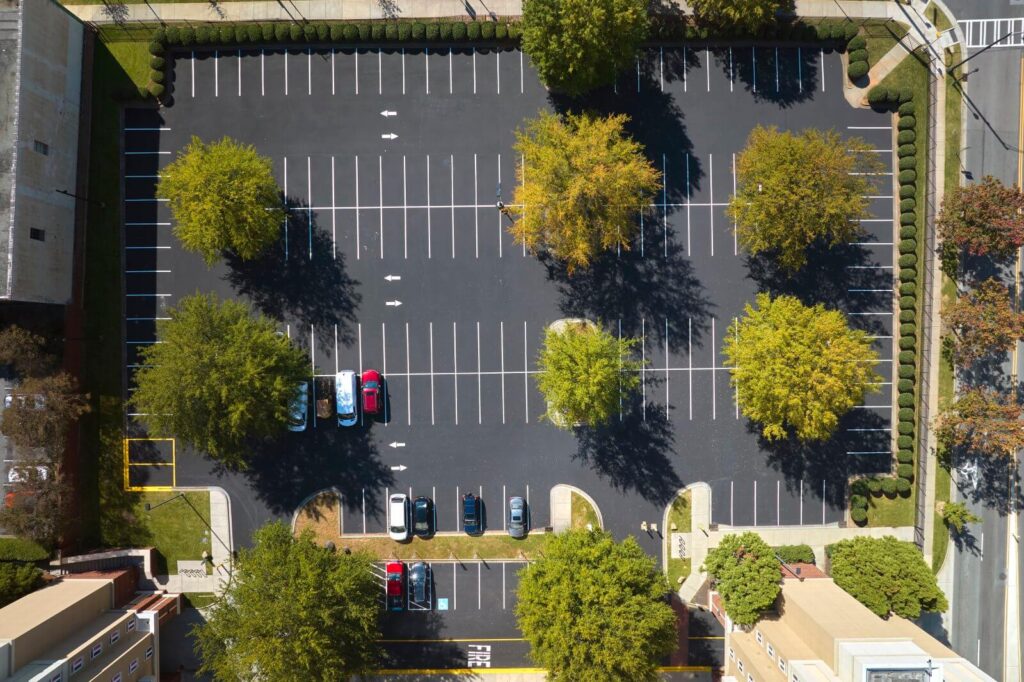
A parking lot works hard. Every day it takes vehicle traffic, weather, road salt, and freeze-thaw cycles without a break. In Chicago, that punishment is more intense than most cities. A lot built to minimum specs here doesn’t last minimum years — it fails early, costs more to maintain, and eventually needs full replacement far sooner than it should.
Parking lot asphalt installation in Chicago requires the right base depth, the right layer count, proper drainage design, and a crew that knows what Chicago winters do to asphalt. Euro Paving has been installing commercial and residential parking lots across Chicago since 2006. We’re licensed, bonded, insured, and experienced with projects of every size — from small multi-unit residential lots to large commercial properties. Free on-site assessments, transparent specs, and a project timeline discussed upfront before any work begins.
Licensed, Bonded, and Insured Is the Baseline — Not a Bonus
Before you discuss specs, timelines, or anything else with a paving contractor, ask for three documents: proof of license, a certificate of general liability insurance, and proof of workers’ compensation coverage. Any legitimate contractor hands these over without hesitation. If there’s a pause, keep looking.
This isn’t bureaucratic box-checking. It directly protects you.
Licensed means the contractor is registered with the state of Illinois and meets minimum competency requirements. It also means there’s a license number you can verify — the Illinois Department of Professional Regulation maintains a public lookup. An unlicensed contractor has no accountability trail.
Bonded means a surety bond is in place. If the contractor takes your deposit and disappears, or fails to complete the job, the bond provides a financial remedy. Without it, your only option is civil court.
Insured — specifically general liability plus workers’ compensation — means that if a crew member is injured on your property, or if equipment damages your building or adjacent structures, their insurance covers it. Without workers’ comp, an injured worker can file a claim directly against your property. In Cook County, that exposure is real and the legal costs are significant.
Illinois requires commercial paving contractors to carry both. Ask for the certificates, check the expiration dates, and confirm the coverage amounts are appropriate for the project size. For larger commercial lots in Chicago, ask specifically about the per-occurrence and aggregate limits on general liability.
Euro Paving is fully licensed, bonded, and insured. We provide all documentation before any contract is signed — no request needed.
Layer Count and Base Depth Determine How Long Your Chicago Parking Lot Lasts
When you’re comparing bids for a parking lot, the number that matters most isn’t the total price — it’s the specs underneath it. Two bids can look similar on paper and describe completely different jobs. The difference is almost always in the base depth and the asphalt layer count.
A properly built Chicago commercial parking lot has two distinct asphalt layers installed over a compacted aggregate base:
The binder course is the structural layer — typically 2 to 2.5 inches of coarser asphalt mix that distributes load across the base. It handles the weight. This layer is not optional on a commercial lot, but some contractors skip it to cut cost.
The surface course is the wear layer — typically 1.5 inches of finer asphalt mix that provides the smooth, durable finished surface. This is what you see and drive on.
Below both asphalt layers sits the compacted aggregate base. This is where most cheap jobs cut corners.
Spec guide for Chicago lots:
- Light-traffic lots (small retail, multi-unit residential): 2.5–3″ asphalt over 6–8″ compacted base
- Standard commercial lots (office, retail, mixed-use): 3–4″ asphalt over 8–10″ compacted base
- Heavy-traffic lots (delivery vehicles, trucks, buses): 4″+ asphalt over 10–12″ compacted base or more
In neighborhoods like Norridge and Elmhurst, many commercial properties sit on clay-heavy subgrade. Clay shifts seasonally — it expands when wet, contracts when dry, and moves more dramatically in freeze-thaw cycles than gravel or sandy soil. A base that might be adequate in a milder climate needs to be deeper and more thoroughly compacted here to stay stable.
If a bid doesn’t specify layer thickness and base depth in writing, ask for it. If the contractor can’t or won’t provide those numbers, that’s the answer.
Ready to start your project? Contact us for a free estimate on any paving project in Chicago or the surrounding suburbs.
A Chicago Parking Lot Installation Follows a Specific Build Sequence
Understanding what a proper installation looks like from start to finish helps you plan around the work — and recognize if a crew is cutting steps.
Here’s the full sequence for a new parking lot installation:
Step 1: Site assessment Before any equipment arrives, the site is evaluated. Subgrade soil type, existing drainage patterns, load requirements based on expected vehicle types, and any utility conflicts are all mapped out. This is where the base depth spec and drainage plan are determined.
Step 2: Demolition and removal If there’s an existing surface — old asphalt, concrete, gravel — it’s broken up, removed, and hauled off-site. The area is cleared down to subgrade.
Step 3: Subgrade grading and compaction The native soil is graded to the planned drainage slope and compacted. Soft spots are identified and addressed — either with additional compaction, subgrade stabilization, or replacement with engineered fill. Skipping this step is the most common cause of early lot failure.
Step 4: Aggregate base installation and compaction Crushed stone or gravel base material is installed in lifts and compacted with a roller to achieve the specified density. Each lift is compacted before the next is added. Depth is matched to the traffic load spec from Step 1.
Step 5: Binder course installation The first asphalt layer — coarser mix, structural function — is laid and compacted. Joints and transitions are detailed carefully here, as they’re the most common points of future cracking.
Step 6: Surface course installation The finish layer — finer mix, wear surface — is laid over the binder course and compacted to a smooth, uniform finish.
Step 7: Edge work, transitions, and line striping Edges are detailed, transitions to adjacent surfaces are finished, and line striping is applied once the surface has cured sufficiently. ADA-compliant stall layouts and accessible route markings are completed at this stage.
Most commercial lots in Chicago are best scheduled between May and September. The paving window closes when consistent overnight temperatures drop below 40°F — and Chicago falls come fast. Early booking avoids end-of-season delays and gives your lot a full summer to begin curing before the first hard freeze.
Proper Drainage Design Is What Separates a 10-Year Lot From a 30-Year Lot
You can build a parking lot to perfect spec — right base depth, right layer count, quality asphalt mix — and still have it fail in ten years if the drainage is wrong. Water is the primary enemy of asphalt in Chicago, and drainage design is how you keep water moving off the surface and away from the base.
Here’s what happens without it: water sits on the surface, finds every small crack, works its way down to the base, and freezes. Frozen water expands with enough force to fracture the asphalt above it and displace the base below it. Do that forty times in a Chicago winter and you have a failing lot.
The basic drainage requirements for a Chicago commercial lot:
- Minimum surface slope of 1–2% away from buildings, loading areas, and toward designated drain points. Flat lots hold water. Even a slight grade makes a significant difference.
- Catch basins or trench drains positioned at low points to collect and route runoff away from the lot. Size and placement are calculated based on lot square footage and expected rainfall volume.
- Perimeter grading to prevent water from adjacent surfaces — lawns, neighboring lots, building runoff — from flowing onto the paved area and saturating the base.
In Des Plaines and Lemont, flat commercial sites are common. Without deliberate drainage engineering, these lots develop standing water problems within the first few seasons. The water doesn’t drain — it sits, works into the base, and starts the deterioration process early. We’ve assessed lots in these areas that failed at eight years when they should have lasted twenty-five, entirely due to drainage design that was ignored at installation.
The drainage plan is mapped before any base work begins. It’s not an afterthought — it’s one of the first things we determine in the site assessment.
The Maintenance Steps That Keep a Chicago Parking Lot Out of Early Replacement

A well-built lot doesn’t maintain itself. The good news is that routine maintenance is simple, inexpensive relative to replacement, and has a compounding effect — a lot that’s maintained consistently performs dramatically better over its full lifespan than one that isn’t.
Chicago’s conditions make maintenance here more important than in most markets. Road salt is corrosive to asphalt binders. UV oxidation in summer dries the surface out. Freeze-thaw cycles stress every small crack all winter. Each of these factors accelerates wear on an unprotected or neglected surface.
The maintenance schedule for a Chicago commercial lot:
Year 1: Let the new asphalt cure fully. No sealcoating for the first 6–12 months — fresh asphalt needs to off-gas and harden before a sealer is applied. Applying too early traps oils in the surface and softens it.
Years 1–3: Apply the first sealcoat after full cure. This is the most important maintenance application — it closes off surface pores, blocks water infiltration, and slows oxidation from the start.
Ongoing — every 3–5 years: Reseal the surface. The exact interval depends on traffic volume, sun exposure, and how much road salt the lot absorbs each winter. High-traffic Chicago lots often need resealing closer to every 3 years.
Each spring: Walk the lot and fill any new cracks before they widen. A crack that’s ¼ inch wide in April is ½ inch wide by November. Fill it while it’s still a straightforward repair.
Annually: Inspect catch basins and drainage channels for blockages. Clear debris from edges and low spots. Check for signs of surface oxidation or edge deterioration that need attention before the next winter.
As needed: Pothole patching, line restriping as markings fade, and catch basin repair or replacement.
Euro Paving offers sealcoating and crack filling as standalone maintenance services. If your lot was installed in the last few years and hasn’t been sealed yet, or if it’s been more than five years since the last sealcoat, contact us to schedule an assessment.
Frequently Asked Questions
Ask the contractor directly for their state license number and certificates of insurance. You can verify an Illinois contractor’s license through the Illinois Department of Professional Regulation’s public database. Certificates of insurance should show current coverage dates and appropriate limits — don’t accept verbal assurances. Euro Paving provides all documentation before any contract is signed.
Most commercial lots are completed in two to five days depending on size, site prep requirements, and whether demolition of an existing surface is involved. Smaller lots may be done in one to two days. The full installation window runs May through October — asphalt requires consistent temperatures above 50°F for proper bonding and compaction.
Passenger vehicles can typically return within 24 to 48 hours. Heavy trucks, delivery vehicles, and dumpsters should stay off for five to seven days. The asphalt reaches full structural strength at 30 days — plan any heavy equipment use around that timeline. For businesses that can’t close entirely, we can discuss a phased schedule that keeps part of the lot accessible throughout the project.
Yes. Line striping is included as part of a full installation. We lay out ADA-compliant stall configurations and accessible route markings as part of the finishing work. Before we begin, confirm the specific ADA and municipal requirements with your local building department — Chicago and surrounding municipalities have specific standards for accessible parking stall count, dimensions, and signage that need to be incorporated into the design.
Yes, and it’s a common approach for retail properties, office buildings, and any business that can’t afford to close entirely during the project. We sequence the phases to maintain safe vehicle and pedestrian access throughout, complete each section before moving to the next, and plan transitions between phases so the finished lot ties together cleanly. Let us know during the assessment that you need a phased approach and we’ll build that into the project plan.
GET A FREE ESTIMATE
Euro Paving · 2210 W Chicago Ave, Chicago, IL 60622 · (773) 988-2353 · contact@europaving.com
Serving Chicago, Arlington Heights, Mount Prospect, Des Plaines, Park Ridge, Hinsdale, Burr Ridge, and surrounding suburbs.