



Masonry Contractor in Chicago, Illinois
Chicago puts outdoor masonry to the test every single year. Freeze-thaw cycles crack mortar joints and shift brick courses. Soil movement pushes retaining walls out of plumb. Decades of salt, moisture, and temperature swings wear down surfaces that were built to last a generation. When masonry fails in Chicago, it rarely fails slowly — a small problem in October becomes a structural issue by April. This page covers masonry contractor services for Chicago homeowners and commercial property owners. Read through each section to find what fits your project. When you’re ready, request a free estimate.
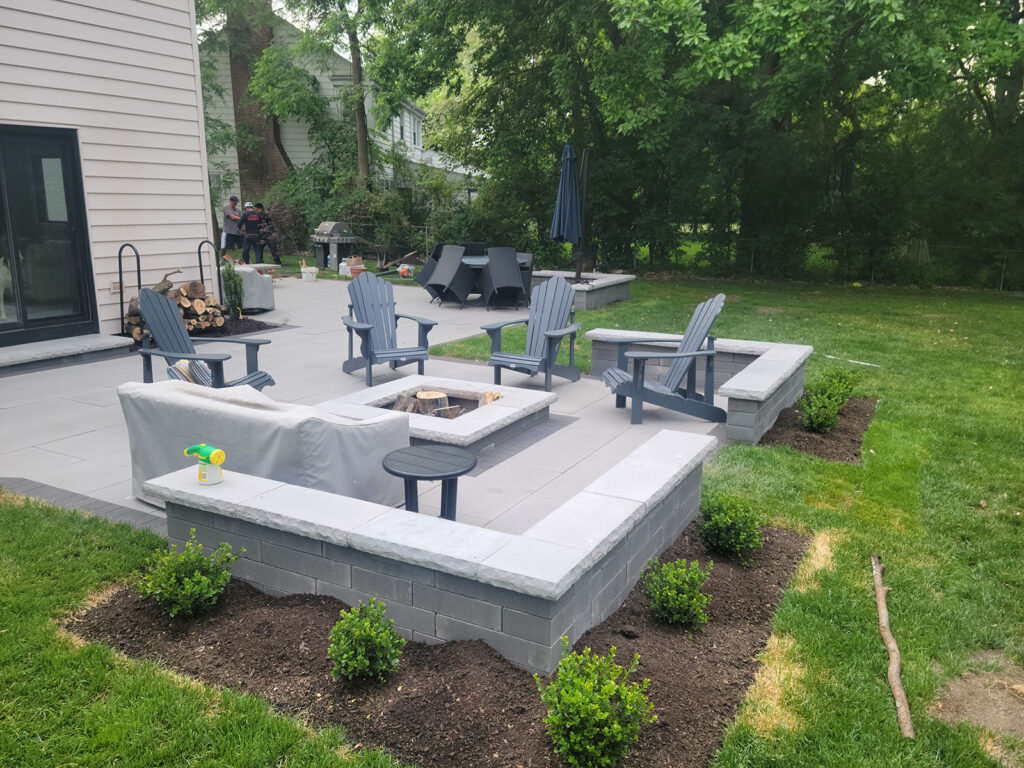
Brick Patios & Walkways in Chicago
A brick paver patio built on a proper base doesn’t crack, sink, or heave the way a poured concrete slab does. That’s the fundamental difference — and it matters enormously in Chicago’s climate.
Concrete slabs move as one piece. When the ground shifts underneath, the slab cracks across. Brick patios are made of individual units set in sand over a compacted gravel base. When the ground moves, the pavers move with it — and then get reset. No jackhammering, no full replacement. Just lift the affected pavers, re-level the base, reset, and done.
Installation starts with excavation and base preparation. The gravel base is compacted in layers to create a stable, load-bearing foundation. Pavers are set in bedding sand, laid to the chosen pattern — herringbone, running bond, or basket weave — and locked with polymeric joint filler. The finished surface handles foot traffic, furniture loads, and Chicago winters without deteriorating.
Homeowners in Beverly and Morgan Park — where larger lots support full outdoor builds — regularly combine brick patio installation with retaining wall and garden wall work under one contract. It keeps the project moving and the finished result cohesive.
Retaining Wall Construction & Repair in Chicago
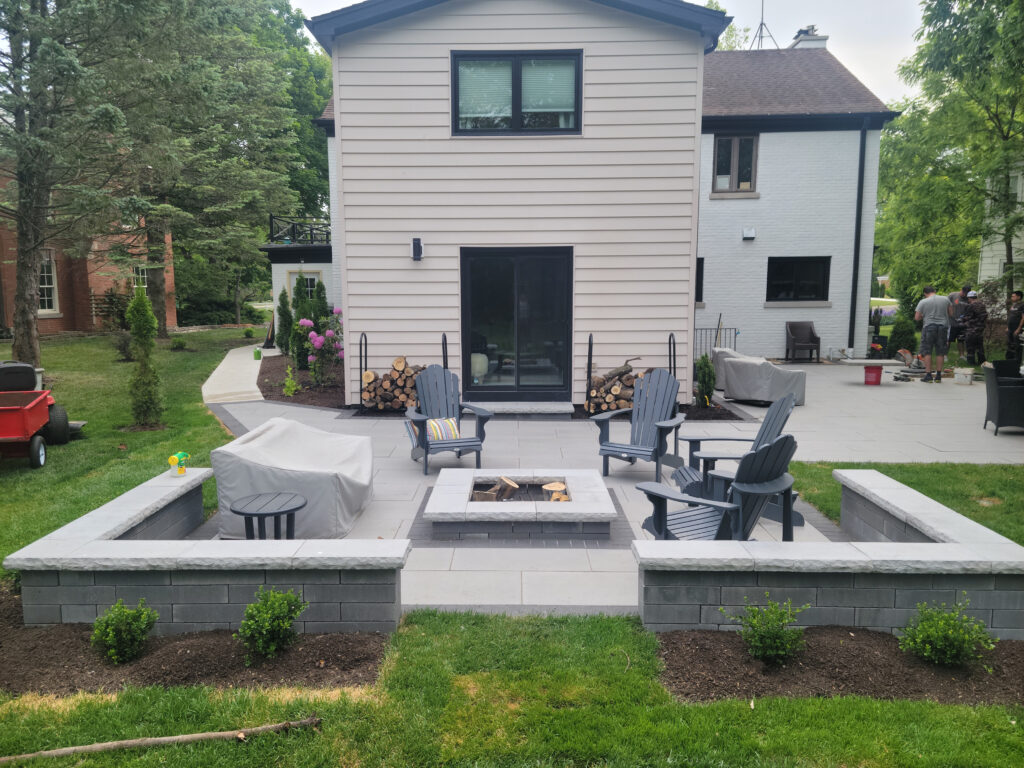
A retaining wall does one job: hold back soil. When it’s built correctly, it does that job for decades without shifting, cracking, or leaning. When it’s built wrong — shallow footing, no drainage, undersized materials — it starts failing within a few years and often takes the landscape with it.
Proper retaining wall construction in Chicago starts below the frost line. The footing needs to sit deep enough that freeze-thaw movement doesn’t push it. In Chicago, that means going down. A wall with a shallow footing will heave every winter and eventually tip forward or separate at the courses.
Drainage is the second critical element. Water builds up behind a retaining wall if there’s nowhere for it to go. That hydrostatic pressure pushes against the wall face constantly. Gravel backfill and drain tile behind the wall give water an exit path and take the pressure off the structure.
Repair work addresses walls that have already started failing — shifted courses, separated sections, leaning faces, or deteriorated mortar joints. In some cases the wall can be rebuilt in place. In others, the full structure comes out and gets rebuilt with proper footing and drainage from scratch.
Sloped lots across Chicago’s North Shore suburbs and the city’s far Northwest Side frequently need retaining walls to separate driveways, yard areas, and neighboring properties. Getting the footing and drainage right the first time is what determines whether the wall lasts 5 years or 50.
Ready to start your project? Contact us for a free estimate on any paving project in Chicago or the surrounding suburbs.
Sidewalk & Pathway Masonry in Chicago
Poured concrete sidewalks crack. Tree roots lift them. Freeze-thaw cycles heave them. Once a concrete panel fails, the whole panel needs to come out and get replaced. Brick and stone sidewalks don’t work that way.
Individual pavers move with the ground instead of cracking across it. When a section settles or lifts, a mason lifts the affected pavers, re-levels the base material underneath, and resets them. The repair is localized. The rest of the walk stays untouched. Over the life of the surface, that makes a real difference in maintenance time and cost.
Installation follows the same process as patio work — excavation, compacted gravel base, bedding sand, pavers set to pattern and locked with joint filler. The finished surface is slip-resistant, level, and drains properly when the grade is set correctly from the start.
In Chicago, property owners are responsible for the public sidewalk in front of their home or building. A heaved or cracked sidewalk is a liability and a potential city violation. Brick and stone sidewalks — properly built and maintained — hold up far longer than poured concrete replacements and eliminate the cycle of repeated panel repairs.
Historic neighborhoods like Pilsen and Bridgeport have a long tradition of brick and masonry construction. Homeowners in these areas often replace failing concrete sidewalks with brick to match the character of older homes and commercial storefronts on the same block.
Residential & Commercial Brick Projects in Chicago
Some masonry projects involve more than one surface. A patio, a retaining wall, and a front walkway. A commercial property with a decorative entry surround, brick edging along the parking area, and a low garden wall at the entrance. Managing those elements under one contract keeps the work moving and the result consistent.
Residential and commercial masonry scopes are different in important ways. Residential work focuses on aesthetics, outdoor living function, and long-term durability under normal foot traffic and weather exposure. Commercial work adds load requirements, code compliance, and scheduling around active business operations. Both require the same foundation — proper base work, correct drainage, and materials suited to Chicago’s climate.
Working with one contractor across a full project eliminates the coordination gaps that cause delays and inconsistencies. Materials are sourced together. Base work is sequenced correctly. One crew handles the project from excavation through cleanup.
Larger properties in Hinsdale and Burr Ridge regularly combine brick driveways, patios, retaining walls, and garden walls under one full masonry contract. It reduces mobilization cost, compresses the project timeline, and produces a finished exterior that looks planned rather than pieced together.
Stone and Brick Garden Walls in Chicago
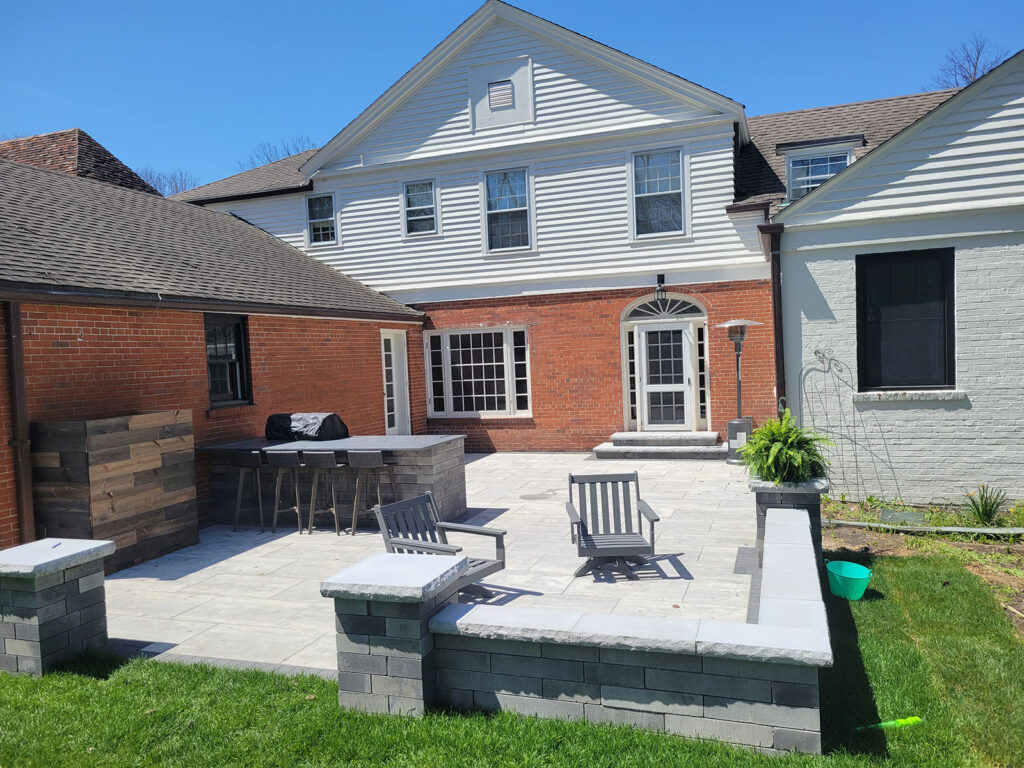
A garden wall does more than look good. It defines space, manages grade changes, contains planting beds, and adds physical structure to a yard that would otherwise feel open and unfinished.
Brick and stone garden walls are built on a proper footing — not just set on the surface of the ground. A wall without a footing will shift with frost and start leaning or separating within a few seasons. The footing anchors the structure below the zone where freeze-thaw movement happens. Above grade, courses are laid level and plumb, with mortar joints tooled for weather resistance.
Natural stone walls have a different character than brick — more informal, more textural, better suited to naturalistic landscapes. Brick walls are clean, geometric, and consistent. The choice depends on the property style and what the wall is connecting to. A mason who works with both materials can advise on which fits the project.
Homeowners in Ravenswood and Lincoln Square use brick and stone garden walls to define front yard spaces, frame raised planting beds, and add depth to properties with mature trees and established landscaping. A well-built garden wall in these neighborhoods lasts generations with minimal maintenance beyond occasional mortar repointing.
Decorative Brickwork & Edging in Chicago
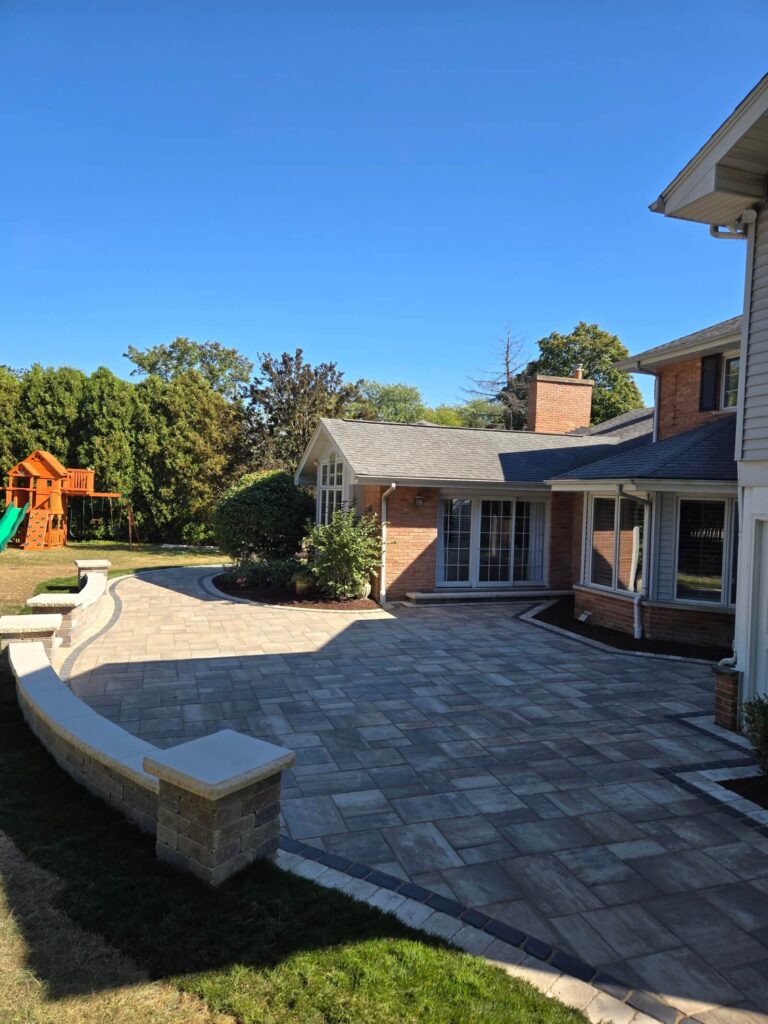
The difference between a finished masonry project and an unfinished one is often the edging. A driveway without a defined border looks like it stops where the contractor ran out of material. A patio without a perimeter course looks temporary. Brick edging and decorative borders are what give a project a complete, intentional appearance.
Brick edging defines the boundary between a paved surface and surrounding lawn, garden, or planting bed. It keeps mulch, gravel, and soil from migrating onto the paved area. It gives lawn care equipment a clean line to follow. And it locks the edge of the paved surface so individual pavers don’t migrate outward over time.
Edging can be set in a running course laid flat, a soldier course standing upright, or a diagonal sawtooth pattern for more visual interest. The pattern choice depends on the scale of the surface it’s bordering and the overall design of the project.
Decorative brickwork goes beyond edging — inlaid patterns within a patio field, contrasting border courses in a different color or size paver, or brick detailing around steps and entry features. These elements are detail-oriented work. They require precise cutting, consistent joint spacing, and a mason who takes the time to get it right.
Homeowners in Elmhurst and La Grange frequently add brick edging and decorative borders to existing driveways and patios as a standalone project. It’s one of the most visible upgrades you can make to an exterior — and one of the more straightforward masonry jobs when done by someone who knows what they’re doing.
Frequently Asked Questions
Brick and stone masonry built on a proper foundation lasts 50 years or more with basic maintenance. The most common failure points are mortar joint deterioration and footing issues — both preventable with correct installation and occasional repointing. The masonry units themselves rarely fail. The base and the mortar are what need attention over time.
The two most common causes are an inadequate footing and poor drainage. A shallow footing heaves with frost. A wall without drainage buildsup hydrostatic pressure behind the face and eventually tips or separates. Most retaining wall failures in Chicago trace back to one or both of these issues at the original installation.
Sometimes. If the concrete is structurally sound, flat, and at the right elevation, pavers can be set on top. If the concrete is cracked, heaved, or too high relative to the house or surrounding grade, it needs to come out first. A contractor needs to evaluate the existing slab before recommending either approach.
Minor leaning, separated mortar joints, and isolated shifted courses can usually be repaired. If the wall has moved significantly out of plumb, if multiple courses have separated, or if the footing has failed, full reconstruction is typically the right call. Patching a wall with a failed footing is a short-term fix — it will fail again.
Late spring through early fall is the ideal window — roughly May through October. Mortar requires temperatures above freezing to cure properly. Working in cold weather without proper protection produces weak joints that deteriorate quickly. Some masonry work can be done in cooler shoulder months with protective measures, but summer scheduling fills fast. Book early.
Sealing is optional but recommended. A quality paver sealer protects the surface from staining, slows efflorescence, and helps lock polymeric joint sand in place. It also enhances the color of the pavers. Reapplication every three to five years is typical. The pavers will perform without sealer — it’s a maintenance choice, not a structural requirement.
GET A FREE ESTIMATE
Good masonry work lasts decades. Poor masonry work fails fast — and costs more to fix than it would have to do correctly the first time.
We serve Chicago and the surrounding suburbs, including Hinsdale, Burr Ridge, Elmhurst, La Grange, Norridge, Beverly, Mount Prospect, Arlington Heights, and the broader Cook and DuPage County areas.
Call us: (773) 988-2353 Email: contact@europaving.com Address: 2210 W Chicago Ave, Chicago, IL 60622
Hours: Monday – Friday: 9:00 AM – 6:30 PM Saturday – Sunday: Closed
Call during business hours or request your estimate online at europaving.com. We’ll walk the project with you, assess what the work requires, and give you a straight answer on scope and next steps.
No pressure. No guesswork. Just honest masonry work built for Chicago.