



Planning and Designing a Brick Patio Garden for Your Backyard
Designing a brick patio garden requires more than dropping a few pavers onto flat ground and placing patio chairs on top. In suburban Chicago communities like Elmhurst, Hinsdale, and Arlington Heights, outdoor living spaces must balance aesthetic elegance with rigorous structural engineering to thrive through shifting seasonal weather.
When we evaluate a property during our site assessment, we analyze soil composition, natural water drainage, existing trees, and architectural sightlines. Whether your yard sits on high ground in Cook County or heavy clay in DuPage County, spatial planning determines how well your patio functions day to day. We carefully divide your footprint into functional zones—creating distinct areas for outdoor dining, fireside lounging, and integrated green space.
Using full-scale 3D paving design technology, we present custom visualizations before ground is ever broken. This allows homeowners to preview how their chosen paver finishes, seat walls, and garden borders match their house facade. To discover layout inspirations tailored to your yard, read The Best Brick Patio Garden Design for Your Backyard.
Selecting Brick Laying Patterns for Maximum Stability
The pattern you choose for your brick patio garden dictates both visual flow and structural integrity. Interlocking brick patterns distribute weight across individual pavers, resisting horizontal shifting under foot traffic or heavy garden furniture.
- Herringbone Pattern (45-degree or 90-degree): Considered the gold standard for brick paving, the herringbone weave locks pavers together horizontally and vertically. Interlocking edges distribute loads evenly, making it extremely durable against shifting. For deeper design insights on classic brick layouts, see this Herringbone Reclaimed Brick Patio Guide | Patterns and Design Ideas.
- Basketweave Pattern: Formed by alternating pairs of perpendicular bricks, basketweave creates a traditional, geometric look. It fits square or rectangular patio footprints beautifully while providing steady weight distribution.
- Running Bond / Stretcher Bond: Bricks are laid end-to-end with offset joints. While clean and modern, straight running bond offers slightly less cross-locking strength than herringbone, making precise perimeter edge restraint essential.
Selecting structural patterns like 45-degree herringbone often requires an extra 5% to 10% material allowance for custom perimeter cuts, ensuring a tight fit along borders.
Integrating Landscape Features into a Brick Patio Garden
A true brick patio garden seamlessly bridges hardscaping and plant life. Instead of separating your patio from your yard, we build structural elements that let nature weave directly through your hardscape:
- Raised Brick Flower Beds & Planters: Building raised planter boxes directly onto or alongside the patio perimeter raises plant roots above compacted base layers while creating comfortable seating edges. You can learn more about planter construction through How to Build a Brick Flower Bed – Mother Earth News.
- Retaining Walls & Seat Walls: Low stone retaining walls manage sloped yards in Mount Prospect or Norridge while offering permanent overflow seating for outdoor gatherings.
- Fire Pits & Outdoor Kitchens: Integrating stone fire features or full outdoor kitchen counters turns a passive garden area into an active year-round entertaining hub.
- Pergolas & Curved Paving Paths: Framing your patio with a cedar pergola or extending brick paths toward specialized landscape features—like a Build a Circular Brick Patio—adds architectural depth and functional shade.
Professional Base Preparation for Long-Term Durability
The longevity of any brick patio depends almost entirely on what lies underneath the visible surface. In Northern Illinois, winter frost depth can penetrate deep into the ground, causing unanchored paver surfaces to heave, shift, and collect standing water. Professional site excavation and sub-base preparation prevent these issues before the first brick is set.
Sub-Base Excavation and Soil Compaction Standards
Professional hardscaping standards require excavating 6 to 10 inches below final ground level, expanding the perimeter 6 inches beyond the final patio edge for total structural support.
- Soil Stripping: We remove all topsoil, organic debris, and clay down to firm subsoil across the entire excavation footprint.
- Drainage Pitch Calculations: We establish a precise slope of 1/4-inch drop per linear foot pointing away from home foundations, guiding rainwater safely into surrounding lawn beds.
- Geotextile Fabric Lining: A heavy-duty woven geotextile fabric lines the subgrade soil, preventing native clay from mixing into the clean aggregate stone base over time.
- Aggregate Compaction: We spread 4 to 8 inches of crushed aggregate stone (CA-6 aggregate) in 2-inch to 3-inch lifts, running high-tonnage mechanical plate compactors over every layer until density reaches 98% Standard Proctor compaction.
This rigorous process ensures your hardscape remains flat and solid through harsh Midwest freeze-thaw cycles in cities like Elmhurst and Hinsdale.
Sand Setting Beds and Edging Restraints
Once the stone base is locked in place, we apply a precise 1-inch layer of coarse, washed bedding sand using screed rails. This setting bed provides a flat, cushion layer for paver placement without allowing surface settling.
To keep pavers locked tightly together, heavy-duty commercial edge restraints are spiked directly into the stone sub-base using steel timber spikes along all borders. Finally, high-performance polymeric joint sand is swept across all joints and activated with water. Polymeric sand hardens to form a durable flexible bond, preventing weed growth, ant burrowing, and joint washout during heavy storms.
Choosing High-Performance Materials: Reclaimed Bricks vs. Unilock Pavers
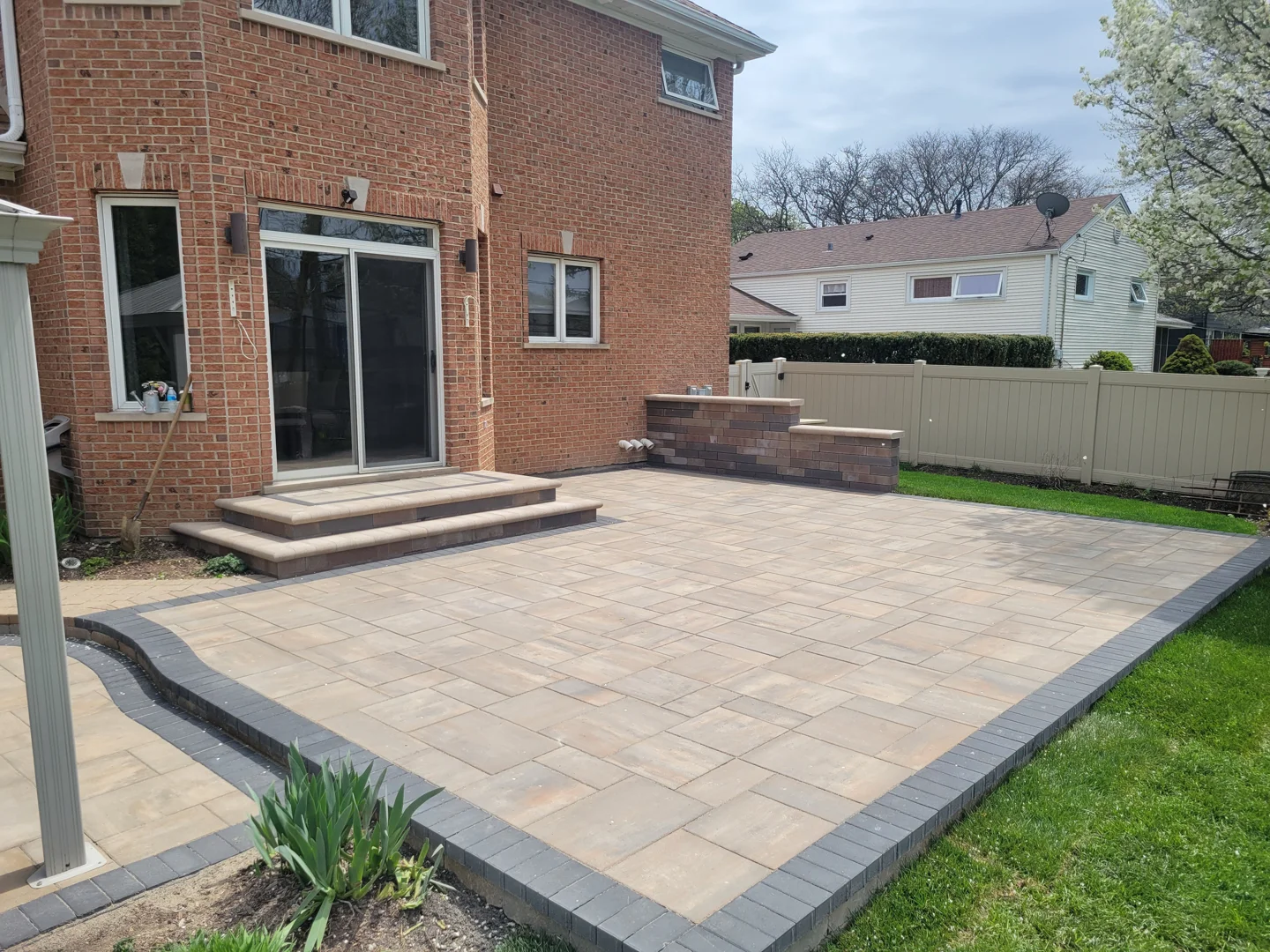
Choosing the right material shapes both the aesthetic character and long-term maintenance needs of your garden patio. Many homeowners admire the historical warmth of weathered clay, while others prefer the engineered strength and color permanence of modern concrete pavers. Discover design possibilities by visiting Transform Your Backyard with a Stunning Brick Paver Patio.
| Feature / Property | Historic Reclaimed Clay Bricks | Premium Unilock Engineered Pavers |
|---|---|---|
| Primary Material | Fired natural clay | High-density architectural concrete & quartz aggregate |
| Dimensional Uniformity | Variable (requires hand sorting and wider joints) | Precise machine dimensions for crisp, tight alignment |
| Freeze-Thaw Durability | Moderate (prone to spalling if soft historic bricks are chosen) | Superior (engineered with EnduraColor™ for severe freeze-thaw cycles) |
| Color Fastness | Natural clay color throughout | Fade-resistant surface protection options |
| Warranty Coverage | None (salvaged materials sold as-is) | Lifetime Material Guarantee through Unilock |
| Installation Speed | Slower (requires custom trimming and sizing adjustments) | Faster, precision interlock installation |
As a certified Unilock Authorized Contractor, we frequently install high-performance pavers engineered specifically for cold northern climates. Unilock products offer rich surface textures mimicking natural stone and weathered brick while delivering multi-generational durability backed by a transferable lifetime material guarantee. For authentic historic transformations, read about this real-world story on Backyard Before and After: A New Patio Made of Old Brick – This Old House.
Commercial and Residential Brick Patio Garden Applications
Hardscaping solutions must adapt to different foot traffic demands and structural loads depending on the property:
- Residential Outdoor Living Spaces: Patios in suburban settings like Arlington Heights and Mount Prospect prioritize cozy aesthetic appeal, seamless indoor-outdoor transitions, built-in lighting, and family-friendly outdoor dining layouts.
- Commercial Courtyards & Plaza Paving: Commercial projects in Cook County and DuPage County—such as retail plazas, dining courtyards, and office walkways—demand heavy-duty paver thickness, high load ratings, and total ADA accessibility compliance.
Explore custom installation options in our complete Brick Patio Ideas and Installation in Chicago Guide.
Customizing Colors, Borders, and Finishes
Personalizing your hardscape border finishes lifts a basic paving project into an architectural feature.
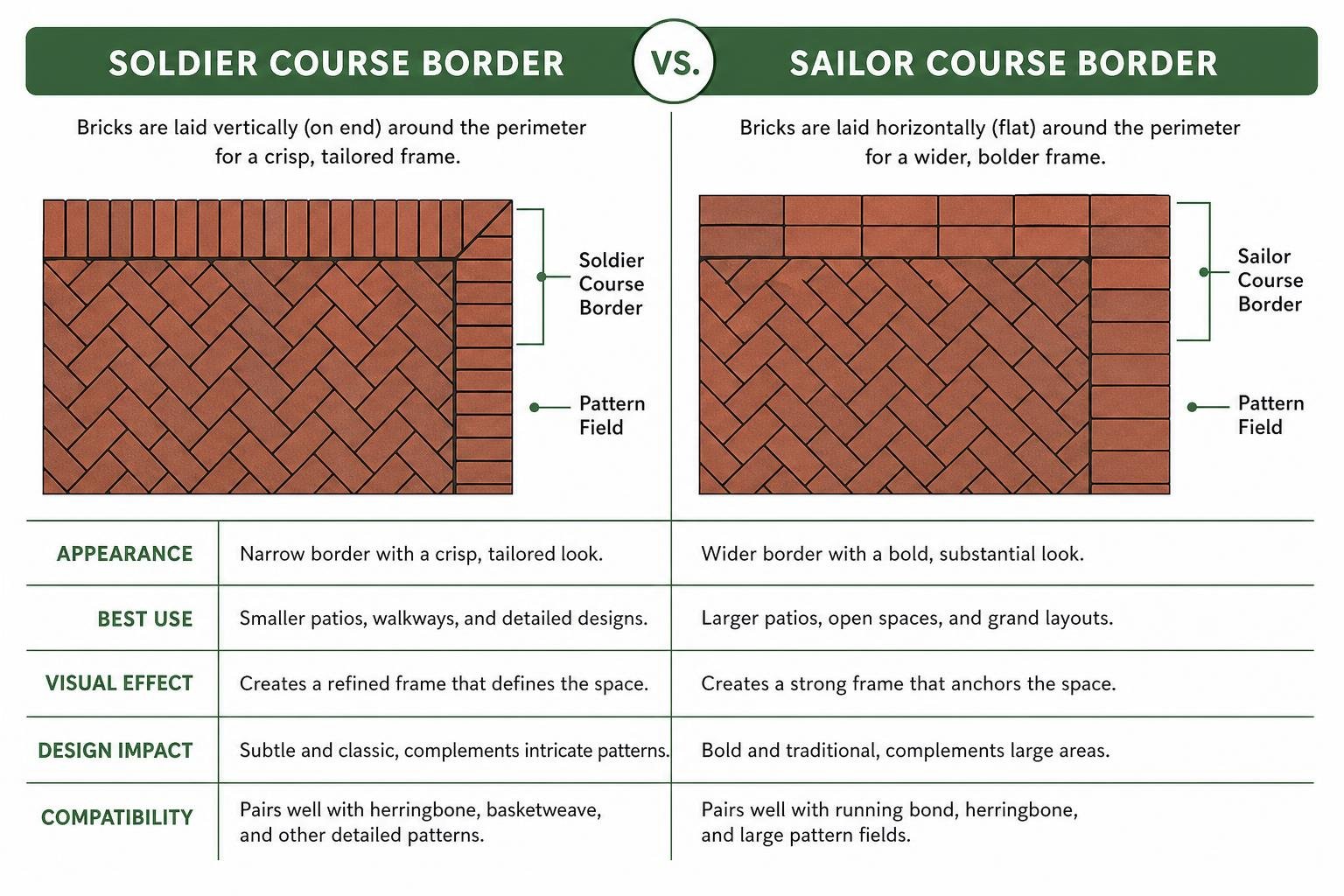
- Soldier Course Borders: Bricks are laid vertically end-to-end around the patio perimeter, framing herringbone or basketweave pattern fields with a crisp, tailored border.
- Sailor Course Borders: Bricks are placed side-by-side horizontally, creating a wider, bolder frame around larger outdoor living spaces.
- Color Selection: Matching warm red brick tones with historic craftsman homes, or opting for modern charcoal, gray, and buff tones, ensures your new hardscaping naturally complements your property’s exterior.
Find color palette inspiration for your property by exploring Brick Patio Floor Inspiration for Your Dream Backyard.
Professional Installation vs. DIY Pitfalls for Brick Patios
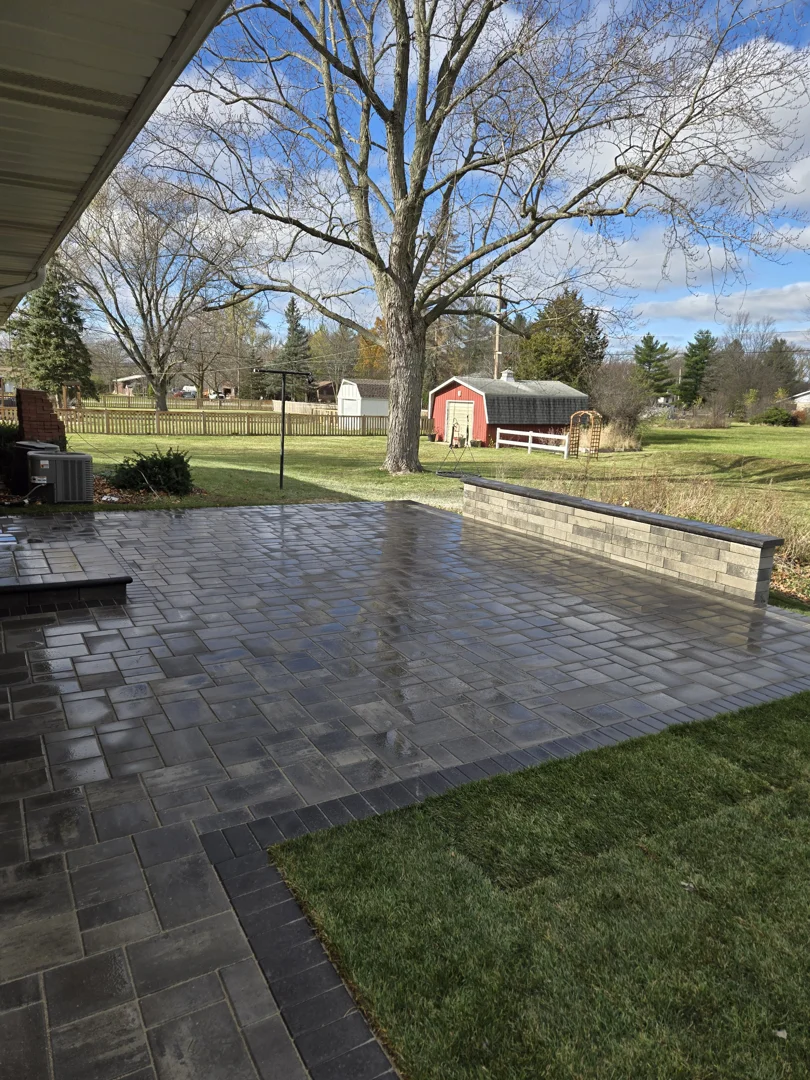
Building a brick patio garden might sound like a rewarding weekend project, but hardscaping in the Chicago suburbs presents technical challenges that quickly overwhelm manual labor. Moving several tons of crushed stone, excavating heavy clay soil, and making hundreds of precise diamond-blade cuts requires heavy commercial equipment and specialized engineering knowledge.
Common pitfalls seen in uncertified installations include:
- Inadequate Soil Excavation: Failing to dig deep enough leads to shallow base layers that crumble and sag under weight within two years.
- Improper Slope Pitch: Skipping drainage calculations causes water to pool against home foundations, leading to basement water intrusion and cracked masonry.
- Uneven Base Leveling: Irregular sand base preparation creates tripping hazards, uneven joints, and loose, rocking pavers.
- Inadequate Edge Restraints: Without commercial edge restraints anchored into deep aggregate stone, patio borders spread outward over time, opening wide gaps between pavers.
To see how professional installation eliminates these risks and elevates your backyard layout, view our portfolio of Custom Brick Patios, Outdoor Kitchens & Backyard Paving Ideas. Learn more about professional dry-laid installation techniques through How To Lay an Appealing Brick Patio – This Old House.
Review detailed product options like ROCHESTER Barrington™ 60mm Paver Bricks 3-Piece … to explore versatile paver choices available for custom designs.
Frequently Asked Questions About Brick Patio Gardens
How long does a professionally installed brick patio last in the Chicago area?
When built on a compacted aggregate sub-base with heavy-duty edge restraints and high-performance jointing sand, a professionally installed paver patio lasts 30 to 50 years or more. Premium Unilock concrete pavers include a transferable lifetime material guarantee, ensuring your investment stands firm against severe freeze-thaw cycles.
What routine maintenance is required to preserve a paver patio’s appearance?
Routine maintenance is simple and straightforward:
- Sweep away leaf litter and organic debris periodically to prevent natural surface staining.
- Rinse the surface with a standard garden hose or low-pressure washer each spring.
- Inspect joint sand every 3 to 5 years, topping off polymeric joint sand as needed.
- Apply a breathable masonry paver sealer every 3 years to enhance color vibrancy and protect against oil or grease spills.
Can an outdoor kitchen or fire pit be added to an existing brick patio design?
Yes. Outdoor fire pits, seat walls, and outdoor kitchens can easily be integrated into custom designs. However, heavier masonry features like outdoor kitchens require reinforced concrete sub-footings placed during base construction to handle structural weight safely without settling.
Conclusion
A custom brick patio garden offers an ideal blend of architectural beauty, outdoor comfort, and lasting home value. By combining precise site engineering, proper sub-base compaction, and premium materials, your backyard can become a seamless outdoor oasis where your family makes memories for decades to come.
At Euro Paving, we bring nearly 20 years of hardscaping experience to residential and commercial projects across Chicago, Elmhurst, Hinsdale, Mount Prospect, Norridge, Arlington Heights, Cook County, and DuPage County. As a certified Unilock Authorized Contractor, we handle every stage of your project with complete precision—from full 3D paving design and spatial visualization to final site installation backed by lifetime material guarantees.
Whether you want to build a cozy garden patio with a fire pit, transform an old concrete slab, or design an expansive outdoor kitchen, our team is ready to bring your vision to life. Transform Your Outdoor Space with Euro Paving and schedule a consultation with our experts today.