



Decorative Brickwork & Edging in Chicago — Sharp Borders, Lasting Curb Appeal
The difference between a good-looking property and a great-looking one is often in the details. Clean brick borders along a driveway. A defined edge where the patio meets the lawn. A finished transition from walkway to garden bed that looks intentional rather than incidental. In Chicago, decorative brickwork and edging in Chicago is one of the most effective — and most overlooked — ways to sharpen the look of an outdoor space without a full hardscaping overhaul.
Euro Paving has been installing decorative brick borders, accent inlays, and edging details across Chicago since 2006. We’re a Unilock authorized contractor, licensed and insured, and we offer 3D design planning so you can see exactly what your property will look like before a single brick is set. Free estimates available — most projects are completed in one to two days.
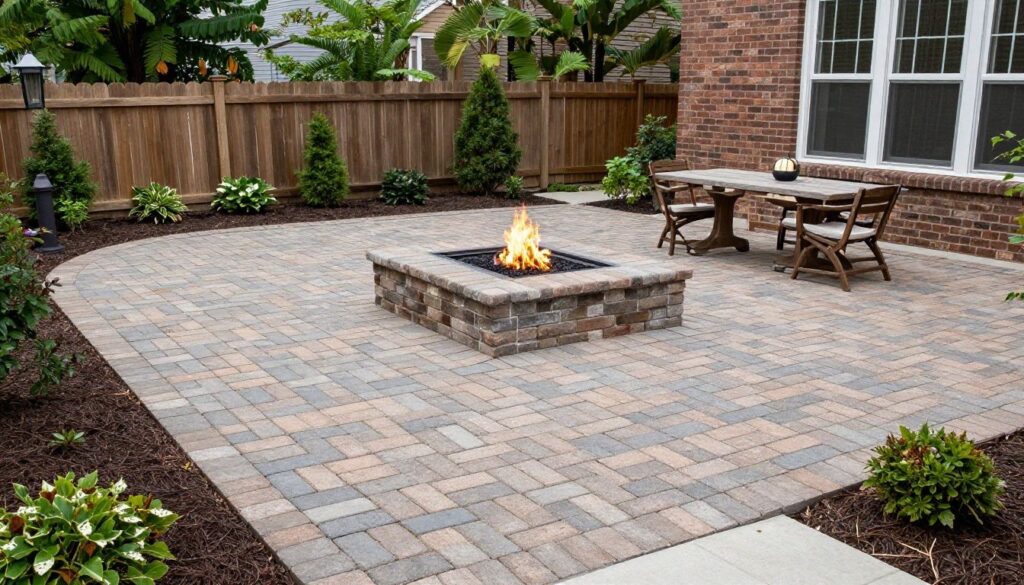
Decorative Brickwork Defines Outdoor Spaces and Lifts Property Value
Decorative brick edging does two jobs at once. It makes your property look better, and it makes your outdoor surfaces perform better. Those two things aren’t always connected — but with brick edging, they are.
Functionally, a brick border defines the edge of a surface and holds it in place. Asphalt and concrete edges chip and crumble over time without containment. Mulch and gravel migrate out of planting beds. Lawn grass creeps into driveway edges. A brick border stops all of that. It acts as a physical boundary that keeps every surface where it’s supposed to be.
Aesthetically, brick edging creates the clean transitions that make an outdoor space look finished. A driveway without a defined edge looks like it just ends. The same driveway with a soldier course brick border looks designed — like someone thought carefully about how the property should present itself. That perception matters at appraisal and at resale.
For property value, finished, intentional outdoor spaces consistently improve perceived value. Buyers and appraisers notice the details. A well-edged driveway, a bordered patio, a defined entry path — these signal that the property has been maintained and cared for. In Chicago’s competitive real estate market, that signal has real weight.
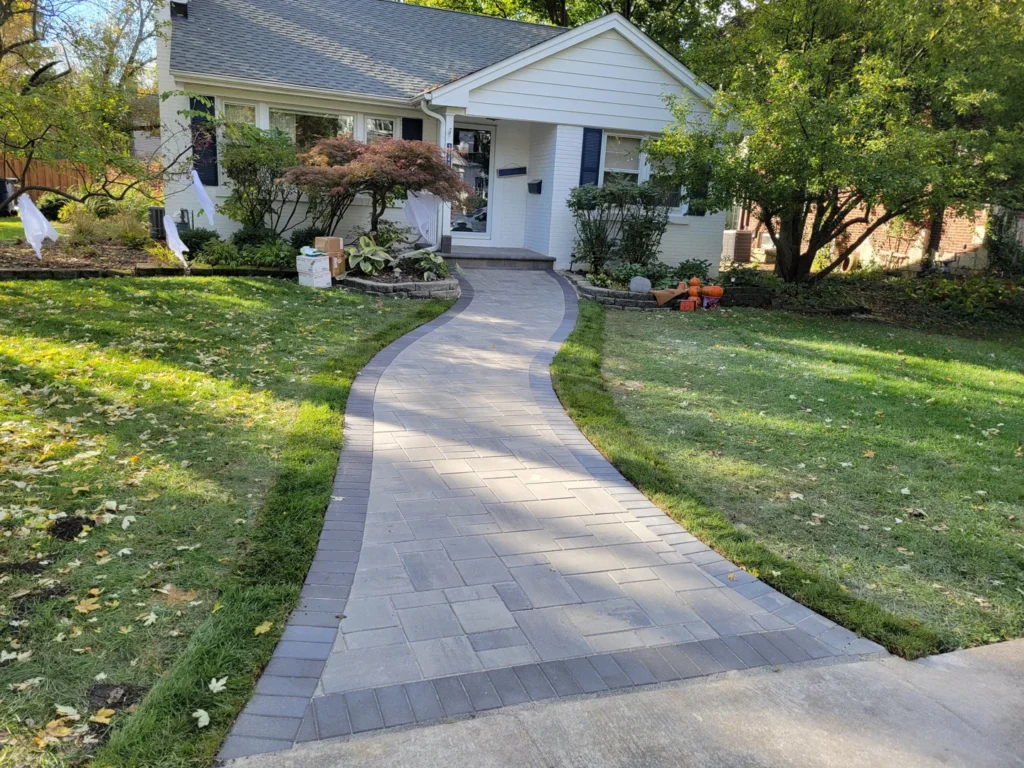
Chicago’s architectural stock makes decorative edging particularly effective here. Bungalows, two-flats, and brick-front homes have strong visual character built in. Brick edging that complements the home’s existing materials — matching mortar tone, echoing the facade brick color — ties the outdoor space to the house in a way that feels cohesive rather than added on.
Chicago Properties Work Best With These Brick Edging Styles and Applications
Decorative brickwork isn’t one thing. The style, pattern, and placement all vary based on what you’re framing, how formal you want the look, and what the existing surfaces are doing. Here’s a breakdown of what’s available and where each works best:
Soldier course edging
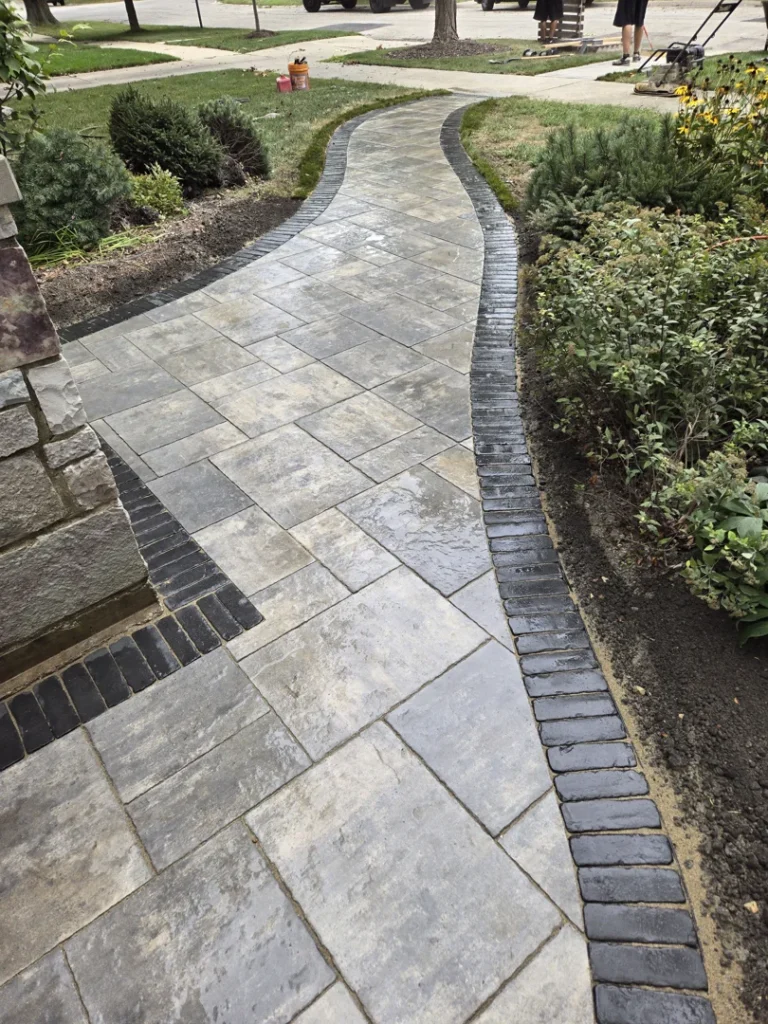
The most classic application. Bricks are set vertically or at a slight angle in a single row along the edge of a driveway, walkway, or patio. It’s clean, simple, and works with almost any architectural style. In Chicago neighborhoods with traditional brick homes, a soldier course in a complementary color reads as part of the original design.
Basket weave and herringbone borders
A patterned strip — two to four bricks wide — that frames the perimeter of a patio or walkway. The pattern adds visual texture and a sense of craft without overwhelming the main surface. Works best on larger patios where there’s enough field area to let the border read as a deliberate frame.
Accent inlays
A contrasting brick color or material woven into an existing surface as a decorative band. Common on long driveways as a break across the width, or as a threshold detail at a garage or entry. The contrast draws the eye and adds detail without changing the main surface material.
Garden bed edging
A low brick border — typically one or two courses high — that separates planting beds from lawn or paved surfaces. Cleaner than plastic edging, more durable than wood, and significantly better looking than either. Keeps mulch contained and gives the garden a structured, maintained appearance.
Entry path borders
Brick edging that frames a front walkway from the street to the front door. One of the highest-impact applications for curb appeal — the entry path is the first thing visitors and buyers see, and a defined border makes it feel welcoming and finished.
In Hinsdale and Burr Ridge, where lot sizes allow for more elaborate outdoor designs, curved edging, multi-row borders, and full patio surround treatments are popular. Larger properties give the design more room to breathe — and more surface area where a well-placed border makes a strong visual statement.
All edging styles are available in Unilock pavers and other premium materials.
Ready to start your project? Contact us for a free estimate on any paving project in Chicago or the surrounding suburbs.
The Right Brick Material Handles Chicago Winters Without Cracking or Shifting
Material selection isn’t just about appearance. In Chicago, it’s about survival. A brick edging installation that looks beautiful in September needs to look just as good in April — after five months of freeze-thaw cycles, road salt, and ground movement. The wrong material won’t make it.
Here’s what happens when material choice goes wrong: brick with a high water absorption rate takes on moisture during Chicago’s wet fall and early winter. When temperatures drop, that trapped moisture freezes inside the brick. Water expands by roughly 9% when it freezes. That expansion happens inside the material — cracking it from within. After two or three winters of that, the brick is spalling, flaking, and falling apart.
Materials that hold up in Chicago:
Concrete pavers — Unilock and similar premium brands
The most reliable choice for Chicago freeze-thaw conditions. Engineered with low water absorption rates and tested specifically for freeze-thaw cycling. Consistent sizing makes for tight, stable joints. Available in a wide range of colors, textures, and profiles that work with any design direction.
Natural stone — bluestone, limestone, granite
Extremely durable in cold climates when properly installed. Dense and low-absorption by nature. Higher visual character than concrete pavers — each piece is unique. Bluestone is a particularly strong performer in Chicago winters and works beautifully as an edging accent alongside both brick and asphalt surfaces.
Freeze-thaw rated clay brick
The traditional look, and it works — but only when the brick carries a freeze-thaw rating. Standard red clay brick without that certification is the most common material failure we see in Chicago edging work. It looks correct initially and then begins spalling after the second or third winter. When specifying clay brick, the freeze-thaw rating is non-negotiable.
Base preparation matters as much as material choice. Even a freeze-thaw rated brick set on an inadequate base will heave and shift when the ground freezes. Proper base excavation, compaction, and drainage slope are what keep edging units locked in place through Chicago winters — material and installation have to work together.
Decorative Brick Edging Can Be Added to an Existing Patio or Driveway
You don’t need a new driveway or a new patio to get decorative brick edging. It can be retrofit onto almost any existing surface — asphalt, concrete, existing brick — with no full tearout required and minimal disruption to your property.
This is one of the most common projects we do in Chicago. A homeowner has a concrete driveway that’s structurally sound but visually plain. Or an asphalt driveway with ragged, crumbling edges that need definition. Or an older brick patio that would look significantly better with a clean border treatment. In all three cases, a retrofit edging installation solves the problem without the cost or disruption of replacing the entire surface.
How retrofit edging installation works:
The edge of the existing surface is saw-cut or trenched to create a clean, defined channel alongside the paving. This step requires professional equipment — a concrete or asphalt saw — and precise control to keep the cut straight and the existing surface intact.
The channel is excavated to the correct depth for the base prep and edging unit height. A compacted aggregate base is set in the channel, graded for drainage, and compacted. The edging units are set on the base, locked into position, and joints are filled and compacted.
The transition between the existing surface and the new edging is finished cleanly — no gaps, no lips, no height mismatch that creates a trip hazard or water trap. The finished result looks like the edging was always part of the original design.
In Park Ridge and Elmhurst, retrofit brick edging on older concrete driveways is one of our most requested residential projects. Homeowners get a dramatically improved look without touching a driveway that still has years of functional life left in it.
Most retrofit edging installations complete in a single day.
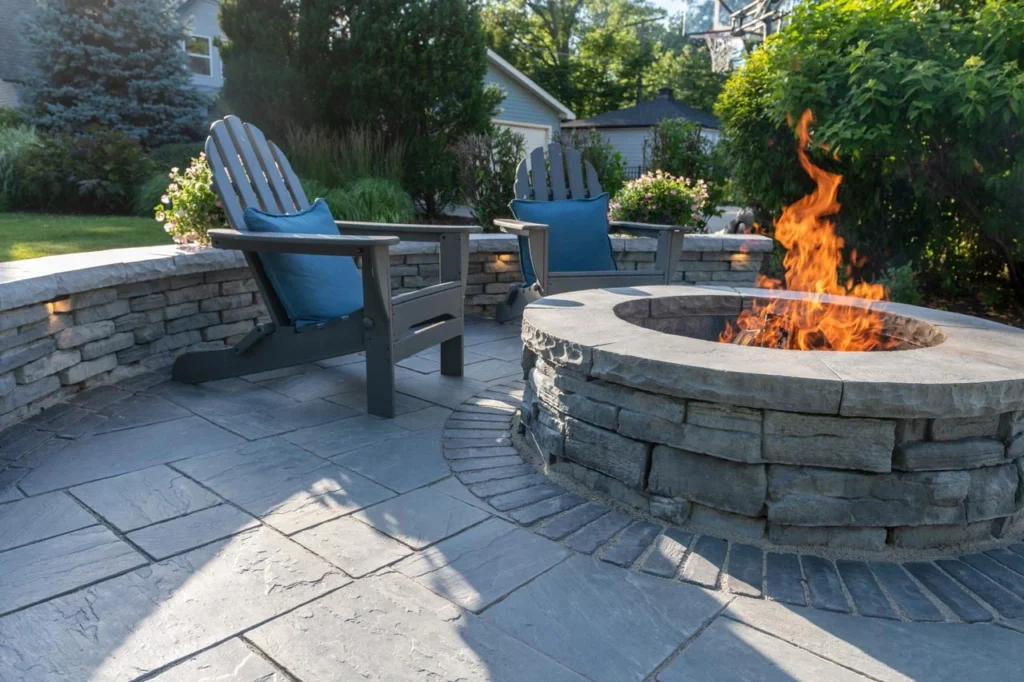
3D Design Planning Lets You See the Finished Result Before Installation Begins
One of the most common hesitations before a decorative brickwork project: not being able to picture how it will actually look on your specific property. A material sample in a showroom looks different than that same material installed along your driveway, next to your landscaping, against your home’s exterior color. The scale, the proportions, the color relationships — all of that only becomes clear when you see it in context.
That’s what 3D design planning solves.
Euro Paving offers 3D paving design as part of our planning process for decorative brickwork and edging projects. Before any material is ordered or any installation begins, we create a detailed visual of your specific property showing exactly how the finished project will look — material selection, pattern layout, color combinations, edge transitions, and how the brickwork integrates with existing surfaces and landscaping.
What you can evaluate in the 3D design:
- Material and color selection against your home’s existing exterior
- Pattern options side by side — soldier course vs. herringbone border, for example
- Scale and proportion — how wide the border reads relative to the driveway or patio field
- Transitions between edging and existing surfaces
- How the full outdoor space reads as a complete composition
This matters most for projects where multiple elements are being designed together — a front walkway border, a driveway edge treatment, and a patio surround that all need to work as a unified design. Seeing the full picture before installation eliminates the guesswork and the risk of choosing a material that looks different than expected once it’s in the ground.
In neighborhoods like Norridge and Arlington Heights, where properties sit close together and street-facing design is highly visible, 3D planning is especially valuable. Getting the color and pattern right relative to adjacent properties and the home’s facade is easier when you can see it rendered before committing.
3D design is available for standalone edging projects and for full hardscaping designs where edging is one component of a larger scope.
Professional Installation Keeps Brick Edging Level, Locked, and Built to Last
Decorative brick edging looks straightforward. Set some bricks along the edge of your driveway, fill the joints, done. A lot of Chicago homeowners try it that way. Most call a professional two winters later.
The problem isn’t the bricks. It’s what happens underneath them.
What DIY edging installations almost always get wrong:
Insufficient base depth. Setting bricks directly on soil or on a shallow sand layer without proper excavation and compaction means the edging has nothing stable to sit on. Chicago’s ground freezes to a significant depth — sometimes 18 to 24 inches in a hard winter. Frozen ground heaves upward. Edging without a proper base heaves with it, then settles unevenly when the ground thaws. After one winter, the border is wavy. After two, it’s falling apart.
No drainage slope. Edging set perfectly level traps water against the surface. That water freezes, expands, and works its way under the edging units. A slight slope away from the main surface — built into the base during installation — routes water away before it can do damage. This requires grading during the base prep phase, not something you add after the bricks are set.
Wrong material. As discussed earlier, standard clay brick without a freeze-thaw rating is still widely available at home improvement stores. It looks identical to rated brick on the shelf. It does not perform identically in a Chicago winter. The freeze-thaw spalling that results is gradual enough that homeowners often don’t connect the material choice to the failure.
No edge restraint. Paver edging systems require a mechanical edge restraint along the outer edge to keep units from migrating outward over time. Without it, the border slowly spreads. Professional installations include this as standard — it’s one of the steps that’s easy to skip and invisibly wrong until the edging starts to separate two or three years later.
The saw-cut step. Retrofitting edging onto an existing asphalt or concrete surface requires cutting the existing material to create a clean border channel. This is done with a concrete saw — not a rental tool most homeowners are equipped to use safely or accurately on a property they care about. An uneven cut shows in the finished installation.
The practical reality is that a professional crew completes in one day what takes a homeowner a full weekend — with commercial compaction equipment, professional-grade cutting tools, and the base preparation knowledge that makes the difference between edging that lasts two winters and edging that lasts twenty years.
Frequently Asked Questions
Yes — retrofit edging works on asphalt, concrete, and existing brick surfaces. The edge of the existing surface is saw-cut to create a clean channel, a compacted base is set, and the edging units are installed and locked in place. The transition between old surface and new edging is finished so the result looks original. Most retrofit installations complete in a single day.
Low-absorption concrete pavers — Unilock and similar premium brands — are the most reliable choice for Chicago’s freeze-thaw conditions. Natural stone such as bluestone, limestone, and granite also performs well. If you want a traditional clay brick look, specify freeze-thaw rated brick only — standard clay brick without that rating spalls and deteriorates within a few winters in Chicago.
Most residential edging projects complete in one day. Larger projects — full patio surround treatments, long driveway borders, or designs that include multiple edging elements across the property — may run two days. We’ll give you a timeline estimate when we come out for the assessment.
Yes. 3D design planning is available for both standalone edging projects and full hardscaping designs that include edging as one component. The design shows your specific property with the chosen materials, patterns, and layouts rendered before any installation begins — so you can see exactly what you’re getting and make changes before anything is set.
Call us at (773) 988-2353 or submit a request at europaving.com. We come out to your property, assess the existing surfaces and design opportunities, and walk you through the options before providing an estimate. No commitment required to get the estimate.
GET A FREE ESTIMATE
Euro Paving · 2210 W Chicago Ave, Chicago, IL 60622 · (773) 988-2353 · contact@europaving.com
Serving Chicago, Hinsdale, Burr Ridge, Park Ridge, Elmhurst, Norridge, Arlington Heights, and surrounding suburbs.