



How to Compare Unilock Driveway Pavers
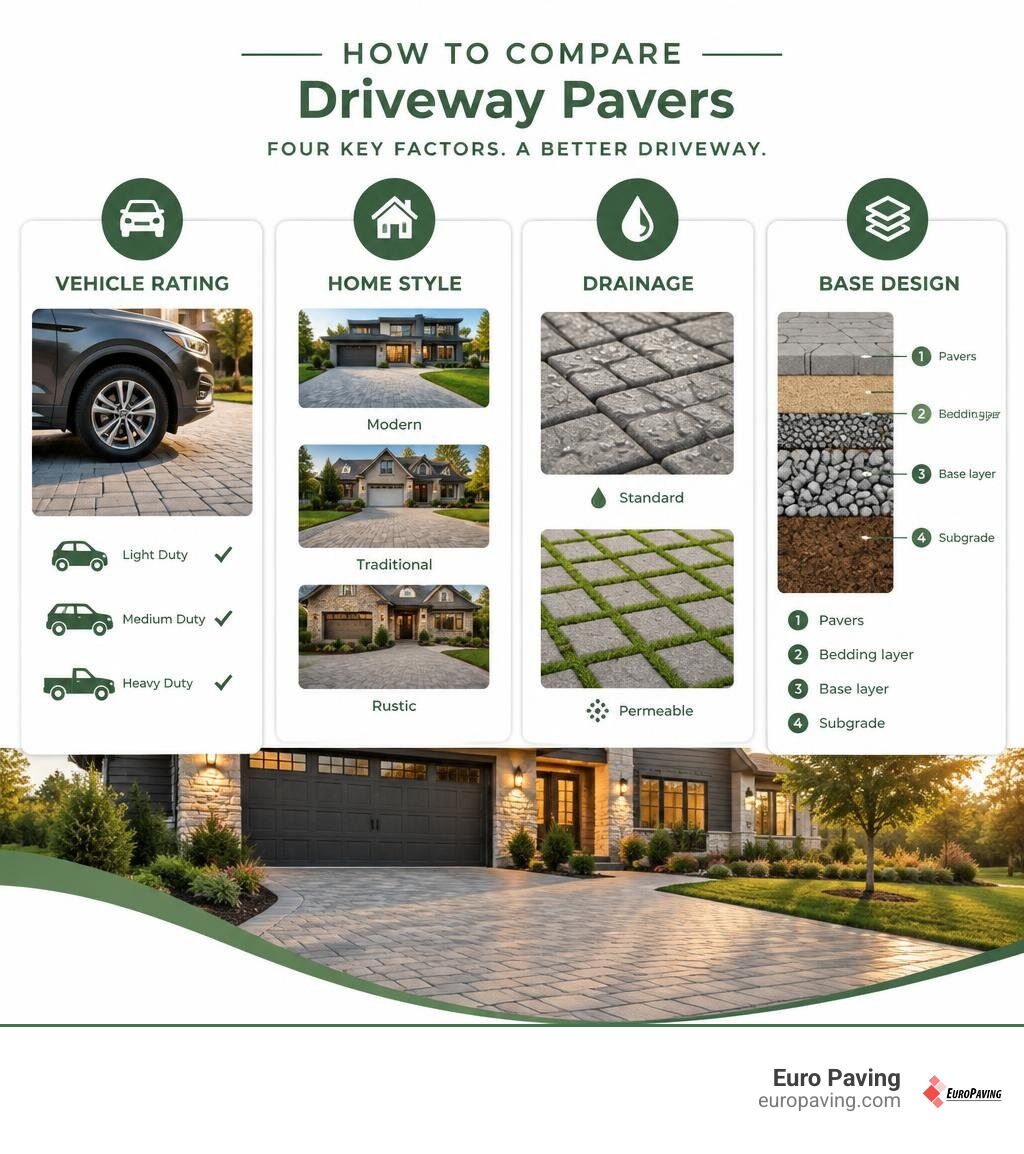
Start with the load your driveway must carry. Then compare Unilock driveway pavers by color, texture, and drainage. Choose a paver rated for vehicle traffic, a style that works with your home’s exterior, and a permeable option if runoff is a concern. The base and edge restraints matter just as much as the paver you see.
For Chicago-area homes, ask a contractor how each option will handle winter conditions and where water will go. That will help you narrow the choices before you settle on a pattern or border.
Why Unilock Driveway Pavers Offer Durable Performance
Poured concrete slabs often crack under seasonal ground movement, and asphalt requires regular topcoats to prevent crumbling. Concrete pavers provide a flexible pavement system. Individual units interlock to distribute vehicle weight across a broader surface while accommodating minor subgrade shifts without structural cracking.
According to Unilock, their paving stones are up to two to three times stronger than standard poured concrete. These units conform to ASTM C936 standards for high compressive strength and low water absorption. Low absorption rates prevent water from saturating the stone interior, protecting the surface during harsh Midwest freeze-thaw cycles. Understanding these benefits of driveway brick pavers helps homeowners choose a surface that handles heavy vehicle traffic across decades of seasonal weather.
Advanced Manufacturing Technologies for Surface Protection
Unilock integrates proprietary manufacturing technologies across their product lines to provide lasting durability:
- EnduraColor Technology: Uses a two-step manufacturing process that concentrates fine aggregates, granite, and quartz on the top surface. This prevents coarse base aggregate from showing through over years of surface wear.
- EasyClean Technology: Integrates a factory-applied stain resistance treatment directly into the paver during production. This allows motor oil, leaf tannins, and barbecue grease to be washed away before penetrating the material.
- Ultima Concrete Technology: Produces high-density units with up to four times the compressive strength of poured concrete, according to Unilock. This engineering provides exceptional load support in high-impact residential and commercial driveways.
- Elegance Collection: Features specialized surface textures cast from natural stone and historic clay bricks, combining classic character with built-in stain resistance.
Heavy-Duty Structural Ratings for Vehicular Loads
Driveways experience dynamic turning forces, braking stress, and sustained wheel loads. Units must meet specific thickness and aspect ratio thresholds to prevent tipping or cracking under vehicle weight.
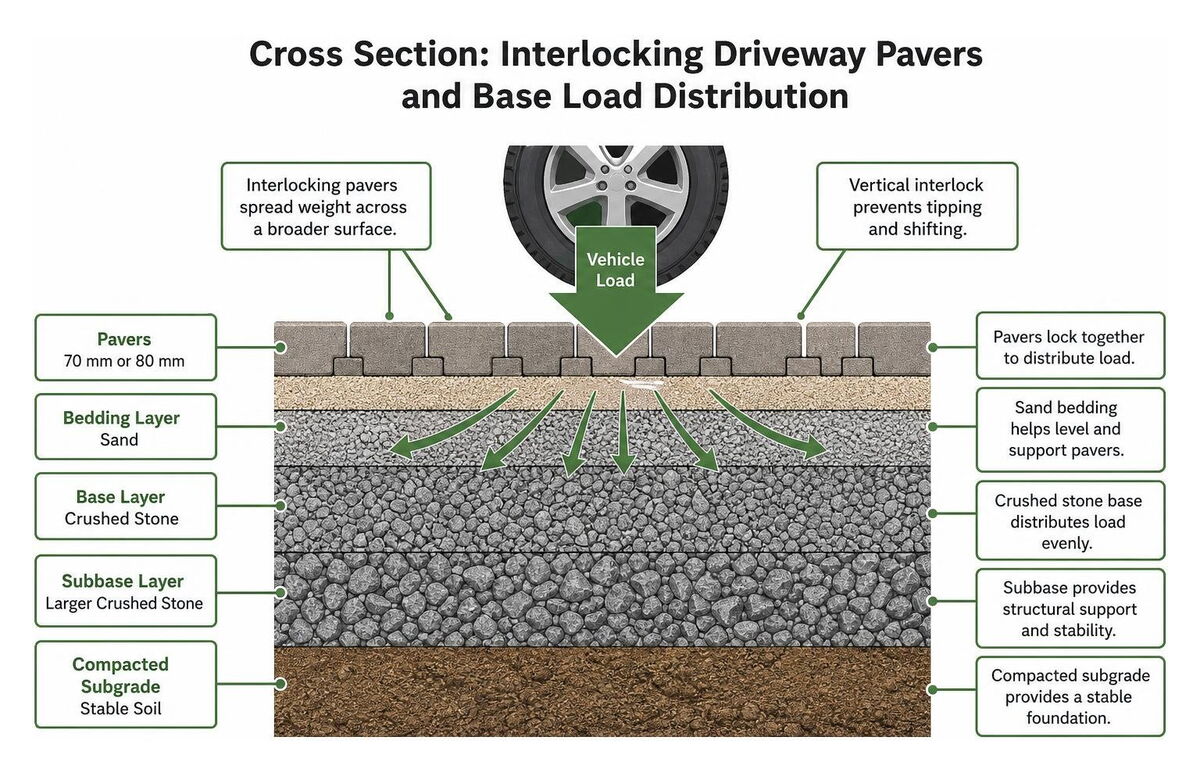
According to the Unilock Product Data Guide, pavers intended for residential vehicular traffic typically feature a minimum thickness of 70 mm (2.75 inches). According to Unilock technical guidelines, high-traffic commercial properties or areas supporting heavy delivery trucks rely on 80 mm (3.125 inches) systems. These thicker profiles ensure the vertical interlock between adjoining units disperses wheel weight evenly down through the bedding and aggregate base.
Comparing Unilock Driveway Collections by Architectural Style
Selecting the right style involves matching paver tones and textures with your home’s rooflines, brickwork, siding, and trim. Reviewing different driveway brick paver styles makes it easier to create visual harmony across your property.
| Collection | Architectural Style | Surface Texture | Thickness | Permeable Option | Primary Applications |
|---|---|---|---|---|---|
| Town Hall | Historic Brick / Traditional | Reala distressed clay | 70 mm | Yes | Standard & permeable driveways |
| Courtstone | Old-World European | Reala split cobblestone | 60 mm | Yes | Accents, borders, aprons |
| Copthorne | Traditional European Brick | Reala weathered clay | 60 mm | Yes | Accents, historic pathways, driveways |
| Richcliff | Natural Stone / Transitional | Reala embossed flagstone | 60 mm | No | Main driveway fields, borders |
| Series | Ultra-Modern / Minimalist | Washed granite aggregate | 70 mm | Yes | Contemporary driveways, banding |
| Artline | Modern / Linear | Smooth, clean-line finish | 70 mm | No | Long, linear contemporary driveways |
| Eco-Optiloc | Functional / Commercial | Industrial non-chamfered | 80 mm | Yes | Heavy-duty permeable driveways |
Classic and Historic Aesthetics with Reala Technology
Historic homes, colonial properties, and craftsman-style residences pair naturally with textured surfaces that mirror vintage clay bricks and weathered granite cobbles.
Using Reala technology, Unilock casts paver surfaces from molds of actual vintage European paving stones. Products like TOWN HALL® Driveway Pavers deliver the authentic look of street pavers with modern concrete durability. Courtstone brings the classic charm of cobblestones to driveway aprons and borders, while Copthorne provides a balanced brick profile that resists cracking and spalling.
Comparing Modern Unilock Driveway Pavers for Architectural Consistency
Modern, mid-century, and prairie-style homes benefit from sleek, linear paver layouts. Unilock produces several contemporary options designed for clean lines and smooth textures:
- Artline: Offers a series of elongated rectangular shapes laid in running bond patterns to visually widen or lengthen modern driveways.
- Series: Features exposed granite and quartz particles on the surface, creating a sophisticated finish that complements stone veneer and dark exterior trim.
- Richcliff: Mimics natural split flagstone with realistic cleft textures, providing an organic feel suitable for transitional architecture.
- Senzo: Delivers bold, minimalist color blocks with smooth finishes that resist scuff marks and oil stains.
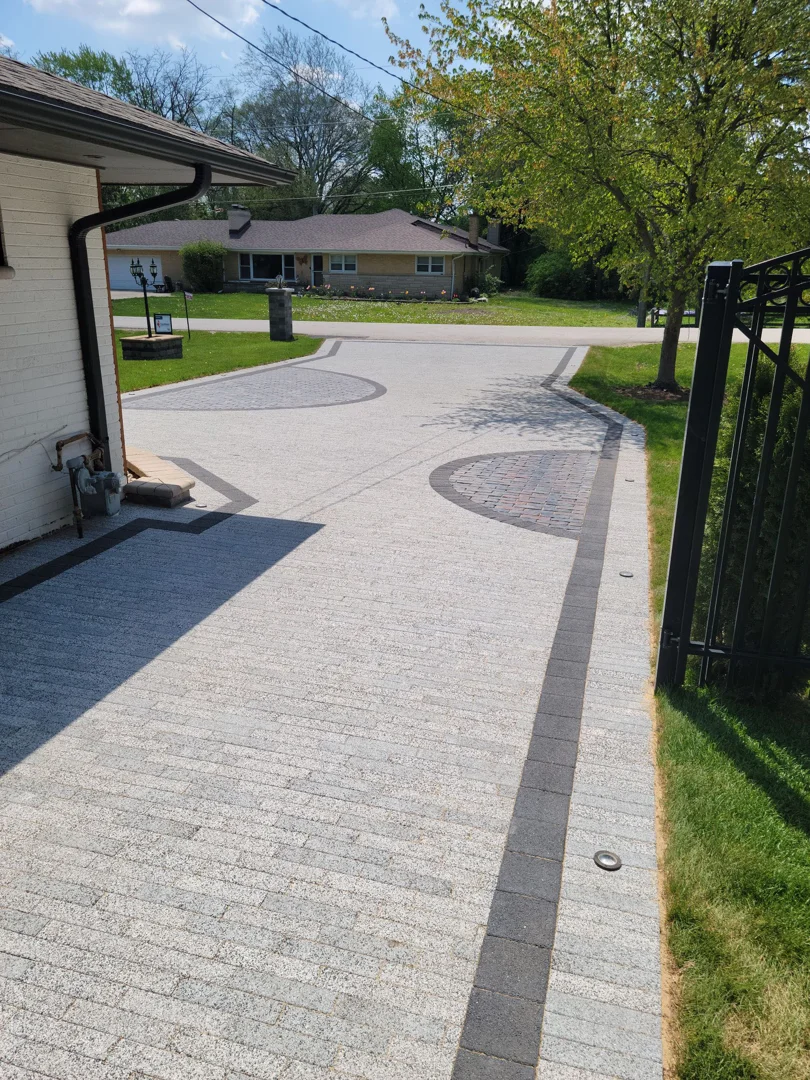
Pairing light-gray primary fields with dark charcoal or black granite borders creates crisp contrast that defines the driveway edge and frames the front entry.
Permeable Systems and Snow-Melt Capabilities
Managing storm runoff is an important consideration for paved surfaces in the Chicago area. Permeable paver systems let surface water drain naturally between the joints, filtering back into the subsoil rather than overloading neighborhood storm sewers.
According to Unilock, they were the first manufacturer in North America to introduce and offer a wide selection of permeable pavers. Commercial and heavy-use driveways often incorporate specialized systems like ECO-OPTILOC™ Driveway Pavers to ensure stable vehicle support alongside high drainage capacity.
Permeable Paver Engineering for Runoff Management
Permeable systems use engineered spacer bars on the sides of each paver to create wider joint openings. Instead of traditional polymeric sand, the joints are filled with clean, crushed aggregate chips (such as ASTM No. 8 or No. 9 stone).
Water drains rapidly through these open joints into an open-graded stone reservoir beneath the driveway. This open base consists of washed, angular aggregate without fine sand or dirt. This design prevents standing water, eliminates winter ice puddles, and helps homeowners comply with local municipal lot coverage and stormwater regulations.
Integrating Radiant Heating Beneath Unilock Driveway Pavers
Shoveling and snow blowing can be labor-intensive during Chicago winters. While Unilock does not manufacture heating elements, their paver lines work directly with hydronic and electric radiant heating systems.
A professional contractor lays durable thermal tubing or heating cables within the sand or bedding layer directly beneath the pavers. Automated temperature and moisture sensors activate the system as soon as snow begins falling. This keeps the driveway clear of snow and ice buildup without mechanical plowing or harsh chemical de-icers that can damage surrounding landscape beds.
Engineering, Laying Patterns, and Custom Accents
The mechanical bond of a paver driveway depends on the laying pattern you choose. Vehicles place continuous rotational and braking forces on driveway surfaces, making structural design essential. Exploring custom brick paver designs allows you to balance functional strength with clean visual lines.
Interlocking Patterns to Prevent Vehicle Shifting
The structural interlock between units stops pavers from shifting or rotating under turning tires.
A traditional 45-degree or 90-degree herringbone pattern provides the highest load resistance for vehicular applications. Because herringbone patterns lock units along multiple angles, tire pressure distributes evenly across surrounding stones. Using established interlocking brick paver patterns prevents wheel ruts and keeps the driveway surface level over years of heavy use.
Enhancing Driveways with Borders, Banding, and Integrated Lighting
A solid field of pavers looks more complete with intentional decorative accents:
- Soldier Courses: Laying rectangular pavers perpendicular to the driveway edge creates a clean frame around the primary field.
- Sailor Courses: Laying pavers parallel to the driveway edge adds subtle linear definition along curved sections.
- Contrasting Inlays: Installing dark granite banding across the width of a driveway breaks up long expanses of stone and highlights vehicle turnarounds.
- Flush Paver Lighting: Low-voltage LED fixtures installed flush within the borders improve evening visibility and illuminate edges safely without interfering with snow removal.
- Driveway Aprons: Upgrading the entrance near the street with contrasting cobblestone pavers like Courtstone establishes an inviting transition from the road.
Professional Base Preparation and Long-Term Maintenance
A paver driveway is only as stable as the ground underneath it. Correct excavation depth, subgrade compaction, and proper aggregate installation prevent settlement and surface rutting over time. Working with an experienced team for professional paver installation in Chicago ensures your base is built to handle local soil conditions.
Brick paver projects start at about $28 per square foot; every quote is individual and depends on the size of the project, the materials and the site.
Base Construction with DriveGrid and Compaction Standards
Standard residential vehicular installations require excavating 10 to 12 inches below finished grade to remove unstable topsoil and soft clay, according to Unilock installation guidelines.
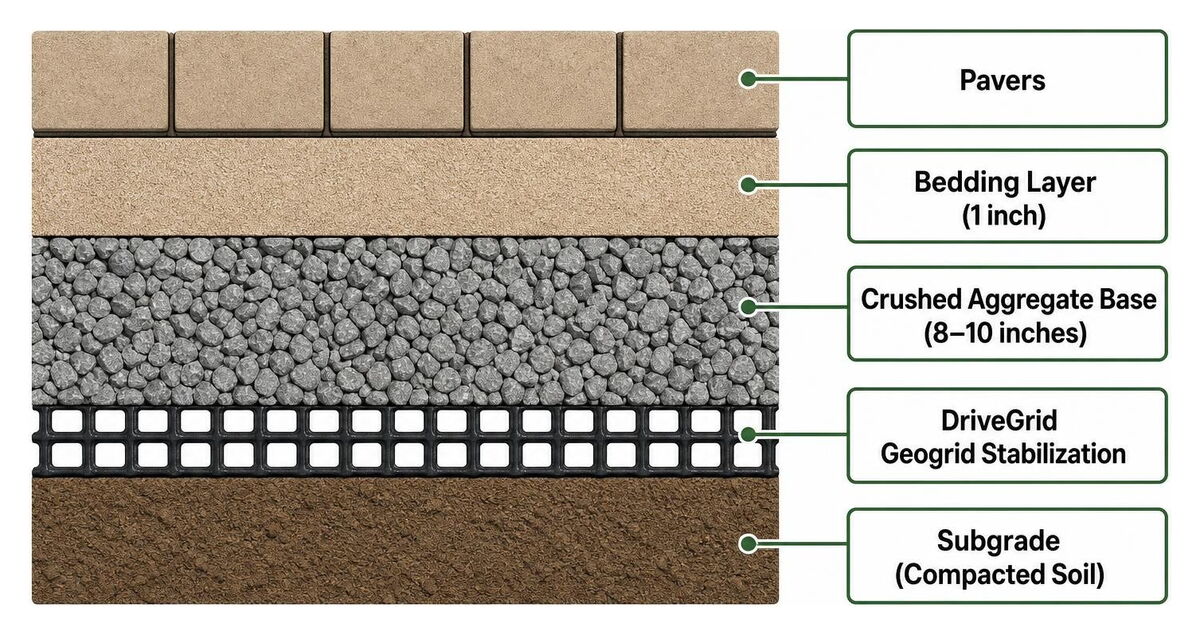
- Subgrade Preparation: The native soil is graded for proper drainage away from structures and thoroughly compacted.
- DriveGrid Geogrid Stabilization: A layer of biaxial geogrid is placed over the subsoil. This grid locks the base stone in place, distributing heavy wheel loads across a wider area and reducing excavation depth requirements.
- Crushed Aggregate Base: As specified by Unilock installation standards, an 8-to-10-inch base of dense-graded aggregate (such as CA-6 or 3/4-inch crushed gravel) is installed in 3-to-4-inch lifts. Each layer is compacted with commercial plate compactors to reach 98% Proctor density, as specified by Unilock.
- Bedding Layer: According to Unilock guidelines, a consistent 1-inch layer of coarse concrete sand (ASTM C33) is screeded over the base.
- Edge Restraints: Heavy-duty spiked polymer or concrete edge restraints are secured along the perimeter to prevent outward lateral movement.
Seasonal Maintenance, Cleaning, and Protective Sealing
Unilock pavers require minimal seasonal upkeep to preserve their structural integrity and appearance:
- Spring Joint Inspection: Inspect joints annually and replenish stabilized polymeric sand as needed to keep out weeds and ants.
- Routine Washing: Rinse away loose dirt, dust, and leaf residue using a garden hose or a low-pressure wash.
- Winter De-Icing: Use calcium chloride or traditional rock salt (sodium chloride) conservatively on mature concrete paver surfaces. Avoid using magnesium chloride or ammonium-based fertilizer compounds, which can degrade concrete over time.
- Protective Sealing: Pavers manufactured with EasyClean do not require aftermarket sealers. For standard collections, applying a breathable sealer every 3 to 5 years, as recommended by Unilock, helps protect joint sand, deepens stone colors, and shields the surface from oil spills.
Frequently Asked Questions About Driveway Pavers
Do Unilock driveway pavers require sealing after installation?
Sealing is not strictly required for structural durability because Unilock pavers are manufactured with high density and low absorption rates. However, applying a quality breathable sealer every 3 to 5 years, as recommended by Unilock, protects joint sand from erosion, enriches natural color tones, and simplifies oil stain removal on products without built-in EasyClean protection.
Which laying pattern provides the greatest resistance to vehicular shifting?
The 45-degree or 90-degree herringbone pattern delivers the highest resistance to tire shear and vehicle movement. The multi-directional orientation of herringbone layouts interlocks adjacent pavers on all four sides, distributing acceleration and braking forces across the entire driveway.
Can Unilock pavers be installed directly over an existing concrete driveway?
Pavers can be installed over existing concrete only if the underlying slab is structurally sound, level, and free of major frost-heave cracks. The concrete surface must slope properly away from foundations, feature drilled drainage weep holes along low points, and include a protective drainage membrane under the bedding layer to prevent trapped moisture.
Conclusion
Upgrading your home’s exterior with a Unilock paver driveway adds reliable strength, clean architectural lines, and dependable winter durability. Professional design planning and certified installation practices ensure your hardscape investment performs properly through years of everyday vehicle use and Midwest weather.
At Euro Paving, we are an authorized contractor specializing in custom brick paver driveway installation throughout Chicago and the surrounding suburbs. We provide complete 3D project visualization so you can review paver shapes, laying patterns, and border details before installation begins.
Request a free estimate and custom 3D design for your project by visiting our contact page or calling our team directly at (773) 988-2353.