



Defining Large Walkway Pavers and Common Sizes
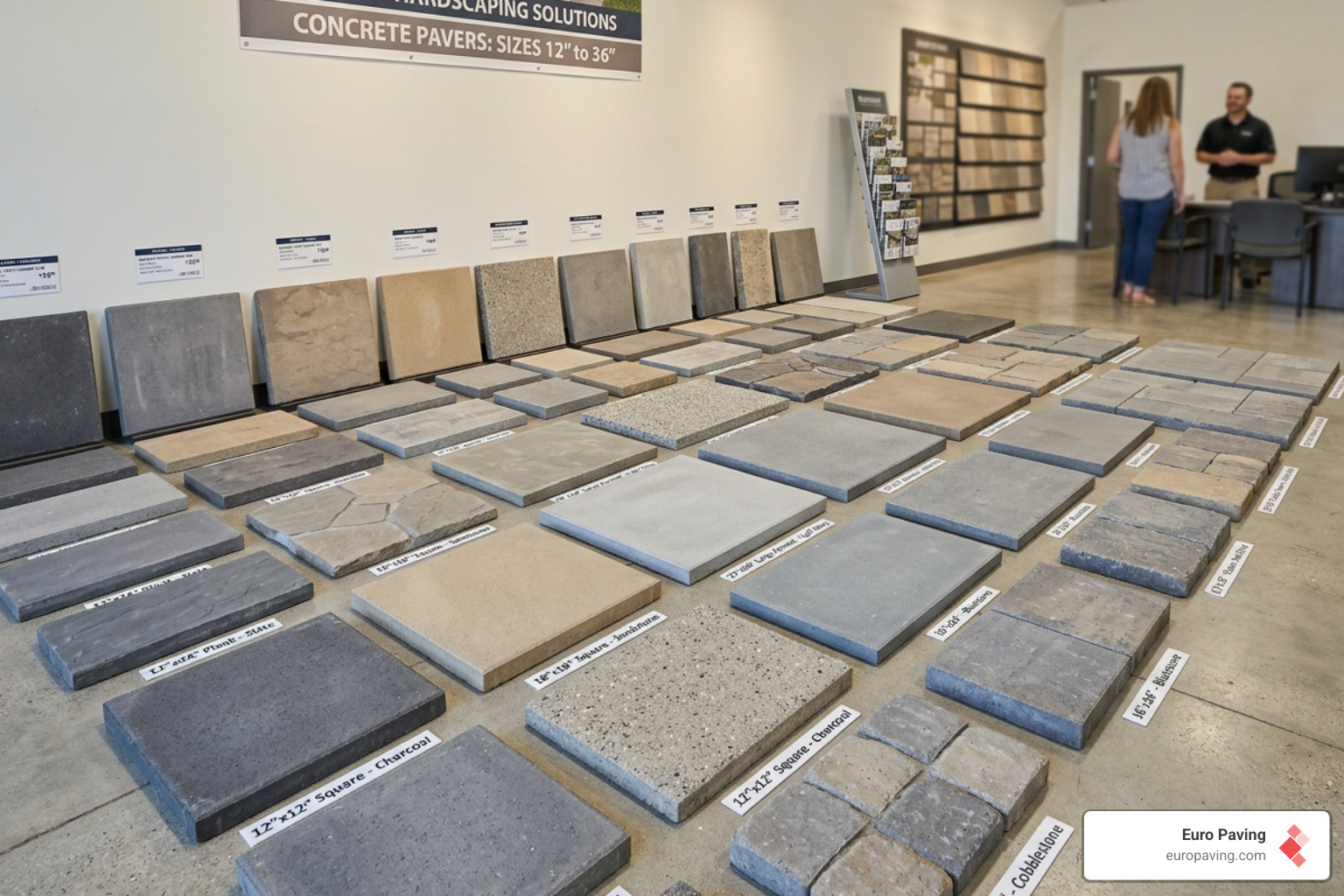
When we talk about large walkway pavers, we aren’t just talking about a slightly bigger brick. These are substantial slabs, often referred to as “XL” or “Grand” formats, that redefine the scale of your landscape. In our experience working across the Chicago area, from Arlington Heights to Hinsdale, we’ve seen these oversized units become the gold standard for modern curb appeal.
Commonly available sizes include:
- 24″ x 24″ Squares: The classic “large format” entry point, perfect for balanced, geometric paths.
- 24″ x 48″ Rectangles: An elongated slab that creates a “plank” look, excellent for directing the eye toward a front door or backyard focal point.
- 36″ x 36″ Slabs: These massive units cover 9 square feet each, offering a bold, monolithic appearance.
- Custom Precast Sizes: For unique architectural projects, some concrete lines offer even larger or narrow linear dimensions.
Thickness is a critical factor for durability. Most large format units for pedestrian use are between 1.25 inches (typically for natural stone or porcelain) and 2.375 inches (standard for concrete pavers). If you are looking for more technical details on how these fit into a total yard transformation, you can explore more about sidewalks and walkways design and build a beautiful outdoor living space.
Why Size Matters for Large Walkway Pavers
In hardscaping, size isn’t just about vanity—it’s about physics and aesthetics. Choosing large walkway pavers offers several functional advantages:
- Fewer Joints: A standard walkway using 4″x8″ bricks has hundreds of joints. A large format walkway might only have a dozen. This creates a “seamless” aesthetic that is much easier on the eyes.
- Visual Expansion: Large slabs trick the brain into thinking a space is larger than it actually is. It’s a design secret we use often in tighter Northbrook or Skokie backyards.
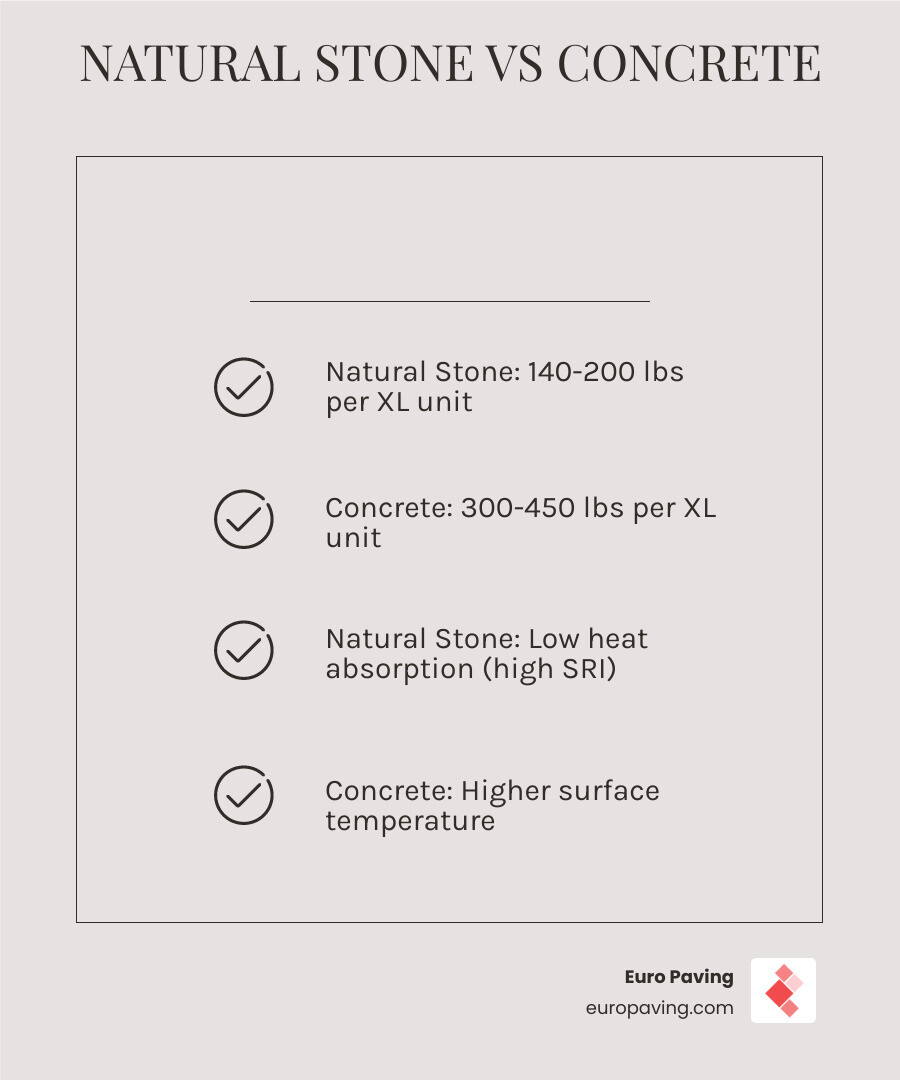
- Reduced Shifting: Because each unit is heavier (some natural stone slabs weigh 140–200 lbs), they are less likely to “creep” or tilt over time compared to tiny interlocking stones, provided the base is set correctly.
- Faster Professional Installation: While the pieces are heavier to lift, a professional crew can cover 8–12 square feet in the time it takes to set a single small brick. For professional design inspiration, look at how these scales interact with home architecture.
Material Selection: Natural Stone, Concrete, and Porcelain
Not all large pavers are created equal. The material you choose dictates the maintenance, “feel,” and longevity of your path.
- Natural Stone: Granite, Indiana Limestone, and Marble are the “luxury” tier. These are cut from solid rock. They offer unique character—no two pieces are identical—and a luminosity that concrete can’t quite replicate.
- Architectural Concrete: Modern manufacturing allows concrete to mimic natural stone textures (like riven or slate) while maintaining perfect dimensional consistency. This makes for a very flat, “trip-free” surface.
- Porcelain Slabs: A newer trend in the Chicago suburbs, porcelain is incredibly dense and nearly impervious to moisture. It’s often used for a “travertine-inspired” look without the porousness of real travertine.
Choosing the right material is the first step toward a beautiful home. For more insight, check out these 11 benefits of adding a brick sidewalk to your home.
Benefits of Natural Stone Large Walkway Pavers
There is a certain “weight” to natural stone—both literally and figuratively. When we install natural stone large walkway pavers, we are installing a piece of history. Unlike molded concrete, stone is sawn, giving it a depth and texture that ages beautifully.
| Feature | Natural Stone (XL) | Concrete (XL) |
|---|---|---|
| Weight per unit | 140 – 200 lbs | 300 – 450 lbs |
| Thickness | 1.25″ – 1.5″ | 2.375″ – 3.5″ |
| Surface Temp | Low (Solar Reflectant) | Higher |
| Unique Texture | 100% Unique | Repeated Molds |
| Strength | High PSI (Granite) | High (Reinforced) |
One of the biggest wins for natural stone is its “thermal finish.” This provides excellent slip resistance, making it the premier choice for pool surrounds or walkways that get wet frequently. Furthermore, stones like Indiana Limestone have a high solar reflectance index (SRI), meaning they stay cool under the summer sun—a must-have for family-friendly designs where kids might be running barefoot.
Aesthetic Appeal and Spatial Perception
The “unifying effect” of large stone is hard to overstate. By reducing the “checkerboard” pattern of joints, the walkway looks like a continuous ribbon of stone. This modern minimalism is a hallmark of luxury landscaping. Natural stone also retains its color forever; while concrete may fade slightly over decades of Chicago winters, granite and limestone maintain their original luminosity and depth. To see how these look in real-world settings, you can view professional walkway galleries.
Professional Installation Methods for Large Format Units
Installing large walkway pavers is not a weekend DIY project. Because of their sheer weight and the precision required to keep them level, professional tools and techniques are mandatory.
Substrate Preparation
Everything starts underground. For a walkway in Barrington or Downers Grove to survive the freeze-thaw cycle, we follow a strict process:
- Excavation & Slope: We ensure a proper slope away from the home’s foundation to prevent water pooling.
- Geotextile Fabric: This layer prevents the soil from mixing with our base stone, ensuring long-term stability.
- Open-Graded Base: We use layers of crushed stone aggregate, compacted thoroughly to create a stable, draining foundation.
Advanced Setting Techniques
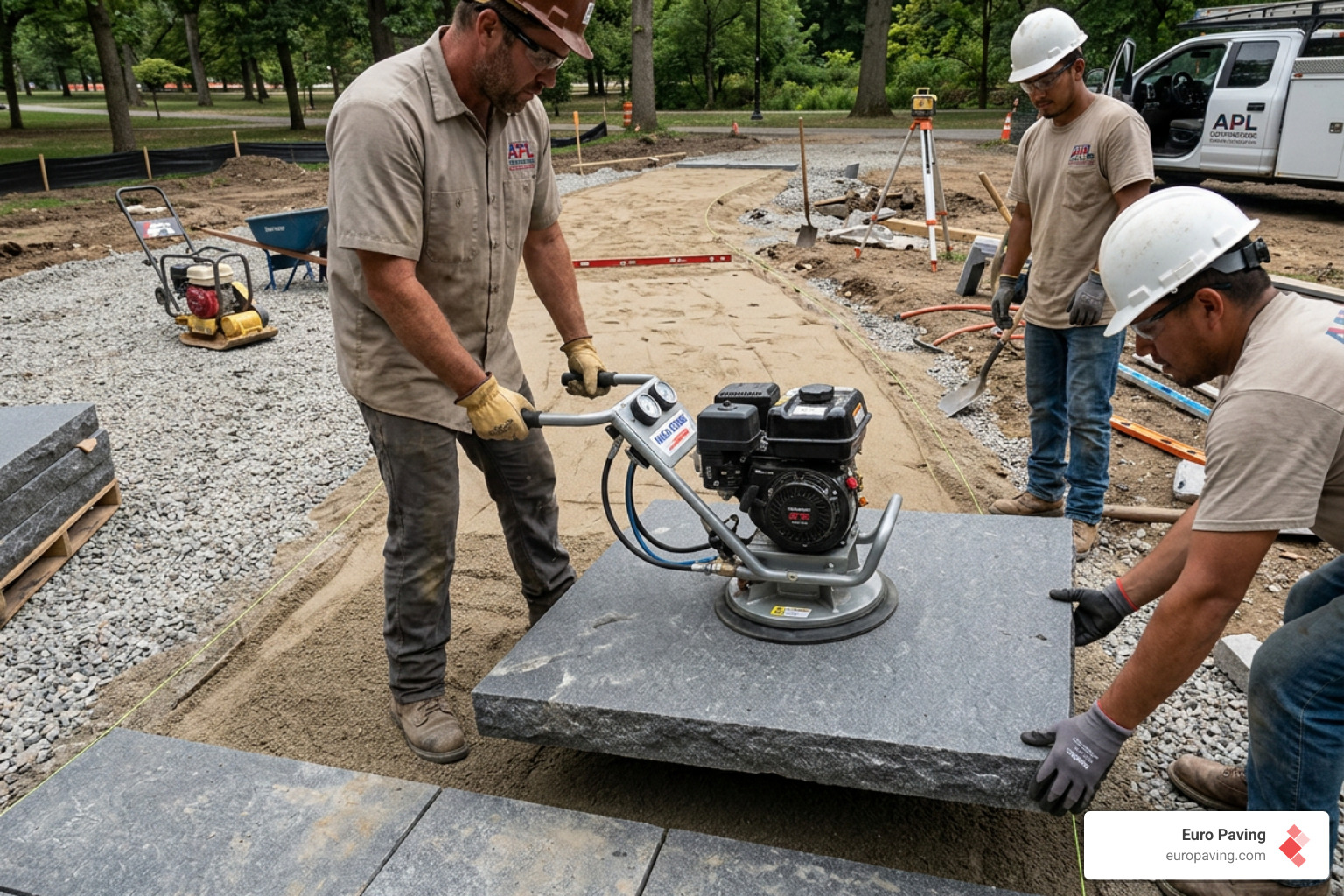
Setting a 200-lb slab by hand is a recipe for uneven joints (and back pain). We use vacuum lifters—specialized machines that use suction to lift and perfectly place each slab. This allows us to maintain tight, consistent joint spacing.
For certain designs, we may use a mortar bed or “wet setting.” This involves a slurry bond coat and a mortar base to “lock” the large pavers into place, preventing any rocking or shifting. This level of precision is why we offer expert sidewalk paving services that stand the test of time.
Design Tips and Creative Layouts for Modern Walkways
The fun part of using large walkway pavers is the design flexibility. You aren’t limited to a simple straight path.
- The Checkerboard: Using 24″x24″ or 36″x36″ squares in a staggered or alternating pattern.
- Running Bond: Rectangular 24″x48″ pavers laid like giant bricks. This “stretches” the walkway visually.
- The “Floating” Path: Instead of tight joints, we leave 3–5 inches between pavers and fill them with grass, moss, or decorative river rock. This creates a “stepping stone” look that is very popular in modern “zen” gardens.
- Mixed-Size Patterns: Combining large slabs with smaller “accent” pavers can create a five-piece pattern that feels dynamic and custom.
You can explore brick paving sidewalk options to see how different materials can be mixed for a one-of-a-kind look.
Climate Suitability and Maintenance
In the Chicago area, we have to account for extreme temperature swings. Large pavers are surprisingly resilient here because they have fewer joints for ice to penetrate. However, we always recommend:
- Polymeric Sand: This “smart sand” hardens when wet, keeping weeds out and joints flexible enough to handle ground movement.
- Seal Coating: A high-quality sealer protects the stone from salt damage during our harsh winters.
- Power Washing: An annual cleaning keeps the “luminosity” of the stone or concrete bright.
Frequently Asked Questions about Large Walkway Pavers
Are large pavers suitable for high-traffic areas?
Yes, absolutely—provided they are the right thickness. For standard pedestrian walkways, a 1.25″ to 2″ thickness is perfect. If the area will ever see a vehicle (like a “ribbon” driveway or a path near a garage), we move to “vehicular-rated” units that are typically 70mm to 100mm (about 3 to 4 inches) thick.
How do you prevent large pavers from cracking?
Cracking is almost always caused by a poor base, not the paver itself. If the ground underneath settles unevenly, the large stone has to “bridge” that gap, which can cause it to snap. Professional excavation and heavy-duty compaction of the substrate are the only ways to prevent this. Choosing high-PSI materials like granite also adds an extra layer of protection.
What are the best joint filling options for oversized stones?
- Polymeric Sand: Best for a clean, “solid” look that blocks weeds.
- Decorative Gravel: Best for a modern, permeable look (allows water to soak through).
- Turf/Grass: Best for “stepping stone” designs in a lush backyard.
Conclusion
Transforming your home’s entrance or backyard isn’t just about adding a path; it’s about creating an experience. At Euro Paving, we specialize in taking these “big ideas” and turning them into reality with large walkway pavers. Whether you are in Arlington Heights, Northbrook, or anywhere in the Chicago area, we bring the expertise of a Unilock authorized contractor to every project.
From family-friendly designs featuring custom fire pits to sleek, modern walkways that guide guests to your outdoor kitchen, we focus on quality that lasts a lifetime. Ready to get your path straight? Schedule a consultation for professional sidewalk paving with us today, and let’s build something beautiful together.