



Concrete Contractor in Chicago, Illinois
Chicago is one of the hardest climates in the country for concrete. The freeze-thaw cycle alone — water seeping into surface pores, freezing, expanding, and forcing the concrete apart — repeats dozens of times every winter. Add road salt, heavy vehicle traffic, and decades of use, and concrete surfaces that weren’t built correctly don’t last. They crack, heave, spall, and eventually fail. This page covers concrete contractor services for Chicago homeowners and commercial property owners. Each section explains a specific service, who it’s for, and what good work looks like. When you’re ready to move forward, request a free estimate.
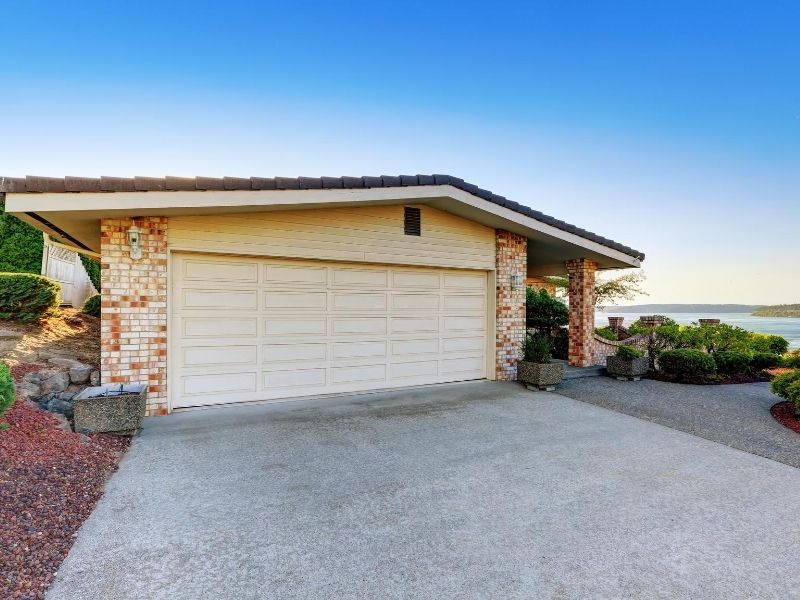
Concrete Driveway Installation & Repair in Chicago
Concrete is one of the most durable driveway surfaces available — when it’s installed correctly. The base underneath determines how long it lasts. A concrete slab poured over poorly compacted or unstable ground will crack and settle regardless of how thick the concrete is or how well it was finished on top.
Proper installation starts with excavation and gravel base compaction. The base is built in layers, compacted at each stage, and graded for drainage. Reinforcement — wire mesh or rebar — goes in before the pour. Concrete is poured to the correct thickness for the expected vehicle loads, finished smooth, and cut with control joints at planned intervals. Control joints give the concrete a place to crack — along the joint, where it’s invisible — rather than randomly across the slab face.
Concrete will crack. That’s not a defect — it’s the nature of the material. The goal is to control where cracking happens and keep it from becoming structural failure.
Repair work addresses isolated problems — a single heaved panel, surface spalling from salt damage, or a crack that has widened over time. If the base is still solid and the damage is limited, targeted repair extends the driveway life without full replacement. If the base has failed or the damage is widespread, replacement is the right call.
Chicago’s Southwest Side and inner-ring suburbs like Cicero and Berwyn have a high concentration of driveways poured in the 1960s and 70s. Many are past the point where repair makes sense. Full replacement with a properly engineered base solves the problem for the next 30 years.
Concrete Sidewalks & Walkways in Chicago
In Chicago, the property owner is legally responsible for the public sidewalk in front of their home or building. A cracked, heaved, or deteriorated panel isn’t just an eyesore — it’s a city violation and a personal liability if someone trips and gets hurt.
New sidewalk installation follows the same principles as driveway work — proper sub-base, correct thickness, control joints at planned intervals, and a broom-finished surface texture for slip resistance. The grade has to be right from the start so water drains off the walk and away from the building foundation rather than pooling on the surface and accelerating freeze-thaw damage.
Panel replacement is the most common sidewalk job in Chicago. One or two panels heave from tree root pressure or frost movement, get flagged by the city, and need to come out and get replaced. A contractor cuts out the damaged panels cleanly, prepares the sub-base underneath, and pours new panels to match the existing walk in thickness and finish. Done correctly, the repair blends in and holds up.
The mistake property owners make is patching over a heaved panel without addressing what caused the heave. If a tree root lifted the panel, the root situation needs to be managed before new concrete goes in. If frost heave caused it, the sub-base needs to be corrected. Pouring new concrete over the same conditions produces the same result.
Property owners in dense North Side neighborhoods like Lakeview and Wrigleyville deal with sidewalk violations regularly. Mature street trees, aging infrastructure, and heavy pedestrian traffic all contribute. Staying ahead of the city inspection cycle saves fines and prevents small problems from becoming larger replacements.
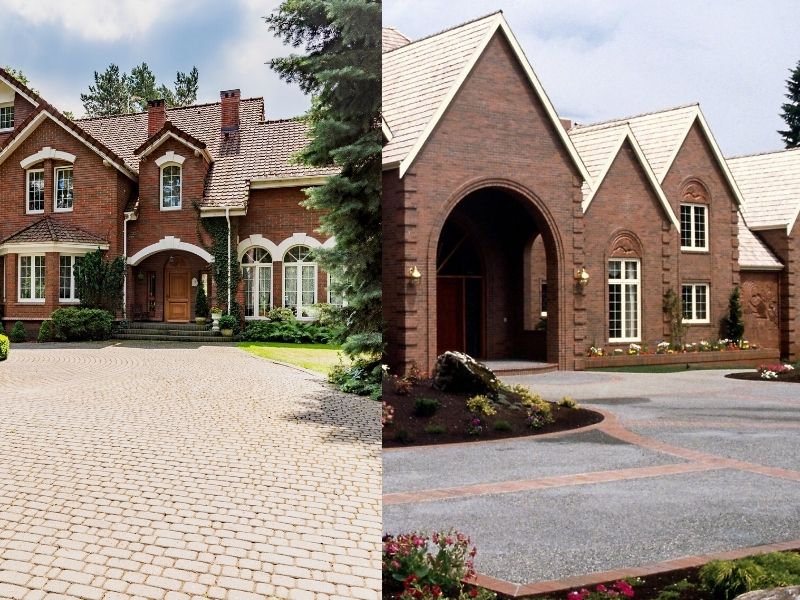
Ready to start your project? Contact us for a free estimate on any paving project in Chicago or the surrounding suburbs.
Stamped Concrete Patios in Chicago
Stamped concrete gives you the look of brick, flagstone, slate, or cobblestone at a lower installed cost than natural materials. It’s poured as a standard concrete slab, then textured and colored before it fully sets. The stamps press a pattern into the surface. Color goes in through integral pigment mixed into the concrete, surface hardener broadcast on top, or acid staining applied after the pour.
The finished surface is one continuous slab — no individual units to shift or settle, no joints to fill and maintain. When it’s sealed properly and resealed on schedule, stamped concrete holds its color and texture through Chicago winters for 20 years or more.
Sealing is not optional with stamped concrete. An unsealed stamped surface absorbs water, which freezes and damages the texture and color over time. A quality concrete sealer applied at installation and reapplied every two to three years protects the surface and keeps it looking right. This is the maintenance step most homeowners skip — and the reason stamped concrete gets a bad reputation in cold climates. The concrete isn’t the problem. The lack of sealing is.
Cracks can appear in stamped concrete the same way they appear in any concrete slab. Control joints are cut into the pattern at planned intervals — a skilled contractor places them where they disappear into the design rather than cutting across a visible field.
Homeowners in Western Springs and Downers Grove frequently choose stamped concrete for backyard patios where they want a permanent, finished surface that works with existing landscaping without the ongoing maintenance of natural stone or brick pavers.
Commercial Concrete Paving Projects in Chicago
Commercial concrete work is engineered differently than residential. The loads are heavier. The drainage requirements are stricter. The schedule has to account for active operations and minimize disruption to the business. And the consequences of getting the base or thickness wrong are far more expensive to fix at commercial scale.
A commercial concrete paving project starts with a site assessment and a written scope — base depth, concrete thickness, reinforcement specification, joint placement, drainage plan, and construction timeline. Every one of those elements is determined by what the surface will carry. Passenger vehicle parking is engineered differently than a truck court or a loading dock apron. A contractor who uses the same spec for every commercial job isn’t engineering — they’re guessing.
Forming is done to tight tolerances on commercial work. Concrete is poured in sections, finished to grade, and allowed to cure under controlled conditions. Expansion joints are placed at intervals based on the slab dimensions and the expected temperature range the surface will see. Joints that are spaced too far apart produce random intermediate cracking. Joints spaced correctly eliminate it.
After curing, surfaces get any required line striping, ADA-compliant markings, and wheel stop installation as part of the finished project scope.
Industrial properties and commercial developments along Chicago’s I-55 corridor and near O’Hare regularly need large-scale concrete paving for parking lots, truck courts, and access roads. These are high-traffic, high-load surfaces that need to be built right the first time. A failed commercial concrete installation costs far more to fix than it would have to engineer correctly from the start.
Concrete Curbs & Edging in Chicago

Concrete curbs do three things at once. They contain the paved surface, direct water runoff to planned drainage points, and protect landscaped areas from vehicle encroachment. On a commercial property, curbing is part of the drainage and site management plan. On a residential property, it gives a driveway or hardscaped area a finished, defined edge.
Machine-formed curbs are the standard for large commercial sites — consistent profile, fast installation, and lower cost per linear foot at scale. A curb machine extrudes concrete directly onto the prepared base in a continuous run. The result is uniform and efficient for straight runs and gentle curves on parking lots and service drives.
Hand-formed curbs suit residential applications and commercial sites with tight curves, transitions, or custom profiles. A mason builds the forms, pours the concrete, and finishes the curb by hand. It takes longer but gives precise control over shape and finish at complex intersections and transitions between surfaces.
Both types require a stable base and correct placement relative to the finished grade of the paved surface. A curb set too high blocks drainage. A curb set too low fails to contain runoff. Grade and drainage have to be worked out before the forms go in.
Commercial properties throughout Chicago’s northwest suburbs — including Norridge, Harwood Heights, and Niles — use concrete curbing to define parking lot perimeters, protect landscaping from vehicle damage, and manage stormwater in compliance with local drainage requirements. It’s often the last element of a paving project and the one that ties everything together visually.
Frequently Asked Questions
A properly installed concrete driveway lasts 30 to 40 years with basic maintenance. The key variables are base quality, concrete thickness, control joint placement, and how well the surface is protected from road salt over its life. Avoid using rock salt directly on concrete — it accelerates surface spalling. Sand or a calcium chloride product does less damage.
Early cracking usually points to one of three causes — inadequate base preparation, concrete poured too wet, or control joints spaced too far apart. A concrete mix with too much water added on site is weaker and more prone to shrinkage cracking. Control joints that are too far apart force the concrete to crack randomly between them. Base failure causes structural cracking as the slab loses support from underneath.
Yes, with the right precautions. Concrete needs to be protected from freezing during the curing period — typically the first 24 to 48 hours at minimum. Contractors use heated enclosures, insulating blankets, and accelerated mix designs to pour in cooler temperatures. Below a certain threshold, pouring becomes impractical. The safe window in Chicago is generally April through October. Cold-weather pours outside that range carry higher risk and require more protective measures.
Stamped concrete is one continuous slab with a textured, colored surface. Pavers are individual units set in sand. Stamped concrete is typically less expensive to install and has no joints to maintain. Pavers are easier to repair — one damaged unit lifts out and gets replaced. Both require sealing. In Chicago’s freeze-thaw climate, both perform well when installed correctly and maintained on schedule.
You can’t prevent all cracking — but you can control it. Control joints give the concrete planned places to crack. Sealing the surface keeps water out of pores where it can freeze and expand. Avoiding rock salt reduces surface spalling. And starting with a properly compacted base eliminates the settling and movement that causes structural cracks. Maintenance matters as much as installation quality.
Permits are typically required for driveway aprons that connect to the public alley or street and for sidewalk work adjacent to city right-of-way. Patio permits depend on size, drainage impact, and local zoning. A reputable contractor identifies permit requirements before work begins and handles filing as part of the project. Never let a contractor skip a required permit — it creates problems at sale and limits your options if work needs to be inspected later.
GET A FREE ESTIMATE
Concrete work done right lasts decades. Concrete work done wrong fails fast — and costs significantly more to fix than it would have to build correctly the first time.
We serve Chicago and the surrounding suburbs, including Norridge, Cicero, Berwyn, Elmhurst, Downers Grove, Western Springs, Niles, Harwood Heights, Mount Prospect, and the broader Cook and DuPage County areas
Call us: (773) 988-2353 Email: contact@europaving.com Address: 2210 W Chicago Ave, Chicago, IL 60622
Hours: Monday – Friday: 9:00 AM – 6:30 PM Saturday – Sunday: Closed
Call during business hours or request your estimate online at europaving.com. We’ll assess the project, walk you through your options, and give you a clear answer on what the work requires.
No pressure. No runaround. Just straight answers from a contractor who knows Chicago concrete.